Map of Netherlands showing where the Sayer arms are recorded
The Sayer arms were recorded in Bois-le, c. 1815.
This is where the arms were entered in the register. Families often moved to other parts of the country, so the same name can turn up in more than one region.
Region
Bois-le
Town
Bois-le
First recorded
1815
Granting Authority for the Sayer Arms
Hoge Raad van Adel
Photograph made by me · CC BY-SA 3.0
The body that granted and recorded arms in Netherlands in this period.
William I of the Netherlands
Sovereign of the period
William I of the Netherlands
1815–1840
Reigning in Netherlands when the Sayer arms are first recorded.
How Arms Worked in Netherlands
In the Netherlands, coats of arms were often used by noble families and those who held specific public offices. These arms were passed down through the generations to legitimate descendants. Younger branches of a family usually kept the original design without needing to add special marks. This system ensured that the family identity remained clear and consistent over many years.
Granting authority
The Hoge Raad van Adel is the official body that regulates and manages noble titles and coats of arms in the Netherlands.
How they got arms
Families typically obtained their coats of arms through official royal grants or by proving their long-standing historical use of the symbols.
Where arms were recorded
Coats of arms are officially recorded in the registers held by the Hoge Raad van Adel, which began its work in 1814.
The family's standing
Recorded among the armigerous families of Netherlands.
Origin & History of the Sayer Family in Netherlands
The history of the Sayer family in the Netherlands is deeply connected to the shifting political landscape of the early nineteenth century. By 1815, records confirm that members of the family were established in Bois-le-Duc, which is known today as 's-Hertogenbosch. This period was a time of great transition for the region as it moved from French control to the newly formed United Kingdom of the Netherlands. The name Sayer likely originated as an occupational surname, referring to someone who acted as an assayer or a judge, reflecting a family history rooted in administrative or legal roles. As the family settled in the southern provinces, they became part of a community navigating the integration of local traditions with the new national identity of the Dutch state. Their presence in a major fortified city like 's-Hertogenbosch suggests that the family was likely involved in the urban economy or the civil service during this era of post-Napoleonic reconstruction.
Coat of Arms & Family Crest Details
Symbols on this shield
bendDefence, and the scarf of a commander
fessThe military belt, and readiness to serve
lionCourage, strength and royalty
crescentHonour by the sovereign, and the second son
mulletThe third son, and a divine quality from above
Colours
Black (Sable)Means: Constancy
Red (Gules)Means: Military strength
Gold (Or)Means: Generosity
Historical info
Source
J. B. Rietstap, Armorial Général, Gouda: G. B. van Goor Zonen, 1884–87
Blazon (the actual original written record)
“Parti: au 1 de sa. au lion cont. d'or, tenant entre ses pattes un croiss. tourné du même; au 2 de gu. à la bande d'or, ch. d'un croiss. tourné du champ. et acc. de deux étoiles du sec. C.: le lion, iss. et tourné à dextre (le croiss. cont.), entre un vol, à dextre de sa. ch. d'une barre d'or, à sen. de gu. ch. d'une fasce d'arg. surch. d'une étoile d'or. L.: à dextre d'or et de sa, à sen. d'arg. et de gu.”
AustriaVienne, c. 1772
Digital archive packCoat of arms PNG, gold border print PDF, vector SVG and the certificate of authenticity. Sent to your email in minutes.
Map of Austria showing where the Sayer arms are recorded
The Sayer arms were recorded in Vienne, c. 1772.
This is where the arms were entered in the register. Families often moved to other parts of the country, so the same name can turn up in more than one region.
Region
Vienne
Town
Vienne
First recorded
1772
Granting Authority for the Sayer Arms
Imperial and Royal chancery
Sodacan · CC BY-SA 3.0
The body that granted and recorded arms in Austria in this period.
Joseph II, Holy Roman Emperor
Sovereign of the period
Joseph II, Holy Roman Emperor
1765–1790
Reigning in Netherlands when the Sayer arms are first recorded.
How Arms Worked in Austria
Austrian coats of arms were often linked directly to noble titles granted by the Emperor. These symbols belonged to the entire family line rather than just one individual. When a family grew, new branches kept the original design without needing to change it. This system allowed all members of a noble house to share the same identity across many generations.
Granting authority
The Imperial and Royal chancery managed all heraldic matters and controlled the official granting of arms throughout the Austrian lands.
How they got arms
Families typically received their arms through a formal imperial decree that often accompanied the elevation of a person to noble status.
Where arms were recorded
Official records of these grants were kept in the Imperial Register of Nobility which began its formal documentation process in 1453.
The family's standing
Recorded among the armigerous families of Austria.
Origin & History of the Sayer Family in Austria
The history of the Sayer family in Austria is deeply connected to the vibrant urban life of Vienna during the late eighteenth century. By 1772, records confirm that members of the family were already established residents within the city, a time when Vienna served as the bustling cultural and administrative heart of the Habsburg Monarchy. The name Sayer likely originated from occupational roots, as it is historically linked to the Middle English word for a woodcutter or a person who assays metals, though its presence in Austria suggests that the family integrated into the professional classes of the imperial capital. As the city expanded under the influence of the Enlightenment, families like the Sayers often found roles in trade, craft, or local governance. Their presence in Vienna during this era reflects the broader movement of families across Europe who sought opportunities in major metropolitan centers. By settling in such a prominent location, the early Sayer family became part of the diverse social fabric that defined Austrian history during the reign of Empress Maria Theresa.
Coat of Arms & Family Crest Details
Symbols on this shield
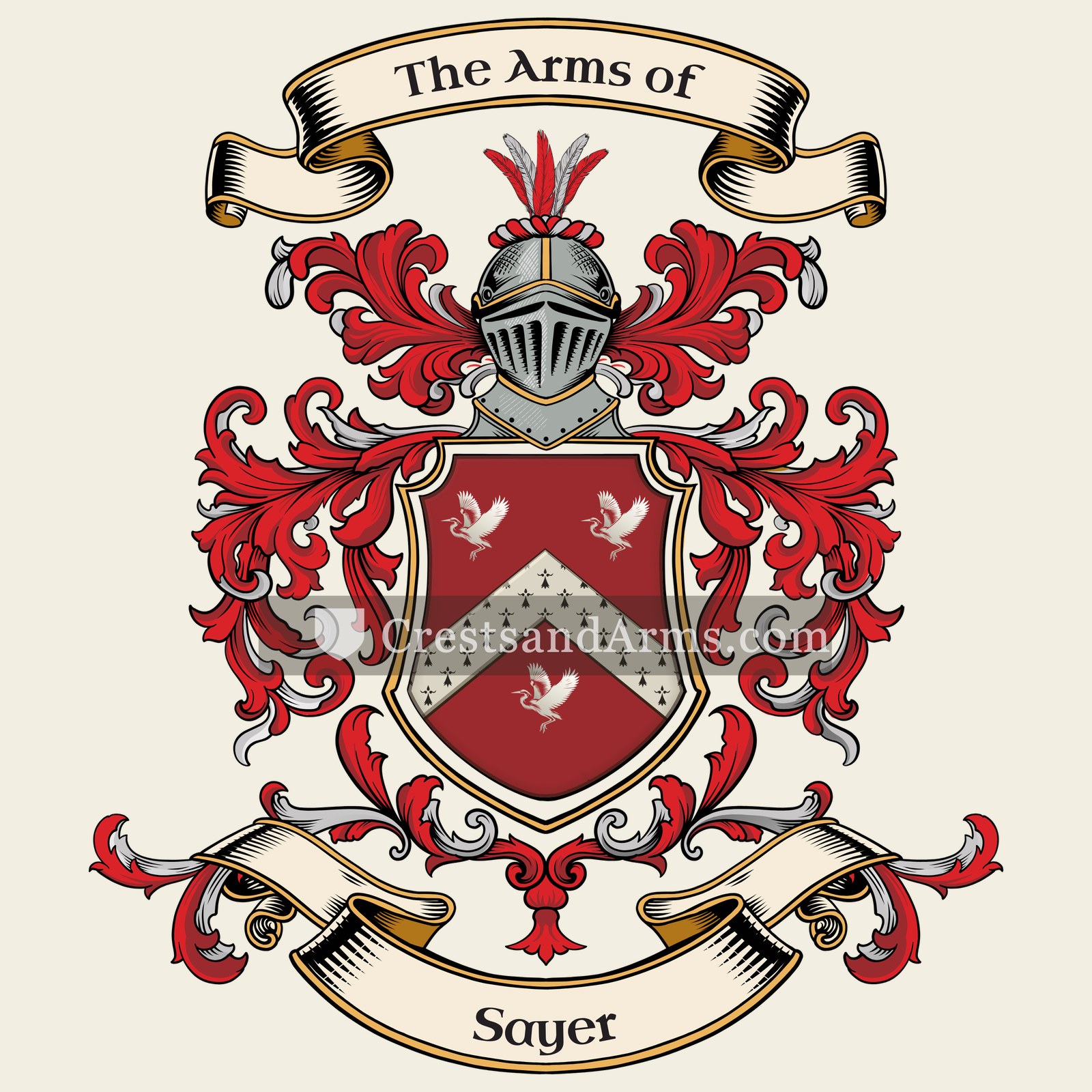
chevronProtection, and faithful service completed
heronPatience and quiet watchfulness
Colours
Red (Gules)Means: Military strength
ErmineMeans: Dignity
Silver (Argent)Means: Peace and sincerity
Historical info
Source
Sir Bernard Burke, The General Armory of England, Scotland, Ireland and Wales, London: Harrison & Sons, 1884
Blazon (the actual original written record)
“Gu. a chev. erm. betw. three seapies ar”
Englandc. 1620
Digital archive packCoat of arms PNG, gold border print PDF, vector SVG and the certificate of authenticity. Sent to your email in minutes.
Map of England showing where the Sayer arms are recorded
The Sayer arms were recorded in England, c. 1620.
Arms such as these were typically recorded in York.
Yorkshire is the largest of the English counties, and it held more gentry families than any other. Land there was split among a great many households rather than a few, so a great many of them carried arms.
This is where the arms were entered in the register. Families often moved to other parts of the country, so the same name can turn up in more than one region.
The body that granted and recorded arms in England in this period.
James VI and I
Sovereign of the period
James VI and I
1603–1625
Reigning in Netherlands when the Sayer arms are first recorded.
How Arms Worked in England
English heraldry allowed arms to be shared by all legitimate descendants of the original owner. These symbols were treated as personal property that moved through the generations to all children. While the eldest son kept the original design, other family members could use the same shield without needing to change it or register their own unique versions.
Granting authority
The College of Arms in London has regulated the use of coats of arms throughout England and Wales since 1484.
How they got arms
Families typically obtained their coats of arms through a formal grant from the Crown or by proving their ancient right to them.
Where arms were recorded
All official coats of arms are recorded in the registers kept at the College of Arms, which date back to the fifteenth century.
The family's standing
Recorded among the armigerous families of England.
Origin & History of the Sayer Family in England
The surname Sayer has deep roots in medieval England, originating as an occupational name for a professional assayer or a person who tested the quality of metals and coins. By the early seventeenth century, the family had established a notable presence in the historic city of York. Records from 1620 confirm that members of the Sayer family were active participants in the civic and social life of this northern hub. During this era, York was a center for trade and religious administration, providing a stable environment for families to build their livelihoods. The name itself reflects a time when surnames were often tied to a person's specific trade or role within the community, marking the Sayer ancestors as individuals who held positions of trust and technical skill within their local society.
Related Branches & Arms
Root word
Sagere
Old French term for a woodcutter or a sawyer.
This name
SayerAn occupational surname for someone who worked with a saw to cut timber.
also spelled
Sayre
Sair
Sawyer
Sawer
Related arms
Gayersame arms
Vienne (de la) - Champsimilar arms
Sarevariant spelling
Sawersvariant spelling
Documented Sources
J. B. Rietstap, Armorial Général, Gouda: G. B. van Goor Zonen, 1884–87


 chevronProtection, and faithful service completed
 crescentHonour by the sovereign, and the second son
 martletA younger son, who must win his own land
 chevronProtection, and faithful service completed
 crescentHonour by the sovereign, and the second son
 martletA younger son, who must win his own land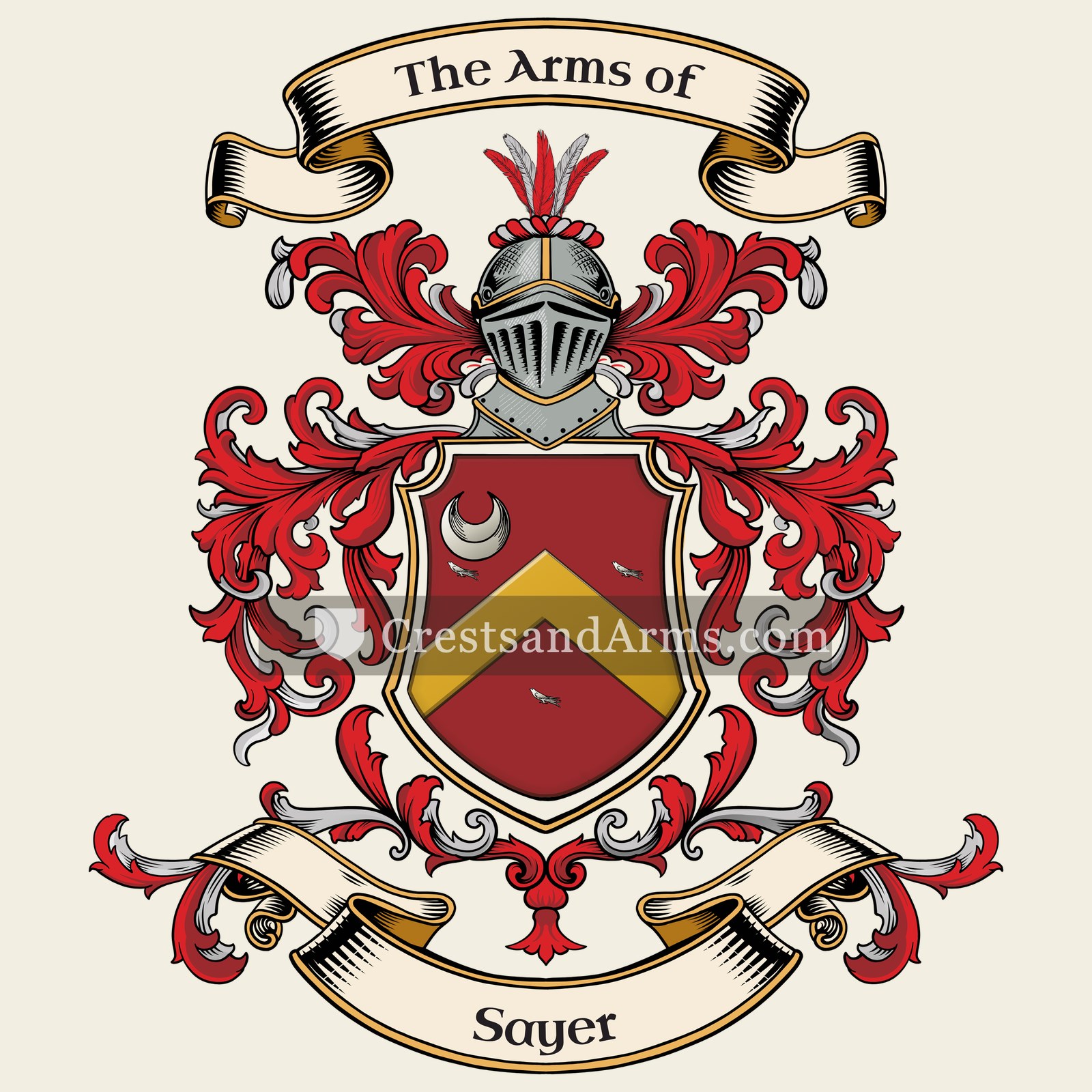


 bendDefence, and the scarf of a commander
 fessThe military belt, and readiness to serve
 lionCourage, strength and royalty
 mulletThe third son, and a divine quality from above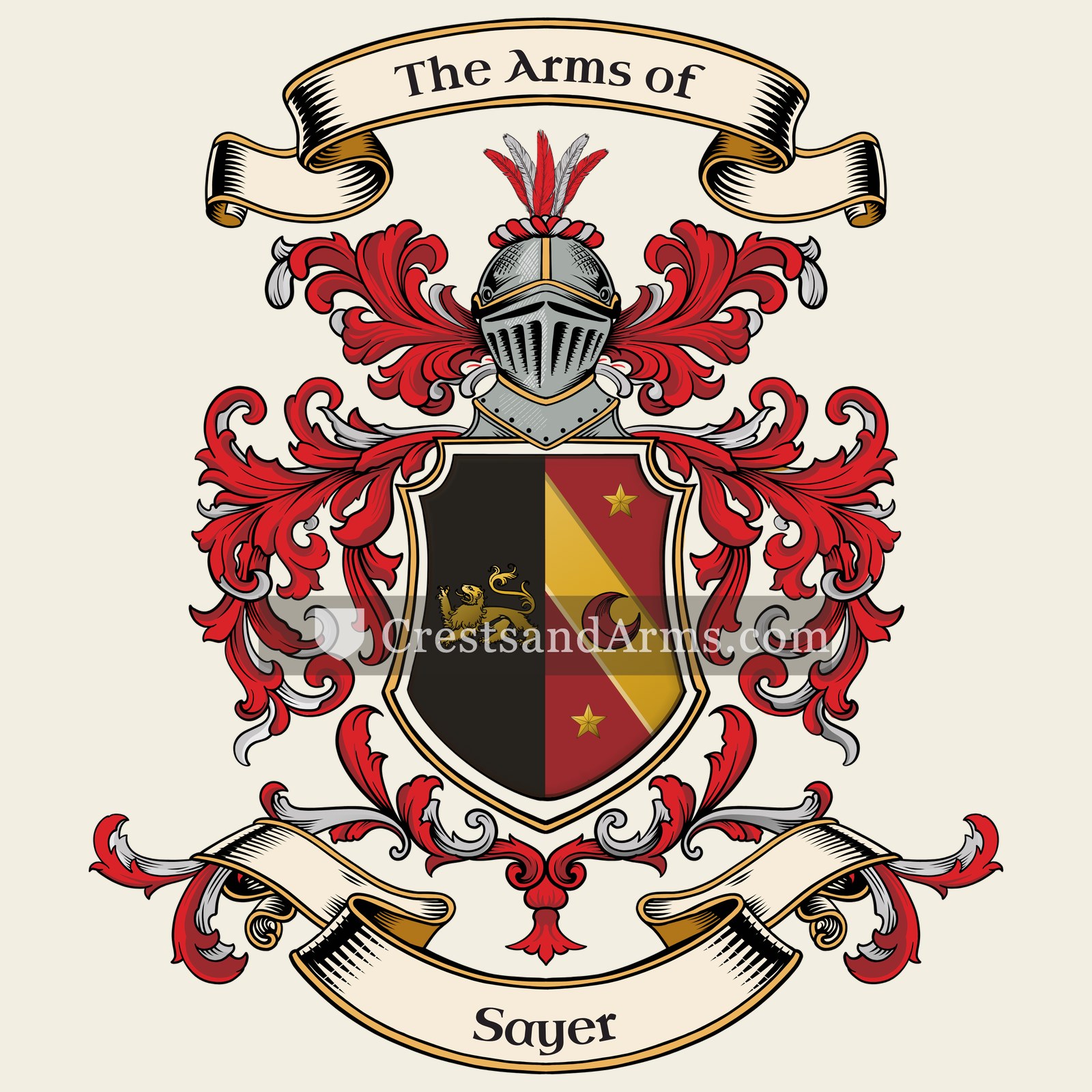


 heronPatience and quiet watchfulness