Map of Switzerland showing where the Scavone arms are recorded
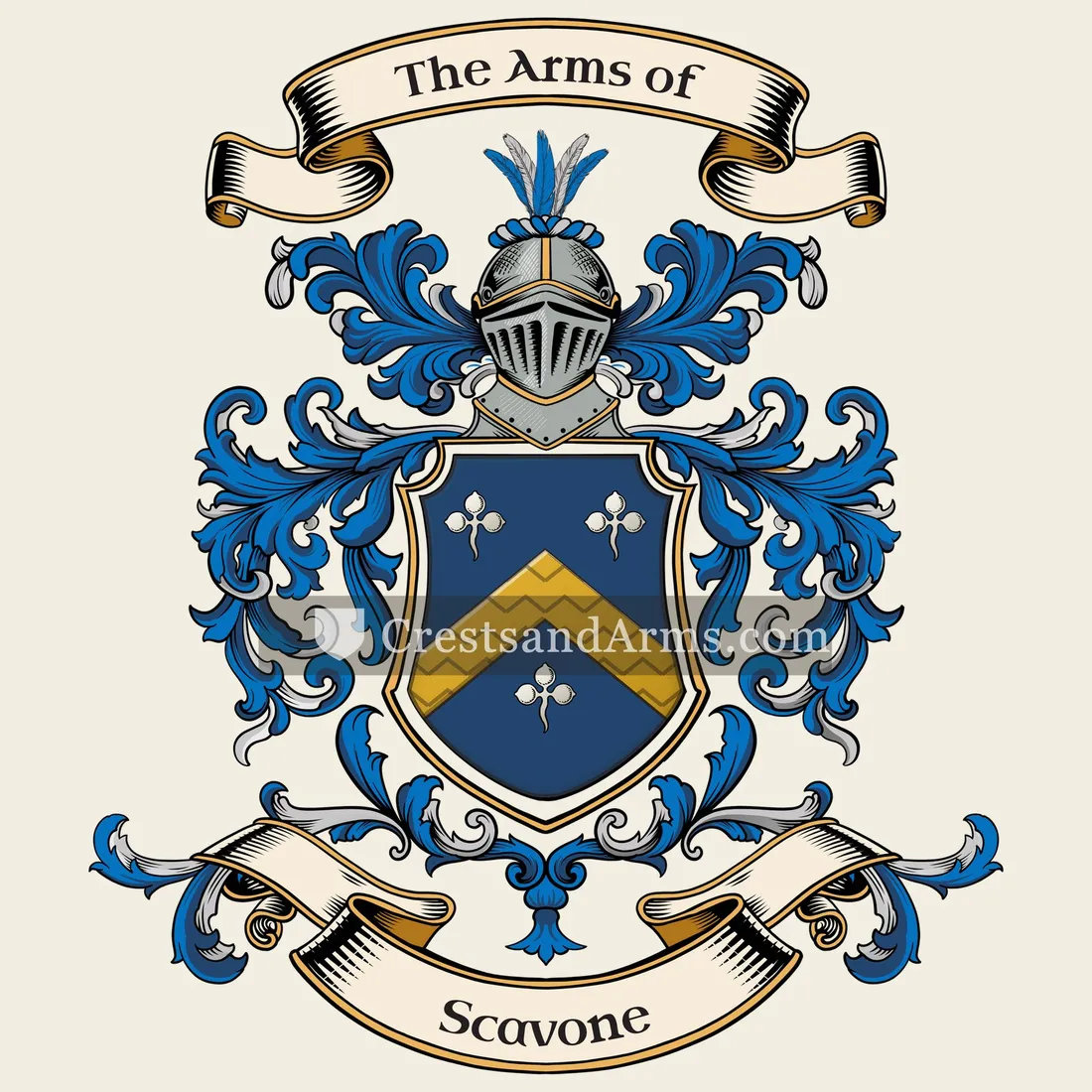
The Scavone arms were recorded in Genève, c. 1745.
This is where the arms were entered in the register. Families often moved to other parts of the country, so the same name can turn up in more than one region.
The body that granted and recorded arms in Switzerland in this period.
How Arms Worked in Switzerland
In Switzerland, coats of arms were not restricted to the nobility and were often adopted by common citizens and families. These symbols were passed down through generations to show family identity. When branches of a family grew, they often changed small details of the design to distinguish their own line from the original group.
Granting authority
Cantonal and civic authorities managed the use of coats of arms within their specific regions and local jurisdictions.
How they got arms
Families typically assumed their own coats of arms based on local custom rather than receiving them from a central monarch.
Where arms were recorded
Arms were recorded in various cantonal and civic registers starting from the fourteenth century throughout the Swiss region.
The family's standing
Recorded among the armigerous families of Switzerland.
Origin & History of the Scavone Family in Switzerland
The Scavone family name carries deep roots that trace back to the mountainous regions of Northern Italy before spreading into neighboring areas like Switzerland. By the year 1745, records confirm that members of the family had established a presence in Genève, a city that served as a vital crossroads for trade and migration during the eighteenth century. The name itself is often linked to the Italian word "scavo," which refers to digging or excavation, suggesting that the earliest ancestors may have been skilled laborers, miners, or farmers who worked the land. As these individuals moved across borders, they brought their distinct heritage into the urban centers of Europe, integrating into the local economy while maintaining their unique family identity. This transition from rural origins to city life in Genève highlights the family's adaptability and their role in the broader movement of people across the continent during the Enlightenment era.
Scavone Meaning & Related Branches
Root word
cavus
Latin term meaning hollow, cavity, or pit.
This name
ScavoneDerived from a topographic descriptor for someone living in a hollow or valley.
also spelled
Savion
Saviyon
Documented Sources
J. B. Rietstap, Armorial Général, Gouda: G. B. van Goor Zonen, 1884–87
Archives d’État de Genève, État civil et registres paroissiaux
Archives d’État de Genève, Registres du Conseil
Emidio De Felice, Dizionario dei cognomi italiani, 1978
Albert Dauzat, Dictionnaire étymologique des noms de famille et prénoms de France, 1951
Digital archive packCoat of arms PNG, gold border print PDF, vector SVG and the certificate of authenticity. Sent to your email in minutes.


 chevronProtection, and faithful service completed
 trefoilPerpetuity, and the Trinity
 chevronProtection, and faithful service completed
 trefoilPerpetuity, and the Trinity