A record of documented arms, meaning and origin, researched for the Schäfer family lines. Documented in 3 countries.
Reg. 4645 · Belgian, T–V
Coat of Arms & Family Crest Details
Symbols on this shield
chevronProtection, and faithful service completed
chiefAuthority, wisdom and dominion
acornAntiquity and strength from small beginnings
eagleNobility, strength and a keen mind
Colours
Blue (Azure)Means: Loyalty and truth
Gold (Or)Means: Generosity
Black (Sable)Means: Constancy
Historical info
Source
J. B. Rietstap, Armorial Général, Gouda: G. B. van Goor Zonen, 1884–87
Blazon (the actual original written record)
“D'azur au chev. d'or, acc. de trois glands effeuillés du même, les queues en bas; au chef d'or, ch. d'une aigle ép. iss. de sa., bq. de gu. Deux cq. cour. C.: 1º un lion iss. et cont. d'or; 1. d'or et de sa.; 2º un vol à l'antique coupé alt. d'azur et d'or, l'azur ch. d'une étoile d'or; 1. d'or et d'azur.”
BelgiumLuxemb, c. 1867
Digital archive packCoat of arms PNG, gold border print PDF, vector SVG and the certificate of authenticity. Sent to your email in minutes.
Map of Belgium showing where the Schäfer arms are recorded
The Schäfer arms were recorded in Luxemb, c. 1867.
This is where the arms were entered in the register. Families often moved to other parts of the country, so the same name can turn up in more than one region.
The body that granted and recorded arms in Belgium in this period.
Leopold II of Belgium
Sovereign of the period
Leopold II of Belgium
1865–1909
Reigning in Belgium when the Schäfer arms are first recorded.
How Arms Worked in Belgium
In Belgium, a coat of arms is considered personal property that is passed down through the male line to legitimate descendants. Families often use the same shield design across generations to show their shared heritage. If a branch of the family wants to change the design, they must apply for an official update to their specific version of the arms.
Granting authority
The Conseil héraldique is the official body that regulates and approves all coats of arms in Belgium.
How they got arms
Families obtain their coats of arms through formal royal grants or by confirming their historical right to use existing designs.
Where arms were recorded
All approved coats of arms are officially recorded in the public registers of the Conseil héraldique since 1844.
The family's standing
Recorded among the armigerous families of Belgium.
Origin & History of the Schäfer Family in Belgium
The surname Schäfer originated in German-speaking regions as an occupational name for a shepherd, reflecting the vital role these individuals played in medieval agricultural society. As families moved across borders, the name spread into neighboring areas including Luxembourg and Belgium. By 1867, records confirm that members of the Schäfer family were established in Luxembourg, which served as a cultural and geographic bridge to the nearby Belgian provinces. During the nineteenth century, the movement of people across these borders was common due to industrial growth and the expansion of trade networks. Families often relocated to find new opportunities in the developing mining and manufacturing sectors of southern Belgium. As these individuals settled into their new communities, they integrated their traditional family name into the local social fabric, helping to establish the surname in the region.
Coat of Arms & Family Crest Details
Symbols on this shield
saltireResolution, and St Andrew's cross
axeThe execution of military duty
Colours
Blue (Azure)Means: Loyalty and truth
Silver (Argent)Means: Peace and sincerity
Historical info
Source
J. B. Rietstap, Armorial Général, Gouda: G. B. van Goor Zonen, 1884–87
Blazon (the actual original written record)
“D'azur à deux hallebardes d'arg., emm. au nat., houppées d'or, passées en saut. Cq. cour. C.: les hallebardes. L. d'arg. et d'azur.”
GermanyBrunswick, c. 1856
Digital archive packCoat of arms PNG, gold border print PDF, vector SVG and the certificate of authenticity. Sent to your email in minutes.
Map of Germany showing where the Schäfer arms are recorded
The Schäfer arms were recorded in Brunswick, c. 1856.
This is where the arms were entered in the register. Families often moved to other parts of the country, so the same name can turn up in more than one region.
The body that granted and recorded arms in Germany in this period.
Frederick William IV of Prussia
Sovereign of the period
Frederick William IV of Prussia
1840–1861
Reigning in Belgium when the Schäfer arms are first recorded.
How Arms Worked in Germany
Prussian heraldry was strictly tied to social rank and noble status rather than being a free choice for every citizen. These symbols were treated as permanent family property that moved through the generations to all legitimate heirs. If a family branch wanted to change their design to stand out, they had to apply for official permission to alter their specific version of the shield.
Granting authority
The Prussian Heroldsamt acted as the central state office that managed and strictly controlled all noble titles and coats of arms.
How they got arms
Families usually obtained their arms through formal royal grants or by proving their long-standing noble status to the state authorities.
Where arms were recorded
All official coats of arms were kept in the rolls of the Prussian Heroldsamt, which functioned from 1706 until 1918.
The family's standing
Recorded among the armigerous families of Germany.
Origin & History of the Schäfer Family in Germany
The surname Schäfer is a classic example of an occupational name that emerged during the Middle Ages in German-speaking regions. Derived from the Middle High German word "schāf," which means sheep, the name was originally used to identify a shepherd or a person who managed a flock. As surnames became mandatory for tax and census purposes, families often adopted the name based on their primary trade. By the time records place your ancestors in Brunswick in 1856, the name had been well-established across Germany for centuries. During this era, Brunswick was a major center for trade and agriculture, making it a logical place for a family with roots in pastoral work to settle and grow. The name reflects the deep connection between the German people and their rural landscape, as the role of the shepherd was vital to the local economy and the survival of village communities.
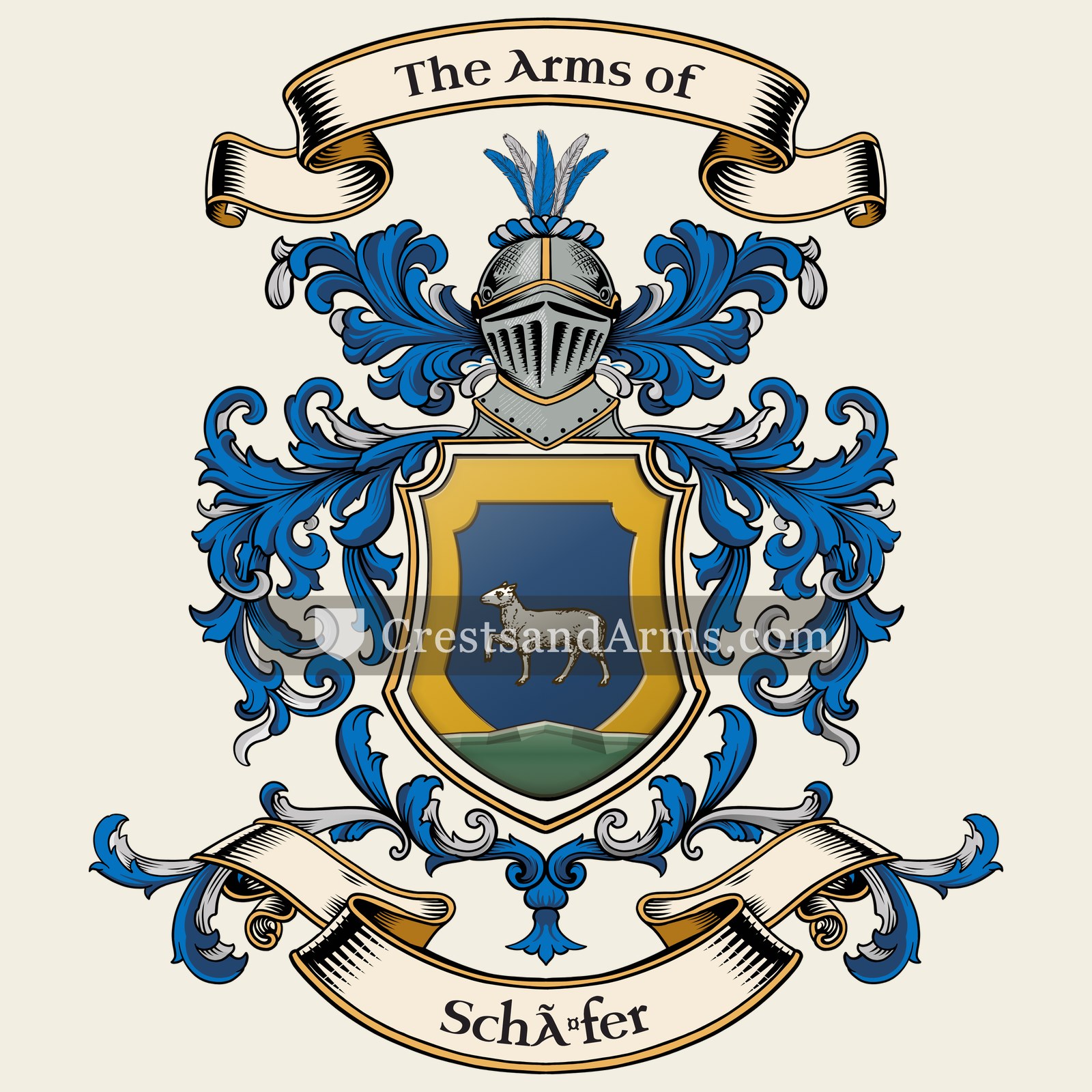
Coat of Arms & Family Crest Details
Symbols on this shield
mountThe ground held, and steadfastness upon it
lambGentleness, patience and faith
Colours
Blue (Azure)Means: Loyalty and truth
Gold (Or)Means: Generosity
Green (Vert)Means: Hope
Silver (Argent)Means: Peace and sincerity
Historical info
Source
J. B. Rietstap, Armorial Général, Gouda: G. B. van Goor Zonen, 1884–87
Blazon (the actual original written record)
“D'azur à un agneau d'arg., pass. sur une terrasse de sin., tenant une houlette d'or, posée sur son épaule; à la bord. d'or. C.: l'agneau, iss. L. d'arg. et d'azur.”
SwitzerlandBâle, c. 1745
Digital archive packCoat of arms PNG, gold border print PDF, vector SVG and the certificate of authenticity. Sent to your email in minutes.
Map of Switzerland showing where the Schäfer arms are recorded
The Schäfer arms were recorded in Bâle, c. 1745.
This is where the arms were entered in the register. Families often moved to other parts of the country, so the same name can turn up in more than one region.
The body that granted and recorded arms in Switzerland in this period.
How Arms Worked in Switzerland
In Switzerland, coats of arms were not restricted to the nobility and were often adopted by common citizens and families. These symbols were passed down through generations to show family identity. When branches of a family grew, they often changed small details of the design to distinguish their own line from the original group.
Granting authority
Cantonal and civic authorities managed the use of coats of arms within their specific regions and local jurisdictions.
How they got arms
Families typically assumed their own coats of arms based on local custom rather than receiving them from a central monarch.
Where arms were recorded
Arms were recorded in various cantonal and civic registers starting from the fourteenth century throughout the Swiss region.
The family's standing
Recorded among the armigerous families of Switzerland.
Origin & History of the Schäfer Family in Switzerland
The surname Schäfer is a classic occupational name that originated from the Middle High German word *schâfære*, which translates to shepherd. In the context of Switzerland, the name reflects the vital role that livestock farming played in the alpine economy for centuries. By the time members of the family were documented in Basel in 1745, the name had already been established across German-speaking regions as a common identifier for those who tended flocks. In the urban environment of Basel, families carrying this name often transitioned from rural agricultural work into the city’s thriving trade and craft guilds. This migration was typical for the period, as families moved to centers of commerce to seek new opportunities in manufacturing or local governance. The presence of the Schäfer name in 18th-century Basel serves as a bridge between the ancient tradition of pastoral life and the growing professional class of the Swiss Enlightenment.
Related Branches & Arms
Root word
scaf
Old High German term referring to a vessel or container.
This name
SchäferAn occupational surname for a shepherd or someone who tends to sheep.
also spelled
Schaffer
Schaeffer
Shafer
Related arms
Andringasimilar arms
Bachof d'Echtsimilar arms
Broemsimilar arms
Schaeffervariant spelling
Documented Sources
J. B. Rietstap, Armorial Général, Gouda: G. B. van Goor Zonen, 1884–87
Heintz, Paul, Luxemburger Familiennamen, 1988
Luxembourg National Archives, État civil, Registres de population, 1867
Mansion, Joseph, Les noms de famille en Belgique, 1935
Digital archive packCoat of arms PNG, gold border print PDF, vector SVG and the certificate of authenticity. Sent to your email in minutes.


 chevronProtection, and faithful service completed
 chiefAuthority, wisdom and dominion
 acornAntiquity and strength from small beginnings
 eagleNobility, strength and a keen mind
 chevronProtection, and faithful service completed
 chiefAuthority, wisdom and dominion
 acornAntiquity and strength from small beginnings
 eagleNobility, strength and a keen mind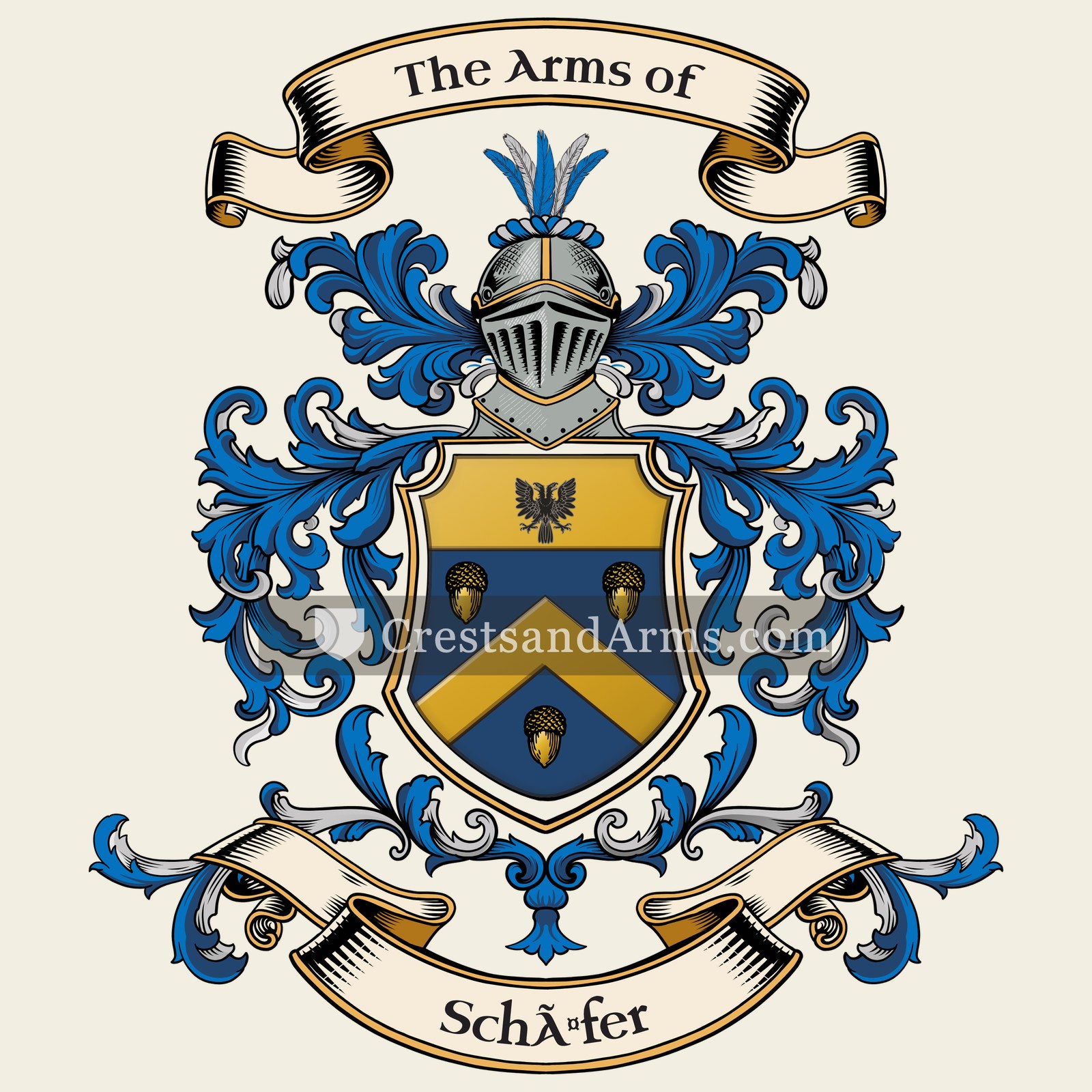


 saltireResolution, and St Andrew's cross
 axeThe execution of military duty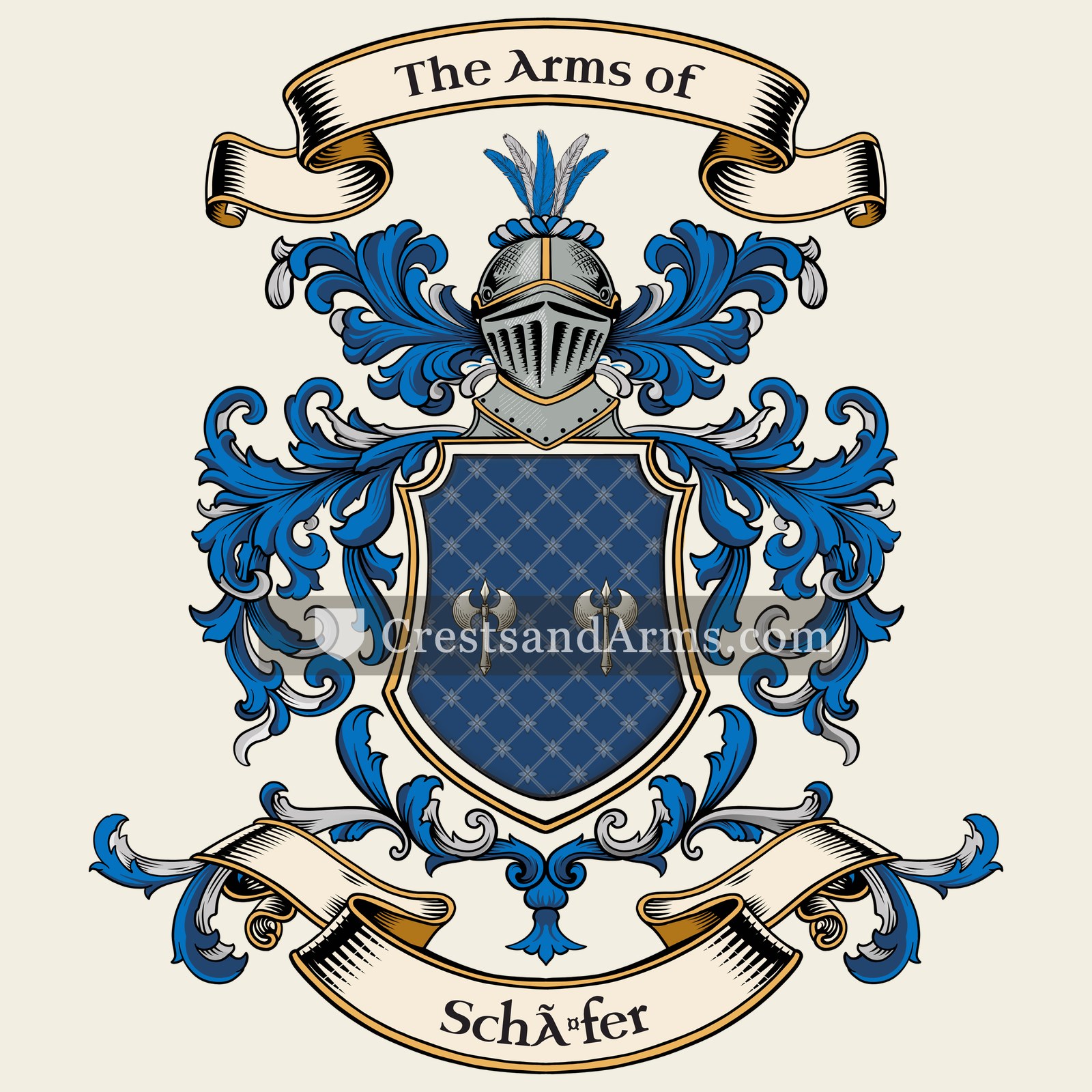


 mountThe ground held, and steadfastness upon it
 lambGentleness, patience and faith