Map of Netherlands showing where the Schaffer arms are recorded
The Schaffer arms were recorded in Netherlands, c. 1815.
Arms such as these were typically recorded in Friesland.
Friesland was low, wet country on the northern coast of the Netherlands, farmed by families who had held the same land for centuries. Free landholders were unusually common there, and a free landholder could carry arms.
This is where the arms were entered in the register. Families often moved to other parts of the country, so the same name can turn up in more than one region.
Region
Friesland
First recorded
1815
Granting Authority for the Schaffer Arms
Hoge Raad van Adel
Photograph made by me · CC BY-SA 3.0
The body that granted and recorded arms in Netherlands in this period.
William I of the Netherlands
Sovereign of the period
William I of the Netherlands
1815–1840
Reigning in Netherlands when the Schaffer arms are first recorded.
How Arms Worked in Netherlands
In the Netherlands, coats of arms were often used by noble families and those who held specific public offices. These arms were passed down through the generations to legitimate descendants. Younger branches of a family usually kept the original design without needing to add special marks. This system ensured that the family identity remained clear and consistent over many years.
Granting authority
The Hoge Raad van Adel is the official body that regulates and manages noble titles and coats of arms in the Netherlands.
How they got arms
Families typically obtained their coats of arms through official royal grants or by proving their long-standing historical use of the symbols.
Where arms were recorded
Coats of arms are officially recorded in the registers held by the Hoge Raad van Adel, which began its work in 1814.
The family's standing
Recorded among the armigerous families of Netherlands.
Origin & History of the Schaffer Family in Netherlands
The surname Schaffer has deep roots in the Germanic linguistic tradition, where it originally functioned as an occupational name for a steward or a manager of a household. By the time the family appeared in the historical records of Friesland in 1815, the name had already evolved from a professional title into a stable hereditary surname. In the context of the Netherlands, the presence of the Schaffer family in the northern province of Friesland during the early nineteenth century suggests a migration pattern common among families moving across the porous borders of the Low Countries and the German states. During this period, the Napoleonic era had recently concluded, and the Dutch government began enforcing stricter civil registration laws. These official records provide a clear snapshot of the family as they established their roots in the Frisian landscape, transitioning from their ancestral origins into the fabric of local Dutch society.
Coat of Arms & Family Crest Details
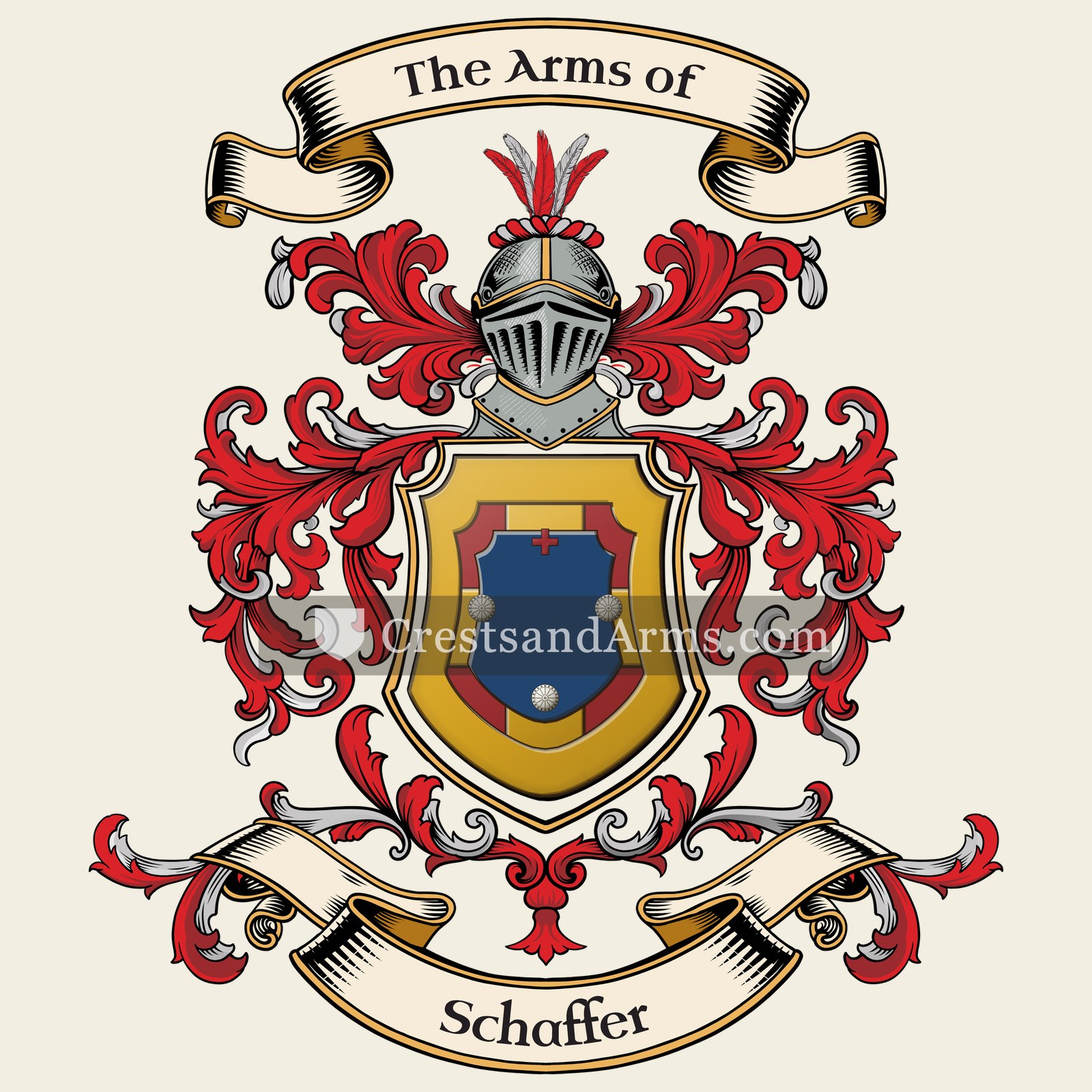
Symbols on this shield
fessThe military belt, and readiness to serve
chevronProtection, and faithful service completed
mountThe ground held, and steadfastness upon it
roseThe seventh son, and beauty with grace
lambGentleness, patience and faith
Colours
Silver (Argent)Means: Peace and sincerity
Red (Gules)Means: Military strength
Gold (Or)Means: Generosity
Historical info
Source
J. B. Rietstap, Armorial Général, Gouda: G. B. van Goor Zonen, 1884–87
Blazon (the actual original written record)
“Coupé: au 1 d'arg. à deux fasces de gu., ch. de trois roses du champ, 2 et 1; au chev. d'or, br. sur le tout; au 2 de gu. à un agneau d'arg., pass. sur un tertre d'or. Cq. cour. C.: l'agneau iss.; entre deux prob. coupées, à dextre d'or sur gu., à sen. de gu. sur arg. L. conformes aux émaux des prob. [Armes assignées à Jobst S., arrière-petit-fils de Pierre-Schäffer ou Schöffer de Gernsheim, gendre de Jean Fust, le collaborateur de Jean Guttenberg.]”
GermanyHalle Saxe, c. 1569
Digital archive packCoat of arms PNG, gold border print PDF, vector SVG and the certificate of authenticity. Sent to your email in minutes.
Map of Germany showing where the Schaffer arms are recorded
The Schaffer arms were recorded in Halle Saxe, c. 1569.
This is where the arms were entered in the register. Families often moved to other parts of the country, so the same name can turn up in more than one region.
The body that granted and recorded arms in Germany in this period.
Maximilian II, Holy Roman Emperor
Sovereign of the period
Maximilian II, Holy Roman Emperor
1564–1576
Reigning in Netherlands when the Schaffer arms are first recorded.
How Arms Worked in Germany
In the Holy Roman Empire, coats of arms were often granted to individuals by the Emperor or his representatives. These arms were then passed down through the generations to all legitimate descendants of the original holder. Younger branches of a family usually kept the same shield design without needing to change it, as the arms belonged to the entire lineage.
Granting authority
The Holy Roman Emperor held the sole power to grant new coats of arms throughout his vast imperial territories.
How they got arms
Families typically obtained their coats of arms through a formal imperial grant or by proving their noble status to the authorities.
Where arms were recorded
These grants were officially recorded in the Imperial Chancery registers, which began keeping formal records of such honors during the Middle Ages.
The family's standing
Recorded among the armigerous families of Germany.
Origin & History of the Schaffer Family in Germany
The name Schaffer is a classic German occupational surname that originated during the Middle Ages. It is derived from the Middle High German word "schaffære," which referred to a steward, a manager of an estate, or a person in charge of household supplies. Because this role was essential to the functioning of medieval manors and monasteries, the name appeared independently in many different regions as families took on these administrative duties. By the time records confirm the presence of the Schaffer family in the city of Halle in 1569, the name was already well-established across German-speaking lands. During this era, Halle was a prominent center for trade and salt production, making it a likely place for a family of stewards to settle and manage local resources. As the family grew, they became part of the social fabric of the region, reflecting the transition from feudal management roles to the developing urban middle class of the sixteenth century.
Coat of Arms & Family Crest Details
Symbols on this shield
cross symbolChristian faith and service
fessThe military belt, and readiness to serve
saltireResolution, and St Andrew's cross
roundelA coin, and one who has been to the crusades
Colours
Red (Gules)Means: Military strength
Gold (Or)Means: Generosity
Blue (Azure)Means: Loyalty and truth
Silver (Argent)Means: Peace and sincerity
Historical info
Source
J. B. Rietstap, Armorial Général, Gouda: G. B. van Goor Zonen, 1884–87
Blazon (the actual original written record)
“De gu. à la croix d'or, ch. d'un filet en croix de gu.; à la bord. d'or. Sur le tout d'azur à la fasce vivrée d'arg. (en forme de W), acc. de trois boules du même. Deux cq. cour. C.: 1º une rose de gu., entre un vol de sa., chaque aile ch. d'une étoile d'or; l. d'or et de gu.; 2º deux guidons, les hampes passées en saut., celui à dextre d'azur à une fasce vivrée d'arg. (en forme de W) et celui à sen. d'or à une croisette de gu.; l. d'arg. et d'azur.”
Austriac. 1735
Digital archive packCoat of arms PNG, gold border print PDF, vector SVG and the certificate of authenticity. Sent to your email in minutes.
Map of Austria showing where the Schaffer arms are recorded
The Schaffer arms were recorded in Austria, c. 1735.
Arms such as these were typically recorded in Tyrol.
Tyrol was mountain country in western Austria, where the valleys were held by families who had been there a very long time. Old tenure counted for more than money, and old families carried arms.
This is where the arms were entered in the register. Families often moved to other parts of the country, so the same name can turn up in more than one region.
Region
Tyrol
First recorded
1735
Granting Authority for the Schaffer Arms
Imperial and Royal chancery
Sodacan · CC BY-SA 3.0
The body that granted and recorded arms in Austria in this period.
Charles VI, Holy Roman Emperor
Sovereign of the period
Charles VI, Holy Roman Emperor
1711–1740
Reigning in Netherlands when the Schaffer arms are first recorded.
How Arms Worked in Austria
Austrian coats of arms were often linked directly to noble titles granted by the Emperor. These symbols belonged to the entire family line rather than just one individual. When a family grew, new branches kept the original design without needing to change it. This system allowed all members of a noble house to share the same identity across many generations.
Granting authority
The Imperial and Royal chancery managed all heraldic matters and controlled the official granting of arms throughout the Austrian lands.
How they got arms
Families typically received their arms through a formal imperial decree that often accompanied the elevation of a person to noble status.
Where arms were recorded
Official records of these grants were kept in the Imperial Register of Nobility which began its formal documentation process in 1453.
The family's standing
Recorded among the armigerous families of Austria.
Origin & History of the Schaffer Family in Austria
The surname Schaffer is rooted in the occupational history of the German-speaking regions of Europe, originating as a descriptive term for a steward or a manager of a household or estate. In the rugged landscape of the Austrian Tyrol, where the family was documented as early as 1735, the name likely identified individuals who held positions of responsibility within local agricultural or administrative systems. Life in the Tyrol during the eighteenth century was shaped by the mountainous terrain and the influence of the Habsburg monarchy, which required organized oversight of land and resources. Families bearing this name were often integrated into the fabric of village life, serving as essential links between the landholders and the working community. As these families settled into the alpine valleys, the name became a permanent fixture of the local population, reflecting a long tradition of service and stewardship in the region.
Related Branches & Arms
Root word
scap
A vessel, bowl, or cup used for measuring or holding.
This name
SchafferAn occupational surname for a steward, cupbearer, or someone who managed household provisions.
also spelled
Schaeffer
Schafer
Shafer
Shaffer
Related arms
Schaeffervariant spelling
Schäfervariant spelling
Barthrecorded with Schaffer, same area
Beckerrecorded with Schaffer, same area
Documented Sources
J. B. Rietstap, Armorial Général, Gouda: G. B. van Goor Zonen, 1884–87
AlleFriezen, Burgerlijke Stand Friesland (1811–1950)
Nationaal Archief, Bevolkingsregisters van de provincie Friesland
Van der Schaar, J., Woordenboek van voornamen, 1964
Debrabandere, Frans, Woordenboek van de familienamen in België en Noord-Frankrijk, 1993
Digital archive packCoat of arms PNG, gold border print PDF, vector SVG and the certificate of authenticity. Sent to your email in minutes.


 wolfReward from long service and hard work
 duckResourcefulness on land and water
 wolfReward from long service and hard work
 duckResourcefulness on land and water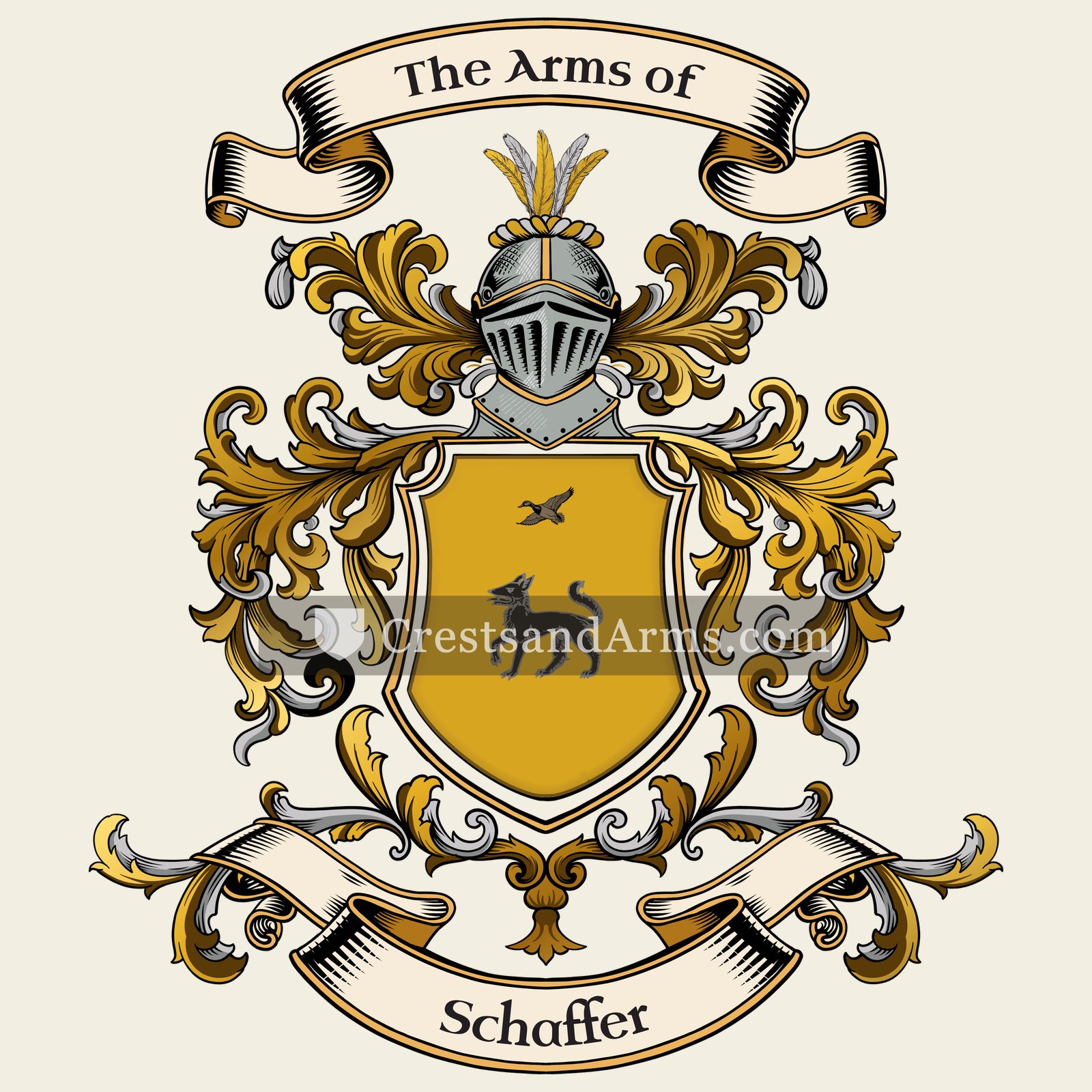


 fessThe military belt, and readiness to serve
 chevronProtection, and faithful service completed
 mountThe ground held, and steadfastness upon it
 roseThe seventh son, and beauty with grace
 lambGentleness, patience and faith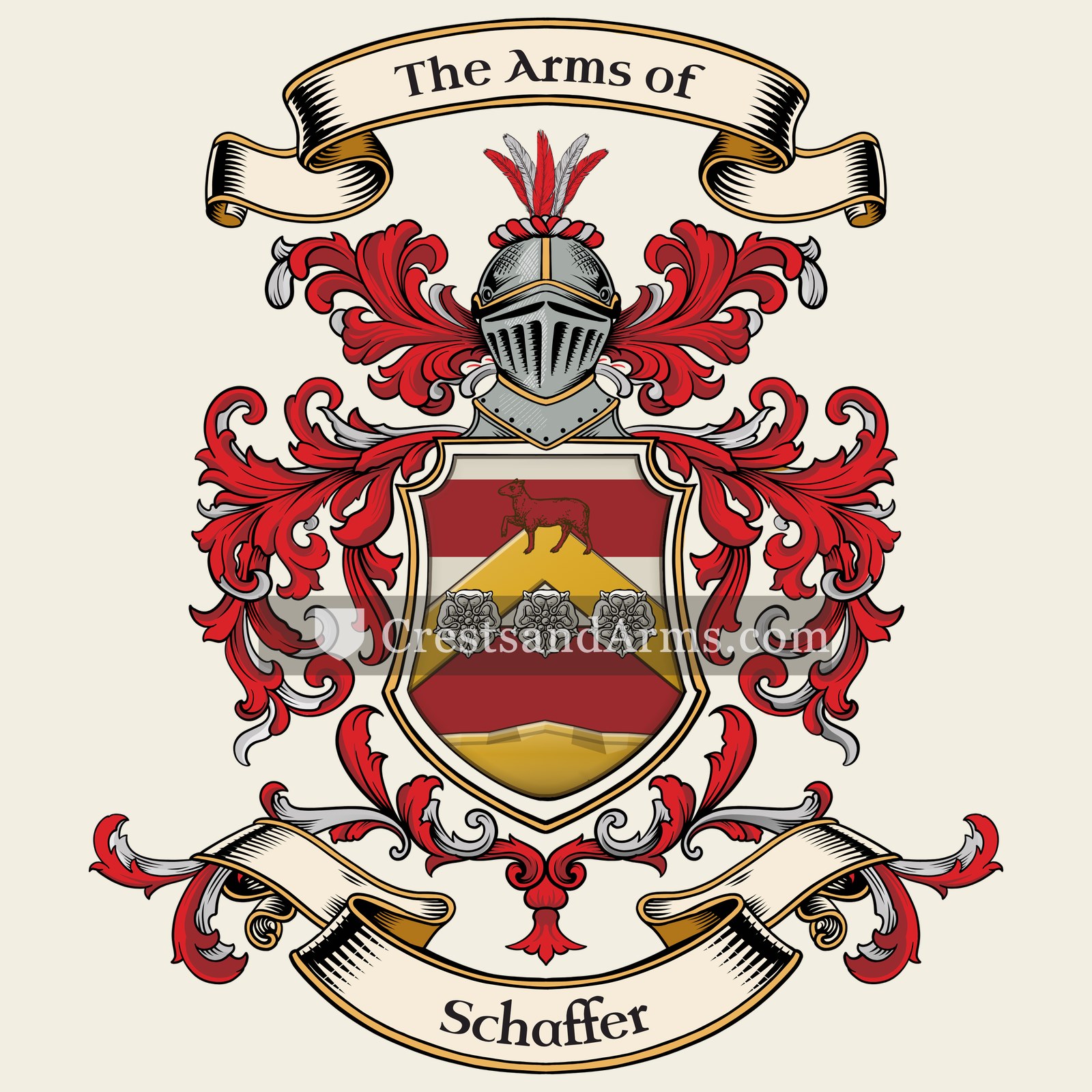


 cross symbolChristian faith and service
 saltireResolution, and St Andrew's cross
 roundelA coin, and one who has been to the crusades