Map of Germany showing where the Schark arms are recorded
The Schark arms were recorded in Aalen Wurt, c. 1765.
This is where the arms were entered in the register. Families often moved to other parts of the country, so the same name can turn up in more than one region.
The body that granted and recorded arms in Germany in this period.
Francis I, Holy Roman Emperor
Sovereign of the period
Francis I, Holy Roman Emperor
1745–1765
Reigning in Germany when the Schark arms are first recorded.
How Arms Worked in Germany
In the Holy Roman Empire, coats of arms were often granted to individuals by the Emperor or his representatives. These arms were then passed down through the generations to all legitimate descendants of the original holder. Younger branches of a family usually kept the same shield design without needing to change it, as the arms belonged to the entire lineage.
Granting authority
The Holy Roman Emperor held the sole power to grant new coats of arms throughout his vast imperial territories.
How they got arms
Families typically obtained their coats of arms through a formal imperial grant or by proving their noble status to the authorities.
Where arms were recorded
These grants were officially recorded in the Imperial Chancery registers, which began keeping formal records of such honors during the Middle Ages.
The family's standing
Recorded among the armigerous families of Germany.
Origin & History of the Schark Family in Germany
The family name Schark finds its historical roots in the southwestern region of Germany, specifically within the state of Württemberg. By the mid-18th century, records confirm that members of the family were established in the town of Aalen. During this period, Aalen was a Free Imperial City, which meant it operated with a high degree of independence under the Holy Roman Empire. Families living in this area were often involved in the local trades or agriculture that supported the town's economy. The name itself likely evolved from regional dialects common to the Swabian Jura mountain range. As the family lived in Aalen during the 1760s, they would have experienced the daily life of a growing market town that served as a vital hub for regional commerce and craft guilds. This early presence in Aalen suggests that the family was part of the stable, working population that helped define the social fabric of the region before the major political shifts of the 19th century.
Meaning of the Schark family crest colors & symbols
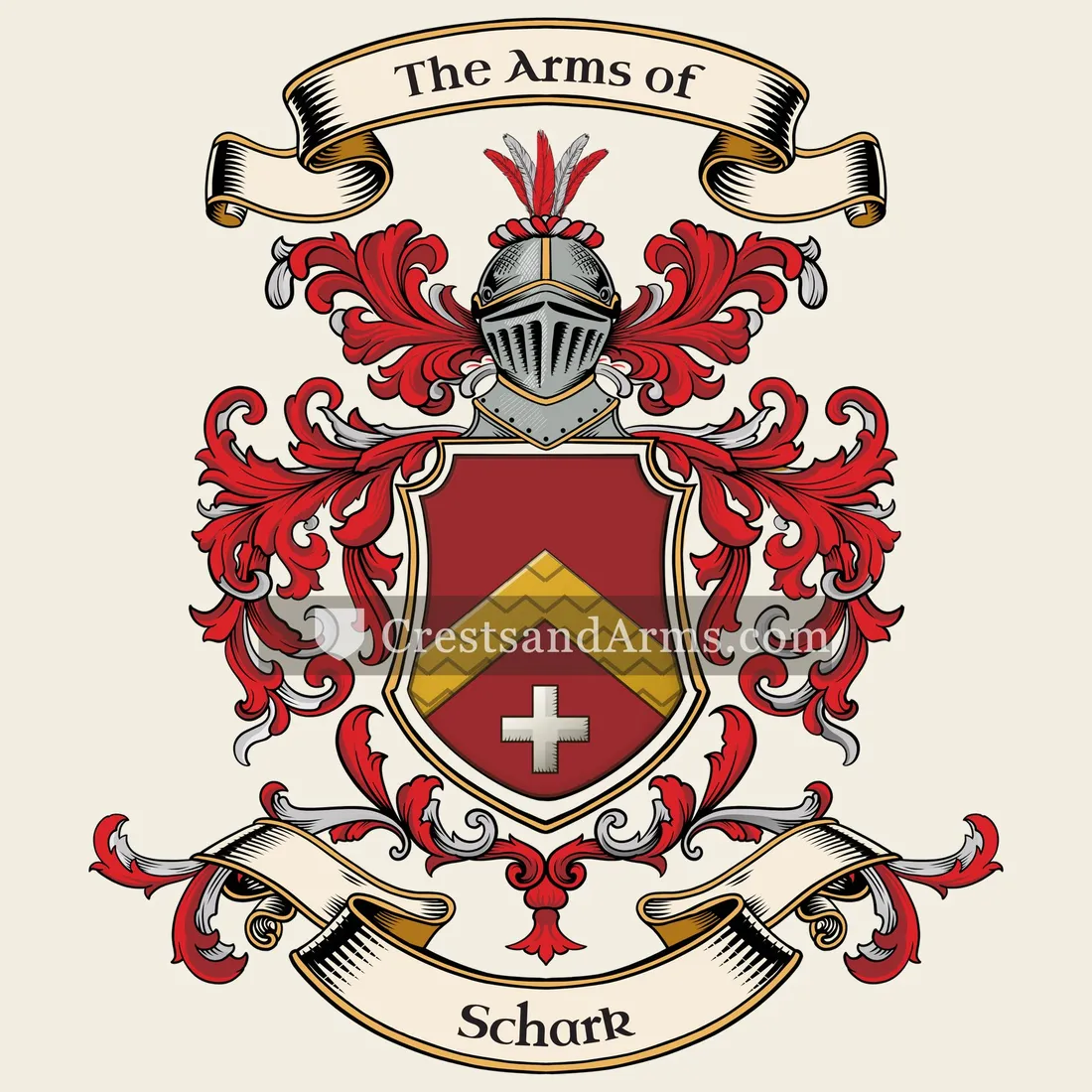
Symbols on this shield
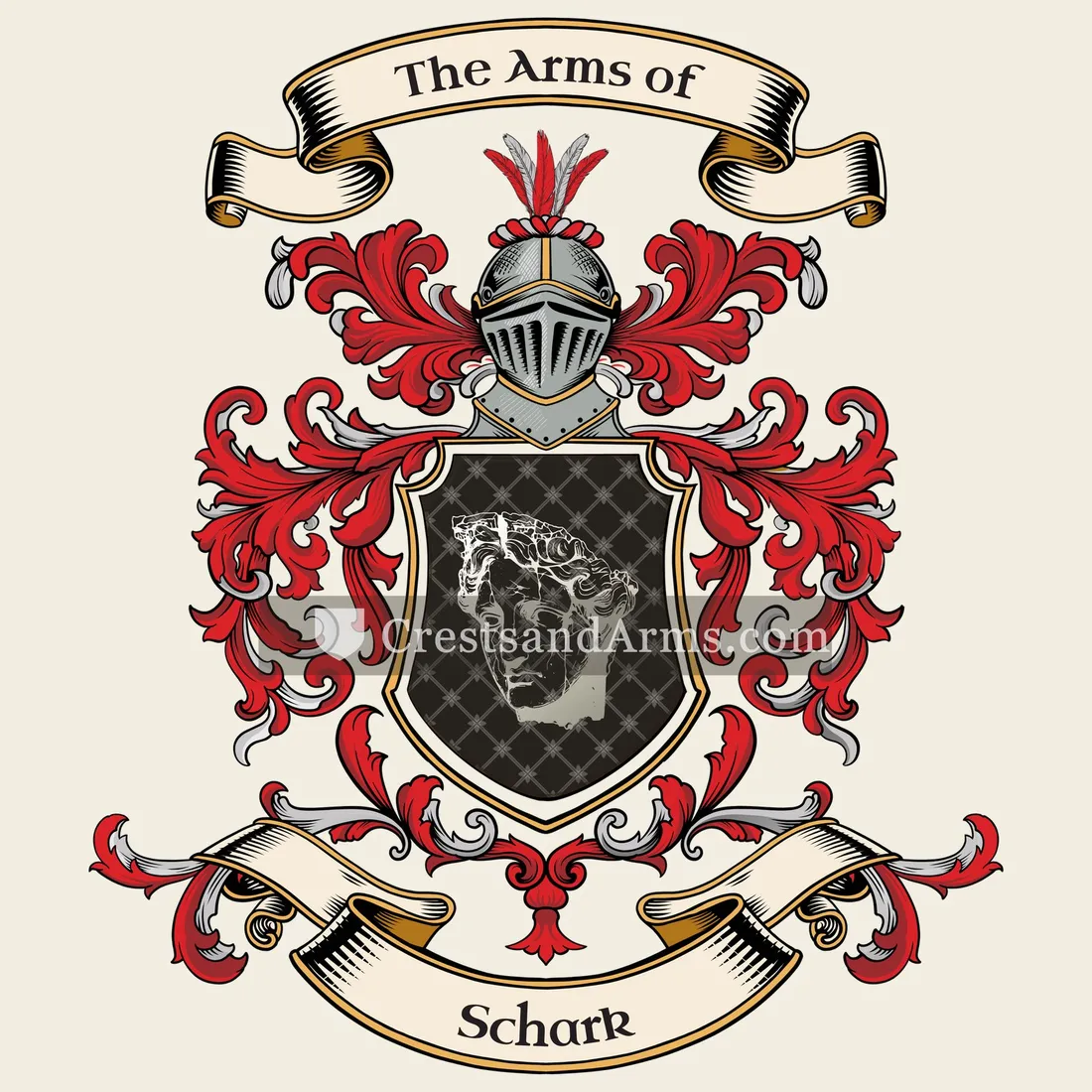
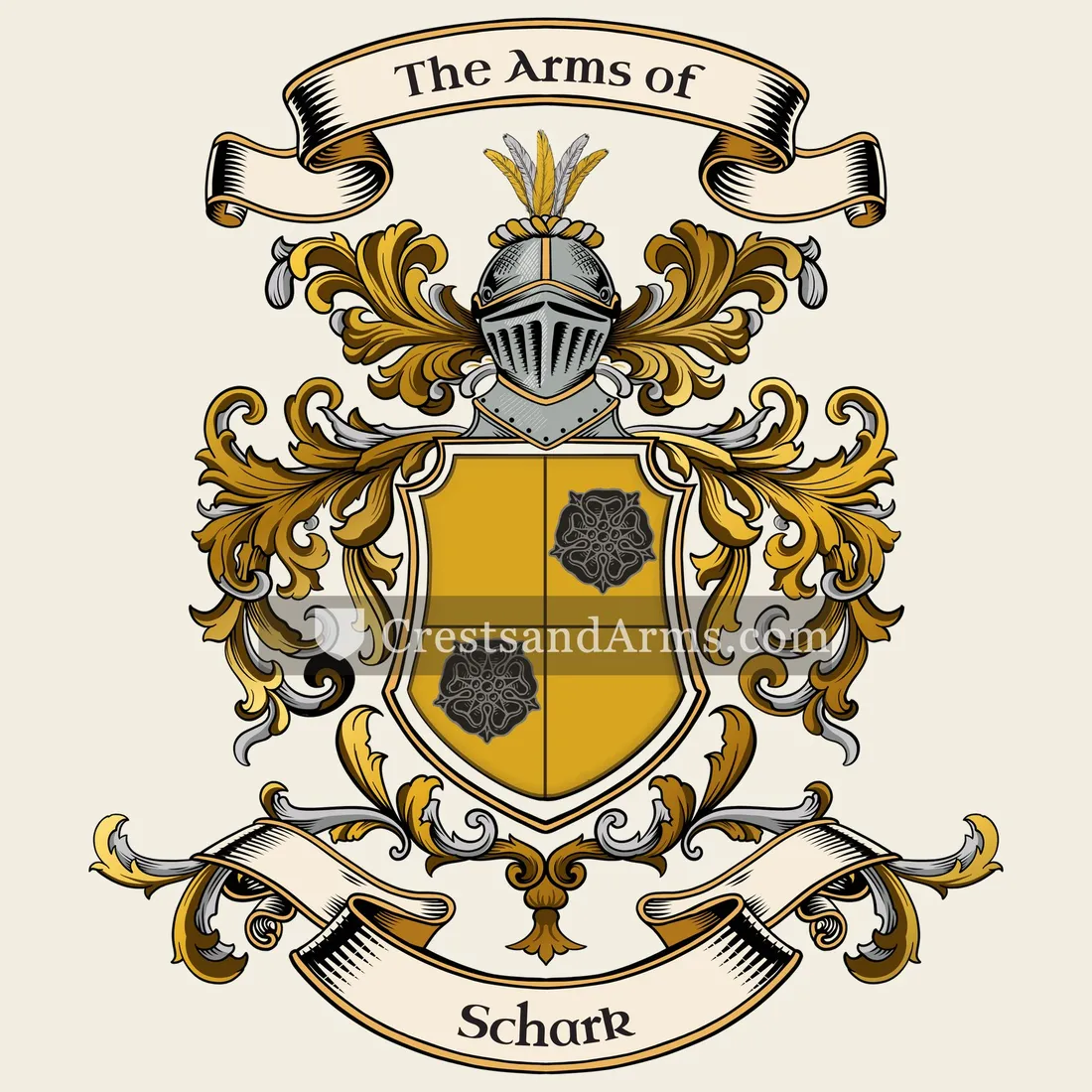
roseThe seventh son, and beauty with grace
Colours
Gold (Or)Means: Generosity
Black (Sable)Means: Constancy
Historical info
Source
J. B. Rietstap, Armorial Général, Gouda: G. B. van Goor Zonen, 1884–87
Blazon (the actual original written record)
“Ec.: aux 1 et 4 d'or à un buste d'homme, hab. d'or, cour. de feuillage de sin.; le champ chapé-ployé de sa.; aux 2 et 3 d'or à une rose de sa. Cq. cour. C.: un homme iss., cour. de feuillage, hab. de sa., au rabat d'or, ch. sur l'estomac d'une rose d'or et supp. de sa main dextre deux triangles vidés de sa., entrelacés en forme d'étoile; entre un vol d'or, chaque aile ch. d'une rose de sa.”
Austriac. 1772
Digital archive packCoat of arms PNG, gold border print PDF, vector SVG and the certificate of authenticity. Sent to your email in minutes.
Map of Austria showing where the Schark arms are recorded
The Schark arms were recorded in Austria, c. 1772.
Arms such as these were typically recorded in Tyrol.
Tyrol was mountain country in western Austria, where the valleys were held by families who had been there a very long time. Old tenure counted for more than money, and old families carried arms.
This is where the arms were entered in the register. Families often moved to other parts of the country, so the same name can turn up in more than one region.
Region
Tyrol
First recorded
1772
Granting Authority for the Schark Arms
Imperial and Royal chancery
Sodacan · CC BY-SA 3.0
The body that granted and recorded arms in Austria in this period.
Joseph II, Holy Roman Emperor
Sovereign of the period
Joseph II, Holy Roman Emperor
1765–1790
Reigning in Germany when the Schark arms are first recorded.
How Arms Worked in Austria
Austrian coats of arms were often linked directly to noble titles granted by the Emperor. These symbols belonged to the entire family line rather than just one individual. When a family grew, new branches kept the original design without needing to change it. This system allowed all members of a noble house to share the same identity across many generations.
Granting authority
The Imperial and Royal chancery managed all heraldic matters and controlled the official granting of arms throughout the Austrian lands.
How they got arms
Families typically received their arms through a formal imperial decree that often accompanied the elevation of a person to noble status.
Where arms were recorded
Official records of these grants were kept in the Imperial Register of Nobility which began its formal documentation process in 1453.
The family's standing
Recorded among the armigerous families of Austria.
Origin & History of the Schark Family in Austria
The family name Schark has deep roots in the rugged landscape of the Austrian Tyrol, where records confirm members of the family were established by 1772. During this period, the region was characterized by small, isolated mountain communities where families often identified themselves by their trade or their specific location within a valley. The name likely evolved as a descriptive term for those living near sharp mountain ridges or rocky outcrops, as the local dialect often used variations of this sound to describe jagged terrain. Life in 18th-century Tyrol was defined by strict adherence to local parish records and agricultural traditions, meaning the Schark family was likely deeply connected to the land and the seasonal rhythms of high-altitude farming. By keeping detailed baptismal and marriage registers, these early ancestors helped cement the name within the social fabric of the Alpine villages, allowing the family line to persist through generations of regional change.
Meaning of the Schark family crest colors & symbols
Symbols on this shield
cross symbolChristian faith and service
Colours
Red (Gules)Means: Military strength
Gold (Or)Means: Generosity
Silver (Argent)Means: Peace and sincerity
Historical info
Source
J. B. Rietstap, Armorial Général, Gouda: G. B. van Goor Zonen, 1884–87
Blazon (the actual original written record)
“De gu. à un V d'or, surm. d'une croisette pattée d'arg. C.: un buste de More, hab. de sa., ch. des meubles de l'écu, le rabat d'or, tort. d'arg. L. d'or et de sa.”
SwitzerlandBâle, c. 1745
Digital archive packCoat of arms PNG, gold border print PDF, vector SVG and the certificate of authenticity. Sent to your email in minutes.
Map of Switzerland showing where the Schark arms are recorded
The Schark arms were recorded in Bâle, c. 1745.
This is where the arms were entered in the register. Families often moved to other parts of the country, so the same name can turn up in more than one region.
The body that granted and recorded arms in Switzerland in this period.
How Arms Worked in Switzerland
In Switzerland, coats of arms were not restricted to the nobility and were often adopted by common citizens and families. These symbols were passed down through generations to show family identity. When branches of a family grew, they often changed small details of the design to distinguish their own line from the original group.
Granting authority
Cantonal and civic authorities managed the use of coats of arms within their specific regions and local jurisdictions.
How they got arms
Families typically assumed their own coats of arms based on local custom rather than receiving them from a central monarch.
Where arms were recorded
Arms were recorded in various cantonal and civic registers starting from the fourteenth century throughout the Swiss region.
The family's standing
Recorded among the armigerous families of Switzerland.
Origin & History of the Schark Family in Switzerland
The history of the Schark family in Switzerland is deeply rooted in the urban landscape of Basel during the mid-eighteenth century. By 1745, records indicate that members of the family were already established residents of this bustling trade center. At that time, Basel was a vital hub for commerce and craftsmanship, drawing families into its guild-based social structure. The name likely emerged from regional linguistic variations common in the Upper Rhine area, where surnames often reflected a person’s occupation or a specific physical trait. As the family integrated into the local community, they participated in the civic life of the city, navigating the complex regulations that governed residency and trade rights for citizens of the Swiss Confederation. Through these early generations, the Schark family contributed to the steady growth of Basel as it transitioned from a medieval stronghold into a center of European intellectual and economic exchange.
Schark Meaning & Related Branches
Root word
Schar
A sharp edge, blade, or plowshare.
This name
ScharkAn occupational surname for a maker of blades or a plowman.
also spelled
Swartz
Swars
Schwartz
Documented Sources
J. B. Rietstap, Armorial Général, Gouda: G. B. van Goor Zonen, 1884–87
Stadtarchiv Aalen, Kirchenbücher der evangelischen Kirchengemeinde Aalen, 1765
Hermann Baumhauer, Aalen: Geschichte und Gesicht einer Stadt, 1978
Württembergisches Landesarchiv, Bestand A 502: Familien- und Sippenkundliche Sammlungen, 18th century
Digital archive packCoat of arms PNG, gold border print PDF, vector SVG and the certificate of authenticity. Sent to your email in minutes.


 womanGrace, and the founding of a house
 womanGrace, and the founding of a house


 roseThe seventh son, and beauty with grace


 cross symbolChristian faith and service