Map of France showing where the Schaub arms are recorded
The Schaub arms were recorded in Alsace, c. 1663.
Alsace lay between France and the German lands and belonged to both at different times. Its families held small estates and served whichever side ruled, and men who served in arms carried arms of their own.
This is where the arms were entered in the register. Families often moved to other parts of the country, so the same name can turn up in more than one region.
The body that granted and recorded arms in France in this period.
Louis XIV of France
Sovereign of the period
Louis XIV of France
1643–1715
Reigning in France when the Schaub arms are first recorded.
How Arms Worked in France
In France, a coat of arms was a mark of honor that passed down through the male line to all legitimate descendants. Families often used the same shield without changes to show their shared heritage. If a branch wanted to stand out, they could add a small mark to their shield to show their specific place in the family tree.
Granting authority
The Juge d'armes de France acted as the official authority that regulated and verified coats of arms across the country.
How they got arms
Families typically inherited their arms from ancestors, though they could also receive them through royal grants or by proving their noble status.
Where arms were recorded
Coats of arms were officially recorded in the Armorial Général de France, which began its main collection in the year 1696.
The family's standing
Recorded among the armigerous families of Alsace.
Origin & History of the Schaub Family in France
The family name Schaub has deep roots in the Alsace region of France, where records confirm members of the family were living as early as 1663. During the seventeenth century, Alsace was a unique cultural crossroads located between the French kingdom and the German states. The name itself is thought to originate from Middle High German, likely referring to a person who worked with bundles of grain or straw. Because Alsace changed political hands frequently during this era, families like the Schaubs often navigated a blend of German and French customs. By settling in this borderland, the early generations of the Schaub family became part of a resilient community that helped shape the distinct identity of the Alsatian people. They lived through a period of significant transition as the region moved toward becoming a permanent part of France, reflecting the diverse linguistic and social history of the Rhine valley.
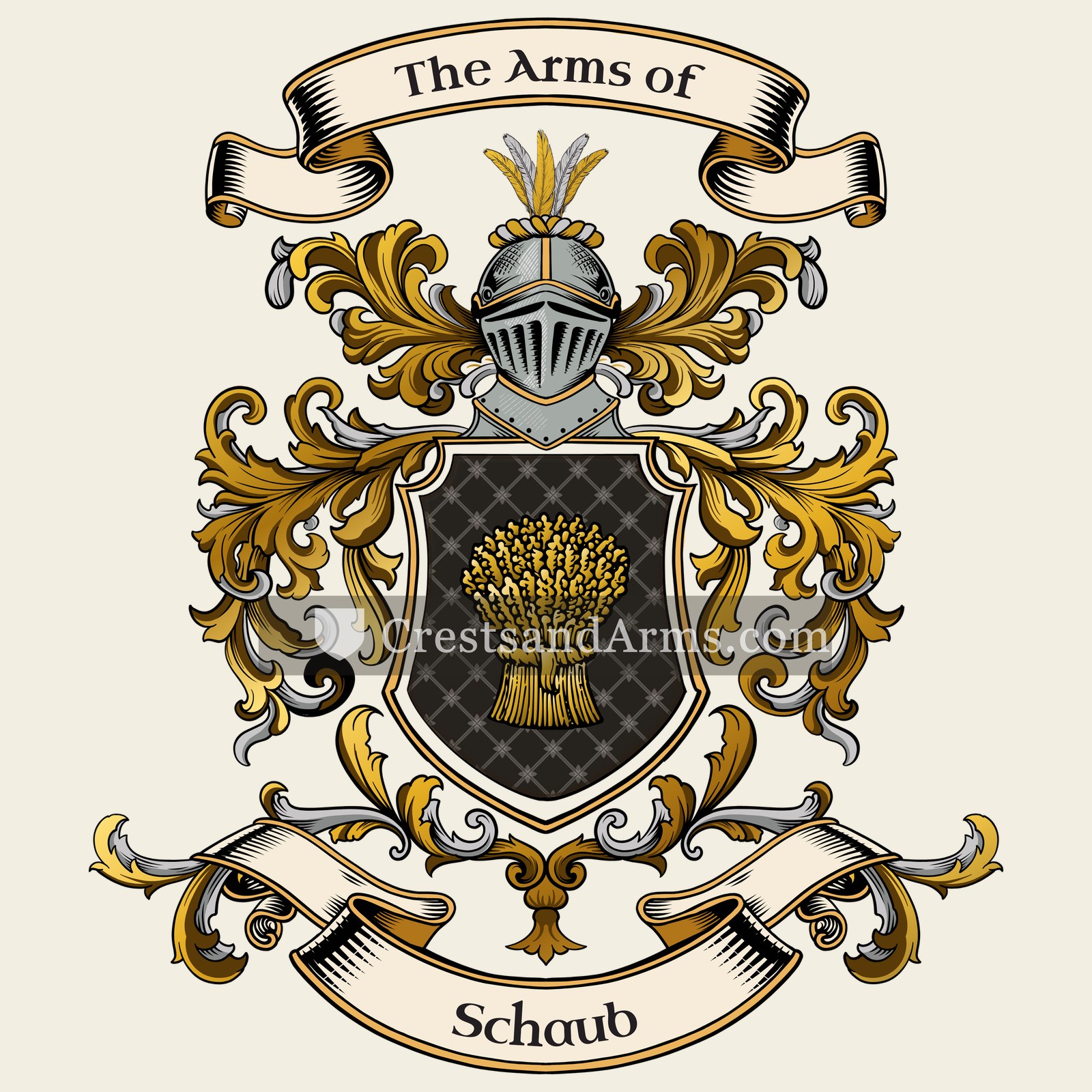
Coat of Arms & Family Crest Details
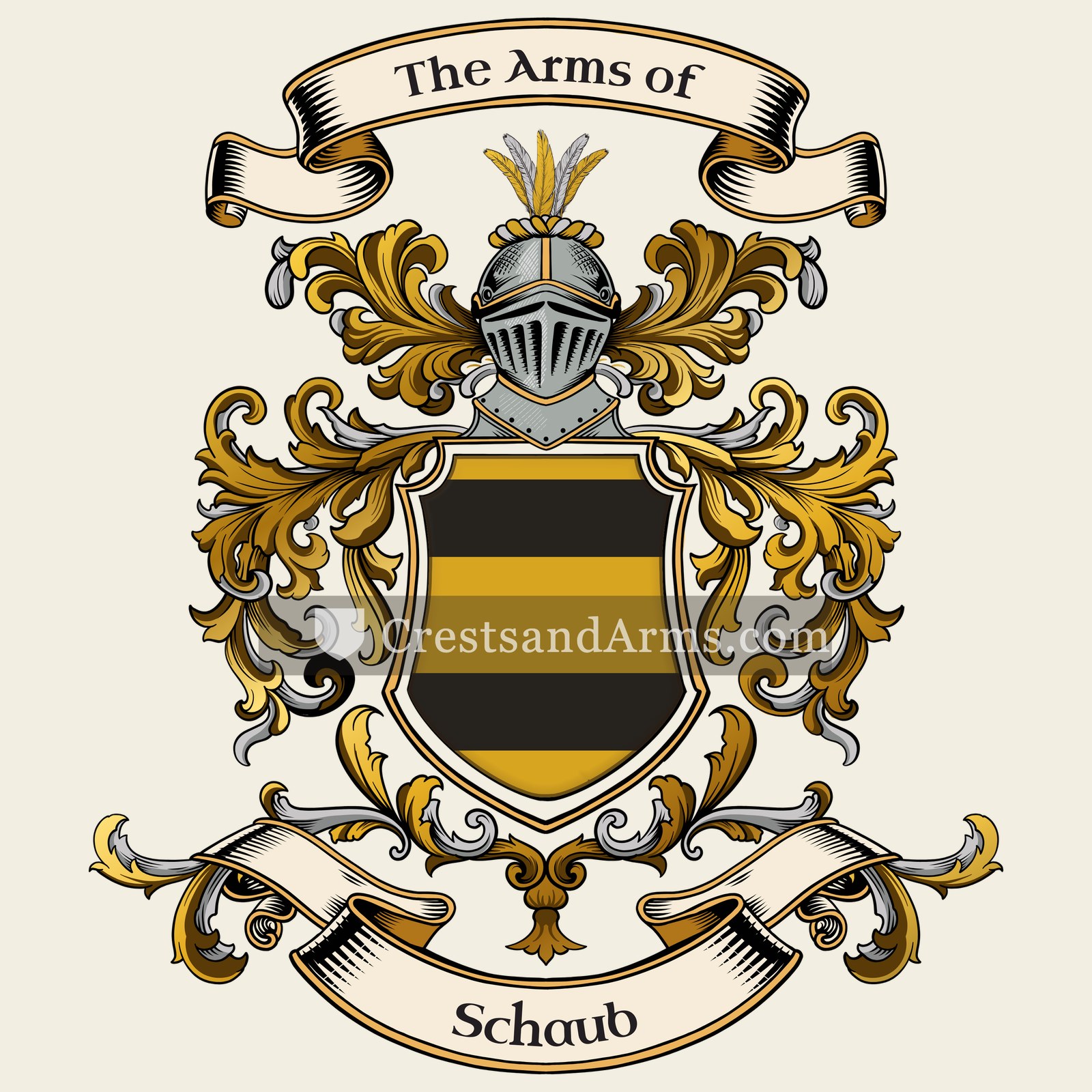
Symbols on this shield
wheatsheafPlenty, and the harvest of one's own labour
Colours
Black (Sable)Means: Constancy
Gold (Or)Means: Generosity
Historical info
Source
J. B. Rietstap, Armorial Général, Gouda: G. B. van Goor Zonen, 1884–87
Blazon (the actual original written record)
“De sa. à une gerbe d'or.”
GermanyRatisbonne, c. 1765
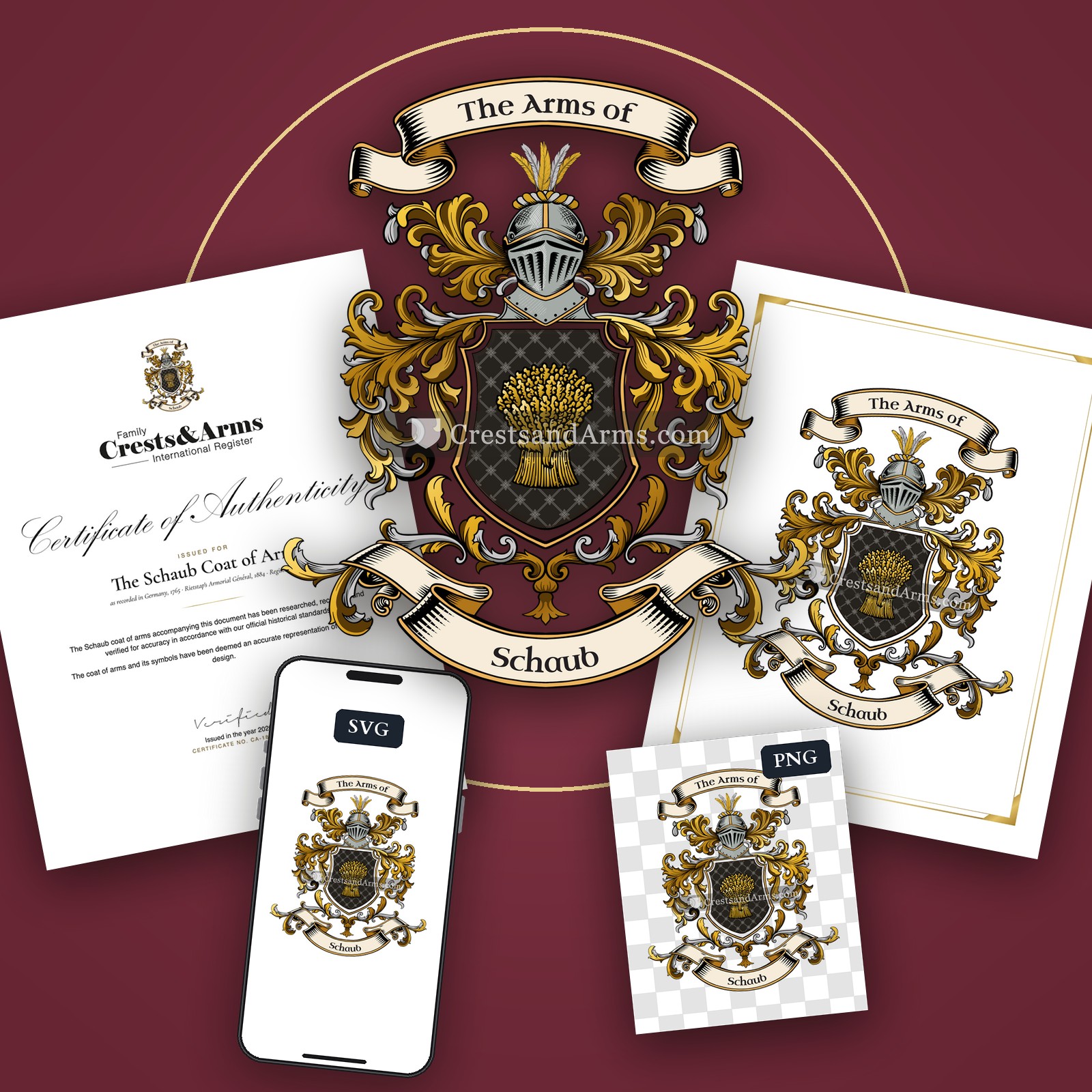
Digital archive packCoat of arms PNG, gold border print PDF, vector SVG and the certificate of authenticity. Sent to your email in minutes.
Map of Germany showing where the Schaub arms are recorded
The Schaub arms were recorded in Ratisbonne, c. 1765.
This is where the arms were entered in the register. Families often moved to other parts of the country, so the same name can turn up in more than one region.
The body that granted and recorded arms in Germany in this period.
Francis I, Holy Roman Emperor
Sovereign of the period
Francis I, Holy Roman Emperor
1745–1765
Reigning in France when the Schaub arms are first recorded.
How Arms Worked in Germany
In the Holy Roman Empire, coats of arms were often granted to individuals by the Emperor or his representatives. These arms were then passed down through the generations to all legitimate descendants of the original holder. Younger branches of a family usually kept the same shield design without needing to change it, as the arms belonged to the entire lineage.
Granting authority
The Holy Roman Emperor held the sole power to grant new coats of arms throughout his vast imperial territories.
How they got arms
Families typically obtained their coats of arms through a formal imperial grant or by proving their noble status to the authorities.
Where arms were recorded
These grants were officially recorded in the Imperial Chancery registers, which began keeping formal records of such honors during the Middle Ages.
The family's standing
Recorded among the armigerous families of Germany.
Origin & History of the Schaub Family in Germany
The surname Schaub traces its roots to the Germanic regions of Central Europe, where it emerged as a descriptive name rooted in the Middle High German word "schoub." This term originally referred to a bundle of straw or a sheaf of grain, suggesting that the earliest bearers of the name were likely farmers or laborers who worked in the agricultural fields of the Holy Roman Empire. By the mid-18th century, the family had established a documented presence in Ratisbonne, known today as Regensburg, which was a vital center of trade and politics along the Danube River. In 1765, records indicate that members of the Schaub family were living within this historic city, likely participating in the urban economy that defined the region during the Enlightenment. As the family moved through these German lands, the name evolved from a simple occupational descriptor into a permanent identifier that linked generations to the fertile landscapes and bustling river towns of their homeland.
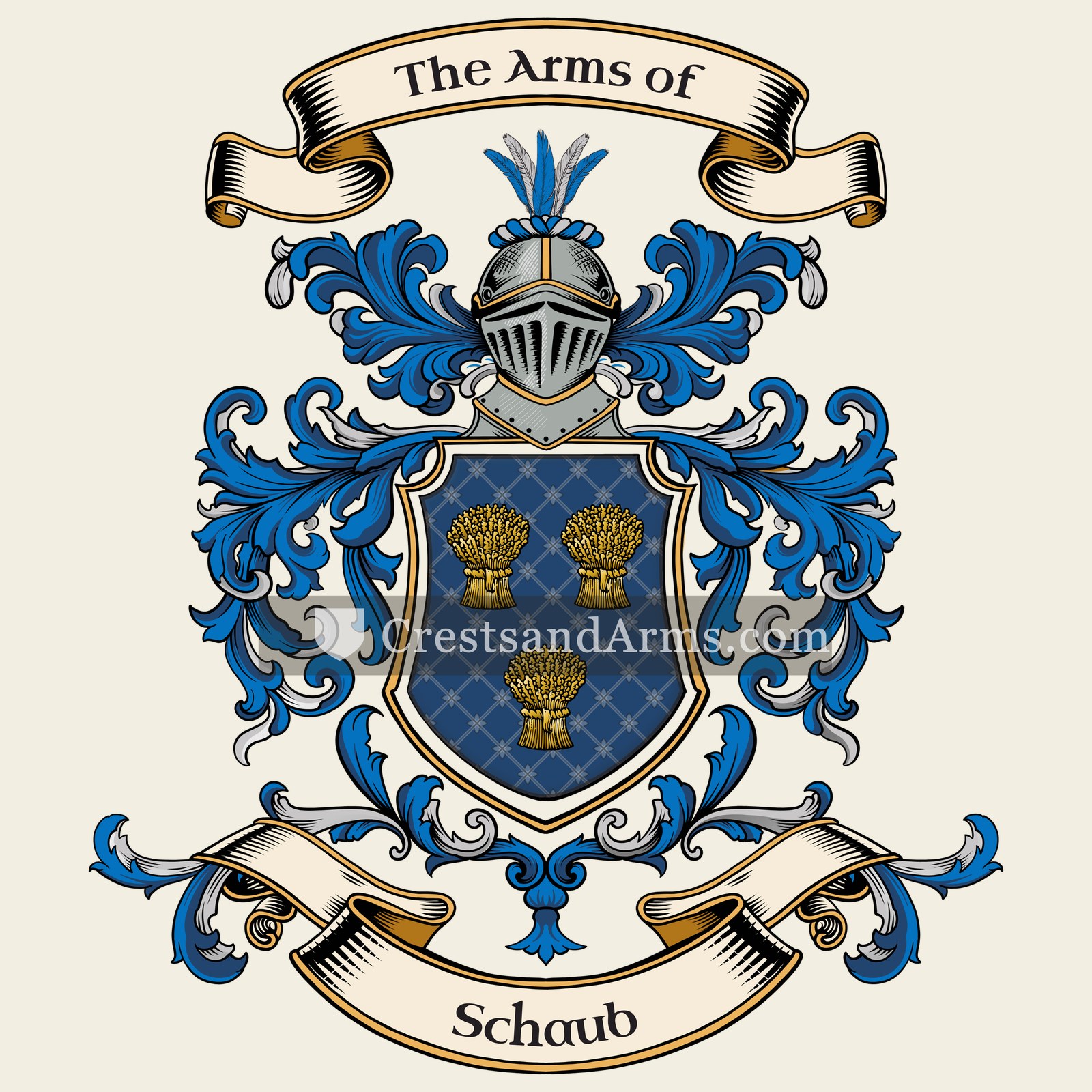
Coat of Arms & Family Crest Details
Symbols on this shield
wheatsheafPlenty, and the harvest of one's own labour
Colours
Blue (Azure)Means: Loyalty and truth
Gold (Or)Means: Generosity
Historical info
Source
J. B. Rietstap, Armorial Général, Gouda: G. B. van Goor Zonen, 1884–87
Blazon (the actual original written record)
“D'azur à trois gerbes d'or. C.: un homme iss., hab. d'azur, ceint d'or, au rabat du même, tenant de sa main dextre une faucille au nat., le tranchant à sen., et dans son bras sen. une gerbe d'or.”
SwitzerlandBâle, c. 1745
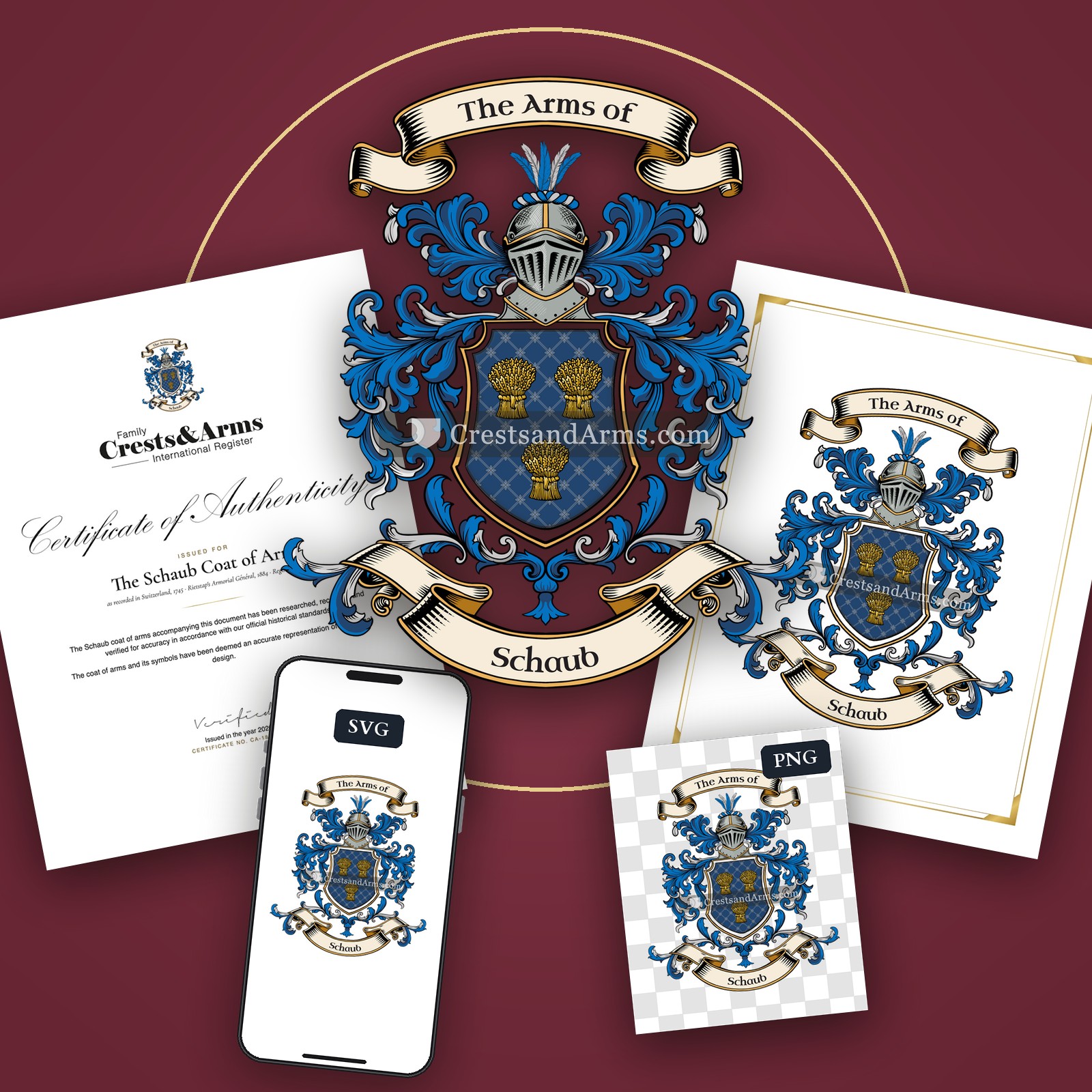
Digital archive packCoat of arms PNG, gold border print PDF, vector SVG and the certificate of authenticity. Sent to your email in minutes.
Map of Switzerland showing where the Schaub arms are recorded
The Schaub arms were recorded in Bâle, c. 1745.
This is where the arms were entered in the register. Families often moved to other parts of the country, so the same name can turn up in more than one region.
The body that granted and recorded arms in Switzerland in this period.
How Arms Worked in Switzerland
In Switzerland, coats of arms were not restricted to the nobility and were often adopted by common citizens and families. These symbols were passed down through generations to show family identity. When branches of a family grew, they often changed small details of the design to distinguish their own line from the original group.
Granting authority
Cantonal and civic authorities managed the use of coats of arms within their specific regions and local jurisdictions.
How they got arms
Families typically assumed their own coats of arms based on local custom rather than receiving them from a central monarch.
Where arms were recorded
Arms were recorded in various cantonal and civic registers starting from the fourteenth century throughout the Swiss region.
The family's standing
Recorded among the armigerous families of Switzerland.
Origin & History of the Schaub Family in Switzerland
The surname Schaub has deep roots in the Swiss region, particularly within the city and canton of Basel. By the mid-18th century, the family was well-established in this area, where they were often involved in the local trades and civic life that defined the city’s economy. The name itself is thought to derive from Middle High German terms related to a bundle of straw or a sheaf, which suggests that early ancestors may have been farmers or laborers who worked with harvested crops. As the family grew in Basel, they became integrated into the social fabric of the city, participating in the guilds and community organizations that governed Swiss life during the 1700s. Their presence in the historical records of Basel by 1745 reflects a period of stability and growth for the family as they navigated the shifting political and economic landscape of the Swiss Confederation.
Schaub Meaning & Related Branches
Root word
Schub
A Middle High German term referring to a shove or push.
This name
SchaubAn occupational surname for a person who worked as a cobbler or shoemaker.
also spelled
Schaube
Schauber
Schaubin
Shaub
Documented Sources
J. B. Rietstap, Armorial Général, Gouda: G. B. van Goor Zonen, 1884–87
Boehler, Jean-Michel. Une société rurale en milieu rhénan: la paysannerie de la plaine d'Alsace (1648-1789). 1995
Livet, Georges. L'Alsace et le Rhin: de la paix de Westphalie à la Révolution française. 1980
Archives départementales du Bas-Rhin, Registres paroissiaux et d'état civil
Digital archive packCoat of arms PNG, gold border print PDF, vector SVG and the certificate of authenticity. Sent to your email in minutes.


 fessThe military belt, and readiness to serve
 fessThe military belt, and readiness to serve


 wheatsheafPlenty, and the harvest of one's own labour