Map of Netherlands showing where the Scheffer arms are recorded
The Scheffer arms were recorded in Rotterdam, c. 1815.
This is where the arms were entered in the register. Families often moved to other parts of the country, so the same name can turn up in more than one region.
Region
Rotterdam
Town
Rotterdam
First recorded
1815
Granting Authority for the Scheffer Arms
Hoge Raad van Adel
Photograph made by me · CC BY-SA 3.0
The body that granted and recorded arms in Netherlands in this period.
William I of the Netherlands
Sovereign of the period
William I of the Netherlands
1815–1840
Reigning in Netherlands when the Scheffer arms are first recorded.
How Arms Worked in Netherlands
In the Netherlands, coats of arms were often used by noble families and those who held specific public offices. These arms were passed down through the generations to legitimate descendants. Younger branches of a family usually kept the original design without needing to add special marks. This system ensured that the family identity remained clear and consistent over many years.
Granting authority
The Hoge Raad van Adel is the official body that regulates and manages noble titles and coats of arms in the Netherlands.
How they got arms
Families typically obtained their coats of arms through official royal grants or by proving their long-standing historical use of the symbols.
Where arms were recorded
Coats of arms are officially recorded in the registers held by the Hoge Raad van Adel, which began its work in 1814.
The family's standing
Recorded among the armigerous families of Netherlands.
Origin & History of the Scheffer Family in Netherlands
The surname Scheffer is rooted in the Germanic word *schäfer*, which translates to shepherd. During the medieval period, many families adopted their last names based on their trade or daily occupation. As the name moved into the Netherlands, it became associated with families who managed livestock or worked on the rural estates surrounding growing urban centers. By the year 1815, records confirm that members of the Scheffer family were well established in Rotterdam. This period was a time of significant change for the city as it transitioned from the Napoleonic era into the newly formed United Kingdom of the Netherlands. The presence of the family in Rotterdam during this time suggests they were part of the city’s industrious middle class, likely contributing to the maritime and commercial growth that defined the region throughout the nineteenth century.
Coat of Arms & Family Crest Details
Symbols on this shield
saltireResolution, and St Andrew's cross
lionCourage, strength and royalty
Colours
Silver (Argent)Means: Peace and sincerity
Blue (Azure)Means: Loyalty and truth
Red (Gules)Means: Military strength
Gold (Or)Means: Generosity
Historical info
Source
J. B. Rietstap, Armorial Général, Gouda: G. B. van Goor Zonen, 1884–87
Blazon (the actual original written record)
“Ec.: aux 1 et 4 d'arg. au saut. alésé et cramponné de gu.; au 2 coupé: a. d'azur au lion naiss. d'or, mouv.”
Swedenc. 1719
Digital archive packCoat of arms PNG, gold border print PDF, vector SVG and the certificate of authenticity. Sent to your email in minutes.
Map of Sweden showing where the Scheffer arms are recorded
The Scheffer arms were recorded in Sweden, c. 1719.
Arms such as these were typically recorded in Stockholm.
Stockholm held the Swedish court and the House of Nobility, where every noble family's arms were entered and kept. Families ennobled for service registered there, which is why so many are recorded around the city.
This is where the arms were entered in the register. Families often moved to other parts of the country, so the same name can turn up in more than one region.
The body that granted and recorded arms in Sweden in this period.
Ulrika Eleonora I of Sweden
Sovereign of the period
Ulrika Eleonora I of Sweden
1718–1720
Reigning in Netherlands when the Scheffer arms are first recorded.
How Arms Worked in Sweden
In Sweden, a coat of arms belonged to a noble family as a whole rather than just one individual. These arms were passed down through the generations to all legitimate descendants. Younger branches of the family used the same shield without needing to change it. This system ensured that the entire lineage shared the same identity and status under the law.
Granting authority
The Riddarhuset, or House of Nobility, regulated all noble coats of arms in Sweden under royal authority.
How they got arms
Families received their coats of arms through royal grants of nobility which were then officially registered with the House.
Where arms were recorded
Coats of arms were officially recorded in the Swedish House of Nobility register starting in the year 1626.
The family's standing
Recorded among the armigerous families of Sweden.
Origin & History of the Scheffer Family in Sweden
The Scheffer family name has deep roots in the administrative and intellectual life of Sweden, particularly within the bustling capital of Stockholm. By 1719, members of the family were already well-established in the city, navigating a period of significant transition as Sweden moved out of its era as a great European power. The name itself reflects a Germanic origin, likely brought to Sweden by merchants or skilled professionals who migrated north to seek opportunities in the growing Swedish bureaucracy. During the eighteenth century, the family became integrated into the urban fabric of Stockholm, often serving in roles that required high levels of literacy and organizational skill. As they settled into their new home, the Scheffers contributed to the professional class that helped manage the country’s trade and civic affairs. Their presence in the capital during this time highlights the broader movement of families across the Baltic Sea who helped shape the social and economic landscape of early modern Sweden.
Coat of Arms & Family Crest Details
Symbols on this shield
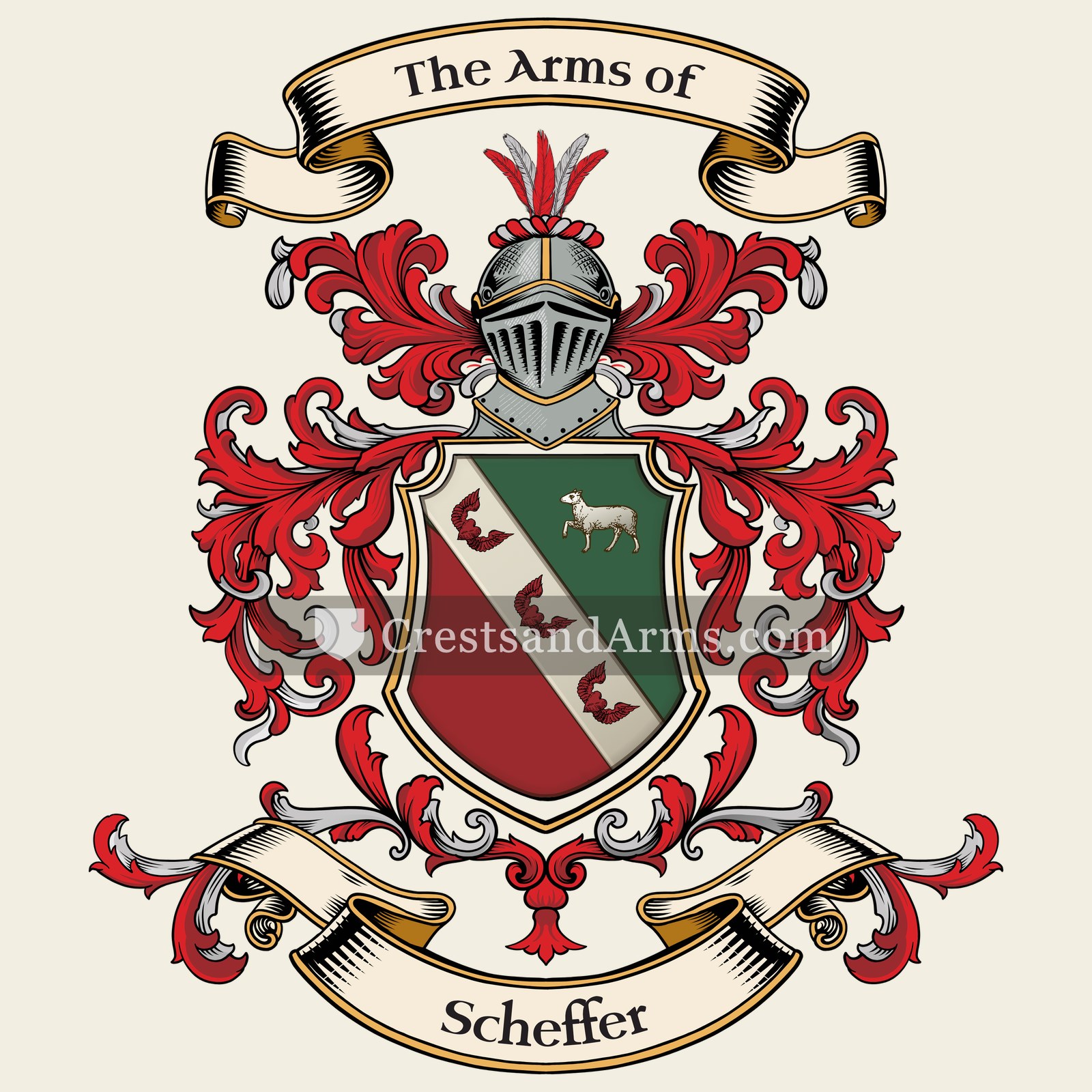
bendDefence, and the scarf of a commander
heartSincerity, charity and true affection
lambGentleness, patience and faith
Colours
Red (Gules)Means: Military strength
Green (Vert)Means: Hope
Silver (Argent)Means: Peace and sincerity
Historical info
Source
J. B. Rietstap, Armorial Général, Gouda: G. B. van Goor Zonen, 1884–87
Blazon (the actual original written record)
“Tranché de gu. sur sin.; à la bande d'arg., ch. de trois coeurs de gu., posés dans le sens de la bande; le gu. ch. d'un mouton naiss. d'arg., mouv. de la bande.”
Germanyc. 1677
Digital archive packCoat of arms PNG, gold border print PDF, vector SVG and the certificate of authenticity. Sent to your email in minutes.
Map of Germany showing where the Scheffer arms are recorded
The Scheffer arms were recorded in Germany, c. 1677.
Arms such as these were typically recorded in Bavaria.
Bavaria was a country of old landed families and walled market towns. Estates passed down the same line for centuries, and both the landowners and the leading townsmen kept arms, which is why so many Bavarian names sit in the registers.
This is where the arms were entered in the register. Families often moved to other parts of the country, so the same name can turn up in more than one region.
The body that granted and recorded arms in Germany in this period.
Leopold I, Holy Roman Emperor
Sovereign of the period
Leopold I, Holy Roman Emperor
1658–1705
Reigning in Netherlands when the Scheffer arms are first recorded.
How Arms Worked in Germany
In the Holy Roman Empire, coats of arms were often granted to individuals by the Emperor or his representatives. These arms were then passed down through the generations to all legitimate descendants of the original holder. Younger branches of a family usually kept the same shield design without needing to change it, as the arms belonged to the entire lineage.
Granting authority
The Holy Roman Emperor held the sole power to grant new coats of arms throughout his vast imperial territories.
How they got arms
Families typically obtained their coats of arms through a formal imperial grant or by proving their noble status to the authorities.
Where arms were recorded
These grants were officially recorded in the Imperial Chancery registers, which began keeping formal records of such honors during the Middle Ages.
The family's standing
Recorded among the armigerous families of Germany.
Origin & History of the Scheffer Family in Germany
The surname Scheffer originates from the Middle High German word *scheffere*, which historically referred to a steward, a manager of an estate, or a person responsible for the collection of taxes. By the late 17th century, the name was firmly established in the southern German region of Bavaria, where records confirm the presence of family members as early as 1677. During this era, individuals bearing this name were often tied to the agricultural and administrative life of rural villages. Because the name was occupational, it was common for families to adopt it based on their specific duties within a local manor or church-run farm. As these families lived and worked in the Bavarian countryside, the name became a permanent identifier that linked their social status to the management of land and local resources. This history reflects the broader patterns of German naming conventions, where a person’s professional role in the community eventually transformed into a hereditary family name passed down through generations.
Related Branches & Arms
Root word
Schäfer
German occupational term for a person who herds or tends sheep.
This name
SchefferAn occupational surname for a shepherd or someone who managed a flock of sheep.
also spelled
Schefer
Sheffer
Related arms
Blümegensimilar arms
Limbecksimilar arms
Reibeltsimilar arms
Documented Sources
J. B. Rietstap, Armorial Général, Gouda: G. B. van Goor Zonen, 1884–87
Archives: Stadsarchief Rotterdam, Burgerlijke Stand (Civil Registry), 1815
Book: Debrabandere, Frans, Woordenboek van de familienamen in België en Noord-Frankrijk, 2003
Book: Meertens, P.J., De betekenis van Nederlandse familienamen, 1959
Digital archive packCoat of arms PNG, gold border print PDF, vector SVG and the certificate of authenticity. Sent to your email in minutes.


 heartSincerity, charity and true affection
 lambGentleness, patience and faith
 heartSincerity, charity and true affection
 lambGentleness, patience and faith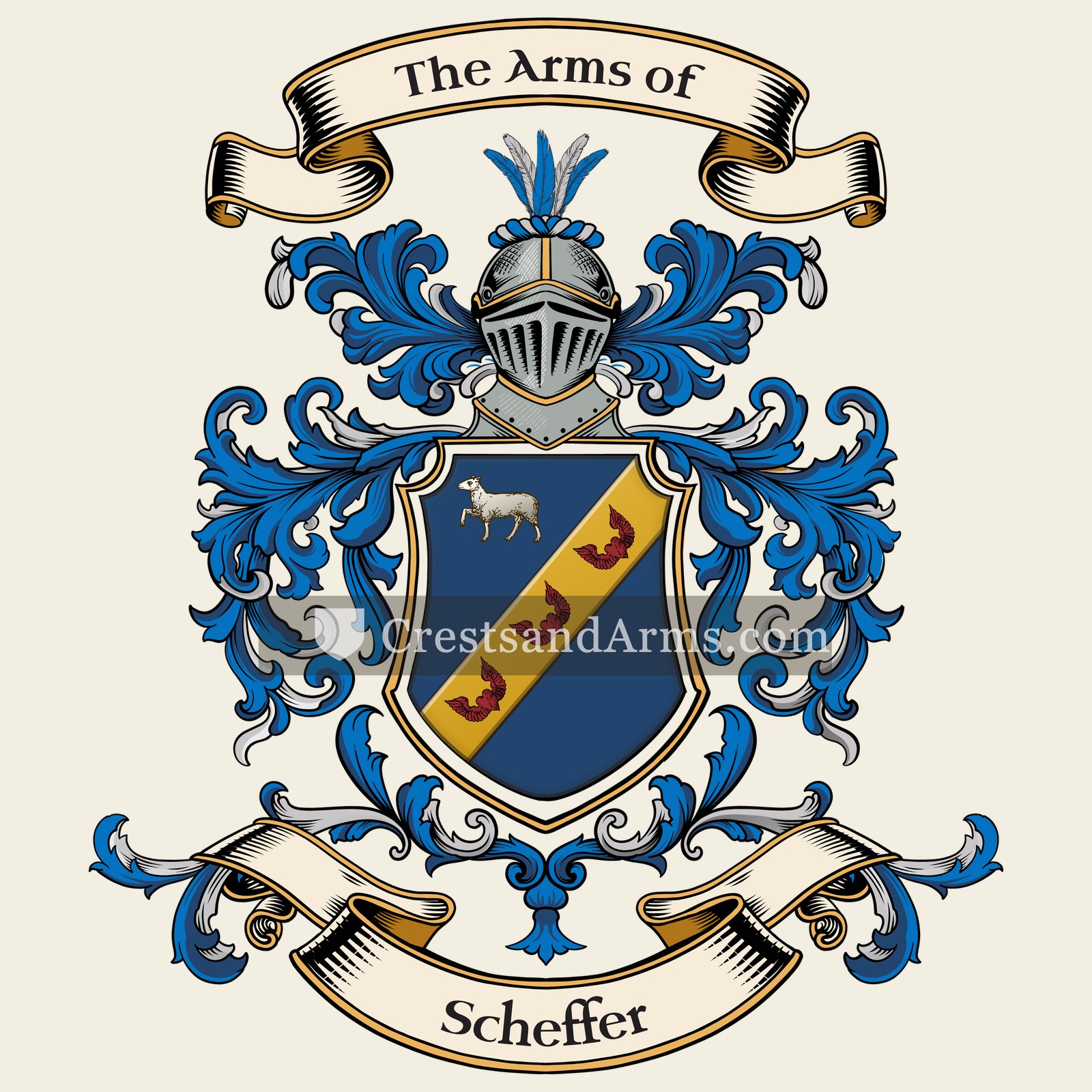


 saltireResolution, and St Andrew's cross
 lionCourage, strength and royalty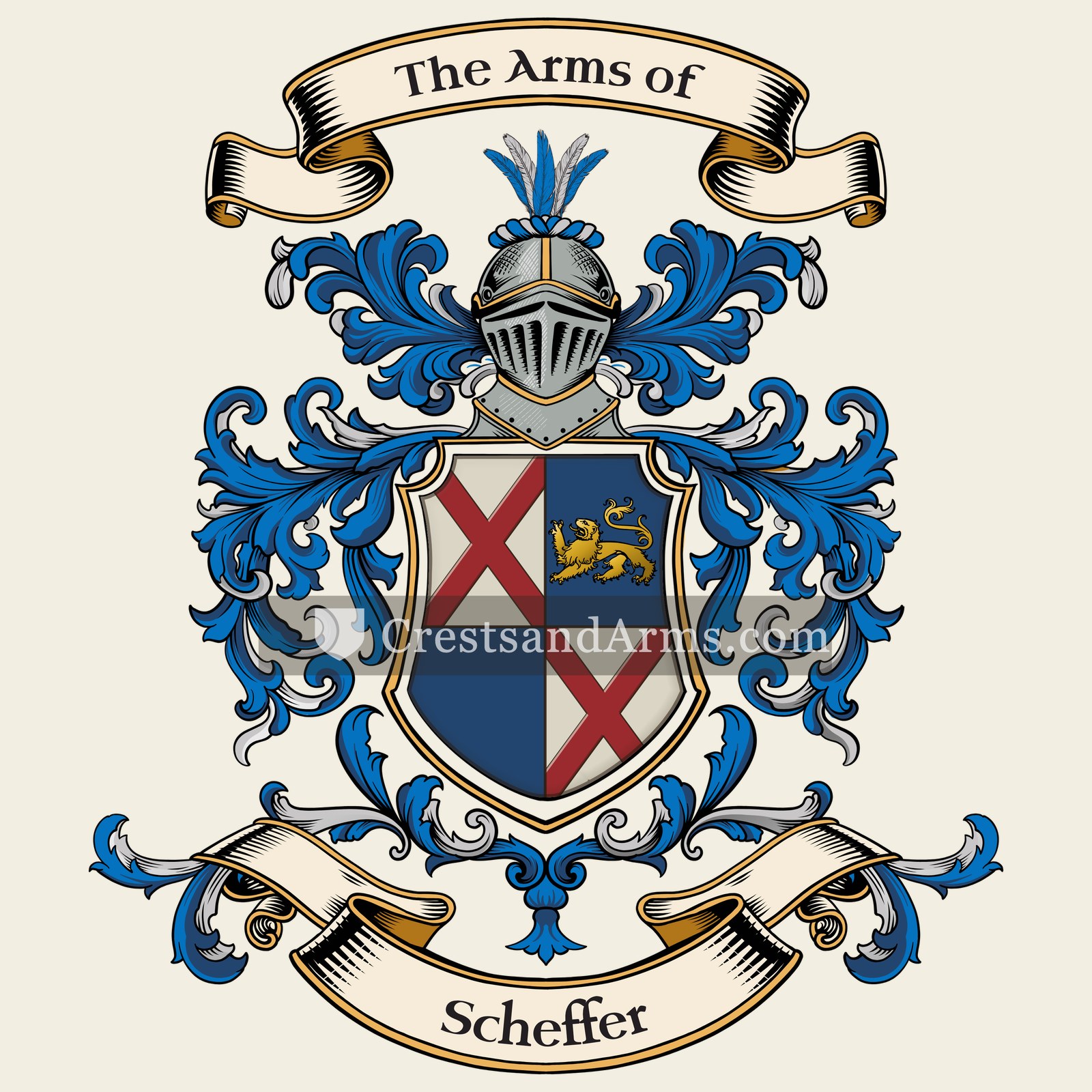


 bendDefence, and the scarf of a commander