Map of Germany showing where the Schilling arms are recorded
The Schilling arms were recorded in Hambourg, c. 1765.
This is where the arms were entered in the register. Families often moved to other parts of the country, so the same name can turn up in more than one region.
The body that granted and recorded arms in Germany in this period.
Francis I, Holy Roman Emperor
Sovereign of the period
Francis I, Holy Roman Emperor
1745–1765
Reigning in Germany when the Schilling arms are first recorded.
How Arms Worked in Germany
In the Holy Roman Empire, coats of arms were often granted to individuals by the Emperor or his representatives. These arms were then passed down through the generations to all legitimate descendants of the original holder. Younger branches of a family usually kept the same shield design without needing to change it, as the arms belonged to the entire lineage.
Granting authority
The Holy Roman Emperor held the sole power to grant new coats of arms throughout his vast imperial territories.
How they got arms
Families typically obtained their coats of arms through a formal imperial grant or by proving their noble status to the authorities.
Where arms were recorded
These grants were officially recorded in the Imperial Chancery registers, which began keeping formal records of such honors during the Middle Ages.
The family's standing
Recorded among the armigerous families of Germany.
Origin & History of the Schilling Family in Germany
The surname Schilling is a classic example of a German occupational or descriptive name that emerged during the Middle Ages. It is derived from the Middle High German word *schillinc*, which originally referred to a specific type of silver coin. Families who adopted this name were often associated with trade, finance, or the collection of taxes, as the name served as a practical identifier for those who handled currency. By the time members of the family were documented in Hamburg in 1765, the name had already been established across various German-speaking regions for several centuries. Hamburg served as a vital hub for commerce and shipping during the eighteenth century, making it a logical destination for families involved in trade. As the family settled into the city, they became part of a long tradition of urban merchants and professionals who helped define the economic character of Northern Germany.
Coat of Arms & Family Crest Details
Symbols on this shield
serpentWisdom, healing and prudence
Colours
Silver (Argent)Means: Peace and sincerity
Blue (Azure)Means: Loyalty and truth
Historical info
Source
J. B. Rietstap, Armorial Général, Gouda: G. B. van Goor Zonen, 1884–87
Blazon (the actual original written record)
“D'arg. à une couleuvre d'azur, cour. d'or, ondoyante en pal, tenant dans sa bouche trois feuilles de tilleul de sin., réunies dans une seule tige. C.: le meuble de l'écu. L. d'arg. et d'azur.”
FranceStrasbourg, c. 1663
Digital archive packCoat of arms PNG, gold border print PDF, vector SVG and the certificate of authenticity. Sent to your email in minutes.
Map of France showing where the Schilling arms are recorded
The Schilling arms were recorded in Strasbourg, c. 1663.
This is where the arms were entered in the register. Families often moved to other parts of the country, so the same name can turn up in more than one region.
The body that granted and recorded arms in France in this period.
Louis XIV of France
Sovereign of the period
Louis XIV of France
1643–1715
Reigning in Germany when the Schilling arms are first recorded.
How Arms Worked in France
In France, a coat of arms was a mark of honor that passed down through the male line to all legitimate descendants. Families often used the same shield without changes to show their shared heritage. If a branch wanted to stand out, they could add a small mark to their shield to show their specific place in the family tree.
Granting authority
The Juge d'armes de France acted as the official authority that regulated and verified coats of arms across the country.
How they got arms
Families typically inherited their arms from ancestors, though they could also receive them through royal grants or by proving their noble status.
Where arms were recorded
Coats of arms were officially recorded in the Armorial Général de France, which began its main collection in the year 1696.
The family's standing
Recorded among the armigerous families of France.
Origin & History of the Schilling Family in France
The family name Schilling has deep roots in the Alsace region, a territory that has historically shifted between French and German influence. By the year 1663, records confirm that members of the Schilling family were well-established residents of Strasbourg. During this period, Strasbourg served as a vital crossroads for trade and culture, placing the family at the center of a bustling urban environment. The name itself likely originated from a nickname related to the "schilling," which was a common unit of currency in medieval Europe. Families often acquired such names based on their occupation as merchants, money changers, or tax collectors. As the Schilling family settled into life in Strasbourg, they became part of the local social fabric, contributing to the city's unique identity as a bridge between two major European powers. Their presence in the city during the mid-seventeenth century suggests they were integrated into the professional and civic life of the region long before the modern borders of France were fully solidified.
Coat of Arms & Family Crest Details
Symbols on this shield
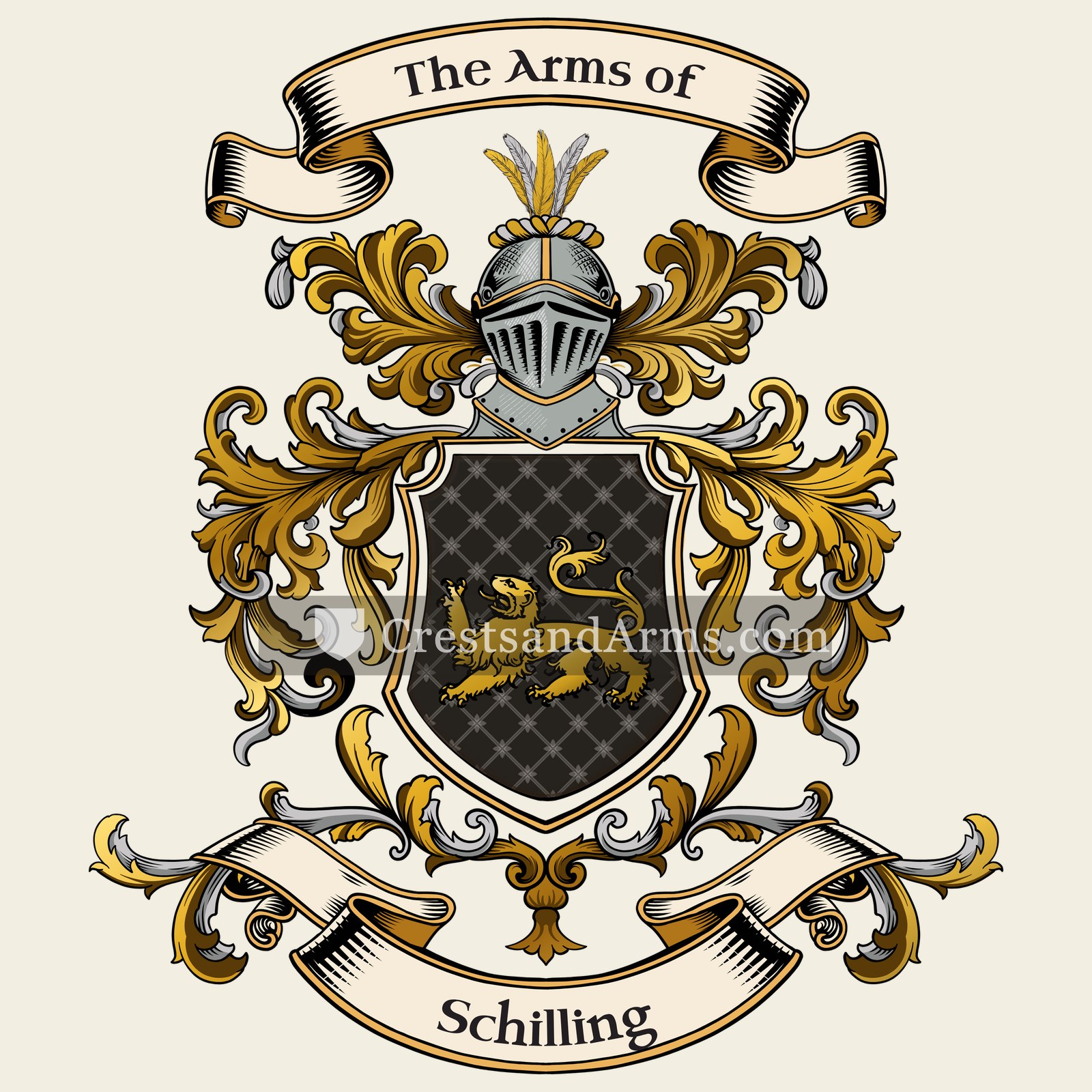
lionCourage, strength and royalty
Colours
Black (Sable)Means: Constancy
Gold (Or)Means: Generosity
Historical info
Source
J. B. Rietstap, Armorial Général, Gouda: G. B. van Goor Zonen, 1884–87
Blazon (the actual original written record)
“De sa. au lion d'or, cour. du même, lamp. de gu. C.: une tête et col de lion d'or, cour. du même, lamp. de gu.; entre un vol de sa.”
SwitzerlandBâle, c. 1745
Digital archive packCoat of arms PNG, gold border print PDF, vector SVG and the certificate of authenticity. Sent to your email in minutes.
Map of Switzerland showing where the Schilling arms are recorded
The Schilling arms were recorded in Bâle, c. 1745.
This is where the arms were entered in the register. Families often moved to other parts of the country, so the same name can turn up in more than one region.
The body that granted and recorded arms in Switzerland in this period.
How Arms Worked in Switzerland
In Switzerland, coats of arms were not restricted to the nobility and were often adopted by common citizens and families. These symbols were passed down through generations to show family identity. When branches of a family grew, they often changed small details of the design to distinguish their own line from the original group.
Granting authority
Cantonal and civic authorities managed the use of coats of arms within their specific regions and local jurisdictions.
How they got arms
Families typically assumed their own coats of arms based on local custom rather than receiving them from a central monarch.
Where arms were recorded
Arms were recorded in various cantonal and civic registers starting from the fourteenth century throughout the Swiss region.
The family's standing
Recorded among the armigerous families of Switzerland.
Origin & History of the Schilling Family in Switzerland
The surname Schilling has deep roots in the German-speaking regions of Europe, with a notable presence in the city of Basel by the mid-18th century. The name itself is thought to have originated as a descriptive nickname, likely referring to a person who handled coins or was involved in early financial dealings. By 1745, records confirm that families bearing this name were established members of the Basel community, participating in the city's vibrant trade and civic life. During this era, Basel was a major center for commerce and printing, and families like the Schillings often integrated into the local guilds that governed the city’s economy. These early ancestors helped shape the social fabric of the region, transitioning from their ancestral origins into the structured urban environment of Switzerland. Their presence in the city reflects the broader movement of families across the Rhine valley who sought stability and opportunity in the Swiss cantons during the Enlightenment period.
Related Branches & Arms
Root word
Schilling
Derived from the Middle High German word for a coin or currency.
This name
SchillingAn occupational name for a moneyer, tax collector, or someone who paid a shilling in rent.
also spelled
Schillin
Schillingh
Schillink
Shiling
Documented Sources
J. B. Rietstap, Armorial Général, Gouda: G. B. van Goor Zonen, 1884–87
Bahlow, Hans. Deutsches Namenlexikon: Familien- und Vornamen nach Ursprung und Sinn erklärt. 1967
Heintze, Albert. Die deutschen Familien-Namen: geschichtlich, geographisch, sprachlich. 1903
Staatsarchiv Hamburg. Hamburger Kirchenbücher, Taufen, Heiraten und Tote. 1765
Digital archive packCoat of arms PNG, gold border print PDF, vector SVG and the certificate of authenticity. Sent to your email in minutes.


 fessThe military belt, and readiness to serve
 roseThe seventh son, and beauty with grace
 fessThe military belt, and readiness to serve
 roseThe seventh son, and beauty with grace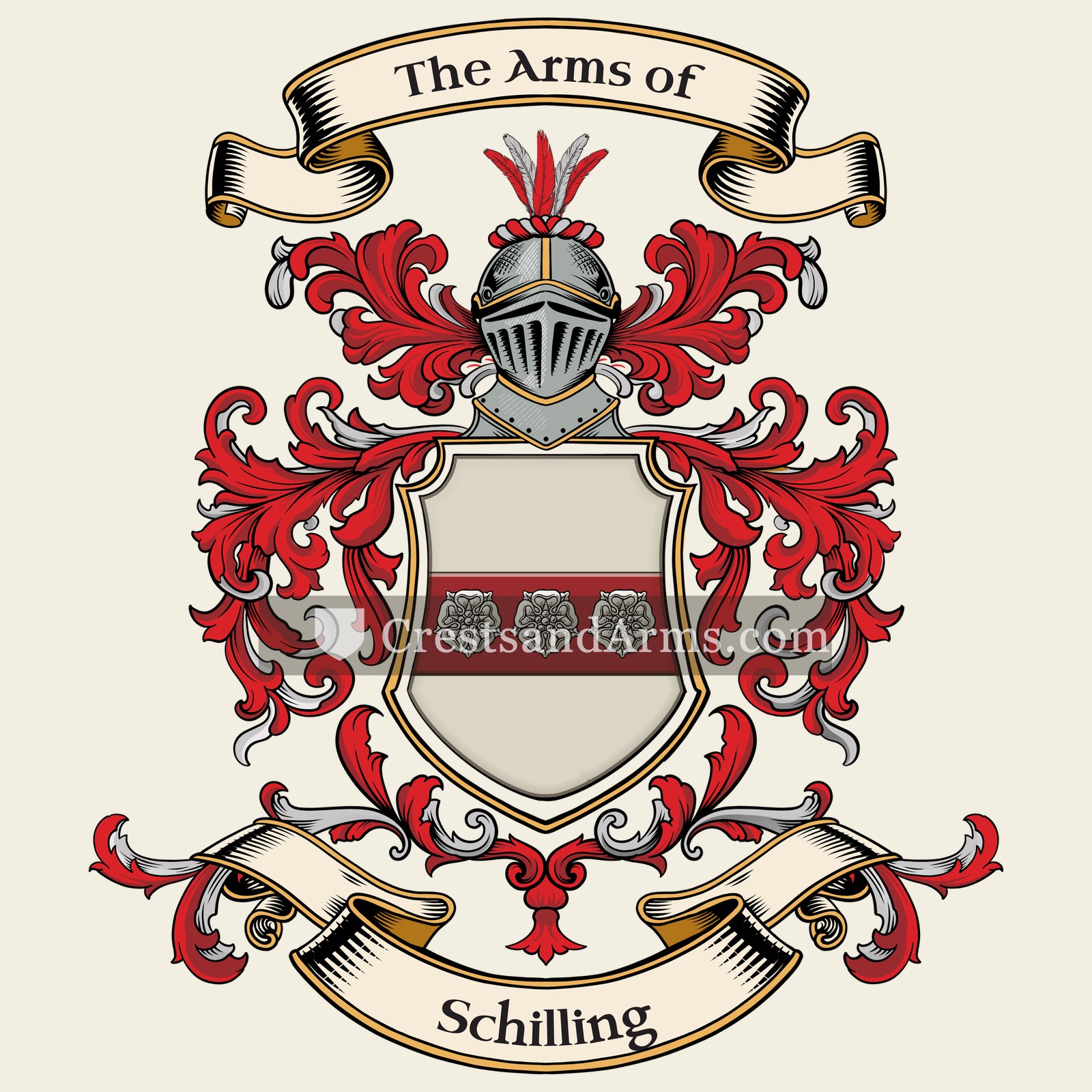


 serpentWisdom, healing and prudence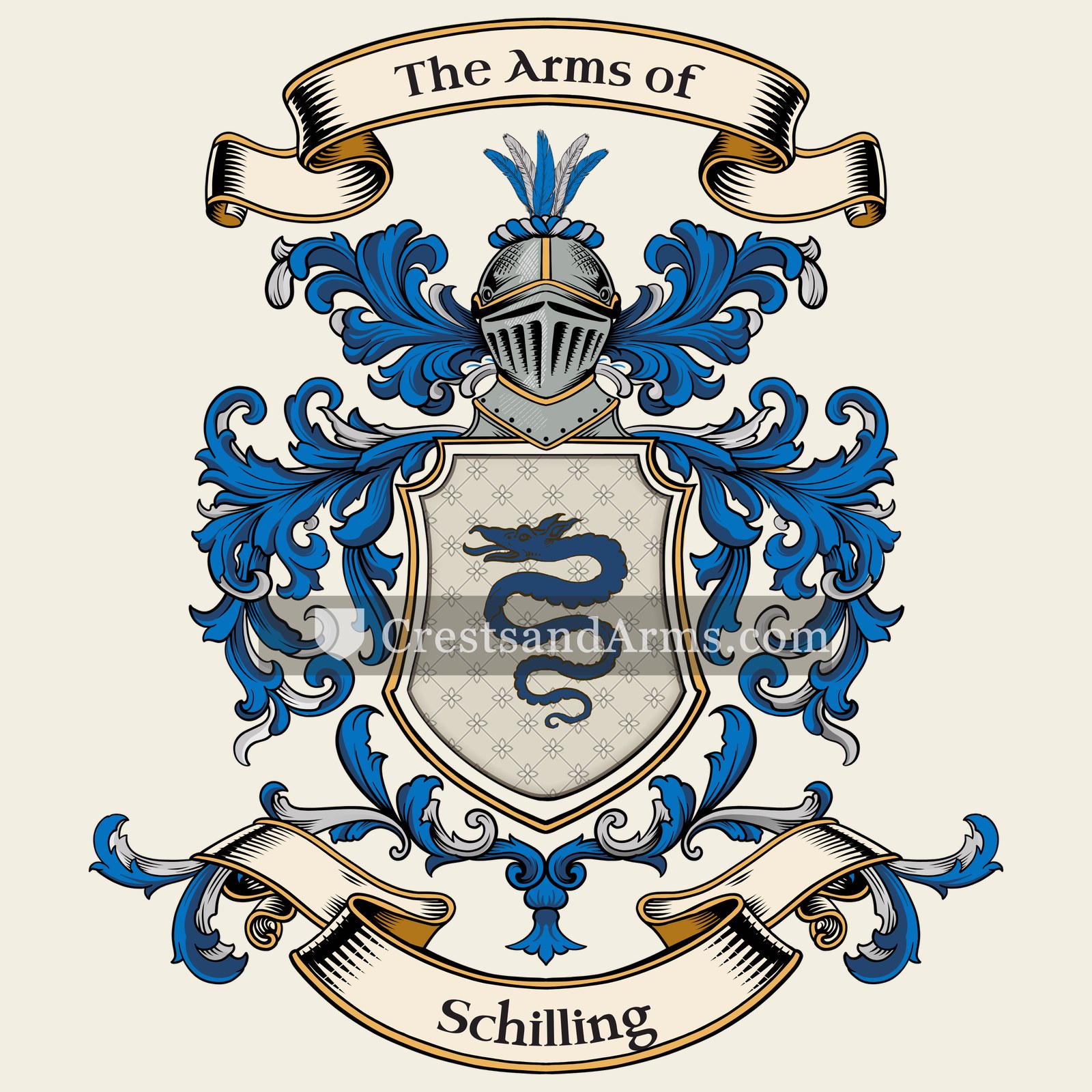


 lionCourage, strength and royalty