Map of Netherlands showing where the School arms are recorded
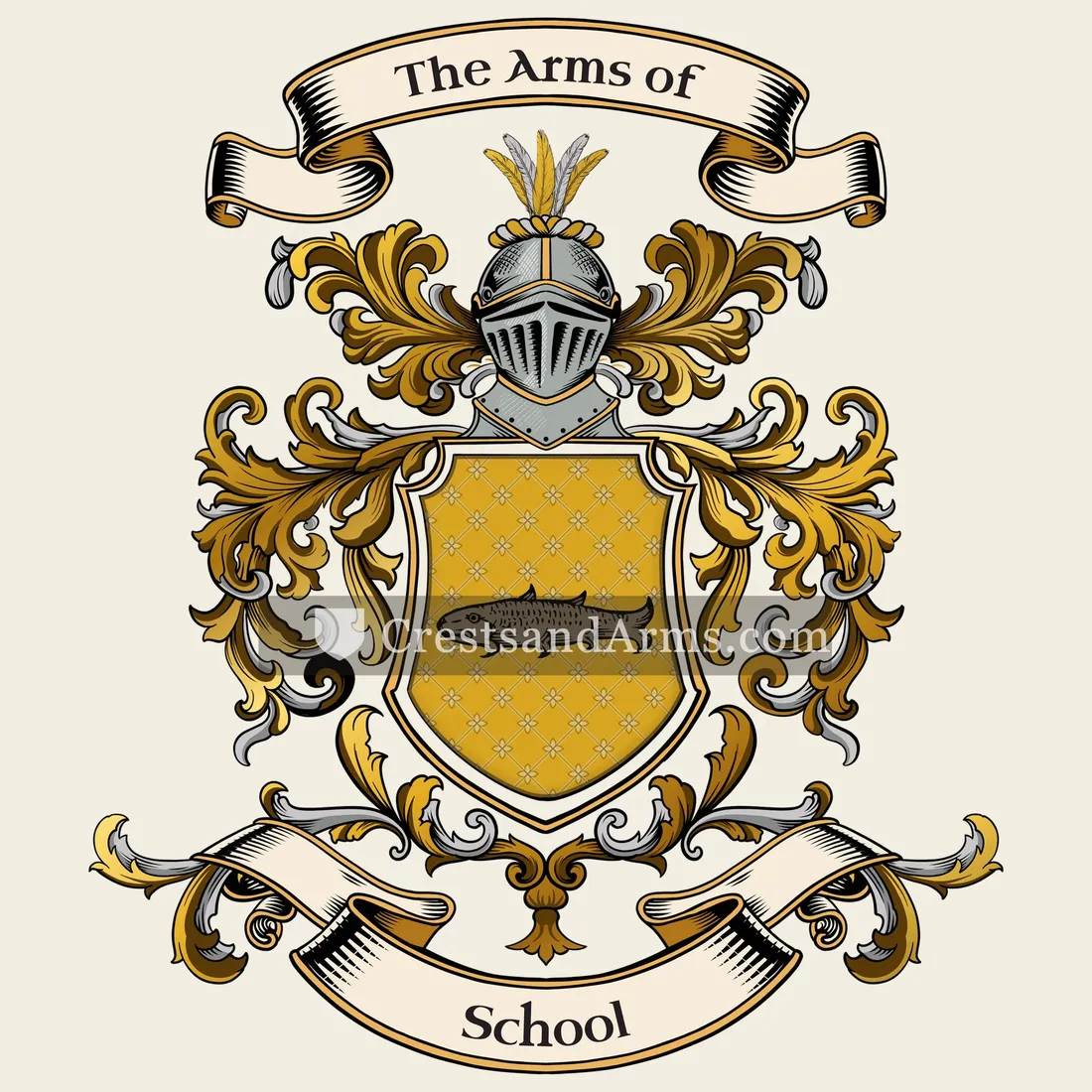
The School arms were recorded in Delft, c. 1815.
This is where the arms were entered in the register. Families often moved to other parts of the country, so the same name can turn up in more than one region.
Region
Delft
Town
Delft
First recorded
1815
Granting Authority for the School Arms
Hoge Raad van Adel
Photograph made by me · CC BY-SA 3.0
The body that granted and recorded arms in Netherlands in this period.
William I of the Netherlands
Sovereign of the period
William I of the Netherlands
1815–1840
Reigning in Netherlands when the School arms are first recorded.
How Arms Worked in Netherlands
In the Netherlands, coats of arms were often used by noble families and those who held specific public offices. These arms were passed down through the generations to legitimate descendants. Younger branches of a family usually kept the original design without needing to add special marks. This system ensured that the family identity remained clear and consistent over many years.
Granting authority
The Hoge Raad van Adel is the official body that regulates and manages noble titles and coats of arms in the Netherlands.
How they got arms
Families typically obtained their coats of arms through official royal grants or by proving their long-standing historical use of the symbols.
Where arms were recorded
Coats of arms are officially recorded in the registers held by the Hoge Raad van Adel, which began its work in 1814.
The family's standing
Recorded among the armigerous families of Netherlands.
Origin & History of the School Family in Netherlands
The family name School has deep roots in the Dutch city of Delft, where records confirm members of the family were living as early as 1815. During the nineteenth century, Delft was a bustling center of trade and craftsmanship, and families often adopted surnames based on their trade, their geographic location, or a notable personal characteristic. The name School likely originated as a descriptive term, potentially identifying an ancestor who worked near a local schoolhouse or served as a scholar within the community. As the family established their lives in Delft, they became part of the city’s long history of urban development and social growth. By tracing these early residents, we can see how the family name became a permanent fixture in the local records, reflecting the typical movement and naming patterns of Dutch citizens during the post-Napoleonic era.
School Meaning & Related Branches
Root word
schola
Latin term for a place of instruction or learned discussion.
This name
SchoolRefers to a person who lived near or worked at a schoolhouse.
also spelled
Schole
Scholl
Shol
Documented Sources
J. B. Rietstap, Armorial Général, Gouda: G. B. van Goor Zonen, 1884–87
Nationaal Archief, Burgerlijke Stand in Nederland 1811-1950


 fishA true and generous mind, and Christian faith
 fishA true and generous mind, and Christian faith