A record of documented arms, meaning and origin, researched for the Schott family lines. Documented in 3 countries.
Reg. 7825 · Austrian, T–V
Coat of Arms & Family Crest Details
Symbols on this shield
mountThe ground held, and steadfastness upon it
treeLife, endurance and deep roots
eagleNobility, strength and a keen mind
wolfReward from long service and hard work
Colours
Silver (Argent)Means: Peace and sincerity
Red (Gules)Means: Military strength
Green (Vert)Means: Hope
Black (Sable)Means: Constancy
Historical info
Source
J. B. Rietstap, Armorial Général, Gouda: G. B. van Goor Zonen, 1884–87
Blazon (the actual original written record)
“Ec.: aux 1 et 4 coupé d'arg. sur or; à l'aigle de sa., bq. et m. d'or, br. sur le coupé, celle du 1 cont.; aux 2 et 3 coupé de gu. sur sa., à un loup ramp. au nat., br. sur le coupé, tenant un scie au nat., emm. d'or; le loup du 3 cont. Sur le tout d'arg. à un arbre de sin. sur un tertre de gu. Deux cq. cour. C.: 1° l'aigle du 1; 1. d'or et de sa.; 2° les meubles du surtout, entre deux prob. coupées alt. d'or et de gu.; 1. d'arg. et de gu.”
Austriac. 1682
Digital archive packCoat of arms PNG, gold border print PDF, vector SVG and the certificate of authenticity. Sent to your email in minutes.
Map of Austria showing where the Schott arms are recorded
The Schott arms were recorded in Austria, c. 1682.
Arms such as these were typically recorded in Tyrol.
Tyrol was mountain country in western Austria, where the valleys were held by families who had been there a very long time. Old tenure counted for more than money, and old families carried arms.
This is where the arms were entered in the register. Families often moved to other parts of the country, so the same name can turn up in more than one region.
Region
Tyrol
First recorded
1682
Granting Authority for the Schott Arms
Imperial and Royal chancery
Sodacan · CC BY-SA 3.0
The body that granted and recorded arms in Austria in this period.
Leopold I, Holy Roman Emperor
Sovereign of the period
Leopold I, Holy Roman Emperor
1658–1705
Reigning in Austria when the Schott arms are first recorded.
How Arms Worked in Austria
Austrian coats of arms were often linked directly to noble titles granted by the Emperor. These symbols belonged to the entire family line rather than just one individual. When a family grew, new branches kept the original design without needing to change it. This system allowed all members of a noble house to share the same identity across many generations.
Granting authority
The Imperial and Royal chancery managed all heraldic matters and controlled the official granting of arms throughout the Austrian lands.
How they got arms
Families typically received their arms through a formal imperial decree that often accompanied the elevation of a person to noble status.
Where arms were recorded
Official records of these grants were kept in the Imperial Register of Nobility which began its formal documentation process in 1453.
The family's standing
Recorded among the armigerous families of Austria.
Origin & History of the Schott Family in Austria
The family name Schott has deep roots in the mountainous landscape of Tyrol, where records confirm members of the family were established by 1682. The name itself is derived from the Middle High German word "schotte," which historically referred to someone who traveled from Scotland or, more commonly, a person who moved from a different region to settle in a new area. In the context of the Austrian Alps, the Schott family likely functioned as part of the local merchant or artisan class that moved along the trade routes connecting Northern Italy to the German lands. Life in seventeenth-century Tyrol was defined by strict social structures and the influence of the Catholic Church, which kept detailed baptismal and marriage registers that allow us to trace the family's presence in the region. As these early ancestors settled into the valleys, they became integrated into the local economy, likely contributing to the agricultural or mining industries that sustained the Tyrolean population during that era.
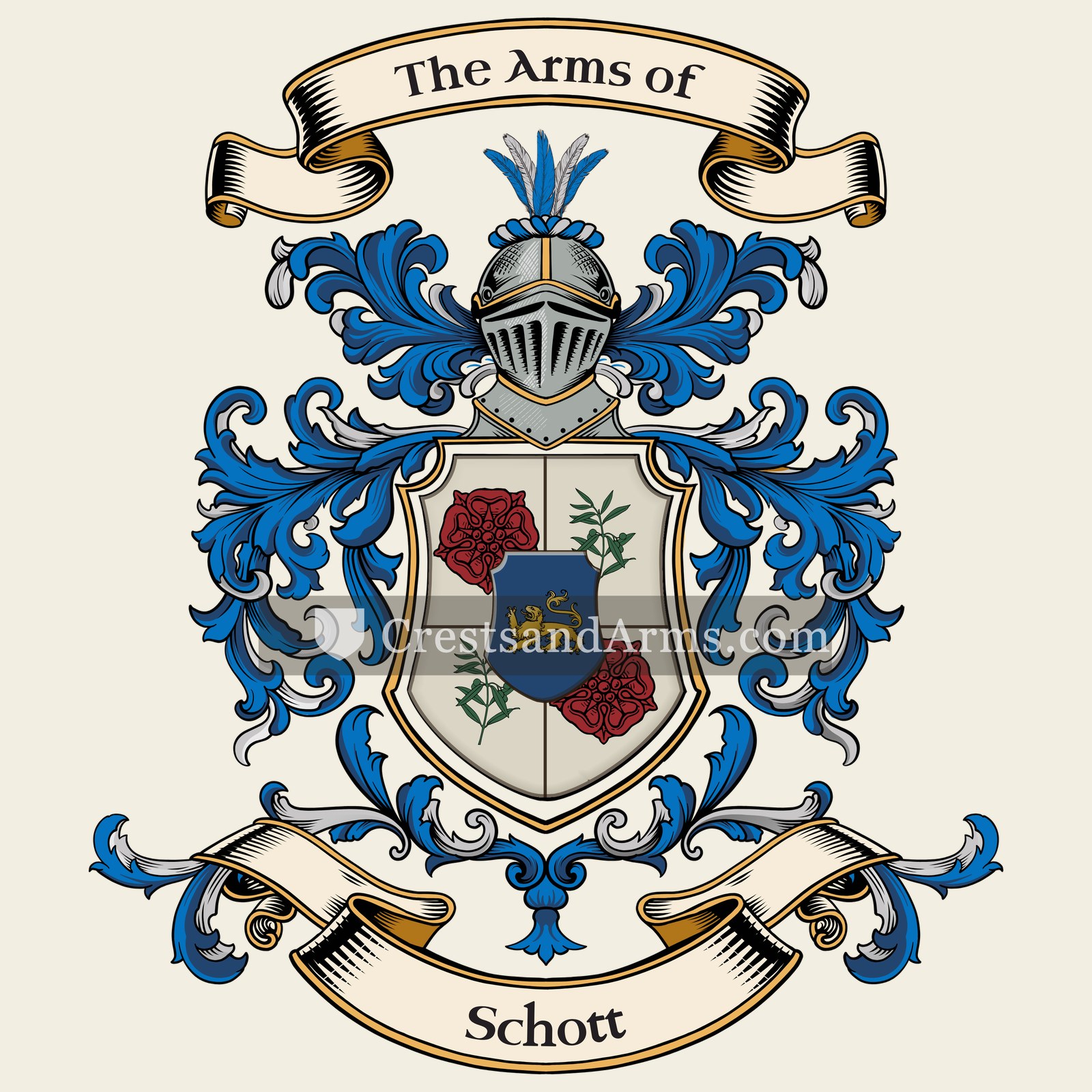
Coat of Arms & Family Crest Details
Symbols on this shield
lionCourage, strength and royalty
roseThe seventh son, and beauty with grace
branchPeace, and new growth
Colours
Silver (Argent)Means: Peace and sincerity
Blue (Azure)Means: Loyalty and truth
Gold (Or)Means: Generosity
Red (Gules)Means: Military strength
Green (Vert)Means: Hope
Historical info
Source
J. B. Rietstap, Armorial Général, Gouda: G. B. van Goor Zonen, 1884–87
Blazon (the actual original written record)
“Ec.: aux 1 et 4 d'arg. à une rose de gu., barbée de sin.; aux 2 et 3 d'arg. à une branche de chêne de trois feuilles de sin., posée en bande. Sur le tout d'azur au lion d'or [En 1693, cette famille prit le nom de Douglas dit Schott, et les armes de Douglas.]”
BelgiumAnvers, c. 1737
Digital archive packCoat of arms PNG, gold border print PDF, vector SVG and the certificate of authenticity. Sent to your email in minutes.
Map of Belgium showing where the Schott arms are recorded
The Schott arms were recorded in Anvers, c. 1737.
This is where the arms were entered in the register. Families often moved to other parts of the country, so the same name can turn up in more than one region.
The body that granted and recorded arms in Belgium in this period.
Charles VI, Holy Roman Emperor
Sovereign of the period
Charles VI, Holy Roman Emperor
1711–1740
Reigning in Austria when the Schott arms are first recorded.
How Arms Worked in Belgium
In Belgium, a coat of arms is considered personal property that is passed down through the male line to legitimate descendants. Families often use the same shield design across generations to show their shared heritage. If a branch of the family wants to change the design, they must apply for an official update to their specific version of the arms.
Granting authority
The Conseil héraldique is the official body that regulates and approves all coats of arms in Belgium.
How they got arms
Families obtain their coats of arms through formal royal grants or by confirming their historical right to use existing designs.
Where arms were recorded
All approved coats of arms are officially recorded in the public registers of the Conseil héraldique since 1844.
The family's standing
Recorded among the armigerous families of Belgium.
Origin & History of the Schott Family in Belgium
The family name Schott has deep roots in the historical landscape of Belgium, particularly within the bustling port city of Antwerp. By the year 1737, records confirm that members of the Schott family were already established residents of this influential trade hub. The name itself is of Germanic origin and was often used as a descriptive term for someone who had traveled from the region of Scotland or for a person who possessed a sharp or quick nature. As Antwerp served as a major center for international commerce and cultural exchange during the eighteenth century, families like the Schotts were frequently involved in the city’s vibrant merchant class. Their presence in the city during this era suggests they were part of the steady stream of families who moved through Europe to build new lives in thriving urban centers. Through their work and daily interactions, these early ancestors helped weave the Schott name into the long and complex social fabric of Belgian history.
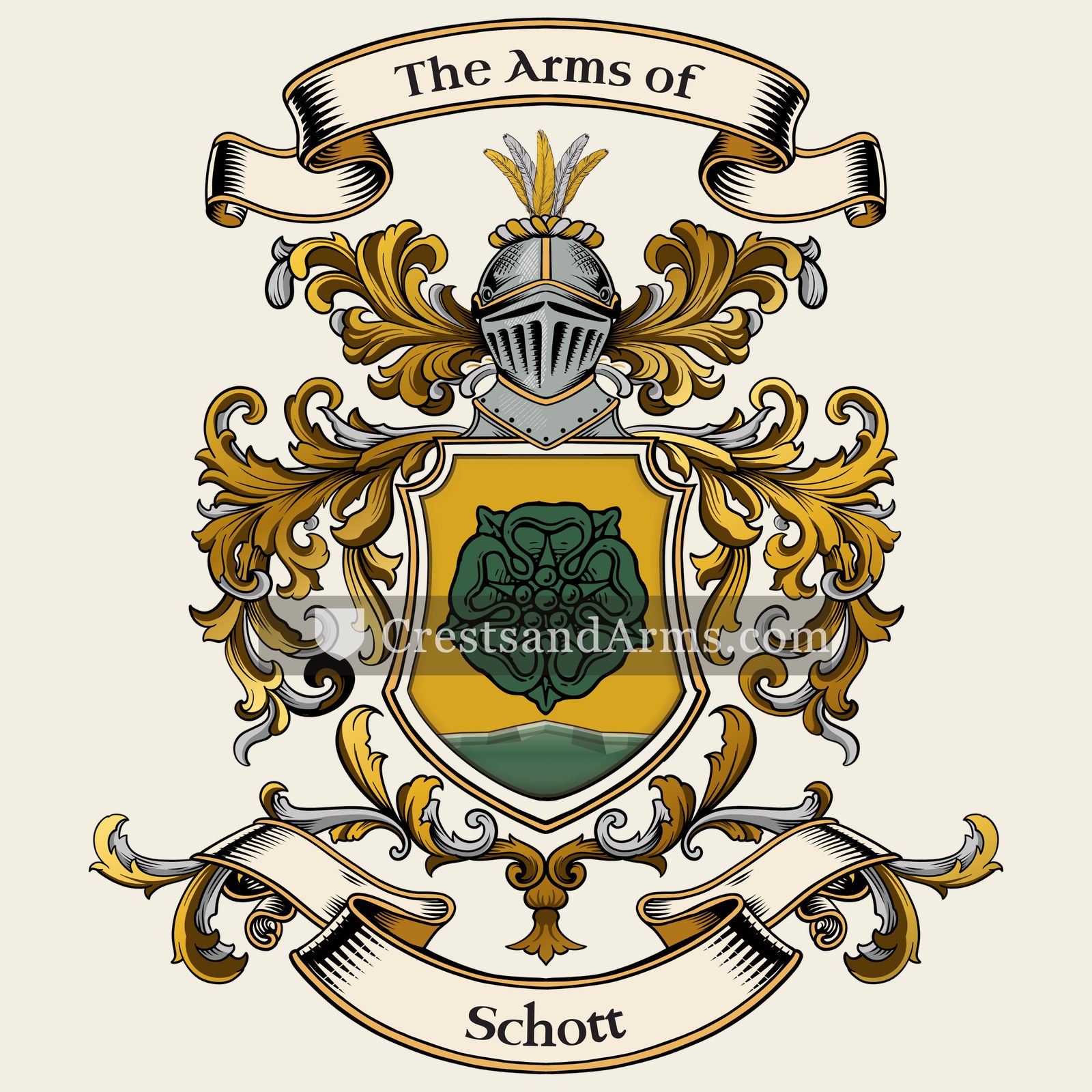
Coat of Arms & Family Crest Details
Symbols on this shield
mountThe ground held, and steadfastness upon it
roseThe seventh son, and beauty with grace
Colours
Gold (Or)Means: Generosity
Green (Vert)Means: Hope
Historical info
Source
J. B. Rietstap, Armorial Général, Gouda: G. B. van Goor Zonen, 1884–87
Blazon (the actual original written record)
“D'or à une tulipe de sin., non feuillée, posée sur un tertre de trois coupeaux du même.”
FranceStrasbourg, c. 1663
Digital archive packCoat of arms PNG, gold border print PDF, vector SVG and the certificate of authenticity. Sent to your email in minutes.
Map of France showing where the Schott arms are recorded
The Schott arms were recorded in Strasbourg, c. 1663.
This is where the arms were entered in the register. Families often moved to other parts of the country, so the same name can turn up in more than one region.
The body that granted and recorded arms in France in this period.
Louis XIV of France
Sovereign of the period
Louis XIV of France
1643–1715
Reigning in Austria when the Schott arms are first recorded.
How Arms Worked in France
In France, a coat of arms was a mark of honor that passed down through the male line to all legitimate descendants. Families often used the same shield without changes to show their shared heritage. If a branch wanted to stand out, they could add a small mark to their shield to show their specific place in the family tree.
Granting authority
The Juge d'armes de France acted as the official authority that regulated and verified coats of arms across the country.
How they got arms
Families typically inherited their arms from ancestors, though they could also receive them through royal grants or by proving their noble status.
Where arms were recorded
Coats of arms were officially recorded in the Armorial Général de France, which began its main collection in the year 1696.
The family's standing
Recorded among the armigerous families of France.
Origin & History of the Schott Family in France
The surname Schott carries a deep connection to the complex history of the Alsace region, which has shifted between French and German cultural influences for centuries. By 1663, records confirm that members of the Schott family were well-established in Strasbourg, a city that served as a vital crossroads for trade and intellectual exchange in Europe. During this period, the name was often associated with families of artisans and merchants who helped build the city’s reputation for craftsmanship and commerce. Because Strasbourg was a center for printing and early academic thought, the Schott family likely lived in an environment that valued literacy and professional guilds. As the region transitioned through various political changes, the family remained rooted in the local community, contributing to the unique blend of traditions that define the Alsatian identity. Their presence in the city during the seventeenth century highlights the family's role in the urban development of a territory that was constantly evolving under the influence of both French administration and local Germanic customs.
Related Branches & Arms
Root word
scot
Old High German term referring to a person from Scotland.
This name
SchottAn occupational or ethnic surname originally denoting an immigrant from Scotland or a tax payer.
also spelled
Schot
Shot
Related arms
Schotvariant spelling
Documented Sources
J. B. Rietstap, Armorial Général, Gouda: G. B. van Goor Zonen, 1884–87
Bahlow, Hans, Deutsches Namenlexikon: Familien- und Vornamen nach Ursprung und Sinn erklärt, 1967
Heintze, Albert, Die deutschen Familien-Namen: geschichtlich, geographisch, sprachlich, 1903
Tiroler Landesarchiv, Matriken der Pfarreien in Tirol (Parish registers of Tyrol)
Digital archive packCoat of arms PNG, gold border print PDF, vector SVG and the certificate of authenticity. Sent to your email in minutes.


 mountThe ground held, and steadfastness upon it
 treeLife, endurance and deep roots
 eagleNobility, strength and a keen mind
 wolfReward from long service and hard work
 mountThe ground held, and steadfastness upon it
 treeLife, endurance and deep roots
 eagleNobility, strength and a keen mind
 wolfReward from long service and hard work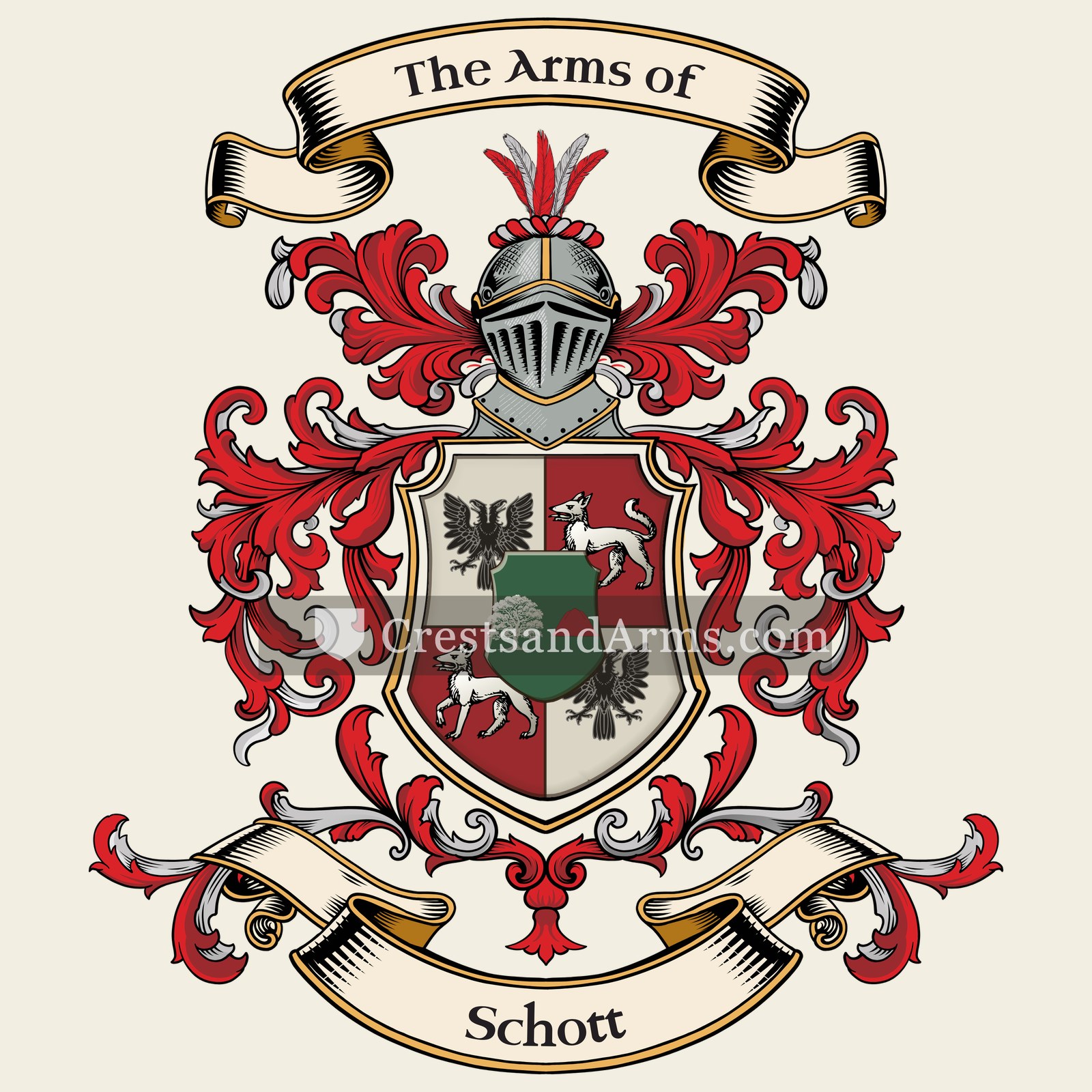


 lionCourage, strength and royalty
 roseThe seventh son, and beauty with grace
 branchPeace, and new growth