Map of Netherlands showing where the Schuerman arms are recorded
The Schuerman arms were recorded in Utrecht, c. 1815.
Utrecht was an old church town with rich farming country around it. Both the church and the land produced families of standing, and families of standing kept arms to seal their documents with.
This is where the arms were entered in the register. Families often moved to other parts of the country, so the same name can turn up in more than one region.
Region
Utrecht
Town
Rotterdam
First recorded
1815
Granting Authority for the Schuerman Arms
Hoge Raad van Adel
Photograph made by me · CC BY-SA 3.0
The body that granted and recorded arms in Netherlands in this period.
William I of the Netherlands
Sovereign of the period
William I of the Netherlands
1815–1840
Reigning in Netherlands when the Schuerman arms are first recorded.
How Arms Worked in Netherlands
In the Netherlands, coats of arms were often used by noble families and those who held specific public offices. These arms were passed down through the generations to legitimate descendants. Younger branches of a family usually kept the original design without needing to add special marks. This system ensured that the family identity remained clear and consistent over many years.
Granting authority
The Hoge Raad van Adel is the official body that regulates and manages noble titles and coats of arms in the Netherlands.
How they got arms
Families typically obtained their coats of arms through official royal grants or by proving their long-standing historical use of the symbols.
Where arms were recorded
Coats of arms are officially recorded in the registers held by the Hoge Raad van Adel, which began its work in 1814.
The family's standing
Recorded among the armigerous families of Utrecht.
Origin & History of the Schuerman Family in Netherlands
The name Schuerman originates from the Low German and Dutch regions, where it functioned as an occupational surname for someone who worked as a shearman or a cloth cutter. These individuals were essential to the textile industry, as they were responsible for trimming the surface of woven wool to create a smooth finish. By the early 19th century, the family had established a documented presence in the city of Utrecht. Records from 1815 confirm that members of the family were living in this historic center, which was a major hub for trade and craftsmanship in the Netherlands. During this period, the Dutch government began standardizing civil registration, which helped solidify the spelling of the name as it transitioned from a descriptive trade title into a permanent family identifier. This shift reflects the broader social changes in the Netherlands as families became more deeply rooted in specific urban communities.
Meaning of the Schuerman family crest colors & symbols
Symbols on this shield
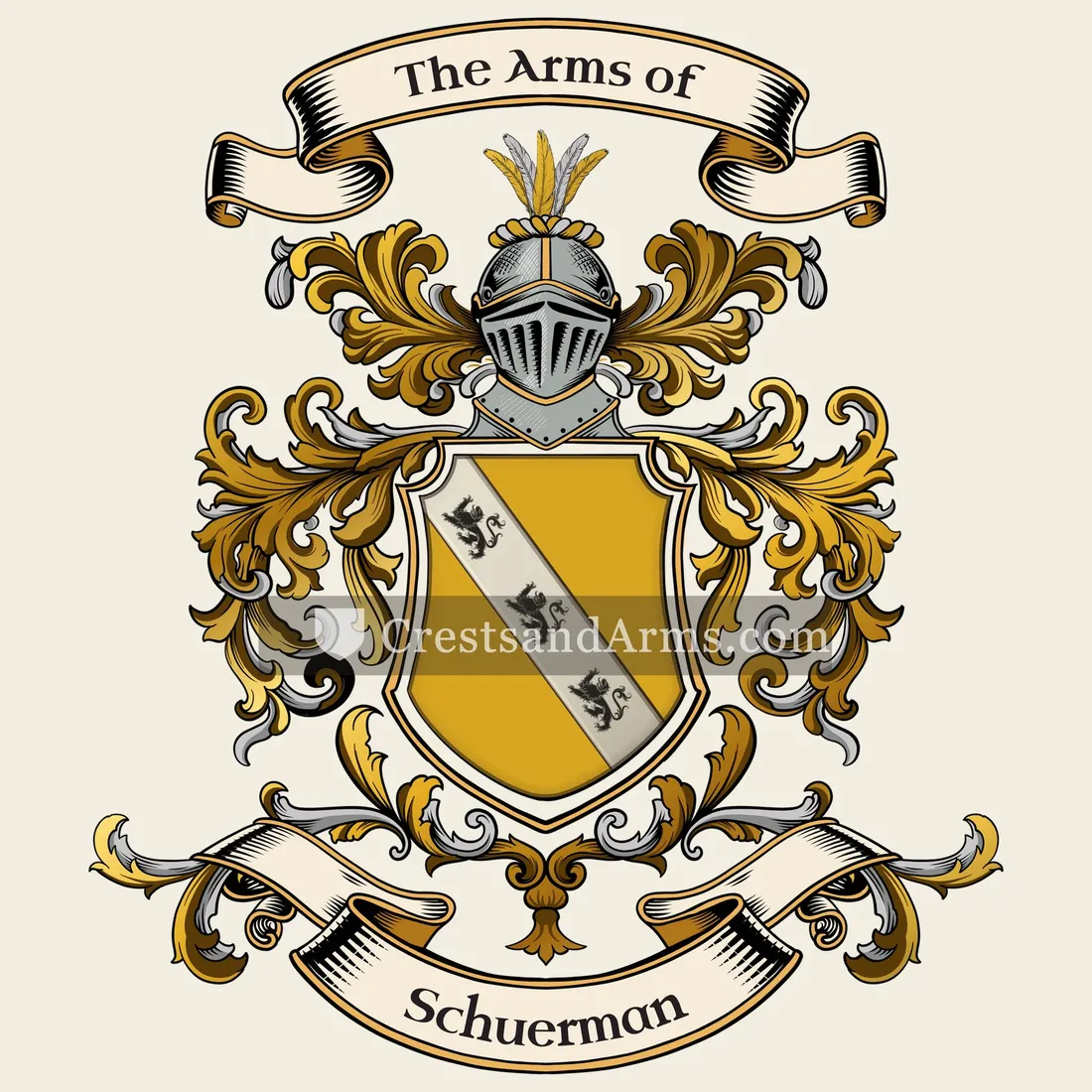
bendDefence, and the scarf of a commander
lionCourage, strength and royalty
Colours
Gold (Or)Means: Generosity
Silver (Argent)Means: Peace and sincerity
Black (Sable)Means: Constancy
Historical info
Source
J. B. Rietstap, Armorial Général, Gouda: G. B. van Goor Zonen, 1884–87
Blazon (the actual original written record)
“D'or à la bande d'arg., ch. de trois lions ramp. de sa.”
FlandreFlandre, c. 1663
Digital archive packCoat of arms PNG, gold border print PDF, vector SVG and the certificate of authenticity. Sent to your email in minutes.
Map of Belgium showing where the Schuerman arms are recorded
The Schuerman arms were recorded in Flandre, c. 1663.
Flandre grew rich on cloth, and its towns were among the busiest in Europe. Merchant families bought land with their profits and took arms to go with it, so trade put as many names in the registers here as land did.
This is where the arms were entered in the register. Families often moved to other parts of the country, so the same name can turn up in more than one region.
The body that granted and recorded arms in Belgium in this period.
Philip IV of Spain
Sovereign of the period
Philip IV of Spain
1621–1665
Reigning in Netherlands when the Schuerman arms are first recorded.
How Arms Worked in Belgium
In Belgium, a coat of arms is considered personal property that is passed down through the male line to legitimate descendants. Families often use the same shield design across generations to show their shared heritage. If a branch of the family wants to change the design, they must apply for an official update to their specific version of the arms.
Granting authority
The Conseil héraldique is the official body that regulates and approves all coats of arms in Belgium.
How they got arms
Families obtain their coats of arms through formal royal grants or by confirming their historical right to use existing designs.
Where arms were recorded
All approved coats of arms are officially recorded in the public registers of the Conseil héraldique since 1844.
The family's standing
Recorded among the armigerous families of Flandre.
Origin & History of the Schuerman Family in Belgium
The family name Schuerman finds its roots in the historic region of Flanders, where records confirm the presence of family members as early as 1663. During this period, the name likely functioned as an occupational descriptor, derived from the Middle Dutch term for a person who worked with or lived near a barn or shed. Life in seventeenth-century Flanders was defined by a complex social structure and a landscape shaped by both agriculture and the growing influence of regional trade centers. Families like the Schuermans were often deeply connected to the local parish system, which served as the primary record-keeper for births, marriages, and deaths. As the region navigated the political shifts of the time, the family likely maintained a steady presence within the rural or semi-urban communities of the Flemish provinces. By establishing themselves in this specific cultural environment, early generations helped define the lineage's long-standing association with the linguistic and social traditions of the Low Countries.
Schuerman Meaning & Related Branches
Root word
Schuur
A barn or storage shed for agricultural produce.
This name
SchuermanAn occupational surname for a person who worked in or lived near a barn.
also spelled
Schurman
Schuerman
Shoorman
Shurman
Documented Sources
J. B. Rietstap, Armorial Général, Gouda: G. B. van Goor Zonen, 1884–87
Leendert Brouwer, Nederlandse Familienamen Databank, 2000
P.J. Meertens, De betekenis van de Nederlandse familienamen, 1950
Het Utrechts Archief, Burgerlijke Stand van de gemeente Utrecht, 1811-1902
Digital archive packCoat of arms PNG, gold border print PDF, vector SVG and the certificate of authenticity. Sent to your email in minutes.


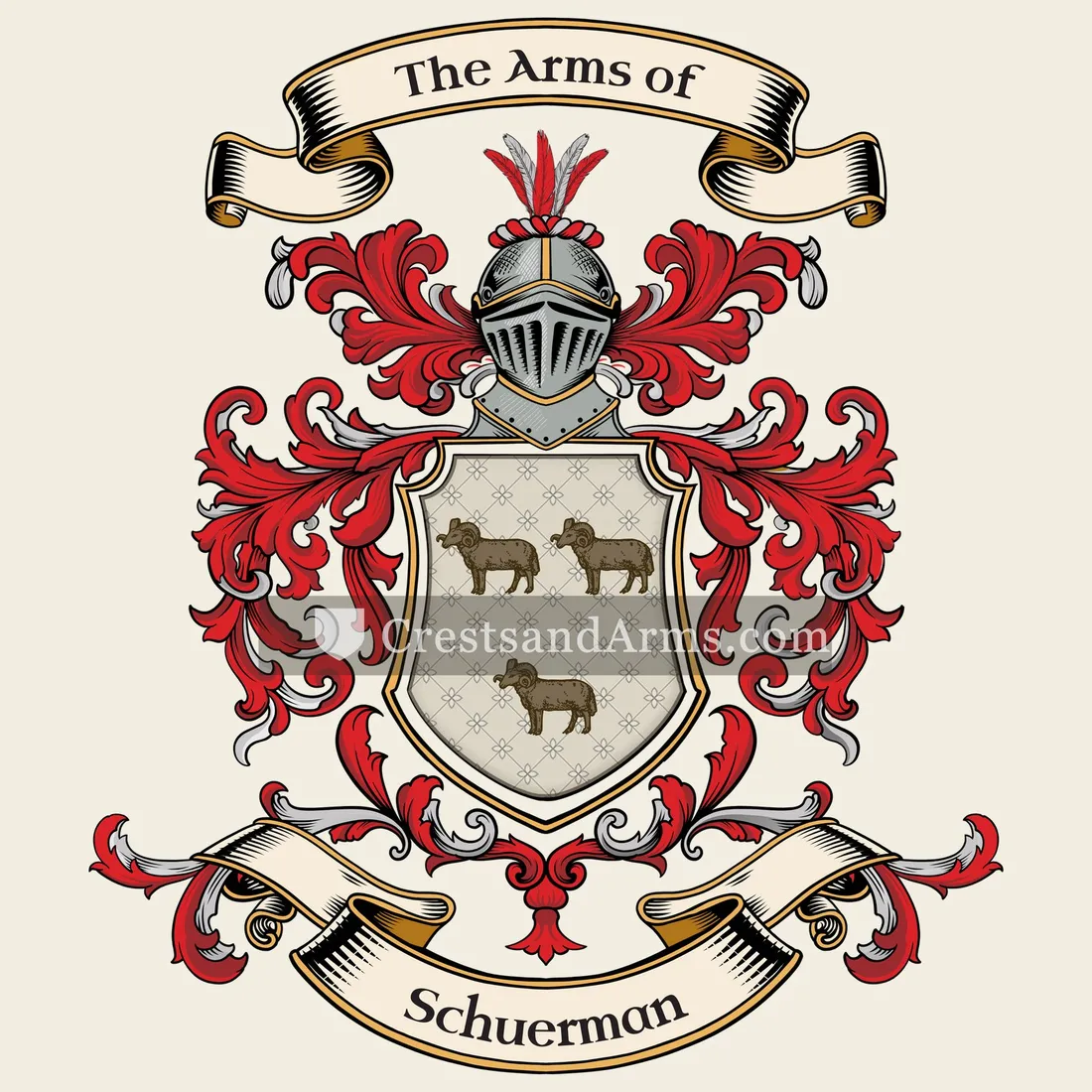
 ramLeadership and authority
 ramLeadership and authority


 bendDefence, and the scarf of a commander
 lionCourage, strength and royalty