Map of Belgium showing where the Schwitz arms are recorded
The Schwitz arms were recorded in Brabant, c. 1737.
Brabant lay at the heart of the Low Countries, where the trade routes met. Its towns were wealthy and its landowners many, and both kinds of family kept arms, which is why the region is so heavily represented.
This is where the arms were entered in the register. Families often moved to other parts of the country, so the same name can turn up in more than one region.
The body that granted and recorded arms in Belgium in this period.
Charles VI, Holy Roman Emperor
Sovereign of the period
Charles VI, Holy Roman Emperor
1711–1740
Reigning in Belgium when the Schwitz arms are first recorded.
How Arms Worked in Belgium
In Belgium, a coat of arms is considered personal property that is passed down through the male line to legitimate descendants. Families often use the same shield design across generations to show their shared heritage. If a branch of the family wants to change the design, they must apply for an official update to their specific version of the arms.
Granting authority
The Conseil héraldique is the official body that regulates and approves all coats of arms in Belgium.
How they got arms
Families obtain their coats of arms through formal royal grants or by confirming their historical right to use existing designs.
Where arms were recorded
All approved coats of arms are officially recorded in the public registers of the Conseil héraldique since 1844.
The family's standing
Recorded among the armigerous families of Brabant.
Origin & History of the Schwitz Family in Belgium
The history of the Schwitz family in Belgium centers on the historic Duchy of Brabant, where records confirm their presence as early as 1737. During the eighteenth century, Brabant was a vibrant region under the rule of the Austrian Netherlands, serving as a crossroads for trade and cultural exchange between Germanic and French-speaking territories. Families like the Schwitzes often lived in these bustling borderlands where surnames frequently evolved due to local dialects and the movement of workers across administrative lines. Settling in this area suggests that the family likely participated in the local agricultural or artisanal economy that defined the Brabant countryside during the Enlightenment. By maintaining a documented presence in this specific region, the family became part of the long tradition of provincial life that shaped the social structure of modern Belgium.
Meaning of the Schwitz family crest colors & symbols
Symbols on this shield
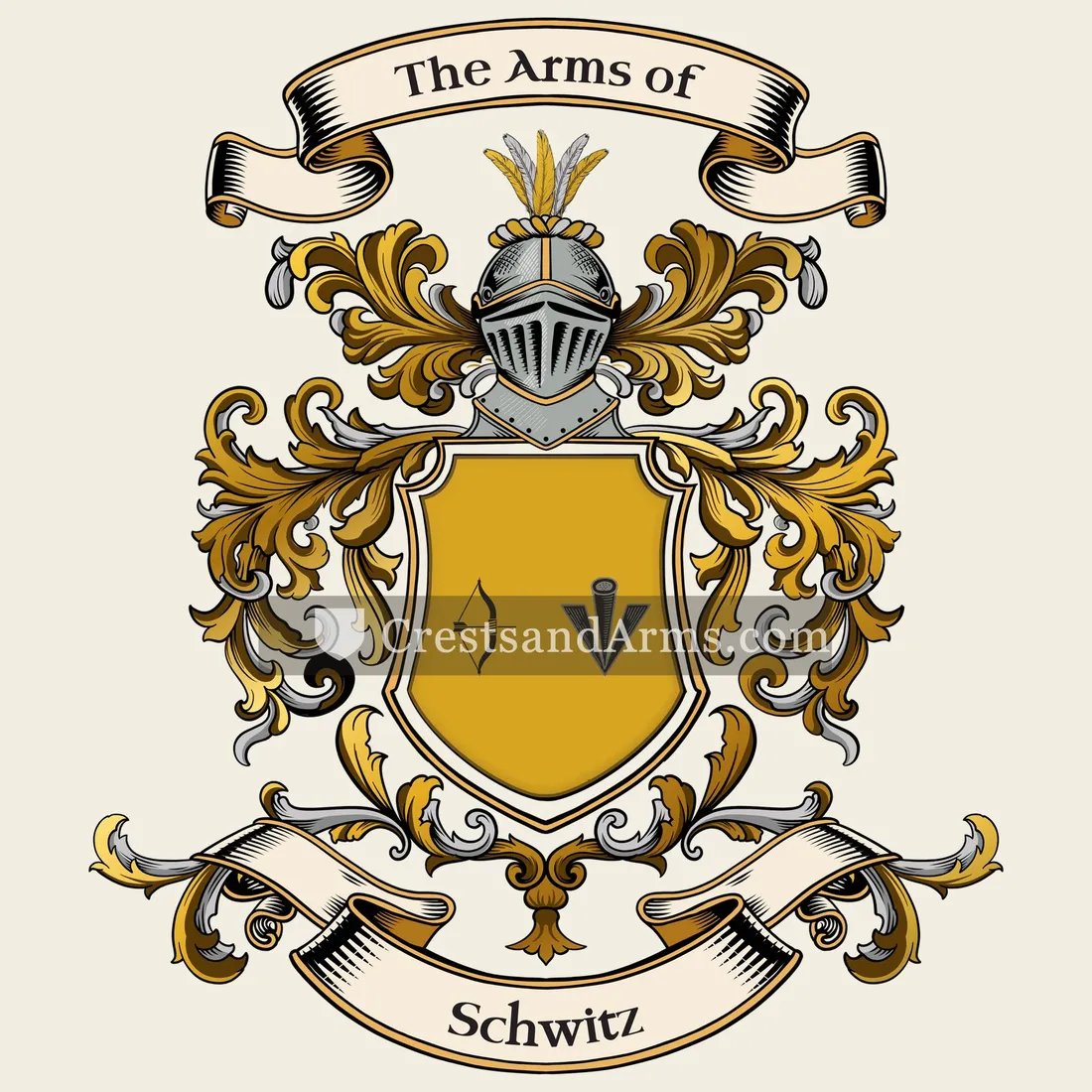
bowReadiness, and the strength held in reserve
arrowReadiness for battle, and affliction endured
Colours
Gold (Or)Means: Generosity
Black (Sable)Means: Constancy
Historical info
Source
J. B. Rietstap, Armorial Général, Gouda: G. B. van Goor Zonen, 1884–87
Blazon (the actual original written record)
“D'or à un arc de sa. en barre, encoché d'une flèche émoussée du même, empennée d'arg. C.: un homme iss., hab. de sa., rebr. d'or, tort. de sa. et d'or, tenant l'arc et la flèche.”
SaxonySaxony, c. 1486
Digital archive packCoat of arms PNG, gold border print PDF, vector SVG and the certificate of authenticity. Sent to your email in minutes.
Map of Germany showing where the Schwitz arms are recorded
The Schwitz arms were recorded in Saxony, c. 1486.
Saxony had mines, trade and old landed families all at once. Silver made some fortunes and land held others, and both sorts of family kept arms, which is why Saxon names appear so often in the registers.
This is where the arms were entered in the register. Families often moved to other parts of the country, so the same name can turn up in more than one region.
The body that granted and recorded arms in Germany in this period.
Frederick III, Holy Roman Emperor
Sovereign of the period
Frederick III, Holy Roman Emperor
1440–1493
Reigning in Belgium when the Schwitz arms are first recorded.
How Arms Worked in Germany
In the Holy Roman Empire, coats of arms were often granted to individuals by the Emperor or his representatives. These arms were then passed down through the generations to all legitimate descendants of the original holder. Younger branches of a family usually kept the same shield design without needing to change it, as the arms belonged to the entire lineage.
Granting authority
The Holy Roman Emperor held the sole power to grant new coats of arms throughout his vast imperial territories.
How they got arms
Families typically obtained their coats of arms through a formal imperial grant or by proving their noble status to the authorities.
Where arms were recorded
These grants were officially recorded in the Imperial Chancery registers, which began keeping formal records of such honors during the Middle Ages.
The family's standing
Recorded among the armigerous families of Saxony.
Origin & History of the Schwitz Family in Germany
The surname Schwitz finds its roots in the historical landscape of Saxony, where family members were documented as early as 1486. During this period, the name likely emerged as a descriptive identifier linked to the geography or the specific occupations of those living in the region. Saxony was a major center for trade and mining at the end of the fifteenth century, which created a dynamic environment for families to establish their presence within local village structures. As the family settled into these communities, the name became a permanent marker of their identity and their connection to the land. Over time, the name evolved alongside the shifting social and political boundaries of the German territories, reflecting the resilience of a family that maintained its roots in the Saxon region for generations.
Meaning of the Schwitz family crest colors & symbols
Symbols on this shield
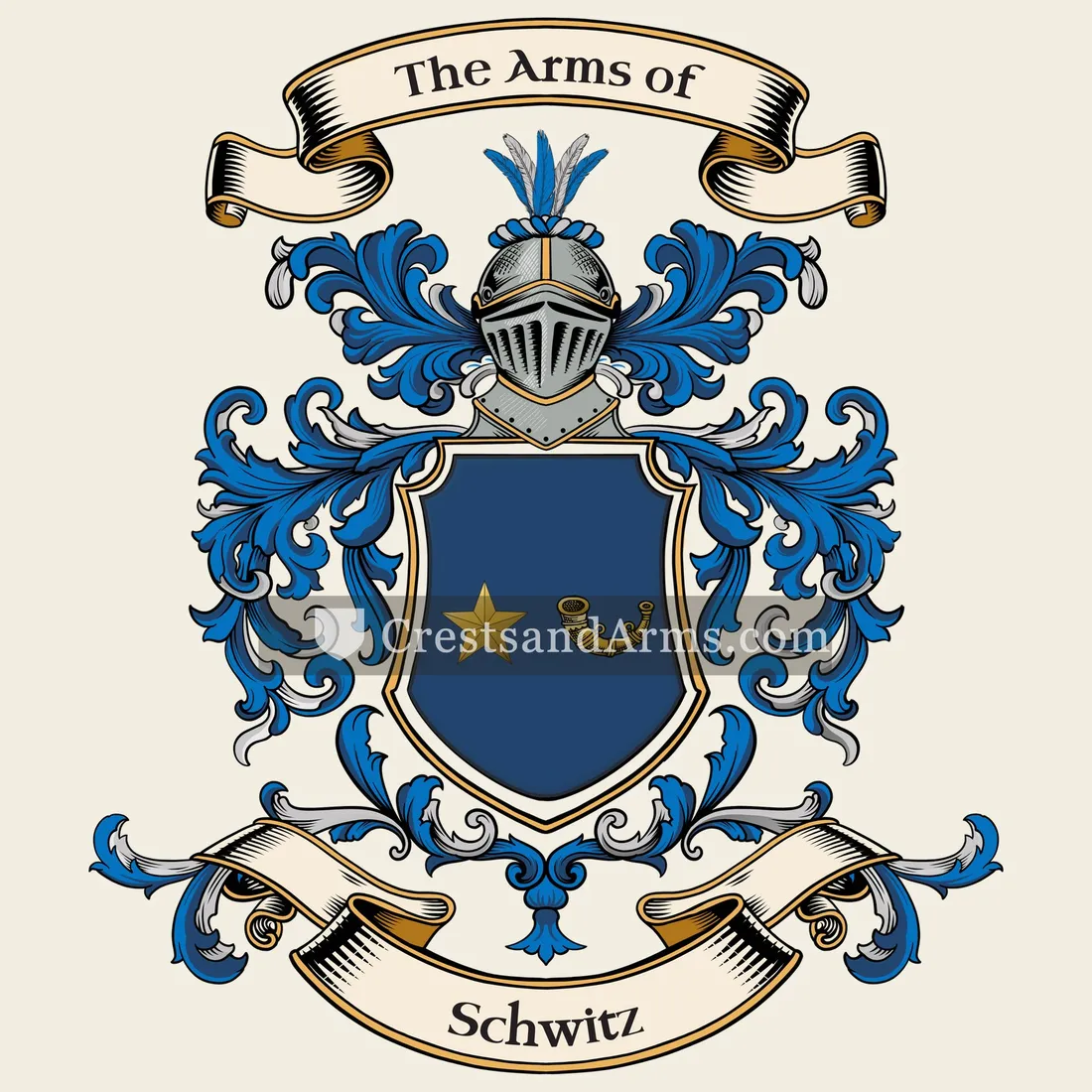
mulletThe third son, and a divine quality from above
hunting horn stringedOne who delights in the chase
Colours
Blue (Azure)Means: Loyalty and truth
Gold (Or)Means: Generosity
Historical info
Source
Sir Bernard Burke, The General Armory of England, Scotland, Ireland and Wales, London: Harrison & Sons, 1884
Blazon (the actual original written record)
“Az. in dexter chief a mullet, in sinister base a stag's horn or”
NorfolkGillingham · Norfolk, c. 1620
Digital archive packCoat of arms PNG, gold border print PDF, vector SVG and the certificate of authenticity. Sent to your email in minutes.
Map of England showing where the Schwitz arms are recorded
The Schwitz arms were recorded in Norfolk, c. 1620.
Norfolk grew rich on wool and grain, and its wealth was spread among many middling families rather than a few great ones. Households of that kind bought land and took arms, and the county holds a large share of English names.
This is where the arms were entered in the register. Families often moved to other parts of the country, so the same name can turn up in more than one region.
The body that granted and recorded arms in England in this period.
James VI and I
Sovereign of the period
James VI and I
1603–1625
Reigning in Belgium when the Schwitz arms are first recorded.
How Arms Worked in England
English heraldry allowed arms to be shared by all legitimate descendants of the original owner. These symbols were treated as personal property that moved through the generations to all children. While the eldest son kept the original design, other family members could use the same shield without needing to change it or register their own unique versions.
Granting authority
The College of Arms in London has regulated the use of coats of arms throughout England and Wales since 1484.
How they got arms
Families typically obtained their coats of arms through a formal grant from the Crown or by proving their ancient right to them.
Where arms were recorded
All official coats of arms are recorded in the registers kept at the College of Arms, which date back to the fifteenth century.
The family's standing
Recorded among the armigerous families of Norfolk.
Origin & History of the Schwitz Family in England
The family name Schwitz arrived in England during a period of significant migration and social change in the early seventeenth century. By 1620, records confirm that members of the family had established a presence in the county of Norfolk. This region was a common destination for continental Europeans seeking new opportunities or fleeing instability in their homelands. As these early settlers integrated into English society, they often adapted to the local customs and agricultural lifestyle of East Anglia. Because Norfolk was a major hub for trade and textile manufacturing at the time, the family likely participated in the bustling economy of the region. Over time, the name became part of the local fabric, reflecting the broader history of immigrant families who helped shape the cultural and economic landscape of coastal England.
Schwitz Meaning & Related Branches
Root word
Sweat
A Middle High German term referring to perspiration or moisture.
This name
SchwitzA topographic or occupational name likely denoting someone who worked hard or lived near a damp area.
also spelled
Schutze
Schutzs
Schutzer
Shuts
Schut
Documented Sources
J. B. Rietstap, Armorial Général, Gouda: G. B. van Goor Zonen, 1884–87
Archives: State Archives in Belgium (Rijksarchief in België), Parish Registers of the Duchy of Brabant (Parochieregisters van het Hertogdom Brabant)
Book: Warlop, E., The Flemish Nobility before 1300 (1975)
Book: De Smet, A., Geschiedenis van de Brabantse steden (1962)
Digital archive packCoat of arms PNG, gold border print PDF, vector SVG and the certificate of authenticity. Sent to your email in minutes.


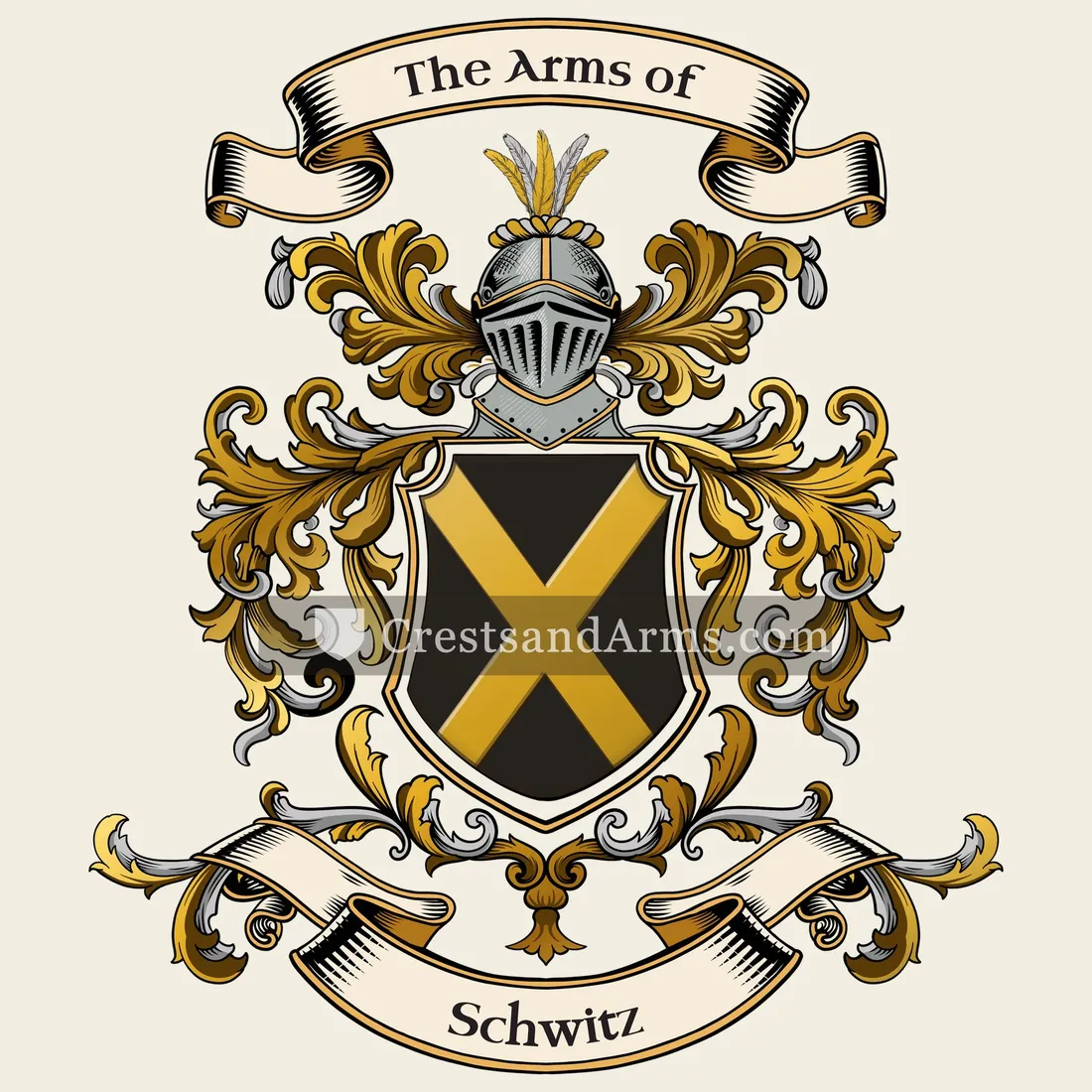
 saltireResolution, and St Andrew's cross
 saltireResolution, and St Andrew's cross


 bowReadiness, and the strength held in reserve
 arrowReadiness for battle, and affliction endured


 mulletThe third son, and a divine quality from above
 hunting horn stringedOne who delights in the chase