A record of documented arms, meaning and origin, researched for the Schwoerer family lines. Documented in 3 countries.
Reg. 5247 · Dutch, T–V
Meaning of the Schwoerer family crest colors & symbols
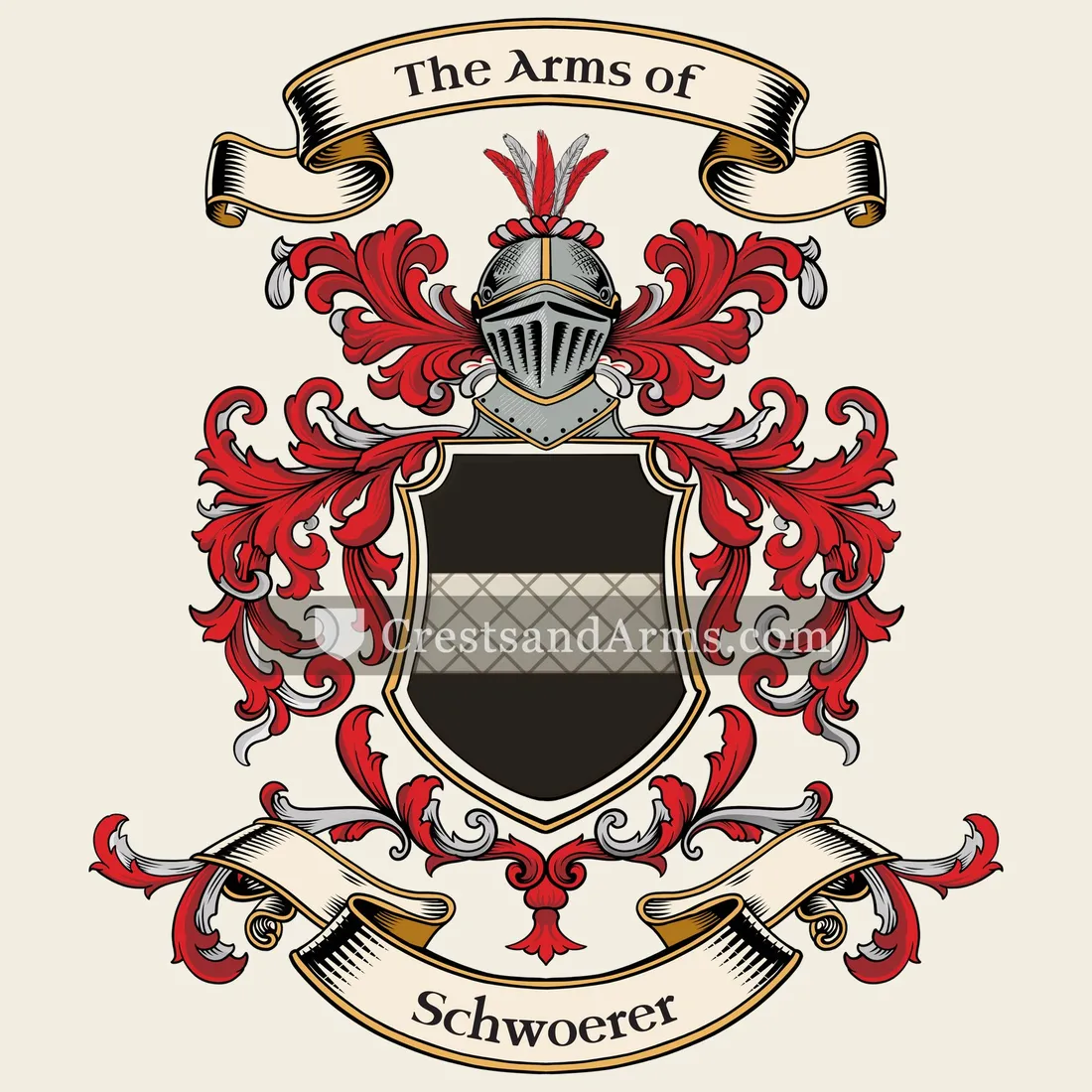
Symbols on this shield
fessThe military belt, and readiness to serve
Colours
Black (Sable)Means: Constancy
Silver (Argent)Means: Peace and sincerity
Historical info
Source
J. B. Rietstap, Armorial Général, Gouda: G. B. van Goor Zonen, 1884–87
Blazon (the actual original written record)
“De sa. à la fasce d'arg., acc. de trois forces du même, les bouts en bas. C.: un bouc iss. d'arg., accorné et onglé d'or. S.: deux boucs d'arg., accornés et onglés d'or [V. Radermacher-Schorer.]”
ZeelandZeeland, c. 1815
Digital archive packCoat of arms PNG, gold border print PDF, vector SVG and the certificate of authenticity. Sent to your email in minutes.
Map of Netherlands showing where the Schwoerer arms are recorded
The Schwoerer arms were recorded in Zeeland, c. 1815.
Zeeland was a scatter of islands in the south-west of the Netherlands, living on the sea and on land reclaimed from it. Families who drained and held that land were counted among the gentry, and gentry carried arms.
This is where the arms were entered in the register. Families often moved to other parts of the country, so the same name can turn up in more than one region.
Region
Zeeland
First recorded
1815
Granting Authority for the Schwoerer Arms
Hoge Raad van Adel
Photograph made by me · CC BY-SA 3.0
The body that granted and recorded arms in Netherlands in this period.
William I of the Netherlands
Sovereign of the period
William I of the Netherlands
1815–1840
Reigning in Netherlands when the Schwoerer arms are first recorded.
How Arms Worked in Netherlands
In the Netherlands, coats of arms were often used by noble families and those who held specific public offices. These arms were passed down through the generations to legitimate descendants. Younger branches of a family usually kept the original design without needing to add special marks. This system ensured that the family identity remained clear and consistent over many years.
Granting authority
The Hoge Raad van Adel is the official body that regulates and manages noble titles and coats of arms in the Netherlands.
How they got arms
Families typically obtained their coats of arms through official royal grants or by proving their long-standing historical use of the symbols.
Where arms were recorded
Coats of arms are officially recorded in the registers held by the Hoge Raad van Adel, which began its work in 1814.
The family's standing
Recorded among the armigerous families of Zeeland.
Origin & History of the Schwoerer Family in Netherlands
The family name Schwoerer likely arrived in the Netherlands as part of the movement of people across European borders during the early nineteenth century. By 1815, records confirm that members of the family were established in the province of Zeeland, a region defined by its complex relationship with the sea and its history as a hub for international trade. Because the name itself suggests a Germanic origin, it is probable that these early settlers were part of the migration patterns that brought skilled workers and laborers into Dutch coastal towns during the post-Napoleonic era. Life in Zeeland at this time required great resilience, as families often navigated the challenges of a changing economy and the constant need to protect their land from the North Sea. These early ancestors helped shape the local community by integrating into the Dutch social structure while maintaining the distinct identity associated with their surname. Their presence in the regional archives serves as a testament to the family's long-standing roots in the area and their role in the historical development of the Dutch province.
Meaning of the Schwoerer family crest colors & symbols
Colours
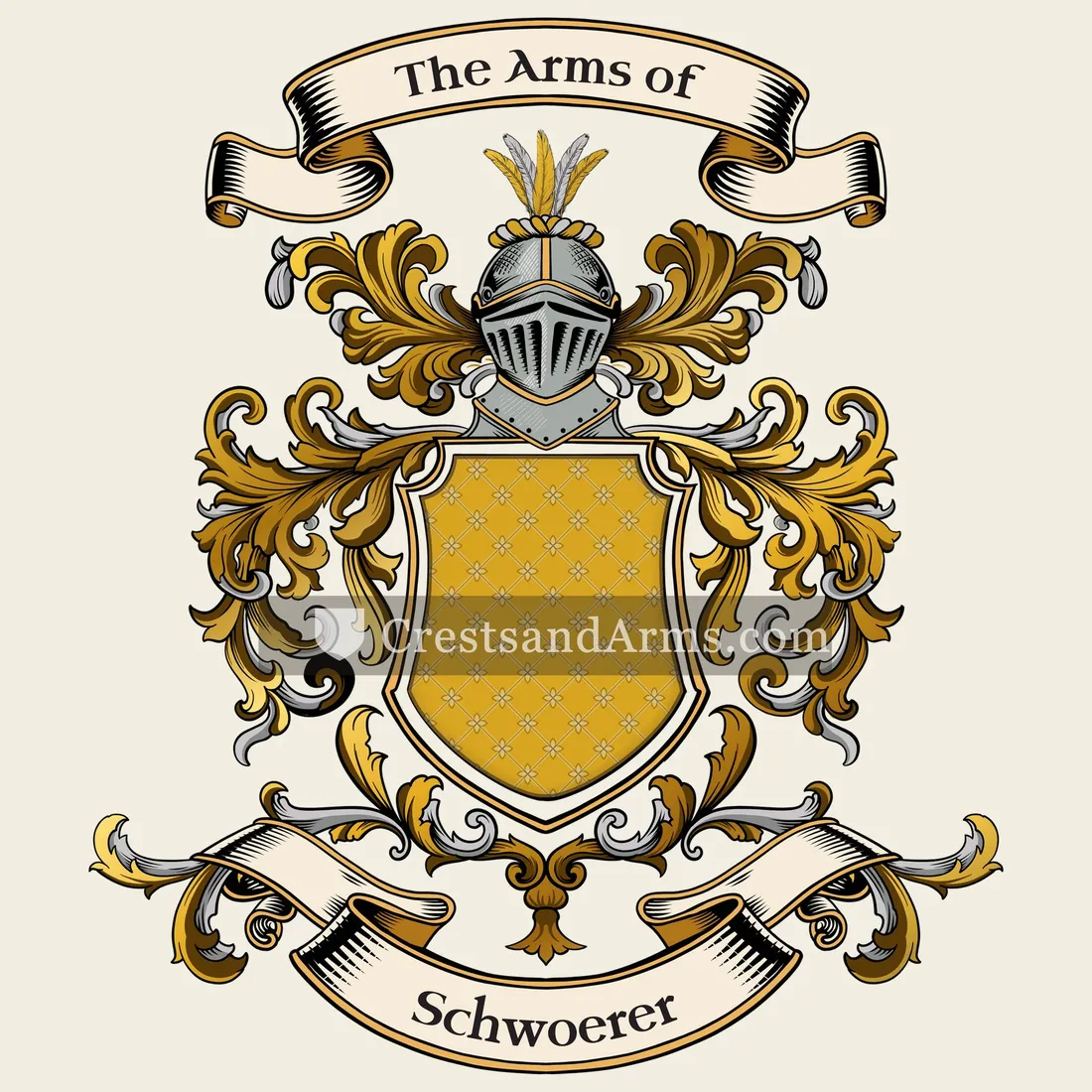
Gold (Or)Means: Generosity
Historical info
Source
J. B. Rietstap, Armorial Général, Gouda: G. B. van Goor Zonen, 1884–87
Blazon (the actual original written record)
“D'or à un buste de More, hab. de sa., au rabat d'or, cour. du même. Cq. cour. C.: le buste.”
GermanyAugsbourg, c. 1765
Digital archive packCoat of arms PNG, gold border print PDF, vector SVG and the certificate of authenticity. Sent to your email in minutes.
Map of Germany showing where the Schwoerer arms are recorded
The Schwoerer arms were recorded in Augsbourg, c. 1765.
This is where the arms were entered in the register. Families often moved to other parts of the country, so the same name can turn up in more than one region.
The body that granted and recorded arms in Germany in this period.
Francis I, Holy Roman Emperor
Sovereign of the period
Francis I, Holy Roman Emperor
1745–1765
Reigning in Netherlands when the Schwoerer arms are first recorded.
How Arms Worked in Germany
In the Holy Roman Empire, coats of arms were often granted to individuals by the Emperor or his representatives. These arms were then passed down through the generations to all legitimate descendants of the original holder. Younger branches of a family usually kept the same shield design without needing to change it, as the arms belonged to the entire lineage.
Granting authority
The Holy Roman Emperor held the sole power to grant new coats of arms throughout his vast imperial territories.
How they got arms
Families typically obtained their coats of arms through a formal imperial grant or by proving their noble status to the authorities.
Where arms were recorded
These grants were officially recorded in the Imperial Chancery registers, which began keeping formal records of such honors during the Middle Ages.
The family's standing
Recorded among the armigerous families of Germany.
Origin & History of the Schwoerer Family in Germany
The name Schwoerer originates from the German word *Schwörer*, which historically identified a person who had taken a formal oath. In the social structure of the Holy Roman Empire, taking an oath was a significant act that often marked a person as a reliable citizen, a guild member, or a sworn official of a town. By the time the family was documented in Augsburg in 1765, the city was a major center for trade and craftsmanship. Families with this name were likely integrated into the urban life of the region, where they would have participated in the local guilds or civic administration. Because Augsburg was a hub for banking and textile manufacturing during the eighteenth century, the Schwoerer family lived in an environment that valued legal standing and professional accountability. This history suggests that the name was not just a label, but a reflection of the family’s long-standing role in the civic and legal traditions of southern Germany.
Meaning of the Schwoerer family crest colors & symbols
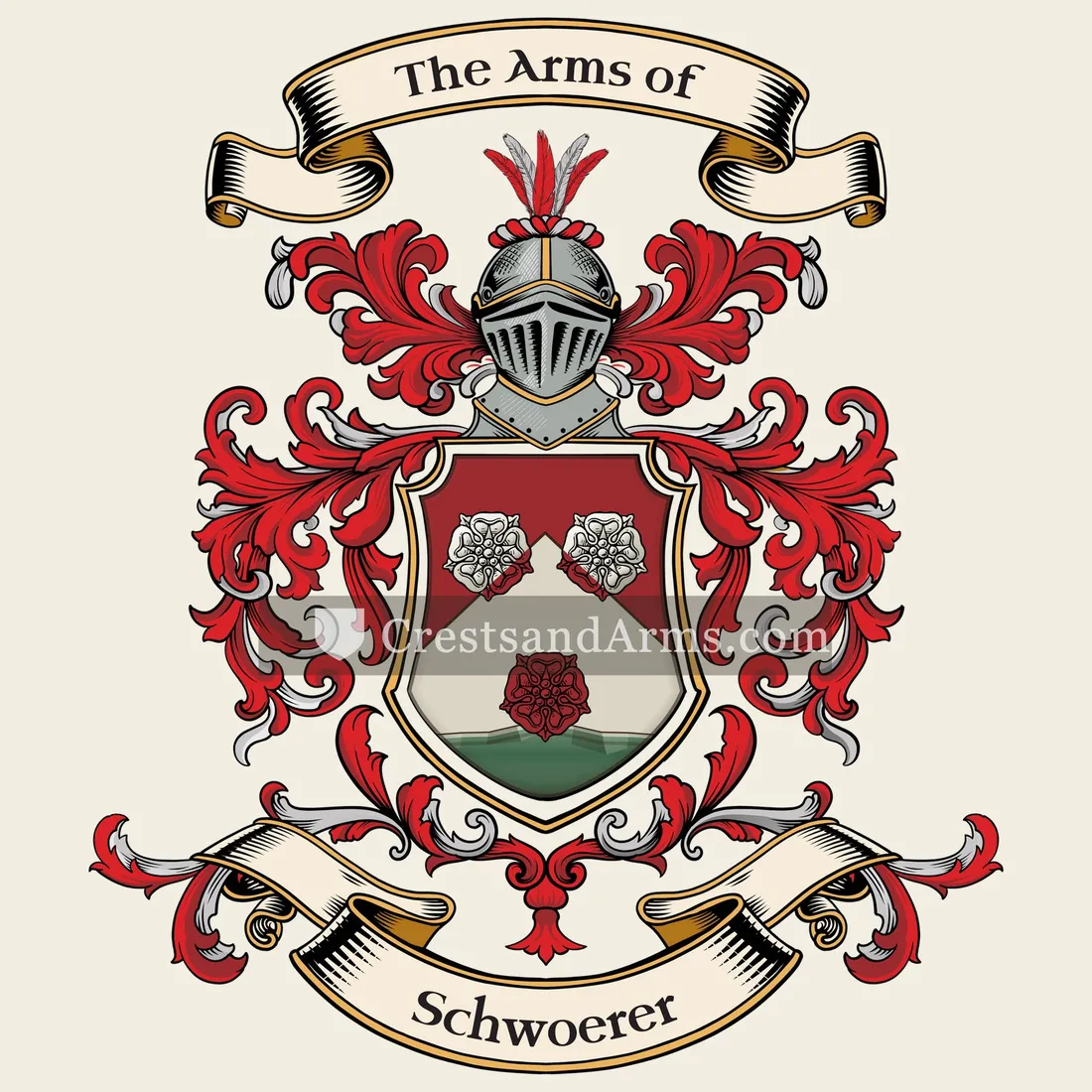
Symbols on this shield
mountThe ground held, and steadfastness upon it
roseThe seventh son, and beauty with grace
Colours
Red (Gules)Means: Military strength
Silver (Argent)Means: Peace and sincerity
Green (Vert)Means: Hope
Historical info
Source
J. B. Rietstap, Armorial Général, Gouda: G. B. van Goor Zonen, 1884–87
Blazon (the actual original written record)
“De gu., chapé-ployé d'arg.; à trois roses de l'un en l'autre, 2 et 1; et en p. un tertre de sin. C.: une rose de gu.”
SwitzerlandBerne, c. 1745
Digital archive packCoat of arms PNG, gold border print PDF, vector SVG and the certificate of authenticity. Sent to your email in minutes.
Map of Switzerland showing where the Schwoerer arms are recorded
The Schwoerer arms were recorded in Berne, c. 1745.
This is where the arms were entered in the register. Families often moved to other parts of the country, so the same name can turn up in more than one region.
The body that granted and recorded arms in Switzerland in this period.
How Arms Worked in Switzerland
In Switzerland, coats of arms were not restricted to the nobility and were often adopted by common citizens and families. These symbols were passed down through generations to show family identity. When branches of a family grew, they often changed small details of the design to distinguish their own line from the original group.
Granting authority
Cantonal and civic authorities managed the use of coats of arms within their specific regions and local jurisdictions.
How they got arms
Families typically assumed their own coats of arms based on local custom rather than receiving them from a central monarch.
Where arms were recorded
Arms were recorded in various cantonal and civic registers starting from the fourteenth century throughout the Swiss region.
The family's standing
Recorded among the armigerous families of Switzerland.
Origin & History of the Schwoerer Family in Switzerland
The family name Schwoerer has deep roots in the Swiss region, with historical documentation confirming that members of the family were established in the city of Berne by 1745. The name itself is derived from the Middle High German word *swuorer*, which historically referred to a person who took a formal oath or a person who served as a witness in legal matters. In the context of 18th-century Switzerland, families with this name were often integrated into the local civic life of the cantons, where they frequently worked as skilled tradespeople or held positions within the local administration. Because the Swiss Confederation during this era was organized into distinct city-states, the presence of the Schwoerer family in Berne suggests they were part of the established citizenry who participated in the social and economic growth of the city. Their history reflects the broader movement of families who settled in the Swiss plateau, contributing to the development of the region through their roles as citizens and community members.
Schwoerer Meaning & Related Branches
Root word
Schwörer
German occupational term for someone who takes an oath.
This name
SchwoererRefers to a person who has sworn an oath or testified under oath.
also spelled
Schorr
Documented Sources
J. B. Rietstap, Armorial Général, Gouda: G. B. van Goor Zonen, 1884–87
Zeeuws Archief, Burgerlijke Stand Zeeland (1796–1940)
Digital archive packCoat of arms PNG, gold border print PDF, vector SVG and the certificate of authenticity. Sent to your email in minutes.


 fessThe military belt, and readiness to serve
 fessThe military belt, and readiness to serve




 mountThe ground held, and steadfastness upon it
 roseThe seventh son, and beauty with grace