Map of Germany showing where the Senn arms are recorded
The Senn arms were recorded in Germany, c. 1765.
Arms such as these were typically recorded in Bavaria.
Bavaria was a country of old landed families and walled market towns. Estates passed down the same line for centuries, and both the landowners and the leading townsmen kept arms, which is why so many Bavarian names sit in the registers.
This is where the arms were entered in the register. Families often moved to other parts of the country, so the same name can turn up in more than one region.
The body that granted and recorded arms in Germany in this period.
Francis I, Holy Roman Emperor
Sovereign of the period
Francis I, Holy Roman Emperor
1745–1765
Reigning in Germany when the Senn arms are first recorded.
How Arms Worked in Germany
In the Holy Roman Empire, coats of arms were often granted to individuals by the Emperor or his representatives. These arms were then passed down through the generations to all legitimate descendants of the original holder. Younger branches of a family usually kept the same shield design without needing to change it, as the arms belonged to the entire lineage.
Granting authority
The Holy Roman Emperor held the sole power to grant new coats of arms throughout his vast imperial territories.
How they got arms
Families typically obtained their coats of arms through a formal imperial grant or by proving their noble status to the authorities.
Where arms were recorded
These grants were officially recorded in the Imperial Chancery registers, which began keeping formal records of such honors during the Middle Ages.
The family's standing
Recorded among the armigerous families of Germany.
Origin & History of the Senn Family in Germany
The surname Senn originated as a descriptive occupational name in the German-speaking regions of Europe, specifically referring to a person who worked as an alpine herdsman or a cheesemaker. In the mountainous landscapes of Bavaria and the surrounding Alpine territories, these individuals played a vital role in the rural economy by managing livestock in high-altitude pastures during the summer months. By the year 1765, records confirm that families bearing this name were well-established within the Bavarian region, where they were deeply integrated into the local agricultural traditions. Because the name was tied to a specific trade, it often appeared in parish registers and tax documents that tracked the movement of farmers and mountain laborers. Over generations, the name transitioned from a simple job title into a permanent family identifier, reflecting the rugged lifestyle and the essential role these ancestors played in the development of mountain village communities.
Coat of Arms & Family Crest Details
Symbols on this shield
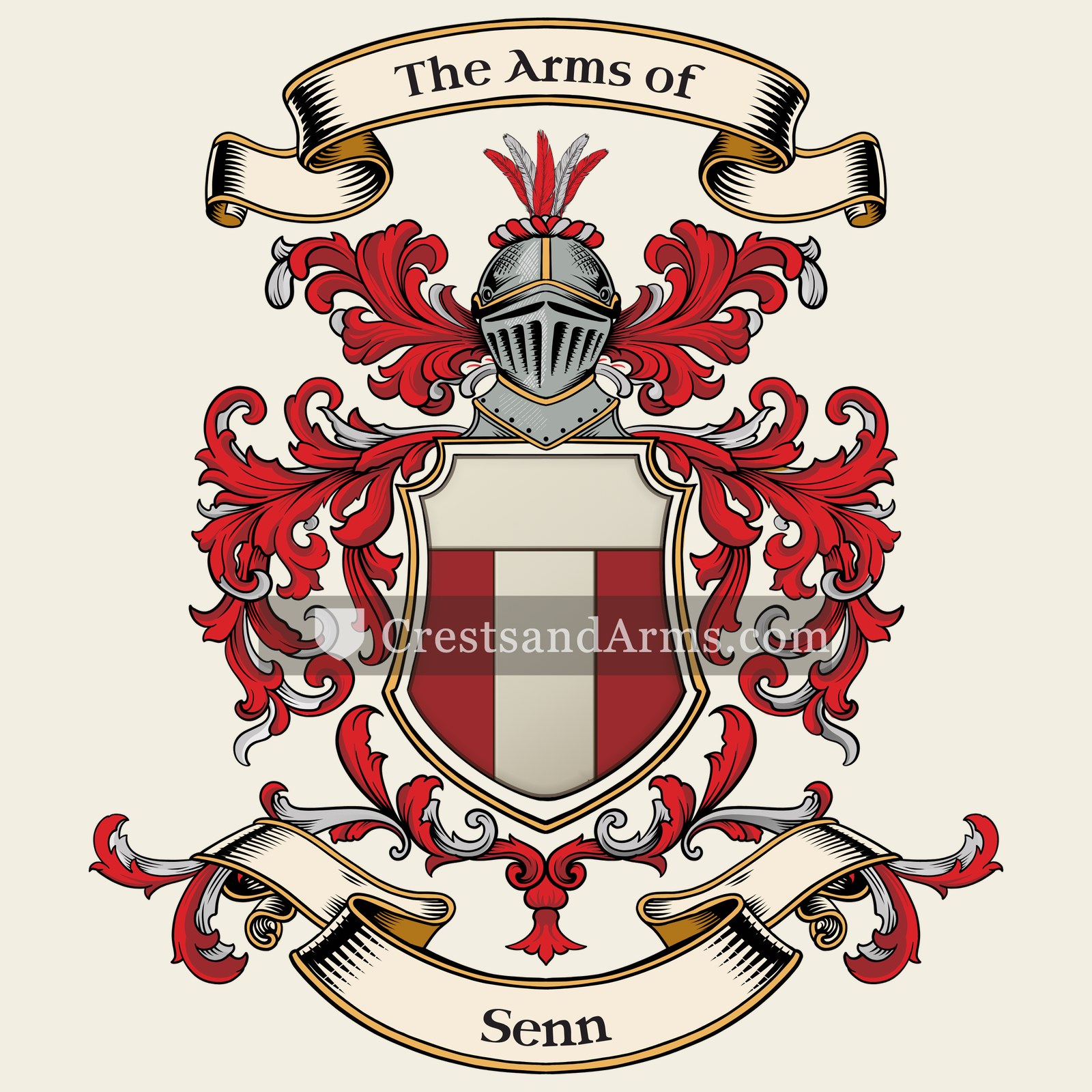
chiefAuthority, wisdom and dominion
Colours
Red (Gules)Means: Military strength
Silver (Argent)Means: Peace and sincerity
Historical info
Source
J. B. Rietstap, Armorial Général, Gouda: G. B. van Goor Zonen, 1884–87
Blazon (the actual original written record)
“De gu., au chef-pal d'arg. C.: deux cornes de buffle de gu. [La branche de Berne porte en cimier une tête de femme moresque, posée de profil, chevelée d'arg., les cheveux épars, cour. d'or, les épaules hab. de gu.]”
SwitzerlandArgovie, c. 1745
Digital archive packCoat of arms PNG, gold border print PDF, vector SVG and the certificate of authenticity. Sent to your email in minutes.
Map of Switzerland showing where the Senn arms are recorded
The Senn arms were recorded in Argovie, c. 1745.
This is where the arms were entered in the register. Families often moved to other parts of the country, so the same name can turn up in more than one region.
The body that granted and recorded arms in Switzerland in this period.
How Arms Worked in Switzerland
In Switzerland, coats of arms were not restricted to the nobility and were often adopted by common citizens and families. These symbols were passed down through generations to show family identity. When branches of a family grew, they often changed small details of the design to distinguish their own line from the original group.
Granting authority
Cantonal and civic authorities managed the use of coats of arms within their specific regions and local jurisdictions.
How they got arms
Families typically assumed their own coats of arms based on local custom rather than receiving them from a central monarch.
Where arms were recorded
Arms were recorded in various cantonal and civic registers starting from the fourteenth century throughout the Swiss region.
The family's standing
Recorded among the armigerous families of Switzerland.
Origin & History of the Senn Family in Switzerland
The surname Senn is deeply rooted in the history of the Swiss Alps, where it functioned originally as an occupational title rather than a simple family name. In the German-speaking regions of Switzerland, a *Senn* was a skilled alpine dairyman who lived in high mountain huts during the summer months to produce cheese and butter from the milk of grazing cattle. This profession was highly respected and required significant knowledge of both animal husbandry and food preservation. By the time the family was firmly established in the canton of Aargau in 1745, the name had transitioned from a job description to a hereditary surname passed down through generations. These early families in Aargau were often part of the rural agricultural class, contributing to the local economy and the distinct cultural identity of the Swiss plateau. Their presence in the region reflects the broader movement of families who settled in the fertile valleys after centuries of life in the higher mountain pastures.
Related Branches & Arms
Root word
Senne
An alpine pasture or mountain meadow.
This name
SennAn occupational surname for a dairyman or cheesemaker working in alpine pastures.
also spelled
Senne
Sennn
Sen
Documented Sources
J. B. Rietstap, Armorial Général, Gouda: G. B. van Goor Zonen, 1884–87
Bahlow, Hans. Deutsches Namenlexikon: Familien- und Vornamen nach Ursprung und Sinn erklärt. 1967


 mountThe ground held, and steadfastness upon it
 mulletThe third son, and a divine quality from above
 mountThe ground held, and steadfastness upon it
 mulletThe third son, and a divine quality from above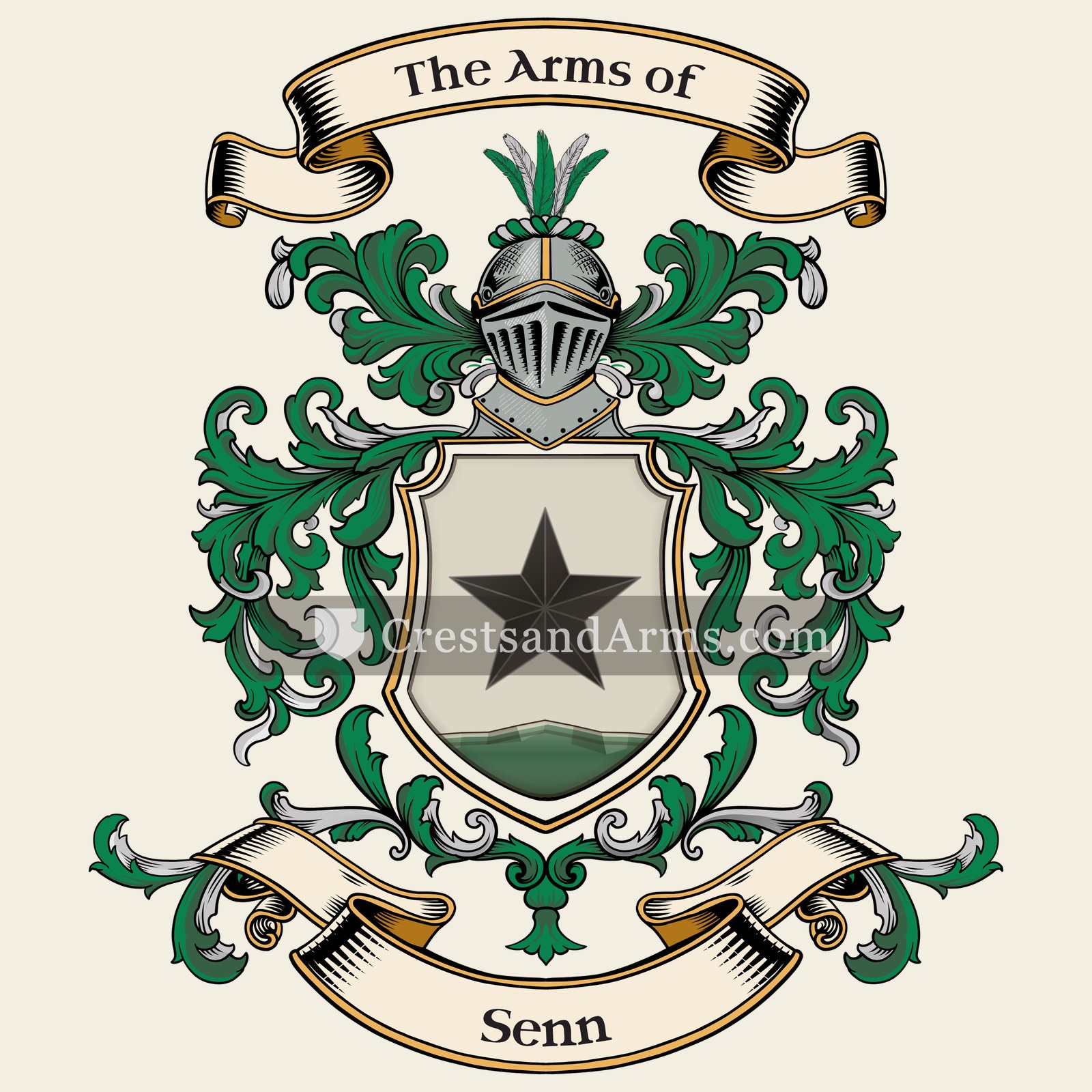


 chiefAuthority, wisdom and dominion