A record of documented arms, meaning and origin, researched for the Seth family lines. Documented in 2 countries.
Reg. 0740 · German, T–V
Coat of Arms & Family Crest Details
Symbols on this shield
fessThe military belt, and readiness to serve
fishA true and generous mind, and Christian faith
mulletThe third son, and a divine quality from above
crescentHonour by the sovereign, and the second son
Colours
Blue (Azure)Means: Loyalty and truth
Gold (Or)Means: Generosity
Silver (Argent)Means: Peace and sincerity
Historical info
Source
J. B. Rietstap, Armorial Général, Gouda: G. B. van Goor Zonen, 1884–87
Blazon (the actual original written record)
“D'azur à la fasce d'or, ch. d'un poisson nageant du champ, et acc. en chef de deux étoiles (5) du sec. et en p. d'un croiss. d'arg. C.: un vol d'azur, chaque aile ch. d'une étoile (5) d'or. L. d'or et d'azur.”
GermanyHambourg, c. 1765
Digital archive packCoat of arms PNG, gold border print PDF, vector SVG and the certificate of authenticity. Sent to your email in minutes.
Map of Germany showing where the Seth arms are recorded
The Seth arms were recorded in Hambourg, c. 1765.
This is where the arms were entered in the register. Families often moved to other parts of the country, so the same name can turn up in more than one region.
The body that granted and recorded arms in Germany in this period.
Francis I, Holy Roman Emperor
Sovereign of the period
Francis I, Holy Roman Emperor
1745–1765
Reigning in Germany when the Seth arms are first recorded.
How Arms Worked in Germany
In the Holy Roman Empire, coats of arms were often granted to individuals by the Emperor or his representatives. These arms were then passed down through the generations to all legitimate descendants of the original holder. Younger branches of a family usually kept the same shield design without needing to change it, as the arms belonged to the entire lineage.
Granting authority
The Holy Roman Emperor held the sole power to grant new coats of arms throughout his vast imperial territories.
How they got arms
Families typically obtained their coats of arms through a formal imperial grant or by proving their noble status to the authorities.
Where arms were recorded
These grants were officially recorded in the Imperial Chancery registers, which began keeping formal records of such honors during the Middle Ages.
The family's standing
Recorded among the armigerous families of Germany.
Origin & History of the Seth Family in Germany
The family name Seth has deep roots in the northern regions of Germany, particularly within the bustling port city of Hamburg. By the mid-eighteenth century, the family had established a notable presence in this trade hub, as evidenced by records dating back to 1765. During this era, Hamburg served as a vital center for international commerce and maritime activity, which likely influenced the family's social and economic development. The name itself is often linked to ancient biblical origins, yet in the German context, it evolved alongside the local dialects and naming customs of the Hanseatic region. As the family integrated into the urban life of Hamburg, they participated in the city's growth as a gateway between Northern Europe and the wider world. This early history reflects a pattern of stability and civic engagement that allowed the name to persist through generations of German history.
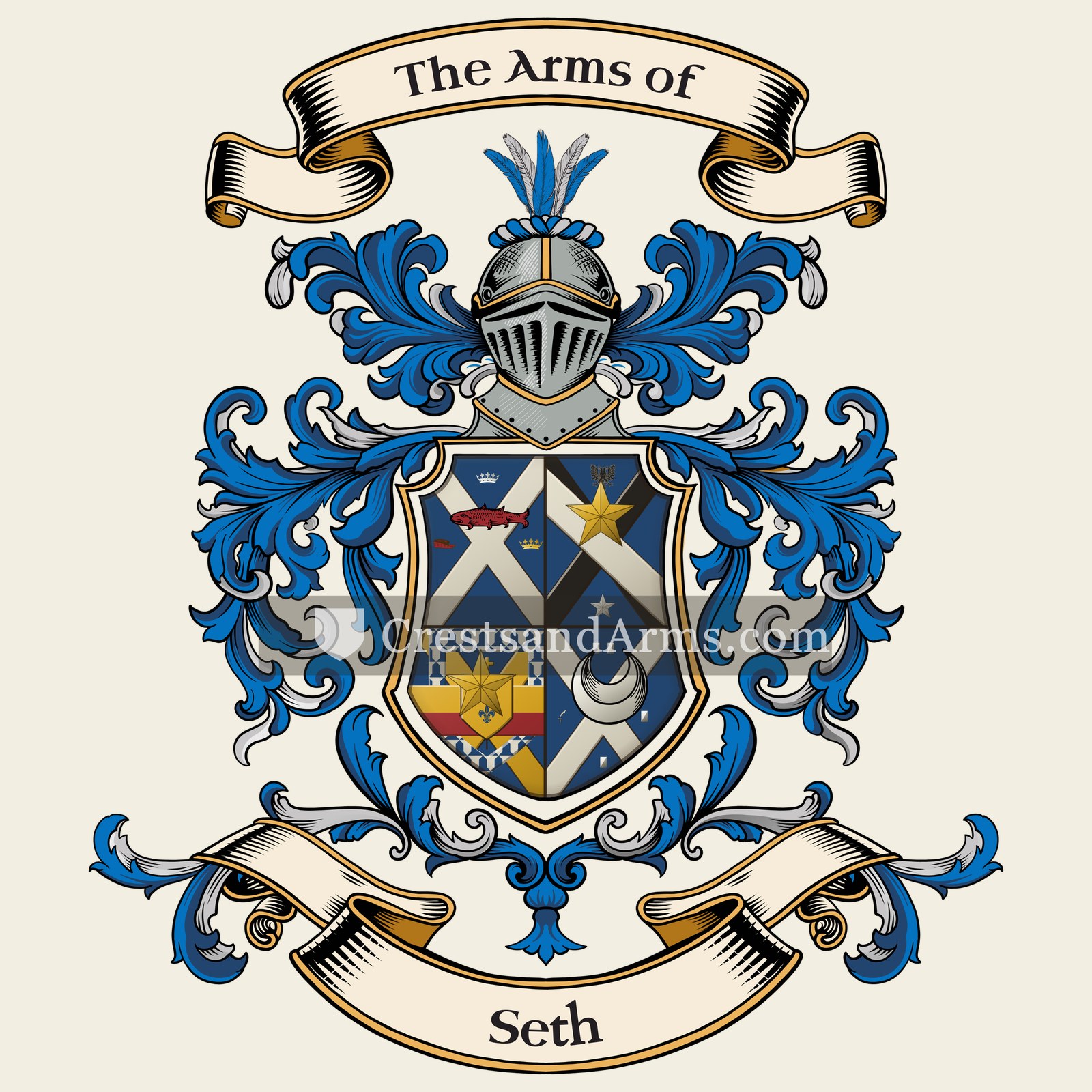
Coat of Arms & Family Crest Details
Symbols on this shield
saltireResolution, and St Andrew's cross
bendDefence, and the scarf of a commander
cross symbolChristian faith and service
fessThe military belt, and readiness to serve
fishA true and generous mind, and Christian faith
mulletThe third son, and a divine quality from above
crescentHonour by the sovereign, and the second son
crownSovereignty, authority and just reward
hat or capDignity, and the honour of office
eagleNobility, strength and a keen mind
fleur de lisPurity, light, and the sixth son
swordJustice, and military honour
billetThe sealed letter, and a message delivered
Colours
Blue (Azure)Means: Loyalty and truth
Silver (Argent)Means: Peace and sincerity
Black (Sable)Means: Constancy
Gold (Or)Means: Generosity
ErmineMeans: Dignity
Red (Gules)Means: Military strength
Historical info
Source
J. B. Rietstap, Armorial Général, Gouda: G. B. van Goor Zonen, 1884–87
Blazon (the actual original written record)
“Ec. en saut.: au 1 tiercé en pal: a. d'azur à une couronne navale d'arg.; b. d'or à un chapeau de gu.; c. d'azur à une couronne navale d'or; au 2 parti: a. d'or à une tête et col d'aigle de sa., surm. d'une étoile (5) d'azur; b. d'azur à trois bandes ondées d'arg.; au 3 d'azur à la croix d'or, ch. d'une fleur-de-lis d'azur, et une bord. d'herm.; au 4 d'azur à une épée d'arg., garnie d'or; et un aviron d'arg. en bande, le manche en haut, et un tube de canon en barre, brochants en saut. sur l'épée; le tout acc. de quatre bill. d'arg., 2 accostant l'épée en chef et 2 accostant le saut. Sur le tout d'azur à la fasce d'or, ch. d'un poisson nageant de gu. et acc. en chef de deux étoiles (5) d'or et en p. d'un croiss. d'arg. Trois cq. cour. C.: 1° une couronne de laurier de sin., entre deux prob. d'arg.; 2° un vol d'azur, chaque aile ch. d'une étoile (5) d'or; 3° une tour de deux étages de gu. S.: deux chevaux reg. d'arg.”
Swedenc. 1672
Digital archive packCoat of arms PNG, gold border print PDF, vector SVG and the certificate of authenticity. Sent to your email in minutes.
Map of Sweden showing where the Seth arms are recorded
The Seth arms were recorded in Sweden, c. 1672.
Arms such as these were typically recorded in Stockholm.
Stockholm held the Swedish court and the House of Nobility, where every noble family's arms were entered and kept. Families ennobled for service registered there, which is why so many are recorded around the city.
This is where the arms were entered in the register. Families often moved to other parts of the country, so the same name can turn up in more than one region.
The body that granted and recorded arms in Sweden in this period.
Charles XI of Sweden
Sovereign of the period
Charles XI of Sweden
1660–1697
Reigning in Germany when the Seth arms are first recorded.
How Arms Worked in Sweden
In Sweden, a coat of arms belonged to a noble family as a whole rather than just one individual. These arms were passed down through the generations to all legitimate descendants. Younger branches of the family used the same shield without needing to change it. This system ensured that the entire lineage shared the same identity and status under the law.
Granting authority
The Riddarhuset, or House of Nobility, regulated all noble coats of arms in Sweden under royal authority.
How they got arms
Families received their coats of arms through royal grants of nobility which were then officially registered with the House.
Where arms were recorded
Coats of arms were officially recorded in the Swedish House of Nobility register starting in the year 1626.
The family's standing
Recorded among the armigerous families of Sweden.
Origin & History of the Seth Family in Sweden
The history of the Seth family in Sweden begins in the late seventeenth century, specifically with records confirming their presence in Stockholm by 1672. The family originated from the merchant class and established themselves as influential figures within the urban landscape of the Swedish capital. During this period, Stockholm was a growing center of trade and administration, providing a fertile environment for families with international connections to build their reputations. The name Seth became associated with the merchant elite, as members of the family engaged in significant commercial activities that linked Sweden to broader European markets. Over the following decades, the family integrated into the social fabric of the city, transitioning from their initial roles as traders into positions of civic and professional importance. Their early years in Sweden reflect the broader movement of skilled individuals who helped shape the economic development of the Swedish state during the era of the Great Power.
Related Branches & Arms
Root word
Seth
Derived from the Hebrew word meaning appointed or placed.
This name
SethA biblical name signifying one who is appointed or substituted by God.
also spelled
Sethe
Setth
Set
Documented Sources
J. B. Rietstap, Armorial Général, Gouda: G. B. van Goor Zonen, 1884–87
Staatsarchiv Hamburg, Hamburger Kirchenbücher (Tauf-, Trau- und Bestattungsregister), 1765
Zoder, Rudolf, Familiennamen in Ostfalen, 1968
Digital archive packCoat of arms PNG, gold border print PDF, vector SVG and the certificate of authenticity. Sent to your email in minutes.


 fessThe military belt, and readiness to serve
 fishA true and generous mind, and Christian faith
 mulletThe third son, and a divine quality from above
 crescentHonour by the sovereign, and the second son
 fessThe military belt, and readiness to serve
 fishA true and generous mind, and Christian faith
 mulletThe third son, and a divine quality from above
 crescentHonour by the sovereign, and the second son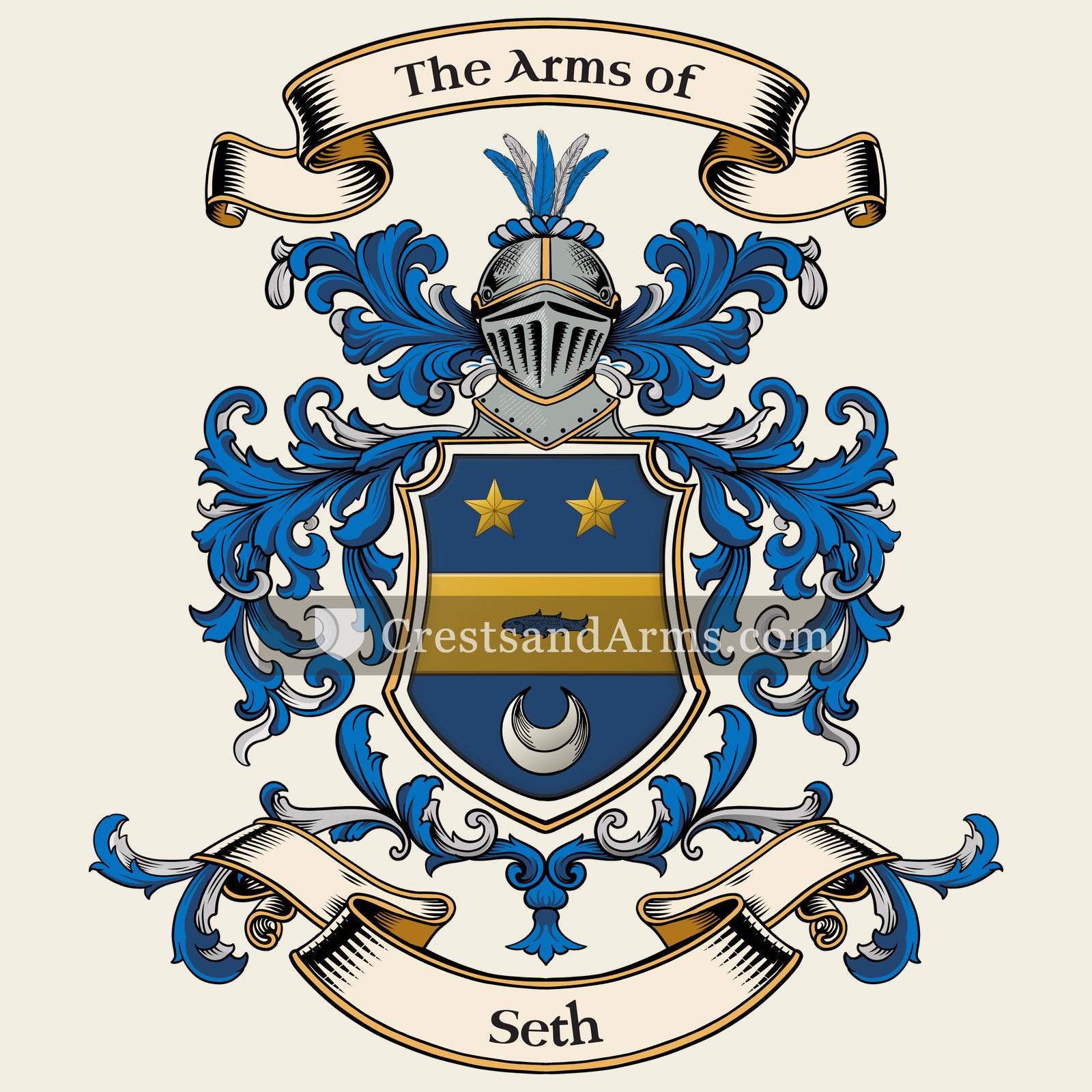


 saltireResolution, and St Andrew's cross
 bendDefence, and the scarf of a commander
 cross symbolChristian faith and service
 crownSovereignty, authority and just reward
 hat or capDignity, and the honour of office
 eagleNobility, strength and a keen mind
 fleur de lisPurity, light, and the sixth son
 swordJustice, and military honour
 billetThe sealed letter, and a message delivered