Map of France showing where the Sezgin arms are recorded
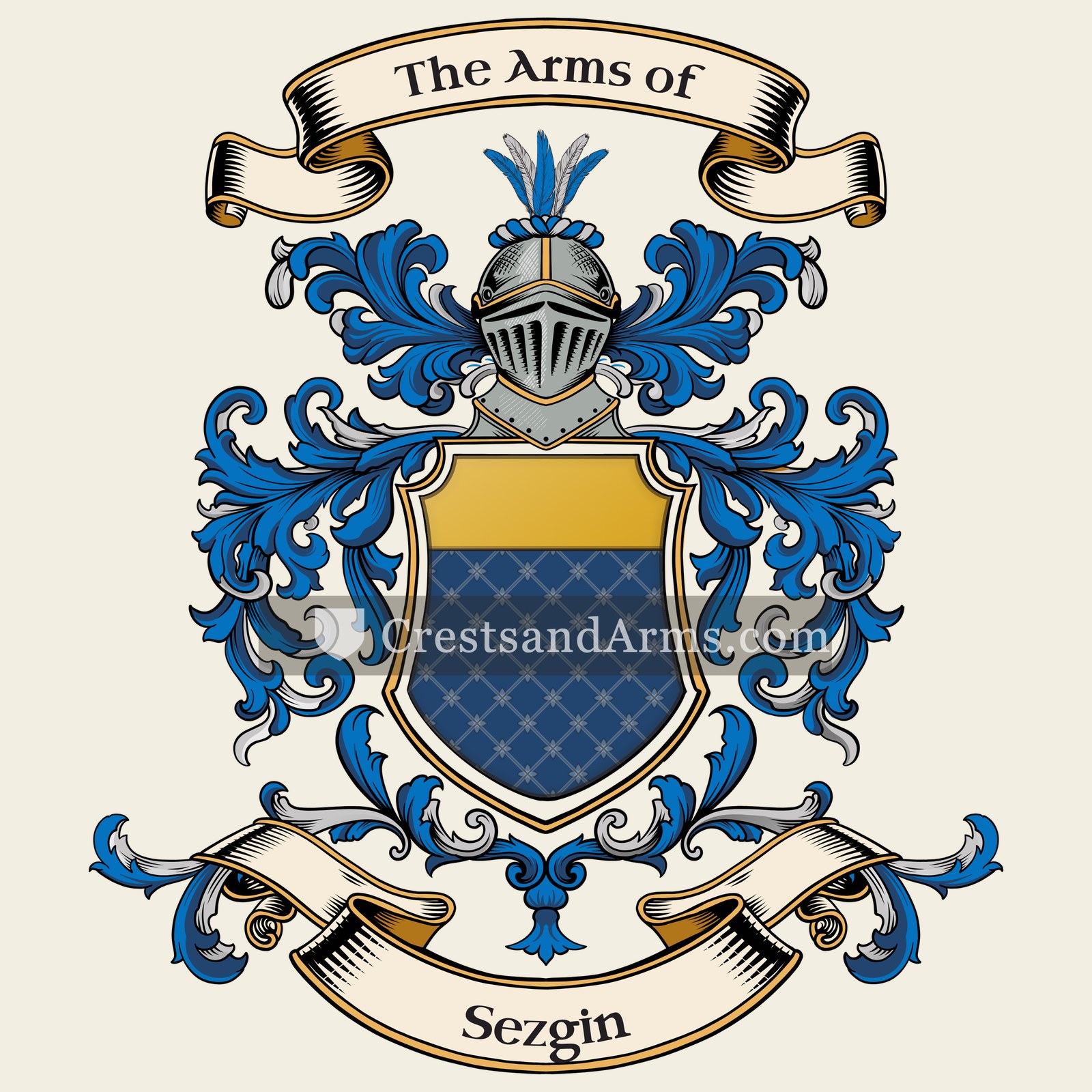
The Sezgin arms were recorded in Lyonnais, c. 1663.
Lyonnais centred on Lyon, one of the great banking and silk towns of France. Money made in the city bought estates in the countryside around it, and those estates brought arms with them.
This is where the arms were entered in the register. Families often moved to other parts of the country, so the same name can turn up in more than one region.
The body that granted and recorded arms in France in this period.
Louis XIV of France
Sovereign of the period
Louis XIV of France
1643–1715
Reigning in France when the Sezgin arms are first recorded.
How Arms Worked in France
In France, a coat of arms was a mark of honor that passed down through the male line to all legitimate descendants. Families often used the same shield without changes to show their shared heritage. If a branch wanted to stand out, they could add a small mark to their shield to show their specific place in the family tree.
Granting authority
The Juge d'armes de France acted as the official authority that regulated and verified coats of arms across the country.
How they got arms
Families typically inherited their arms from ancestors, though they could also receive them through royal grants or by proving their noble status.
Where arms were recorded
Coats of arms were officially recorded in the Armorial Général de France, which began its main collection in the year 1696.
The family's standing
Recorded among the armigerous families of Lyonnais.
Origin & History of the Sezgin Family in France
The surname Sezgin carries a rich history that traces back to the mid-seventeenth century in the Lyonnais region of France. By 1663, records confirm that members of the family were already established within this historic province, which served as a major crossroads for trade and culture in Europe. The name itself is often associated with roots in the Middle East and Central Asia, suggesting that early ancestors may have migrated through long-standing merchant routes that connected the Mediterranean world to the heart of France. During the 1600s, families in the Lyonnais area were frequently involved in the thriving silk industry and regional administration, providing a stable environment for the family to grow. Over time, the name became a marker of this specific lineage, representing a blend of diverse cultural origins and a long-standing presence in the French countryside.
Related Branches & Arms
Root word
Sezgin
Derived from the Turkish verb sezmek meaning to perceive or sense.
This name
SezginRefers to an individual who is intuitive, perceptive, or possesses deep insight.
also spelled
Seguy
Seguyn
Segan
Segwin
Documented Sources
J. B. Rietstap, Armorial Général, Gouda: G. B. van Goor Zonen, 1884–87
Archives départementales du Rhône, Registres paroissiaux et d'état civil du Lyonnais, 1663
Baudrier, Henri, Bibliographie lyonnaise: recherches sur les imprimeurs, libraires, relieurs et fondeurs de lettres de Lyon au XVIe siècle, 1895
Le Mée, René, Démographie historique de la France: les sources et les méthodes, 1980
Digital archive packCoat of arms PNG, gold border print PDF, vector SVG and the certificate of authenticity. Sent to your email in minutes.


 chiefAuthority, wisdom and dominion
 chiefAuthority, wisdom and dominion