Map of Netherlands showing where the Sheaffer arms are recorded
The Sheaffer arms were recorded in Rotterdam, c. 1815.
This is where the arms were entered in the register. Families often moved to other parts of the country, so the same name can turn up in more than one region.
Region
Rotterdam
Town
Rotterdam
First recorded
1815
Granting Authority for the Sheaffer Arms
Hoge Raad van Adel
Photograph made by me · CC BY-SA 3.0
The body that granted and recorded arms in Netherlands in this period.
William I of the Netherlands
Sovereign of the period
William I of the Netherlands
1815–1840
Reigning in Netherlands when the Sheaffer arms are first recorded.
How Arms Worked in Netherlands
In the Netherlands, coats of arms were often used by noble families and those who held specific public offices. These arms were passed down through the generations to legitimate descendants. Younger branches of a family usually kept the original design without needing to add special marks. This system ensured that the family identity remained clear and consistent over many years.
Granting authority
The Hoge Raad van Adel is the official body that regulates and manages noble titles and coats of arms in the Netherlands.
How they got arms
Families typically obtained their coats of arms through official royal grants or by proving their long-standing historical use of the symbols.
Where arms were recorded
Coats of arms are officially recorded in the registers held by the Hoge Raad van Adel, which began its work in 1814.
The family's standing
Recorded among the armigerous families of Netherlands.
Origin & History of the Sheaffer Family in Netherlands
The family name Sheaffer, often appearing in Dutch records as Schaeffer, has roots that trace back to the industrious urban landscape of the Netherlands. By 1815, members of the family were firmly established in the bustling port city of Rotterdam. During this period, Rotterdam was a vital center for trade and maritime activity, which likely influenced the family's daily life and economic opportunities. The name itself is traditionally linked to the German word for a shepherd, suggesting that the family’s ancestors may have originally worked in agriculture or livestock management before moving into the growing cities. As the family settled in Rotterdam, they became part of a society undergoing significant change following the Napoleonic era, contributing to the local workforce and the development of the city's identity during the nineteenth century.
Meaning of the Sheaffer family crest colors & symbols
Symbols on this shield
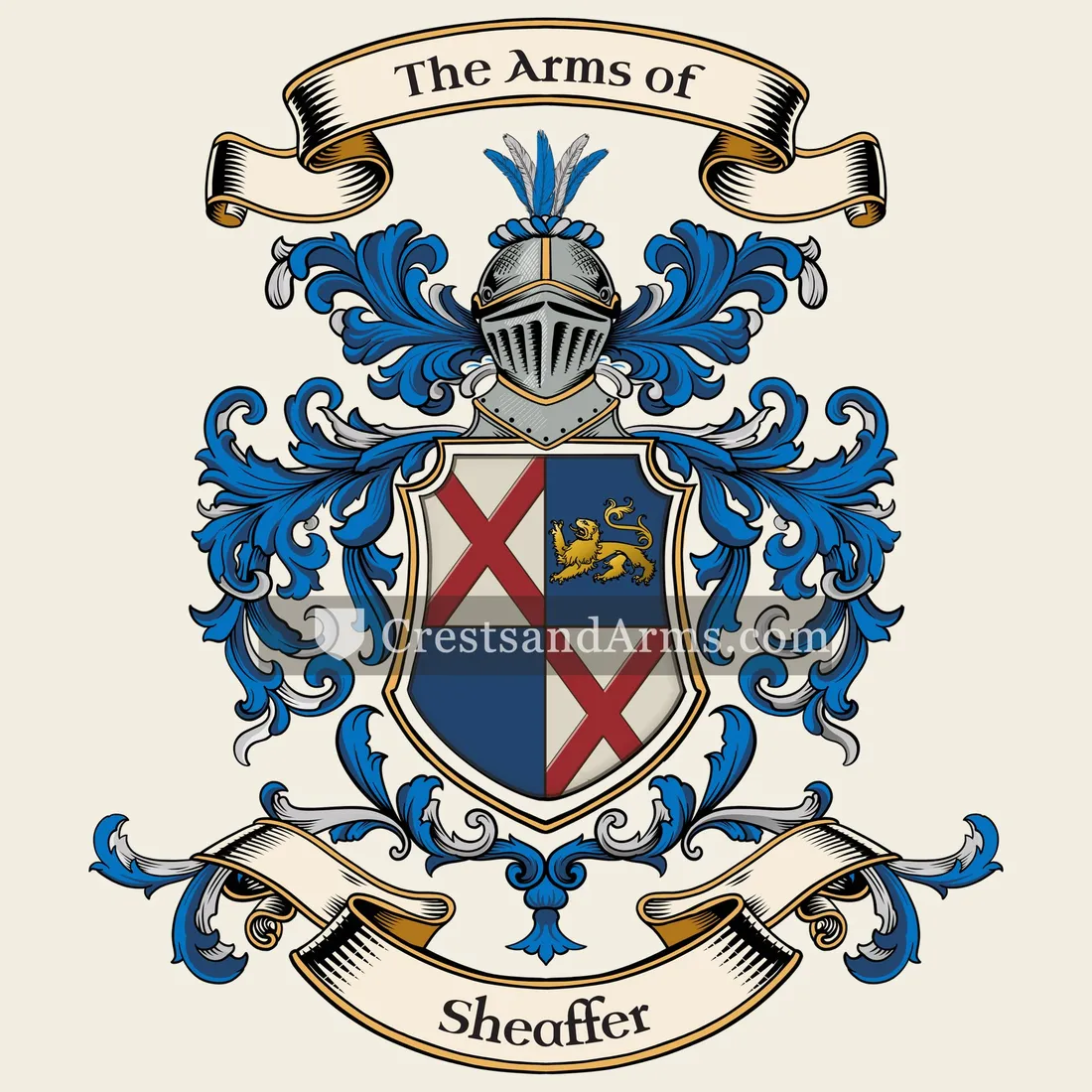
saltireResolution, and St Andrew's cross
lionCourage, strength and royalty
Colours
Silver (Argent)Means: Peace and sincerity
Blue (Azure)Means: Loyalty and truth
Red (Gules)Means: Military strength
Gold (Or)Means: Generosity
Historical info
Source
J. B. Rietstap, Armorial Général, Gouda: G. B. van Goor Zonen, 1884–87
Blazon (the actual original written record)
“Ec.: aux 1 et 4 d'arg. au saut. alésé et cramponné de gu.; au 2 coupé: a. d'azur au lion naiss. d'or, mouv.”
Swedenc. 1719
Digital archive packCoat of arms PNG, gold border print PDF, vector SVG and the certificate of authenticity. Sent to your email in minutes.
Map of Sweden showing where the Sheaffer arms are recorded
The Sheaffer arms were recorded in Sweden, c. 1719.
Arms such as these were typically recorded in Stockholm.
Stockholm held the Swedish court and the House of Nobility, where every noble family's arms were entered and kept. Families ennobled for service registered there, which is why so many are recorded around the city.
This is where the arms were entered in the register. Families often moved to other parts of the country, so the same name can turn up in more than one region.
The body that granted and recorded arms in Sweden in this period.
Ulrika Eleonora I of Sweden
Sovereign of the period
Ulrika Eleonora I of Sweden
1718–1720
Reigning in Netherlands when the Sheaffer arms are first recorded.
How Arms Worked in Sweden
In Sweden, a coat of arms belonged to a noble family as a whole rather than just one individual. These arms were passed down through the generations to all legitimate descendants. Younger branches of the family used the same shield without needing to change it. This system ensured that the entire lineage shared the same identity and status under the law.
Granting authority
The Riddarhuset, or House of Nobility, regulated all noble coats of arms in Sweden under royal authority.
How they got arms
Families received their coats of arms through royal grants of nobility which were then officially registered with the House.
Where arms were recorded
Coats of arms were officially recorded in the Swedish House of Nobility register starting in the year 1626.
The family's standing
Recorded among the armigerous families of Sweden.
Origin & History of the Sheaffer Family in Sweden
The history of the Sheaffer name in Sweden begins during a period of significant transition for the city of Stockholm in 1719. At this time, the Great Northern War was nearing its end, and the capital was working to recover from the threat of Russian naval raids. Family members living in Stockholm during this year were part of a growing urban population that included many skilled craftsmen and merchants. Because the name Sheaffer suggests a connection to the German word for a shepherd or a manager of estates, it is likely that the family arrived in Sweden as part of the movement of skilled workers across the Baltic Sea. These early settlers often integrated into the local economy by joining trade guilds, which allowed them to establish a stable life in the city despite the political instability of the era. By settling in Stockholm, the family became part of the diverse cultural fabric that defined the Swedish capital during the early eighteenth century.
Meaning of the Sheaffer family crest colors & symbols
Symbols on this shield
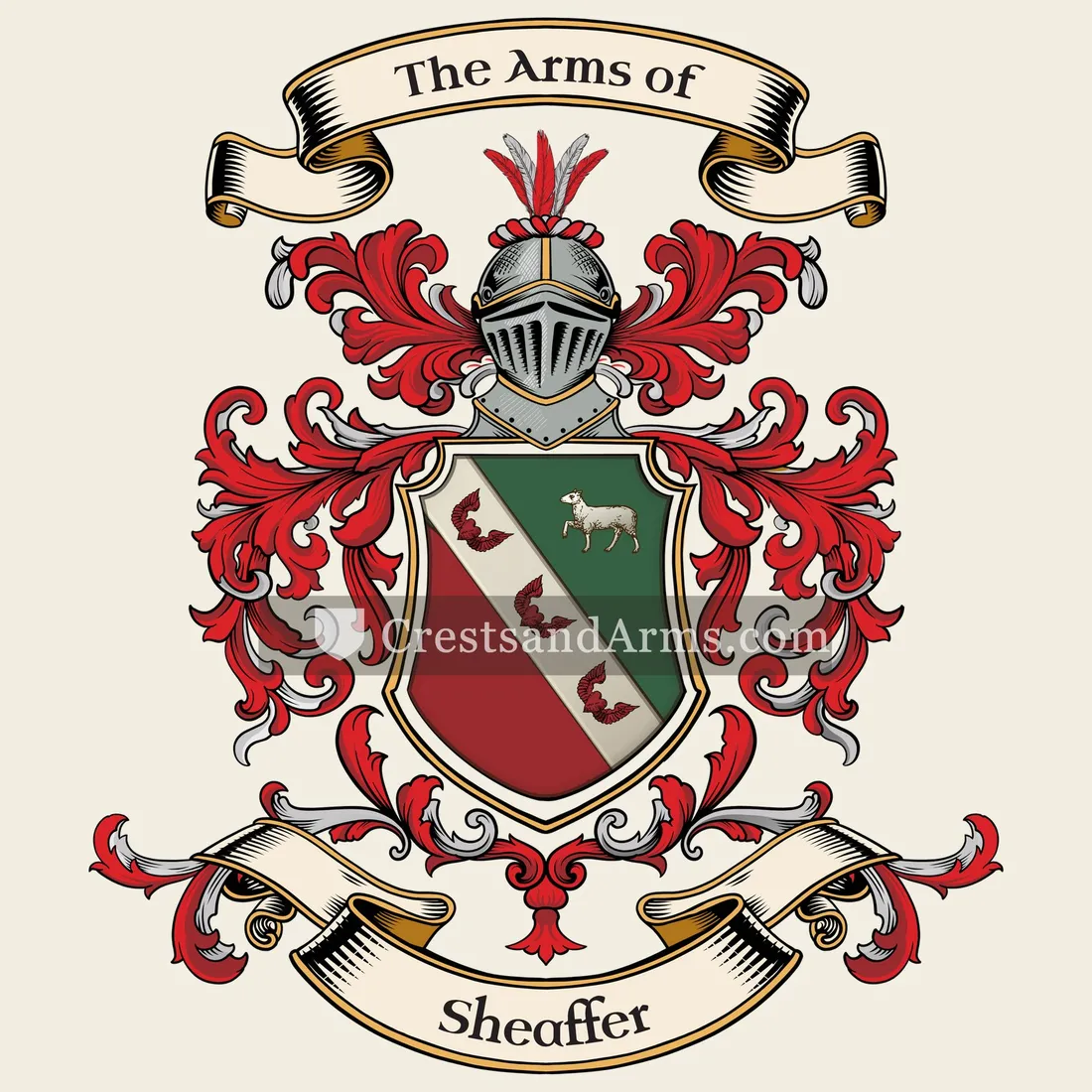
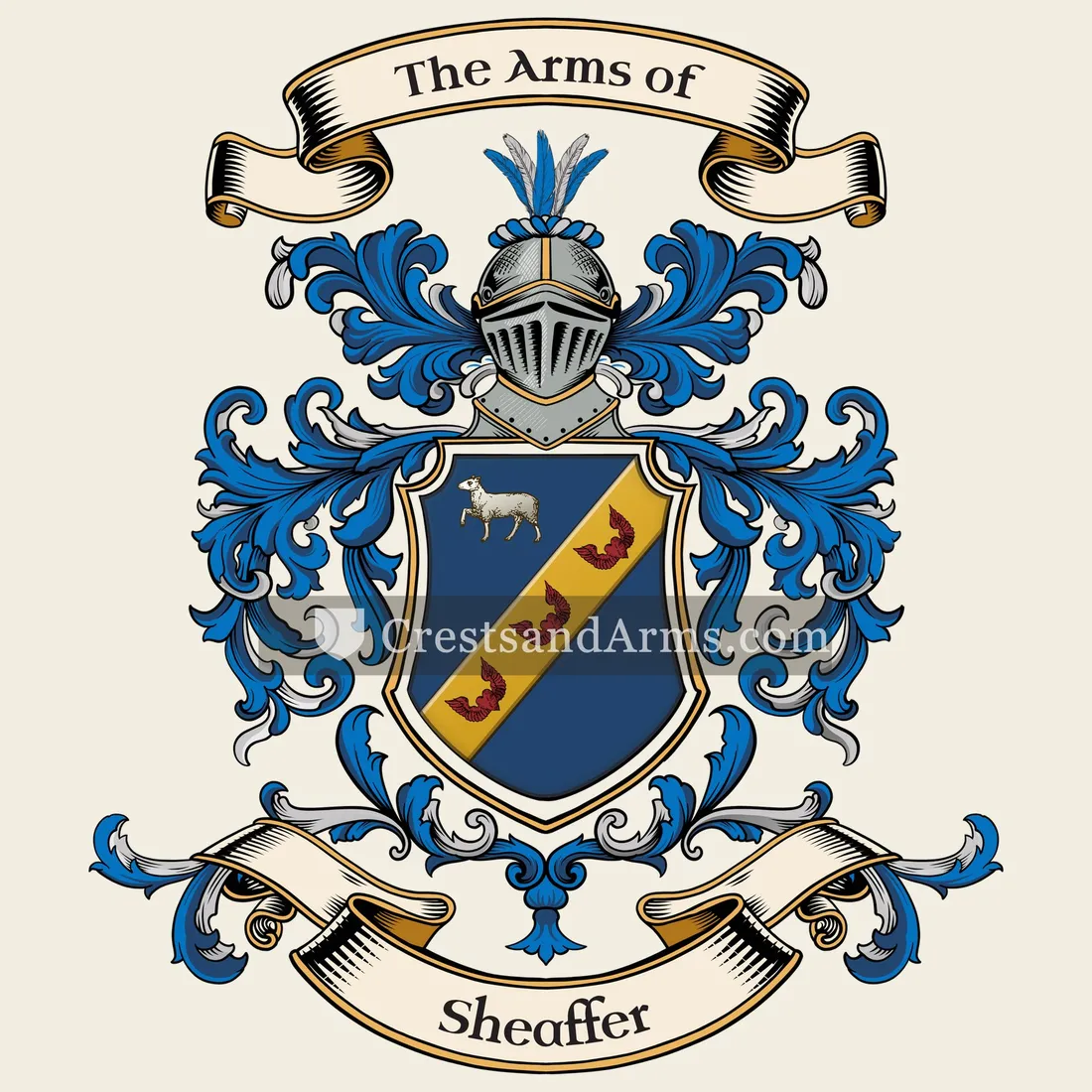
bendDefence, and the scarf of a commander
heartSincerity, charity and true affection
lambGentleness, patience and faith
Colours
Red (Gules)Means: Military strength
Green (Vert)Means: Hope
Silver (Argent)Means: Peace and sincerity
Historical info
Source
J. B. Rietstap, Armorial Général, Gouda: G. B. van Goor Zonen, 1884–87
Blazon (the actual original written record)
“Tranché de gu. sur sin.; à la bande d'arg., ch. de trois coeurs de gu., posés dans le sens de la bande; le gu. ch. d'un mouton naiss. d'arg., mouv. de la bande.”
Germanyc. 1677
Digital archive packCoat of arms PNG, gold border print PDF, vector SVG and the certificate of authenticity. Sent to your email in minutes.
Map of Germany showing where the Sheaffer arms are recorded
The Sheaffer arms were recorded in Germany, c. 1677.
Arms such as these were typically recorded in Bavaria.
Bavaria was a country of old landed families and walled market towns. Estates passed down the same line for centuries, and both the landowners and the leading townsmen kept arms, which is why so many Bavarian names sit in the registers.
This is where the arms were entered in the register. Families often moved to other parts of the country, so the same name can turn up in more than one region.
The body that granted and recorded arms in Germany in this period.
Leopold I, Holy Roman Emperor
Sovereign of the period
Leopold I, Holy Roman Emperor
1658–1705
Reigning in Netherlands when the Sheaffer arms are first recorded.
How Arms Worked in Germany
In the Holy Roman Empire, coats of arms were often granted to individuals by the Emperor or his representatives. These arms were then passed down through the generations to all legitimate descendants of the original holder. Younger branches of a family usually kept the same shield design without needing to change it, as the arms belonged to the entire lineage.
Granting authority
The Holy Roman Emperor held the sole power to grant new coats of arms throughout his vast imperial territories.
How they got arms
Families typically obtained their coats of arms through a formal imperial grant or by proving their noble status to the authorities.
Where arms were recorded
These grants were officially recorded in the Imperial Chancery registers, which began keeping formal records of such honors during the Middle Ages.
The family's standing
Recorded among the armigerous families of Germany.
Origin & History of the Sheaffer Family in Germany
The family name Sheaffer is an anglicized version of the German surname Schäffer, which historically functioned as an occupational title. In medieval and early modern Germany, this name identified a person who served as a *Schäffer*, or a steward, who was responsible for managing the financial accounts and agricultural output of a large estate or monastery. By the time members of the family were documented in Bavaria in 1677, the name had become a stable hereditary surname rather than just a job description. During this period, the region was recovering from the long-term economic and social disruptions of the Thirty Years' War, and families like the Schäffers were often deeply embedded in the local agrarian economy. As stewards, these individuals held positions of trust within their villages, acting as intermediaries between the landowning nobility and the local tenant farmers. This professional role likely provided the family with a degree of social stability that allowed them to maintain their presence in the Bavarian countryside for generations.
Sheaffer Meaning & Related Branches
Root word
Schäfer
German word for a person who herds or tends sheep.
This name
SheafferAn occupational surname for a shepherd or someone who managed a flock.
also spelled
Schefer
Sheffer
Documented Sources
J. B. Rietstap, Armorial Général, Gouda: G. B. van Goor Zonen, 1884–87
Centraal Bureau voor Genealogie, Bevolkingsregister van Rotterdam, 1815
Huizinga, Frans, Nederlandse Familienamen: Ontstaan en Betekenis, 1959
Stadsarchief Rotterdam, Doop-, trouw- en begraafregisters (DTB) van Rotterdam, 1815
Digital archive packCoat of arms PNG, gold border print PDF, vector SVG and the certificate of authenticity. Sent to your email in minutes.


 heartSincerity, charity and true affection
 lambGentleness, patience and faith
 heartSincerity, charity and true affection
 lambGentleness, patience and faith


 saltireResolution, and St Andrew's cross
 lionCourage, strength and royalty


 bendDefence, and the scarf of a commander