Map of Netherlands showing where the Shrader arms are recorded
The Shrader arms were recorded in Leeuwarden, c. 1815.
This is where the arms were entered in the register. Families often moved to other parts of the country, so the same name can turn up in more than one region.
Region
Leeuwarden
Town
Leeuwarden
First recorded
1815
Granting Authority for the Shrader Arms
Hoge Raad van Adel
Photograph made by me · CC BY-SA 3.0
The body that granted and recorded arms in Netherlands in this period.
William I of the Netherlands
Sovereign of the period
William I of the Netherlands
1815–1840
Reigning in Netherlands when the Shrader arms are first recorded.
How Arms Worked in Netherlands
In the Netherlands, coats of arms were often used by noble families and those who held specific public offices. These arms were passed down through the generations to legitimate descendants. Younger branches of a family usually kept the original design without needing to add special marks. This system ensured that the family identity remained clear and consistent over many years.
Granting authority
The Hoge Raad van Adel is the official body that regulates and manages noble titles and coats of arms in the Netherlands.
How they got arms
Families typically obtained their coats of arms through official royal grants or by proving their long-standing historical use of the symbols.
Where arms were recorded
Coats of arms are officially recorded in the registers held by the Hoge Raad van Adel, which began its work in 1814.
The family's standing
Recorded among the armigerous families of Netherlands.
Origin & History of the Shrader Family in Netherlands
The history of the Shrader family in the Netherlands is deeply connected to the northern province of Friesland. By the year 1815, records confirm that family members were established in the city of Leeuwarden. During this period, the Netherlands was undergoing significant changes as it transitioned into a modern kingdom following the Napoleonic era. The name likely evolved from Germanic roots related to a trade or occupation, which was common for families living in bustling urban centers like Leeuwarden. As the city served as a regional hub for government and commerce, the Shrader family became part of the local social fabric during a time when the Dutch government began requiring formal registration of all surnames. This administrative shift helped solidify the family identity within the province, allowing them to participate in the growing professional and civic life of the Dutch state throughout the nineteenth century.
Meaning of the Shrader family crest colors & symbols
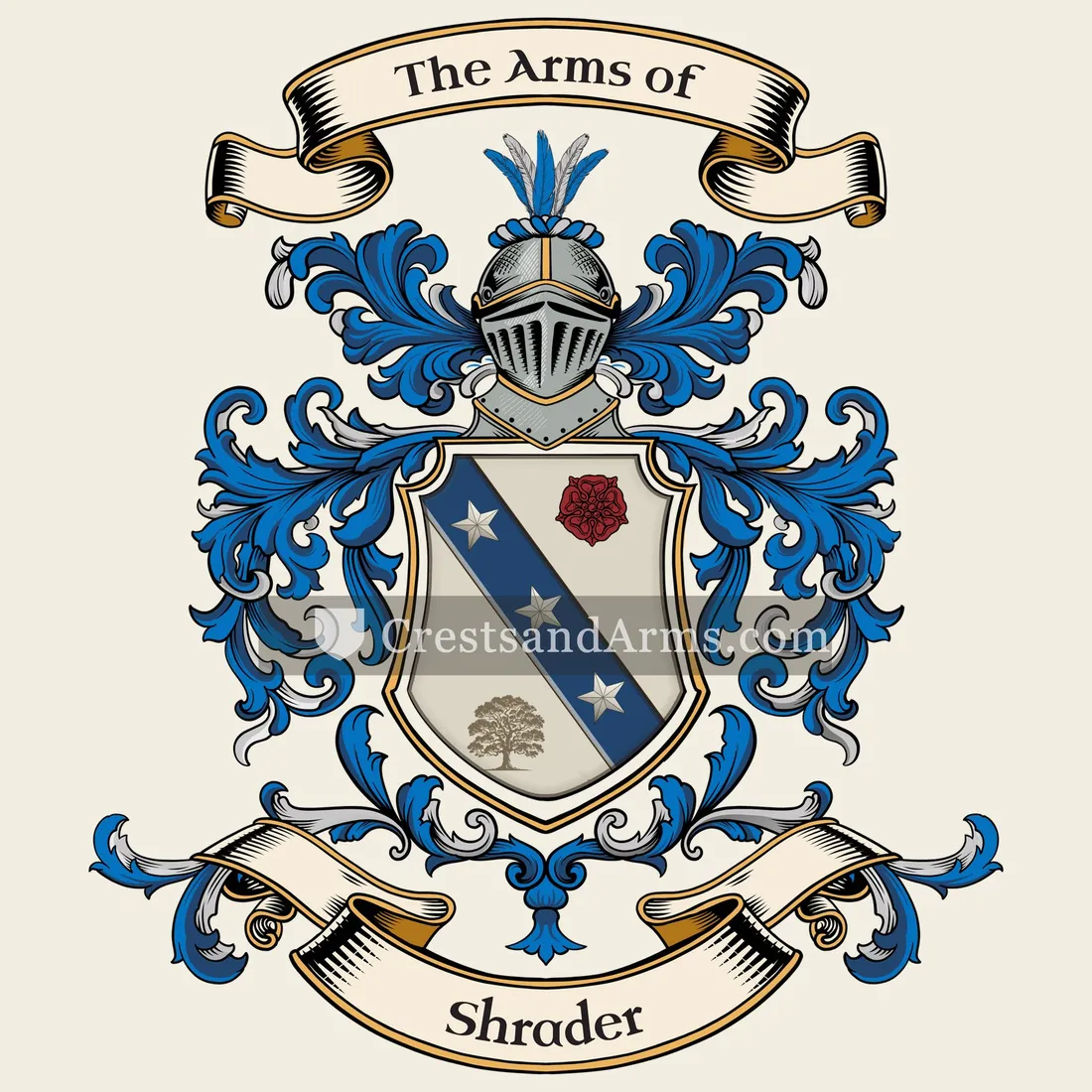
Symbols on this shield
bendDefence, and the scarf of a commander
mulletThe third son, and a divine quality from above
roseThe seventh son, and beauty with grace
treeLife, endurance and deep roots
Colours
Silver (Argent)Means: Peace and sincerity
Blue (Azure)Means: Loyalty and truth
Red (Gules)Means: Military strength
Historical info
Source
J. B. Rietstap, Armorial Général, Gouda: G. B. van Goor Zonen, 1884–87
Blazon (the actual original written record)
“D'arg. à la bande d'azur, ch. de trois étoiles du champ et acc. en chef d'une rose de gu. et en p. d'une tige fruitée de trois glands mal-ordonnés, attachée à un petit chicot en fasce, le tout au nat. Cq. cour. C.: cinq pl. d'aut.: d'azur, d'arg., de gu., d'or et d'azur; entre un vol de sa. L. d'arg. et d'azur.”
GermanyHan, c. 1708
Digital archive packCoat of arms PNG, gold border print PDF, vector SVG and the certificate of authenticity. Sent to your email in minutes.
Map of Germany showing where the Shrader arms are recorded
The Shrader arms were recorded in Han, c. 1708.
This is where the arms were entered in the register. Families often moved to other parts of the country, so the same name can turn up in more than one region.
The body that granted and recorded arms in Germany in this period.
Joseph I, Holy Roman Emperor
Sovereign of the period
Joseph I, Holy Roman Emperor
1705–1711
Reigning in Netherlands when the Shrader arms are first recorded.
How Arms Worked in Germany
In the Holy Roman Empire, coats of arms were often granted to individuals by the Emperor or his representatives. These arms were then passed down through the generations to all legitimate descendants of the original holder. Younger branches of a family usually kept the same shield design without needing to change it, as the arms belonged to the entire lineage.
Granting authority
The Holy Roman Emperor held the sole power to grant new coats of arms throughout his vast imperial territories.
How they got arms
Families typically obtained their coats of arms through a formal imperial grant or by proving their noble status to the authorities.
Where arms were recorded
These grants were officially recorded in the Imperial Chancery registers, which began keeping formal records of such honors during the Middle Ages.
The family's standing
Recorded among the armigerous families of Germany.
Origin & History of the Shrader Family in Germany
The family name Shrader originates from the German word *Schrader*, which historically functioned as an occupational surname. In medieval Germany, this name was typically given to a tailor or a cutter of cloth, derived from the Middle Low German verb *schraden*. By the time members of the family were documented in the village of Han in 1708, the name had already been established for generations as a way to identify individuals by their trade within their local community. During this era, families often remained in the same rural regions for centuries, meaning the ancestors of the 1708 residents likely lived in the surrounding German territories for a long time. These early Shraders were part of the agrarian and artisan class that formed the backbone of German village life, where surnames served as a practical link between a person and their specific craft.
Meaning of the Shrader family crest colors & symbols
Symbols on this shield
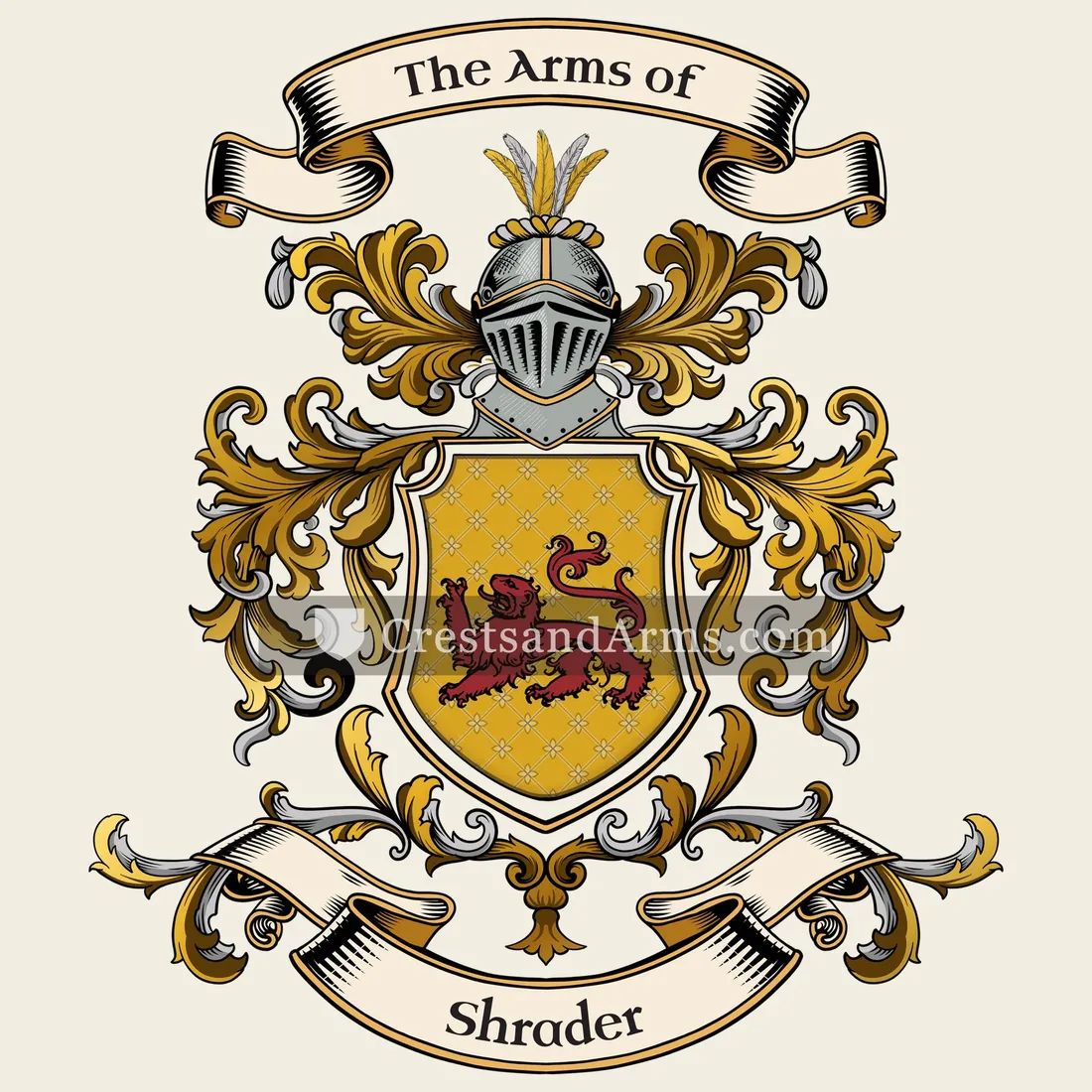
lionCourage, strength and royalty
Colours
Gold (Or)Means: Generosity
Red (Gules)Means: Military strength
Historical info
Source
J. B. Rietstap, Armorial Général, Gouda: G. B. van Goor Zonen, 1884–87
Blazon (the actual original written record)
“D'or à une tête et col de lion de gu., cour. d'or. C.: la tête de lion.”
LivoniaLivonia, c. 1736
Digital archive packCoat of arms PNG, gold border print PDF, vector SVG and the certificate of authenticity. Sent to your email in minutes.
Map of Poland showing where the Shrader arms are recorded
The Shrader arms were recorded in Livonia, c. 1736.
Livonia was Baltic country held by a small number of landed families who kept their estates for centuries. Land there passed down whole rather than being divided, and long unbroken tenure is what fills a register.
This is where the arms were entered in the register. Families often moved to other parts of the country, so the same name can turn up in more than one region.
Region
Livonia
First recorded
1736
Granting Authority for the Shrader Arms
Ennoblement by the Sejm
Author: Olek Remesz · CC BY-SA 3.0
The body that granted and recorded arms in Poland in this period.
Augustus III of Poland
Sovereign of the period
Augustus III of Poland
1733–1763
Reigning in Netherlands when the Shrader arms are first recorded.
How Arms Worked in Poland
Polish noble families shared a single coat of arms across many different surnames, creating large clans rather than individual designs. These symbols were held collectively by all members of the clan regardless of their specific family name. When a new family joined the nobility, they were adopted into an existing clan and began using that group's established shield.
Granting authority
The Sejm, which was the Polish parliament, held the power to grant noble status and the right to bear arms.
How they got arms
Families typically received their coat of arms through a formal act of ennoblement granted by the Sejm for distinguished service.
Where arms were recorded
These grants were officially recorded in the Crown Metrica, which served as the central archive for state documents starting in the sixteenth century.
The family's standing
Recorded among the armigerous families of Livonia.
Origin & History of the Shrader Family in Poland
The name Shrader traces its roots to the Germanic linguistic influence that spread across Northern Europe during the Middle Ages. By the time the family was documented in the region of Livonia in 1736, the name had already become established within the complex social landscape of the Baltic territories. During this period, Livonia was a crossroads of cultures where German, Polish, and Baltic traditions often overlapped due to shifting political borders and trade networks. Families like the Shraders often served as administrators, merchants, or skilled craftsmen in these frontier lands. Their presence in 1736 suggests they were part of a mobile class of people who moved between the Polish-Lithuanian Commonwealth and the surrounding Baltic provinces to seek new opportunities. As the family settled into these areas, they adapted to the local customs while maintaining the distinct identity associated with their name. This history reflects the broader movement of families who helped shape the cultural and economic development of the region during the eighteenth century.
Shrader Meaning & Related Branches
Root word
Schrader
Derived from the Middle Low German word for a tailor or cutter.
This name
ShraderAn occupational surname for someone who cut cloth or made garments.
also spelled
Shrader
Documented Sources
J. B. Rietstap, Armorial Général, Gouda: G. B. van Goor Zonen, 1884–87
AlleFriezen, Burgerlijke Stand Leeuwarden (Civil Registry of Leeuwarden)
Digital archive packCoat of arms PNG, gold border print PDF, vector SVG and the certificate of authenticity. Sent to your email in minutes.


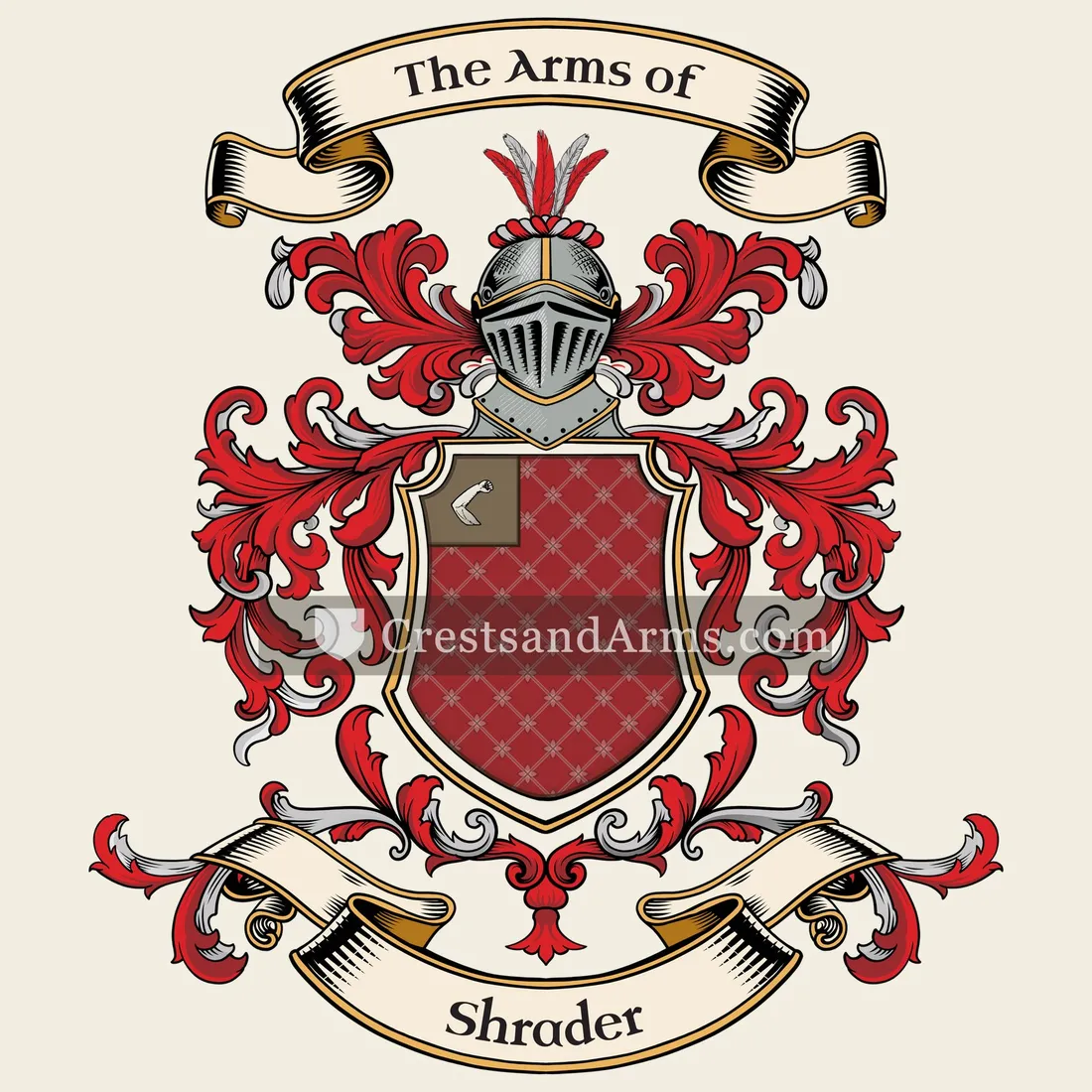
 cantonA mark of honour granted by the sovereign
 armA person of action, industrious and laborious
 cantonA mark of honour granted by the sovereign
 armA person of action, industrious and laborious


 bendDefence, and the scarf of a commander
 mulletThe third son, and a divine quality from above
 roseThe seventh son, and beauty with grace
 treeLife, endurance and deep roots


 lionCourage, strength and royalty