Map of Netherlands showing where the Shultz arms are recorded
The Shultz arms were recorded in Netherlands, c. 1815.
Arms such as these were typically recorded in Friesland.
Friesland was low, wet country on the northern coast of the Netherlands, farmed by families who had held the same land for centuries. Free landholders were unusually common there, and a free landholder could carry arms.
This is where the arms were entered in the register. Families often moved to other parts of the country, so the same name can turn up in more than one region.
Region
Friesland
First recorded
1815
Granting Authority for the Shultz Arms
Hoge Raad van Adel
Photograph made by me · CC BY-SA 3.0
The body that granted and recorded arms in Netherlands in this period.
William I of the Netherlands
Sovereign of the period
William I of the Netherlands
1815–1840
Reigning in Netherlands when the Shultz arms are first recorded.
How Arms Worked in Netherlands
In the Netherlands, coats of arms were often used by noble families and those who held specific public offices. These arms were passed down through the generations to legitimate descendants. Younger branches of a family usually kept the original design without needing to add special marks. This system ensured that the family identity remained clear and consistent over many years.
Granting authority
The Hoge Raad van Adel is the official body that regulates and manages noble titles and coats of arms in the Netherlands.
How they got arms
Families typically obtained their coats of arms through official royal grants or by proving their long-standing historical use of the symbols.
Where arms were recorded
Coats of arms are officially recorded in the registers held by the Hoge Raad van Adel, which began its work in 1814.
The family's standing
Recorded among the armigerous families of Netherlands.
Origin & History of the Shultz Family in Netherlands
The name Shultz is a variation of the German occupational title *Schultheiß*, which historically referred to a village magistrate or a local official responsible for collecting taxes and enforcing laws. While the name has deep roots in German-speaking regions, families carrying this surname migrated into the northern Netherlands, particularly the province of Friesland, during the early nineteenth century. By 1815, records indicate that individuals with this name were established within the Frisian population, likely drawn to the region by the opportunities for trade or agricultural administration. Because the name originated as a professional title rather than a geographic one, it suggests that early ancestors were often people of local standing or community leadership. As these families integrated into Dutch society, the spelling often shifted to better fit the phonetic patterns of the local language, marking the transition from their ancestral roots to their new life in the Netherlands.
Meaning of the Shultz family crest colors & symbols
Symbols on this shield
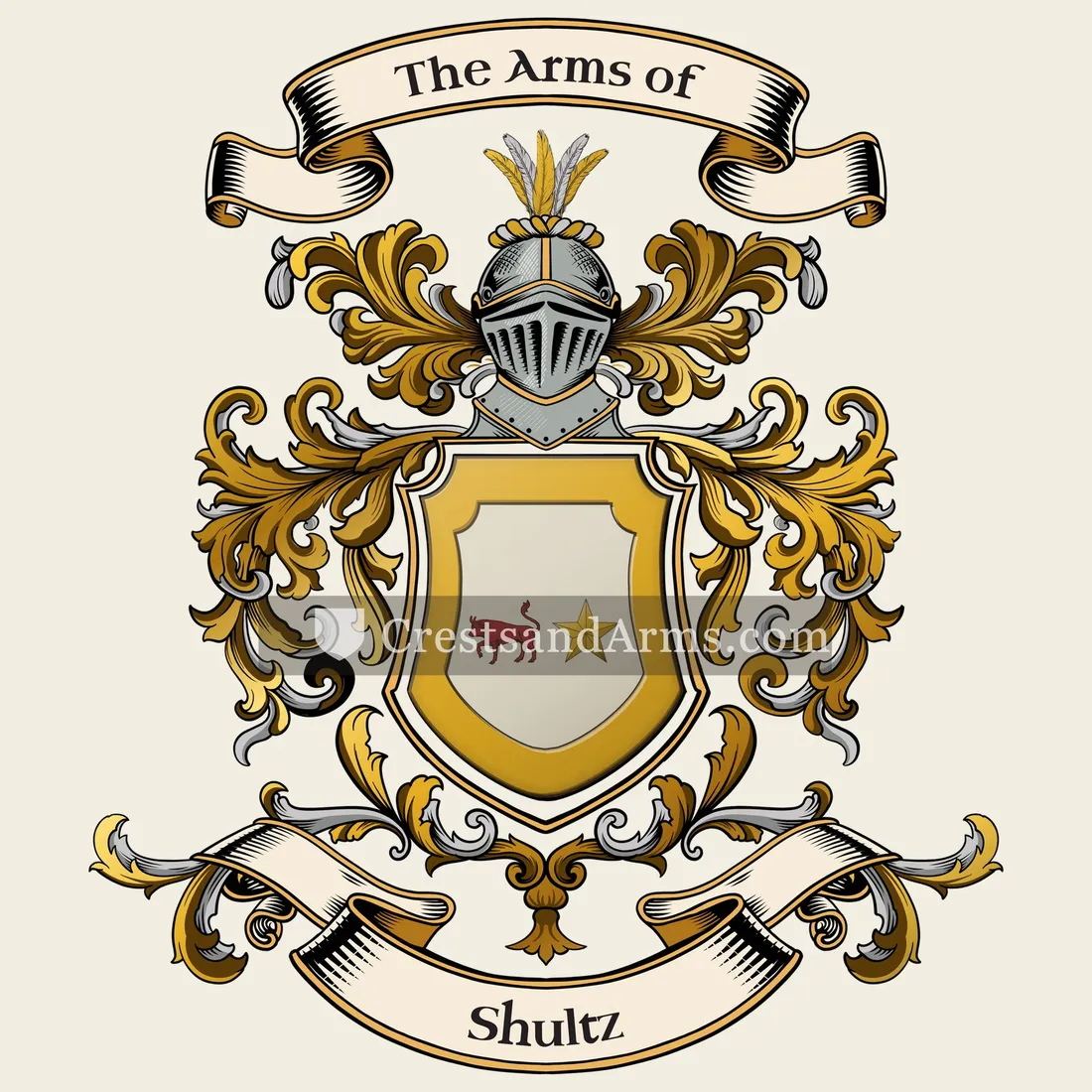
bullValour and generosity
mulletThe third son, and a divine quality from above
Colours
Silver (Argent)Means: Peace and sincerity
Gold (Or)Means: Generosity
Red (Gules)Means: Military strength
Historical info
Source
J. B. Rietstap, Armorial Général, Gouda: G. B. van Goor Zonen, 1884–87
Blazon (the actual original written record)
“D'arg. à un taureau sautant de gu., portant entre ses cornes une étoile d'or; l'écu bordé du même. C.: l'étoile. L. à dextre: d'arg., d'azur et de gu.”
Germanyc. 1739
Digital archive packCoat of arms PNG, gold border print PDF, vector SVG and the certificate of authenticity. Sent to your email in minutes.
Map of Germany showing where the Shultz arms are recorded
The Shultz arms were recorded in Germany, c. 1739.
Arms such as these were typically recorded in Bavaria.
Bavaria was a country of old landed families and walled market towns. Estates passed down the same line for centuries, and both the landowners and the leading townsmen kept arms, which is why so many Bavarian names sit in the registers.
This is where the arms were entered in the register. Families often moved to other parts of the country, so the same name can turn up in more than one region.
The body that granted and recorded arms in Germany in this period.
Charles VI, Holy Roman Emperor
Sovereign of the period
Charles VI, Holy Roman Emperor
1711–1740
Reigning in Netherlands when the Shultz arms are first recorded.
How Arms Worked in Germany
In the Holy Roman Empire, coats of arms were often granted to individuals by the Emperor or his representatives. These arms were then passed down through the generations to all legitimate descendants of the original holder. Younger branches of a family usually kept the same shield design without needing to change it, as the arms belonged to the entire lineage.
Granting authority
The Holy Roman Emperor held the sole power to grant new coats of arms throughout his vast imperial territories.
How they got arms
Families typically obtained their coats of arms through a formal imperial grant or by proving their noble status to the authorities.
Where arms were recorded
These grants were officially recorded in the Imperial Chancery registers, which began keeping formal records of such honors during the Middle Ages.
The family's standing
Recorded among the armigerous families of Germany.
Origin & History of the Shultz Family in Germany
The surname Shultz is a variation of the German occupational name Schulz, which originated as a title for a village magistrate or a local official known as a Schultheiß. During the Middle Ages, this official was responsible for collecting taxes and enforcing local laws on behalf of a feudal lord. As surnames became permanent in Germany, families who held this position of authority adopted the title as their own family name. By the time members of the family were documented in Bavaria in 1739, the name had already been established for centuries as a mark of civic responsibility and social standing within rural communities. Because these officials often managed land and community resources, the family likely played a central role in the daily administration and organization of their Bavarian village. Over time, the spelling shifted to Shultz as families migrated and adapted to different regional dialects and record-keeping styles.
Meaning of the Shultz family crest colors & symbols
Symbols on this shield
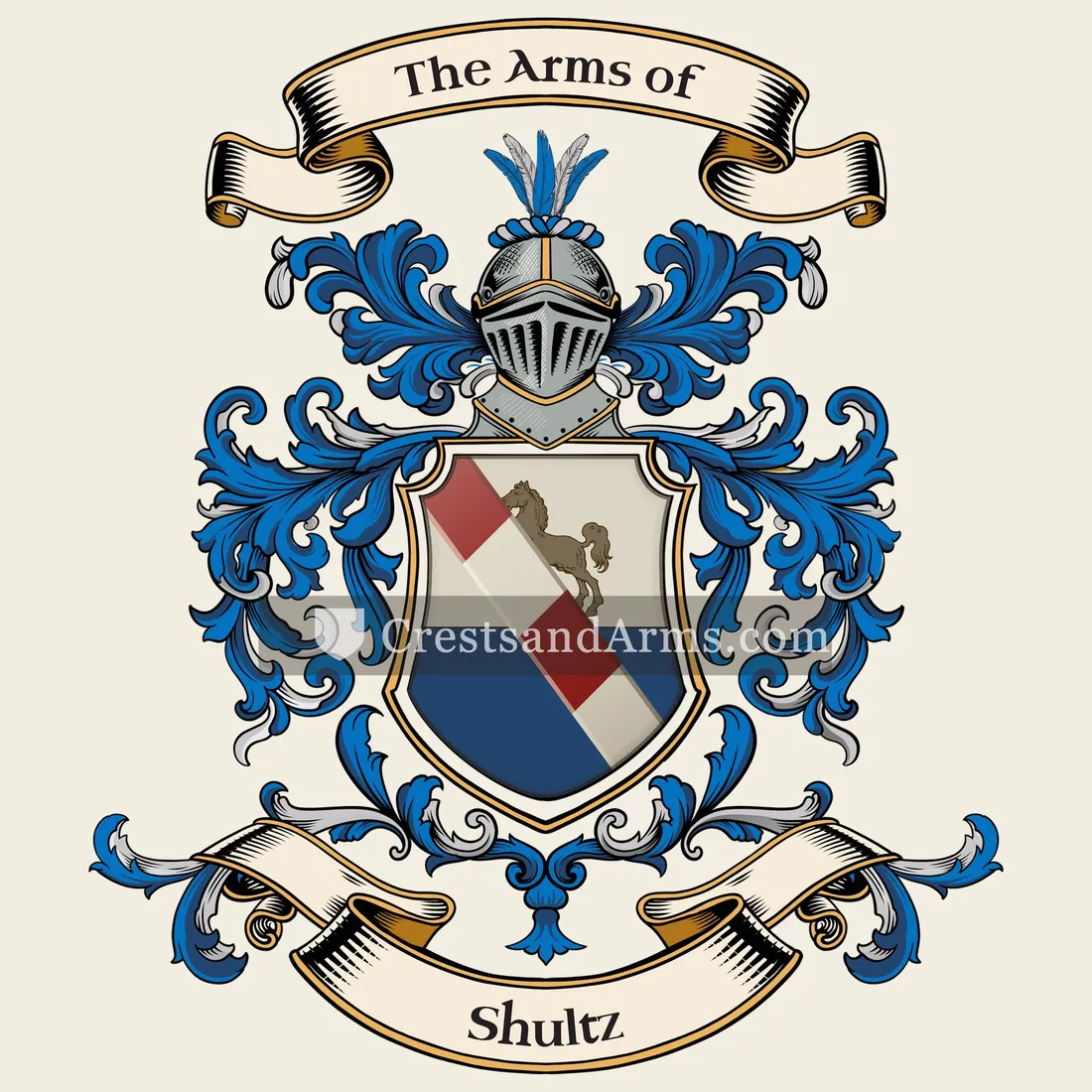
bendDefence, and the scarf of a commander
horseReadiness to serve king and country
Colours
Silver (Argent)Means: Peace and sincerity
Blue (Azure)Means: Loyalty and truth
Historical info
Source
J. B. Rietstap, Armorial Général, Gouda: G. B. van Goor Zonen, 1884–87
Blazon (the actual original written record)
“Coupé d'arg. sur azur; l'arg. ch. d'un cheval naiss. au nat., mouv. du coupé et br. avec ses jambes de devant sur l'azur; l'azur ch. de trois bandes d'arg. C.: un demi-vol d'azur, ch. de trois bandes d'arg.”
AustriaVienne, c. 1772
Digital archive packCoat of arms PNG, gold border print PDF, vector SVG and the certificate of authenticity. Sent to your email in minutes.
Map of Austria showing where the Shultz arms are recorded
The Shultz arms were recorded in Vienne, c. 1772.
This is where the arms were entered in the register. Families often moved to other parts of the country, so the same name can turn up in more than one region.
Region
Vienne
Town
Vienne
First recorded
1772
Granting Authority for the Shultz Arms
Imperial and Royal chancery
Sodacan · CC BY-SA 3.0
The body that granted and recorded arms in Austria in this period.
Joseph II, Holy Roman Emperor
Sovereign of the period
Joseph II, Holy Roman Emperor
1765–1790
Reigning in Netherlands when the Shultz arms are first recorded.
How Arms Worked in Austria
Austrian coats of arms were often linked directly to noble titles granted by the Emperor. These symbols belonged to the entire family line rather than just one individual. When a family grew, new branches kept the original design without needing to change it. This system allowed all members of a noble house to share the same identity across many generations.
Granting authority
The Imperial and Royal chancery managed all heraldic matters and controlled the official granting of arms throughout the Austrian lands.
How they got arms
Families typically received their arms through a formal imperial decree that often accompanied the elevation of a person to noble status.
Where arms were recorded
Official records of these grants were kept in the Imperial Register of Nobility which began its formal documentation process in 1453.
The family's standing
Recorded among the armigerous families of Austria.
Origin & History of the Shultz Family in Austria
The name Shultz, often spelled as Schulz or Schultze in German-speaking regions, originated as a professional title derived from the Middle High German word *schultheize*. Historically, this term referred to a village magistrate or a local official responsible for collecting taxes and enforcing legal duties on behalf of a lord. By the time members of the family were documented in Vienna in 1772, the name had transitioned from a specific job title into a hereditary surname. During the eighteenth century, Vienna served as the bustling administrative heart of the Habsburg Empire, attracting skilled individuals from across the provinces to fill roles in the growing bureaucracy. Families bearing this name were often integrated into the urban fabric of the city, serving as tradespeople, clerks, or local administrators who helped maintain the complex social order of the Austrian capital. This transition from a functional role to a family name reflects the broader shift in European society where professional identities became permanent markers of ancestry and social standing.
Shultz Meaning & Related Branches
Root word
Schultheiß
An official responsible for collecting taxes and enforcing local laws.
This name
ShultzA surname historically denoting a village magistrate or a tax collector.
also spelled
Schulz
Shultz
Schultes
Schult
Documented Sources
J. B. Rietstap, Armorial Général, Gouda: G. B. van Goor Zonen, 1884–87
AlleFriezen, Burgerlijke Stand van Friesland (Civil Registration of Friesland), 1811–1950
Tresoar, Fries Historisch en Letterkundig Centrum (Frisian Historical and Literary Center), Population Registers of Friesland
De Vries, J.W., Nederlandse Familienamen: Herkomst en Betekenis, 2005
Van der Schaar, J., Woordenboek van voornamen en familienamen, 1988
Digital archive packCoat of arms PNG, gold border print PDF, vector SVG and the certificate of authenticity. Sent to your email in minutes.


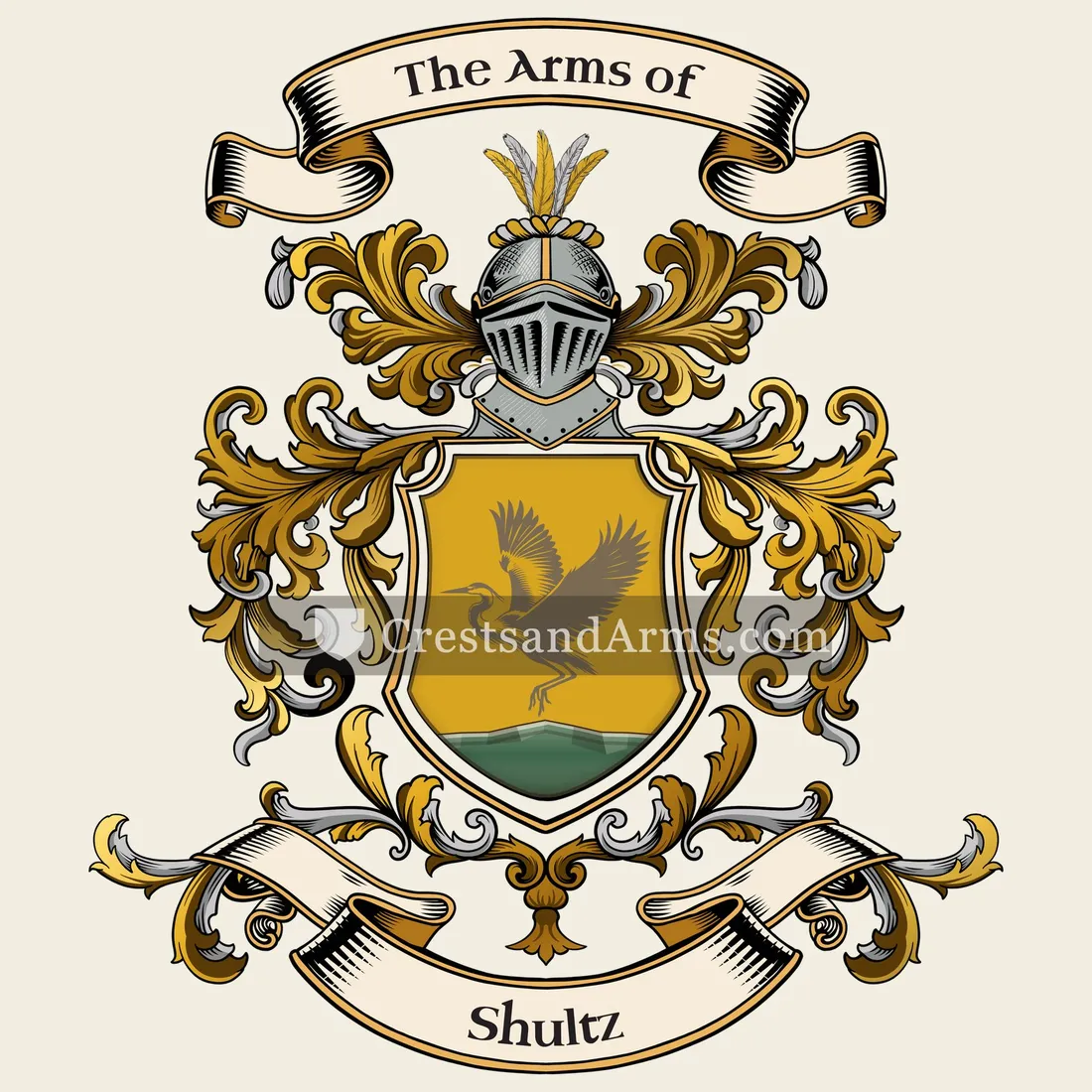
 mountThe ground held, and steadfastness upon it
 heronPatience and quiet watchfulness
 mountThe ground held, and steadfastness upon it
 heronPatience and quiet watchfulness


 bullValour and generosity
 mulletThe third son, and a divine quality from above


 bendDefence, and the scarf of a commander
 horseReadiness to serve king and country