Map of France showing where the Sigmon arms are recorded
The Sigmon arms were recorded in Lorraine, c. 1643.
Lorraine sat on the border between France and the German lands, and border country bred soldiers. Families here held small estates and served in arms, and a fighting man was exactly the sort who carried a shield of his own.
This is where the arms were entered in the register. Families often moved to other parts of the country, so the same name can turn up in more than one region.
The body that granted and recorded arms in France in this period.
Louis XIII of France
Sovereign of the period
Louis XIII of France
1617–1643
Reigning in France when the Sigmon arms are first recorded.
How Arms Worked in France
In France, a coat of arms was a mark of honor that passed down through the male line to all legitimate descendants. Families often used the same shield without changes to show their shared heritage. If a branch wanted to stand out, they could add a small mark to their shield to show their specific place in the family tree.
Granting authority
The Juge d'armes de France acted as the official authority that regulated and verified coats of arms across the country.
How they got arms
Families typically inherited their arms from ancestors, though they could also receive them through royal grants or by proving their noble status.
Where arms were recorded
Coats of arms were officially recorded in the Armorial Général de France, which began its main collection in the year 1696.
The family's standing
Recorded among the armigerous families of Lorraine.
Origin & History of the Sigmon Family in France
The family name Sigmon finds its early roots in the historical region of Lorraine, a territory defined by its position between French and Germanic cultural spheres. By 1643, records confirm the presence of family members living in this area during a period of intense political transition. At that time, Lorraine was frequently caught in the middle of the Thirty Years' War, which forced many families to adapt to shifting borders and changing local authorities. The name itself likely evolved from older Germanic linguistic traditions, reflecting the naming conventions common among the people who settled in the eastern borderlands of France. As the family navigated life in Lorraine, they were part of a resilient population that maintained its identity despite the constant movement of armies and the restructuring of regional governance. This early history suggests that the Sigmon family was deeply connected to the agricultural and social life of the rural French frontier during the seventeenth century.
Meaning of the Sigmon family crest colors & symbols
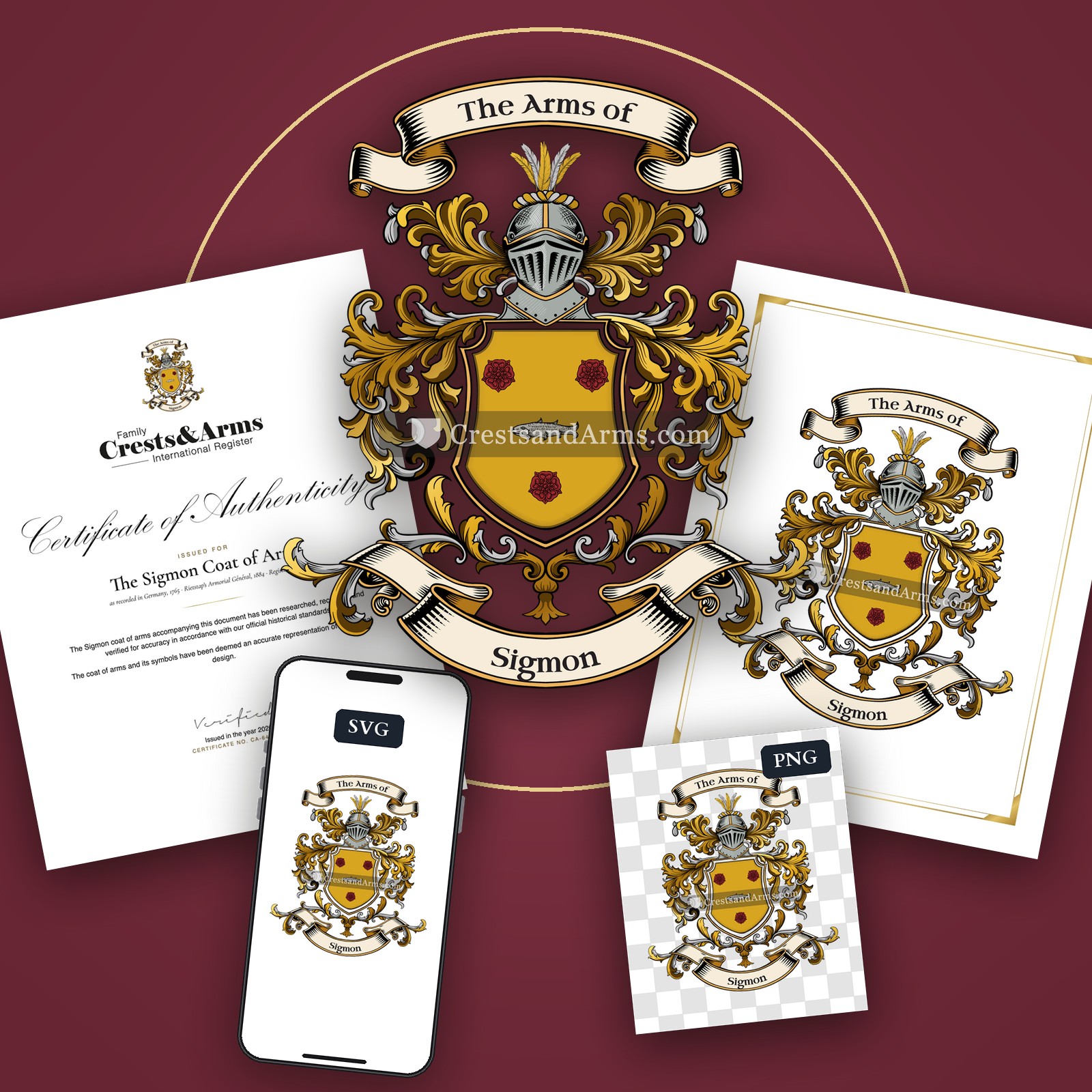
Symbols on this shield
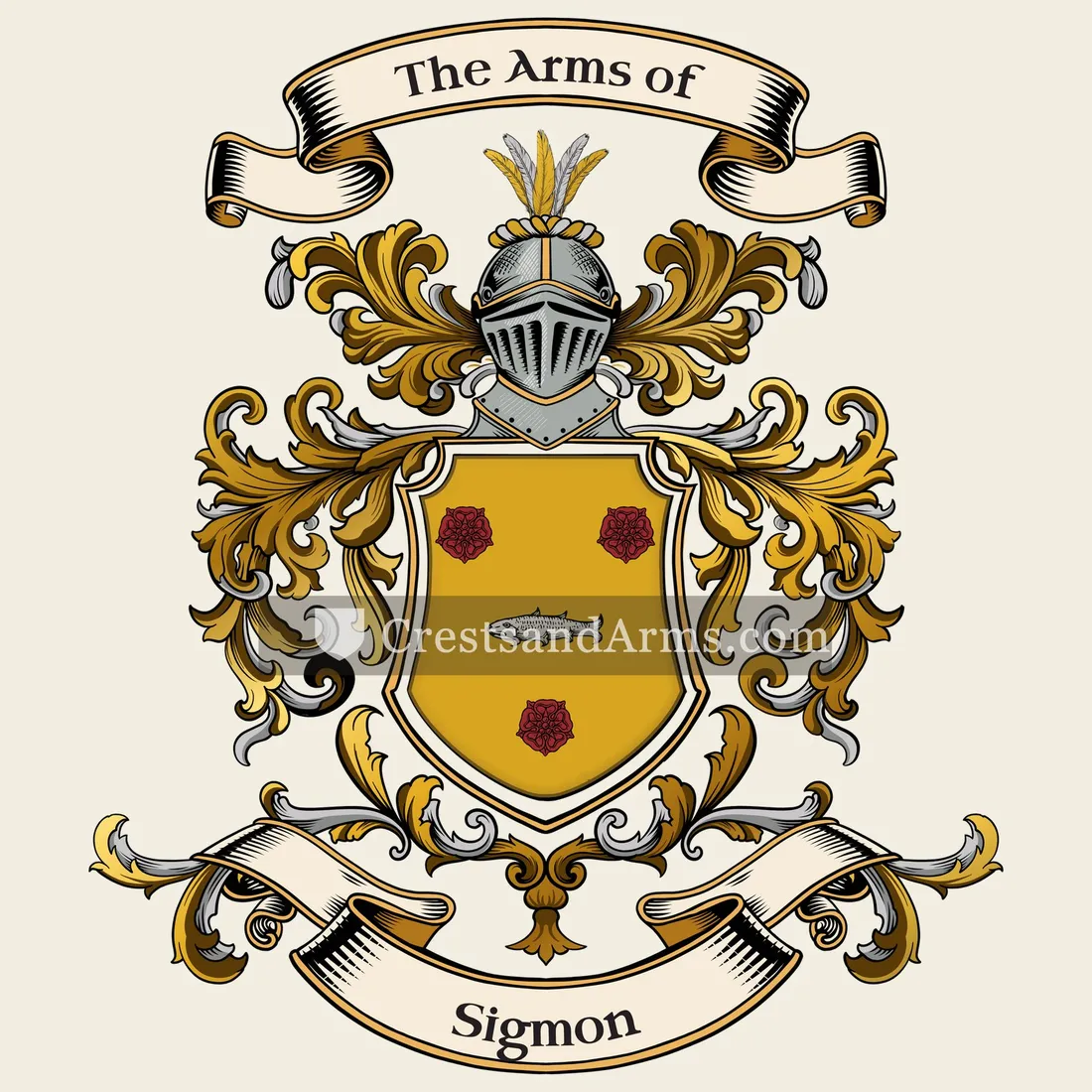
fishA true and generous mind, and Christian faith
roseThe seventh son, and beauty with grace
Colours
Gold (Or)Means: Generosity
Silver (Argent)Means: Peace and sincerity
Red (Gules)Means: Military strength
Historical info
Source
J. B. Rietstap, Armorial Général, Gouda: G. B. van Goor Zonen, 1884–87
Blazon (the actual original written record)
“D'or à trois roses de gu., 2 et 1, abaissées sous un poisson nageant d'arg. C.: une rose de gu.; entre deux prob. coupées d'or sur gu. - Armes mod.: D'arg. à trois roses mal-ordonnées de gu.; le champ chapé-ployé, à dextre d'azur à une clé de sa, le panneton en bas, et à sen. d'or à un poisson d'arg. en barre, la tête en bas. Le C. ancien. L.: à dextre d'or et de gu., à sen. d'arg. et de gu.”
GermanyFulda, c. 1765
Digital archive packCoat of arms PNG, gold border print PDF, vector SVG and the certificate of authenticity. Sent to your email in minutes.
Map of Germany showing where the Sigmon arms are recorded
The Sigmon arms were recorded in Fulda, c. 1765.
This is where the arms were entered in the register. Families often moved to other parts of the country, so the same name can turn up in more than one region.
The body that granted and recorded arms in Germany in this period.
Francis I, Holy Roman Emperor
Sovereign of the period
Francis I, Holy Roman Emperor
1745–1765
Reigning in France when the Sigmon arms are first recorded.
How Arms Worked in Germany
In the Holy Roman Empire, coats of arms were often granted to individuals by the Emperor or his representatives. These arms were then passed down through the generations to all legitimate descendants of the original holder. Younger branches of a family usually kept the same shield design without needing to change it, as the arms belonged to the entire lineage.
Granting authority
The Holy Roman Emperor held the sole power to grant new coats of arms throughout his vast imperial territories.
How they got arms
Families typically obtained their coats of arms through a formal imperial grant or by proving their noble status to the authorities.
Where arms were recorded
These grants were officially recorded in the Imperial Chancery registers, which began keeping formal records of such honors during the Middle Ages.
The family's standing
Recorded among the armigerous families of Germany.
Origin & History of the Sigmon Family in Germany
The family name Sigmon finds its roots in the German language, where it evolved from ancient Germanic personal names combining elements that mean victory and protection. By the middle of the 18th century, the family established a notable presence in the city of Fulda. This region was historically significant due to the influence of the Fulda Abbey, which served as a major center for learning and administration in the Holy Roman Empire. Families living in this area during the 1760s often worked as skilled tradespeople or farmers who contributed to the local economy of the prince-bishopric. As the family grew, they became part of the social fabric of the Hessian landscape, living through a period of intense regional development and religious transition. The persistence of the name in local records from 1765 highlights how families in this part of Germany maintained strong ties to their home provinces before many eventually sought new opportunities abroad.
Meaning of the Sigmon family crest colors & symbols
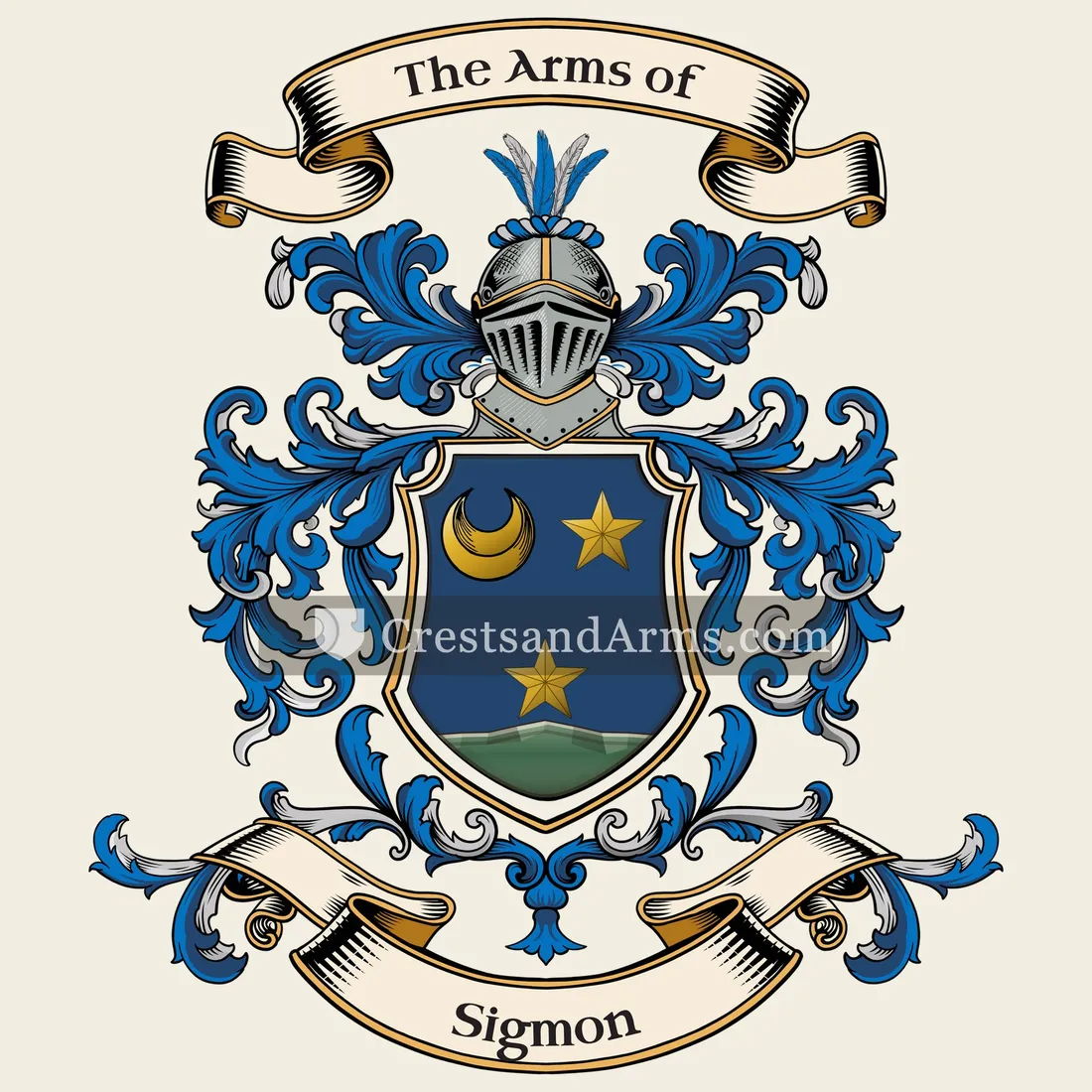
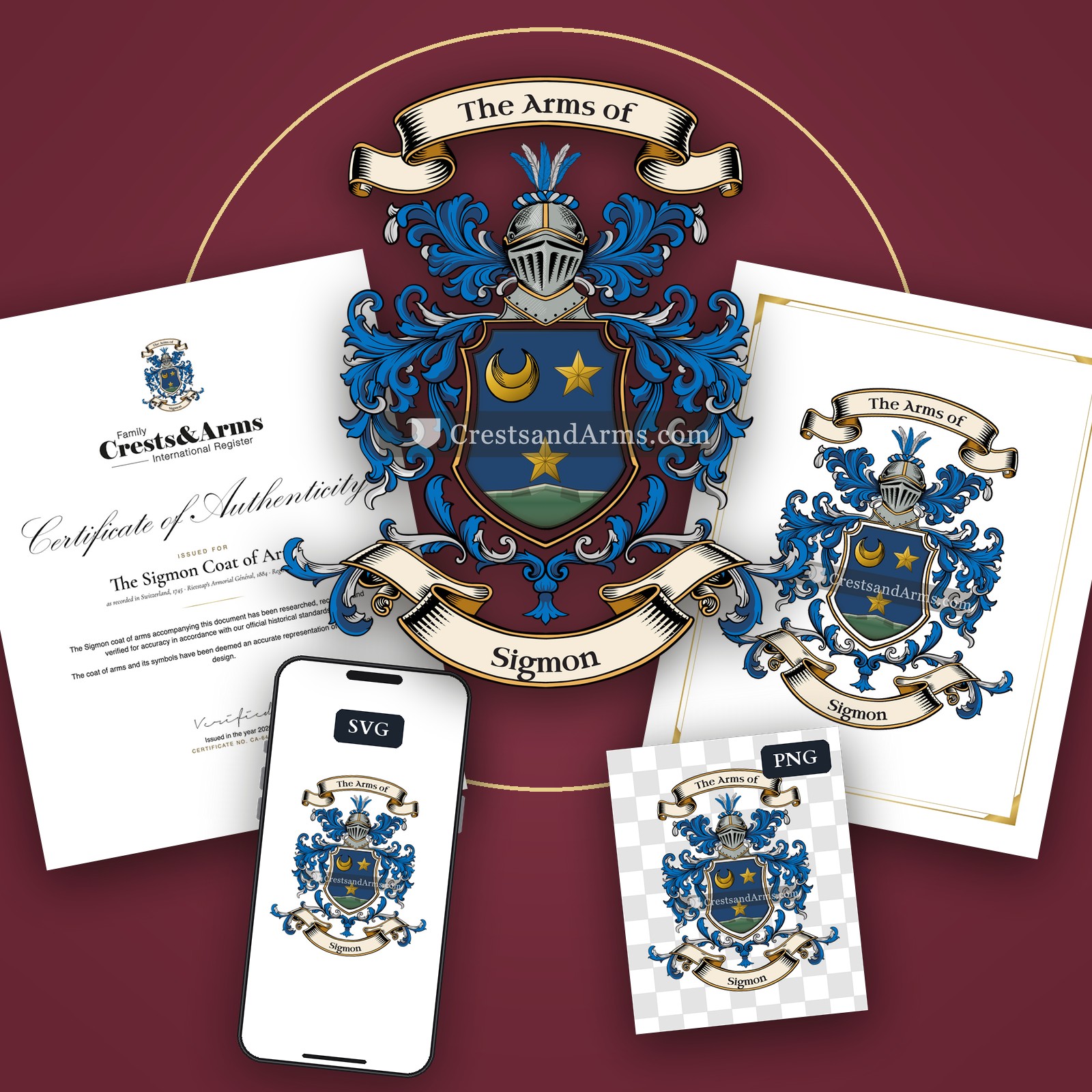
Symbols on this shield
mountThe ground held, and steadfastness upon it
crescentHonour by the sovereign, and the second son
mulletThe third son, and a divine quality from above
Colours
Blue (Azure)Means: Loyalty and truth
Green (Vert)Means: Hope
Gold (Or)Means: Generosity
Historical info
Source
J. B. Rietstap, Armorial Général, Gouda: G. B. van Goor Zonen, 1884–87
Blazon (the actual original written record)
“D'azur à un croiss. versé d'or, surmontant deux étoiles (5) renv. du même; le tout acc. en p. d'un tertre de sin. C.: un jeune homme iss., hab. d'azur, coiffé d'un bonnet albanais du même, les bras étendus, supp. de sa main dextre un croiss. montant d'or et de sa sen. une étoile du même.”
SwitzerlandBerne, c. 1745
Digital archive packCoat of arms PNG, gold border print PDF, vector SVG and the certificate of authenticity. Sent to your email in minutes.
Map of Switzerland showing where the Sigmon arms are recorded
The Sigmon arms were recorded in Berne, c. 1745.
This is where the arms were entered in the register. Families often moved to other parts of the country, so the same name can turn up in more than one region.
The body that granted and recorded arms in Switzerland in this period.
How Arms Worked in Switzerland
In Switzerland, coats of arms were not restricted to the nobility and were often adopted by common citizens and families. These symbols were passed down through generations to show family identity. When branches of a family grew, they often changed small details of the design to distinguish their own line from the original group.
Granting authority
Cantonal and civic authorities managed the use of coats of arms within their specific regions and local jurisdictions.
How they got arms
Families typically assumed their own coats of arms based on local custom rather than receiving them from a central monarch.
Where arms were recorded
Arms were recorded in various cantonal and civic registers starting from the fourteenth century throughout the Swiss region.
The family's standing
Recorded among the armigerous families of Switzerland.
Origin & History of the Sigmon Family in Switzerland
The family name Sigmon finds its roots in the German-speaking regions of Switzerland, where it emerged as a variation of the name Siegmund. By the mid-eighteenth century, historical records confirm that members of the family were well-established in the canton of Berne. During this period, the Swiss landscape was defined by strong local governance and a focus on agricultural and artisanal trade. Families like the Sigmons were often deeply integrated into the civic life of their parishes, where they participated in the local economy and maintained records of births and marriages within the church. As the name spread through the region, it reflected the linguistic shifts common in the Swiss plateau, where names were frequently adapted to suit local dialects. These early generations lived through a time of relative stability in the Swiss Confederation, allowing them to build a foundation that would eventually lead some family members to seek new opportunities beyond the borders of their homeland.
Sigmon Meaning & Related Branches
Root word
Sigismund
Derived from Germanic elements meaning victory and protection.
This name
SigmonA locational or patronymic surname indicating a descendant of one named Sigismund.
also spelled
Symon
Simonn
Simone
Documented Sources
J. B. Rietstap, Armorial Général, Gouda: G. B. van Goor Zonen, 1884–87
Archives départementales de la Meurthe-et-Moselle, Registres paroissiaux et d'état civil
Cabourdin, Guy, La Lorraine dans la guerre de Trente Ans, 1964
Martin, Jean, La vie en Lorraine au XVIIe siècle, 1978
Digital archive packCoat of arms PNG, gold border print PDF, vector SVG and the certificate of authenticity. Sent to your email in minutes.


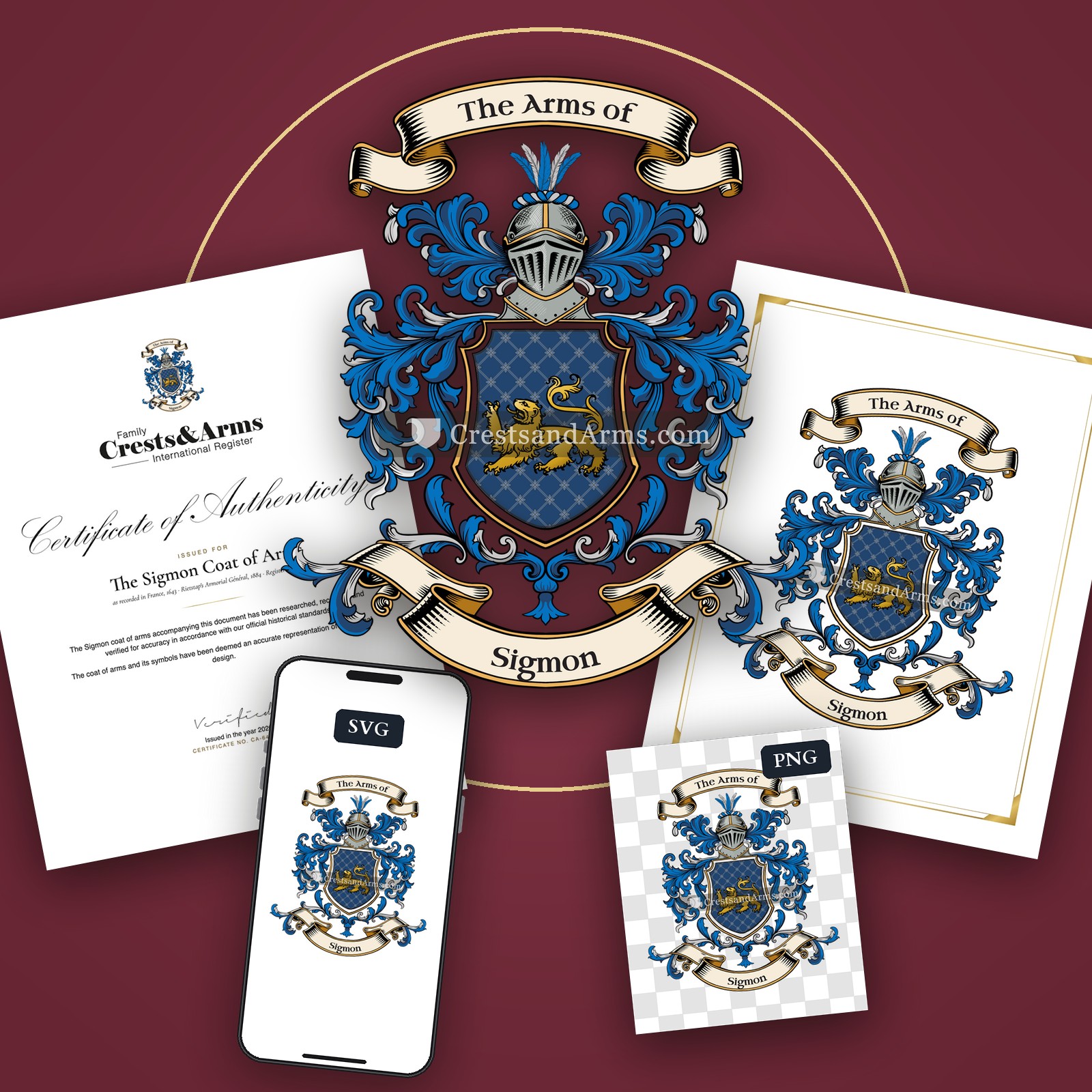
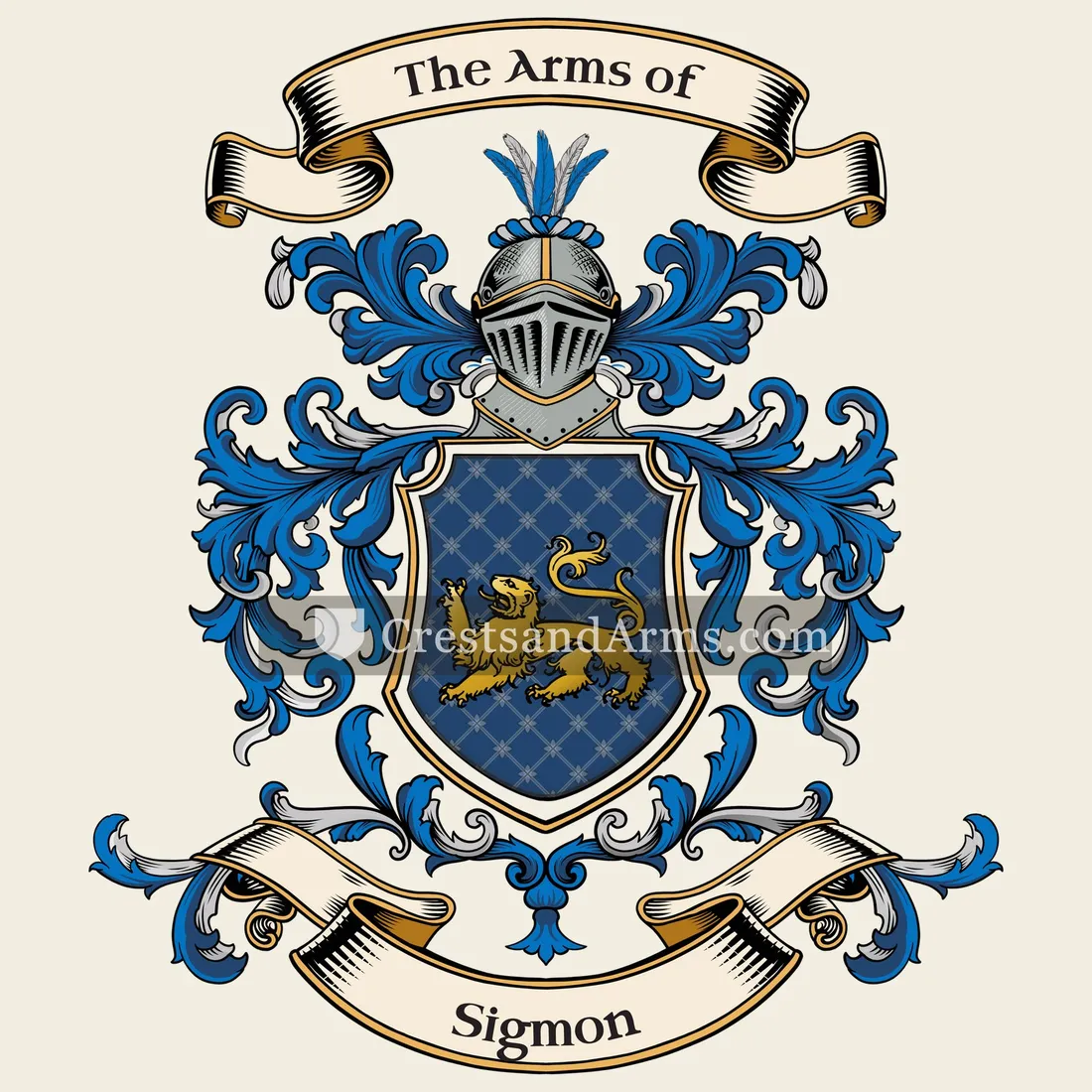
 lionCourage, strength and royalty
 lionCourage, strength and royalty


 fishA true and generous mind, and Christian faith
 roseThe seventh son, and beauty with grace


 mountThe ground held, and steadfastness upon it
 crescentHonour by the sovereign, and the second son
 mulletThe third son, and a divine quality from above