Map of Spain showing where the Silvia arms are recorded
The Silvia arms were recorded in Naples, c. 1722.
Naples was the largest city in Italy and the seat of a kingdom. Its noble houses were numerous, and the kingdom kept formal lists of the families entitled to arms, which is why so many appear in the records.
This is where the arms were entered in the register. Families often moved to other parts of the country, so the same name can turn up in more than one region.
The body that granted and recorded arms in Spain in this period.
Philip V of Spain
Sovereign of the period
Philip V of Spain
1714–1724
Reigning in Spain when the Silvia arms are first recorded.
How Arms Worked in Spain
In Spain, a coat of arms was considered a form of property that belonged to the entire family line. These arms were passed down from a father to all his children equally. Younger branches of the family usually kept the original design without needing to add any special marks to distinguish their specific line.
Granting authority
The Cronista Rey de Armas was the official body that regulated and granted coats of arms throughout Spain.
How they got arms
Families often obtained their arms through royal grants or by proving their noble status to the official heraldic authority.
Where arms were recorded
Coats of arms were officially recorded in the registers of the Cronista Rey de Armas starting in 1496.
The family's standing
Recorded among the armigerous families of Naples.
Origin & History of the Silvia Family in Spain
The name Silvia originates from the Latin word silva, which means forest or woods. In the context of Spain, the name was often associated with families living near dense woodlands or those who worked in forestry. While the name has deep roots in the Iberian Peninsula, it gained significant prominence as families moved across the Mediterranean during the era of the Spanish Empire. By 1722, records confirm that members of the Silvia family had established a notable presence in Naples. At that time, Naples was under the control of the Spanish crown, which allowed for a steady flow of families between the two regions. These early family members were likely part of the administrative or military class that moved to Italy to support Spanish interests. This migration helped spread the name across different territories while maintaining its connection to its Latin linguistic origins.
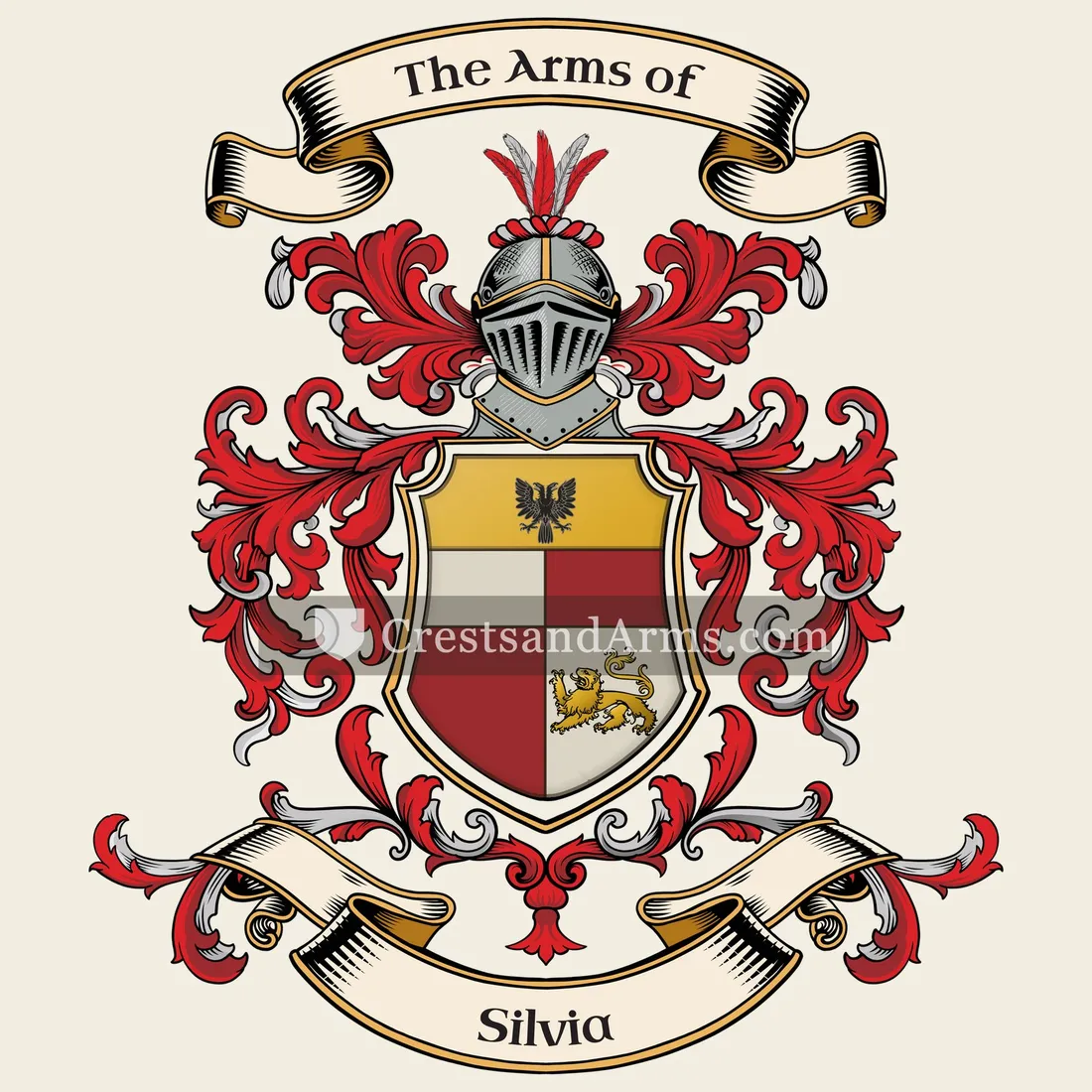
Meaning of the Silvia family crest colors & symbols
Symbols on this shield
chiefAuthority, wisdom and dominion
eagleNobility, strength and a keen mind
lionCourage, strength and royalty
Colours
Silver (Argent)Means: Peace and sincerity
Red (Gules)Means: Military strength
Gold (Or)Means: Generosity
Black (Sable)Means: Constancy
Historical info
Source
J. B. Rietstap, Armorial Général, Gouda: G. B. van Goor Zonen, 1884–87
Blazon (the actual original written record)
“Ec., d'un barré d'arg. et de gu., et d'azur au lion d'or; au chef d'or, br. sur l'écartelé et ch. d'une aigle de sa., bq. d'or. Cq. cour. C.: l'aigle, iss. L.: à dextre d'or et de sa., à sen. d'arg. et de gu.”
ItalyMilan, c. 1775
Digital archive packCoat of arms PNG, gold border print PDF, vector SVG and the certificate of authenticity. Sent to your email in minutes.
Map of Italy showing where the Silvia arms are recorded
The Silvia arms were recorded in Milan, c. 1775.
This is where the arms were entered in the register. Families often moved to other parts of the country, so the same name can turn up in more than one region.
The body that granted and recorded arms in Italy in this period.
Alvise Giovanni Mocenigo
Sovereign of the period
Alvise Giovanni Mocenigo
1763–1778
Reigning in Spain when the Silvia arms are first recorded.
How Arms Worked in Italy
In the Italian states, coats of arms were often used by noble families to show their status and history. These symbols were passed down through the generations to all legitimate male descendants. Younger branches of a family usually kept the original design but sometimes added small changes to distinguish their specific line from the main branch.
Granting authority
Various local rulers and city governments controlled the use of coats of arms across the different Italian states.
How they got arms
Families often assumed their own arms or received them as official grants from local lords, popes, or city councils.
Where arms were recorded
Arms were recorded in local city archives or private family books rather than in one single national register.
The family's standing
Recorded among the armigerous families of Italy.
Origin & History of the Silvia Family in Italy
The surname Silvia traces its linguistic roots to the Latin word *silva*, which means forest or woodland. In the context of Italian history, this name often identified families who lived near wooded areas or worked as foresters in the northern regions. By the late eighteenth century, the Silvia family established a notable presence in Milan. During this period, Milan was a vibrant center of culture and trade under the influence of the Habsburg monarchy. Families living in the city at that time were often part of a growing class of merchants, artisans, or civil servants who helped shape the urban landscape. The presence of the Silvia name in 1775 suggests that the family was well-integrated into the social and economic life of Lombardy, contributing to the development of the region during a time of significant administrative reform and intellectual growth.
Silvia Meaning & Related Branches
Root word
Silvius
Derived from the Latin word silva meaning forest or woods.
This name
SilviaRefers to someone who lives in or comes from the forest.
also spelled
Sylva
Documented Sources
J. B. Rietstap, Armorial Général, Gouda: G. B. van Goor Zonen, 1884–87
Albaigès, Josep M., Diccionario de nombres de personas, 1993
Archivo General de Simancas, Secretaría de Estado, Italia, 1722
Moll, Francesc de B., Els llinatges catalans, 1959
Digital archive packCoat of arms PNG, gold border print PDF, vector SVG and the certificate of authenticity. Sent to your email in minutes.


 lionCourage, strength and royalty
 lionCourage, strength and royalty
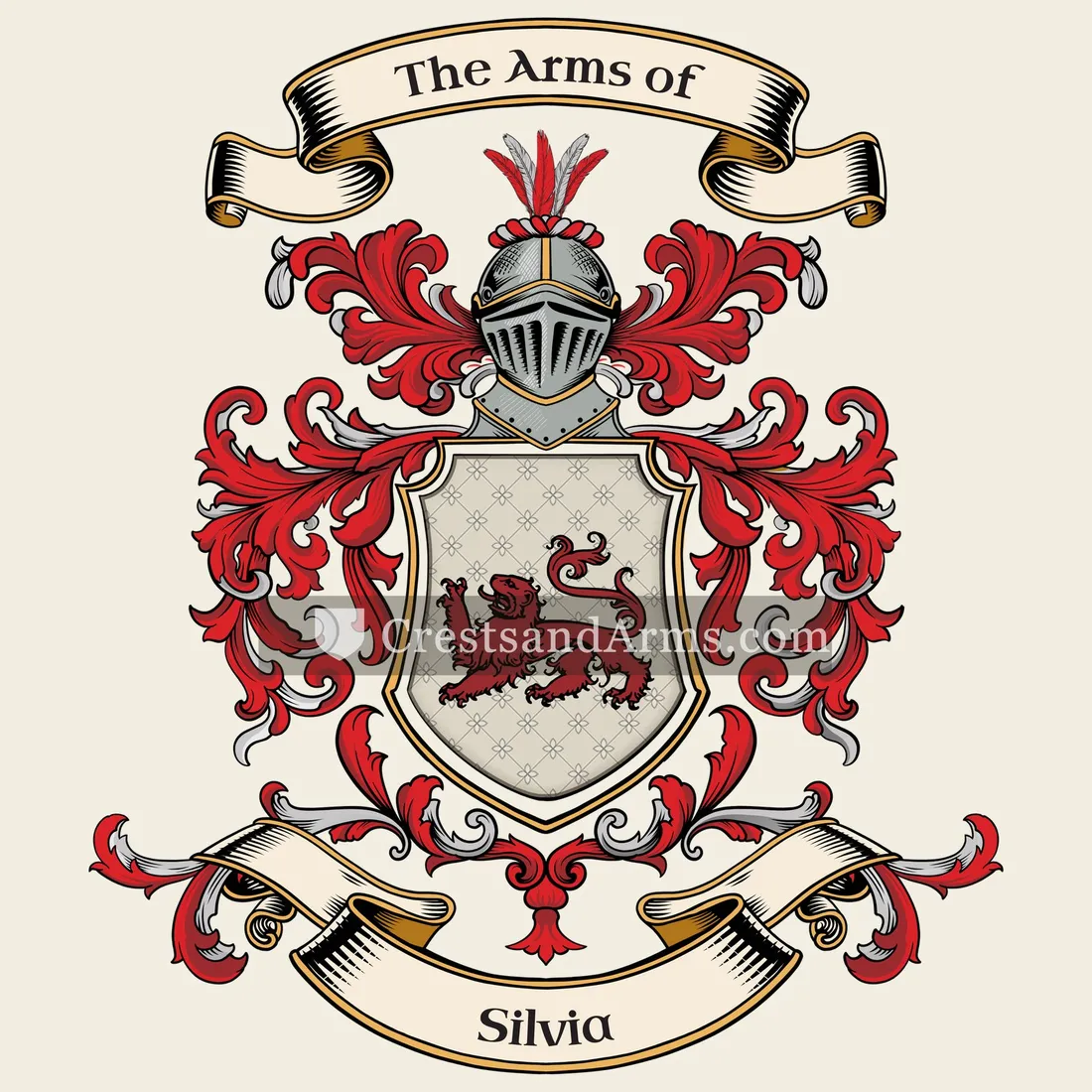


 chiefAuthority, wisdom and dominion
 eagleNobility, strength and a keen mind