Map of Netherlands showing where the Sinclair arms are recorded
The Sinclair arms were recorded in Middelbourg, c. 1815.
This is where the arms were entered in the register. Families often moved to other parts of the country, so the same name can turn up in more than one region.
Region
Middelbourg
Town
Middelbourg
First recorded
1815
Granting Authority for the Sinclair Arms
Hoge Raad van Adel
Photograph made by me · CC BY-SA 3.0
The body that granted and recorded arms in Netherlands in this period.
William I of the Netherlands
Sovereign of the period
William I of the Netherlands
1815–1840
Reigning in Netherlands when the Sinclair arms are first recorded.
How Arms Worked in Netherlands
In the Netherlands, coats of arms were often used by noble families and those who held specific public offices. These arms were passed down through the generations to legitimate descendants. Younger branches of a family usually kept the original design without needing to add special marks. This system ensured that the family identity remained clear and consistent over many years.
Granting authority
The Hoge Raad van Adel is the official body that regulates and manages noble titles and coats of arms in the Netherlands.
How they got arms
Families typically obtained their coats of arms through official royal grants or by proving their long-standing historical use of the symbols.
Where arms were recorded
Coats of arms are officially recorded in the registers held by the Hoge Raad van Adel, which began its work in 1814.
The family's standing
Recorded among the armigerous families of Netherlands.
Origin & History of the Sinclair Family in Netherlands
The history of the Sinclair name in the Netherlands is deeply connected to the strategic port city of Middelburg. By 1815, members of the family had established themselves in this bustling center of trade and maritime activity. During this period, the Netherlands was undergoing a major transition as it emerged from the Napoleonic era to form the United Kingdom of the Netherlands. Families like the Sinclairs often moved to cities like Middelburg to participate in the recovery of international commerce and the shipping industry. Because Middelburg was a vital hub for trade with the East Indies, the presence of the family there suggests they were likely involved in the professional or merchant classes that kept the Dutch economy moving. Their settlement in this region reflects a broader pattern of families seeking stability and opportunity in the wake of significant political change.
Meaning of the Sinclair family crest colors & symbols
Symbols on this shield
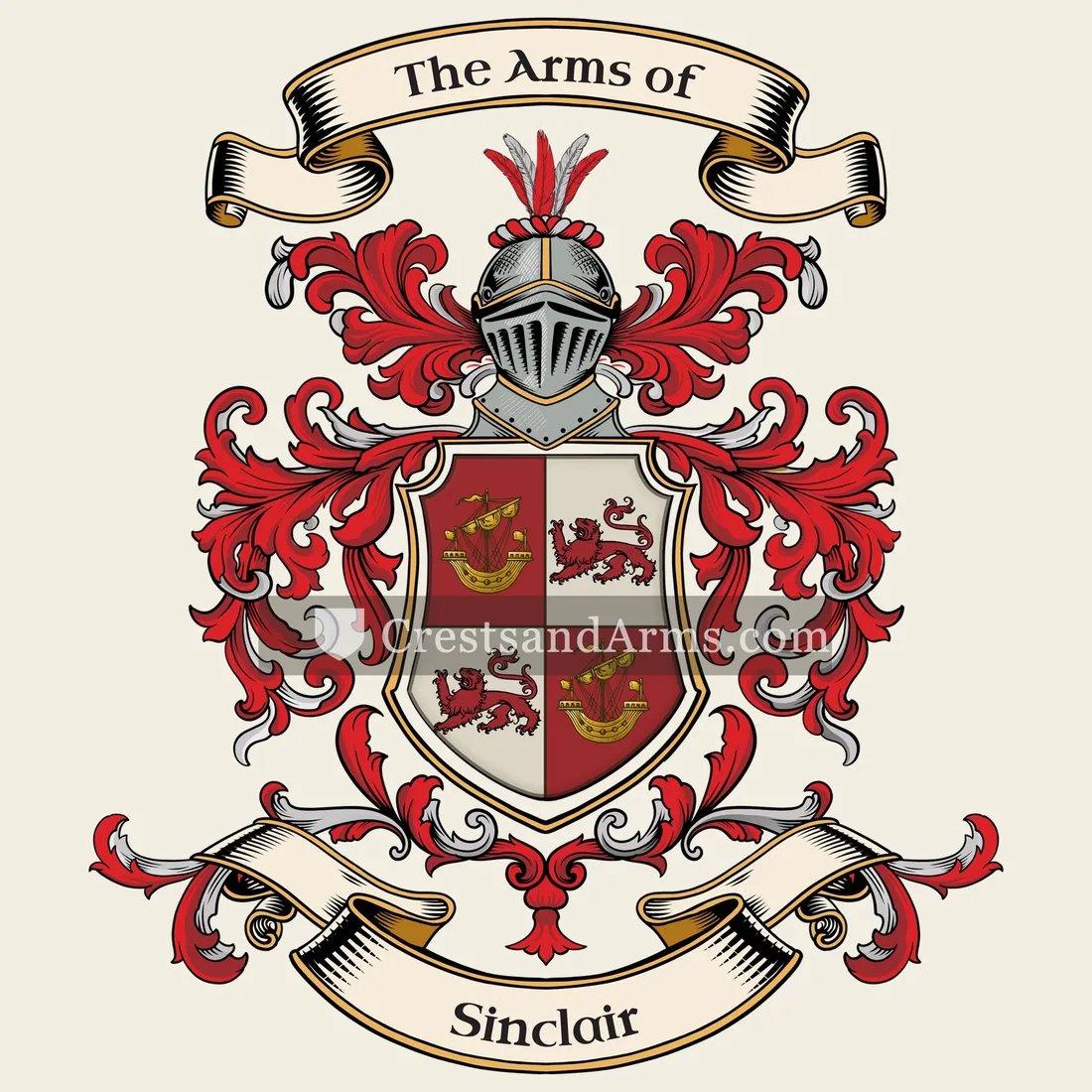
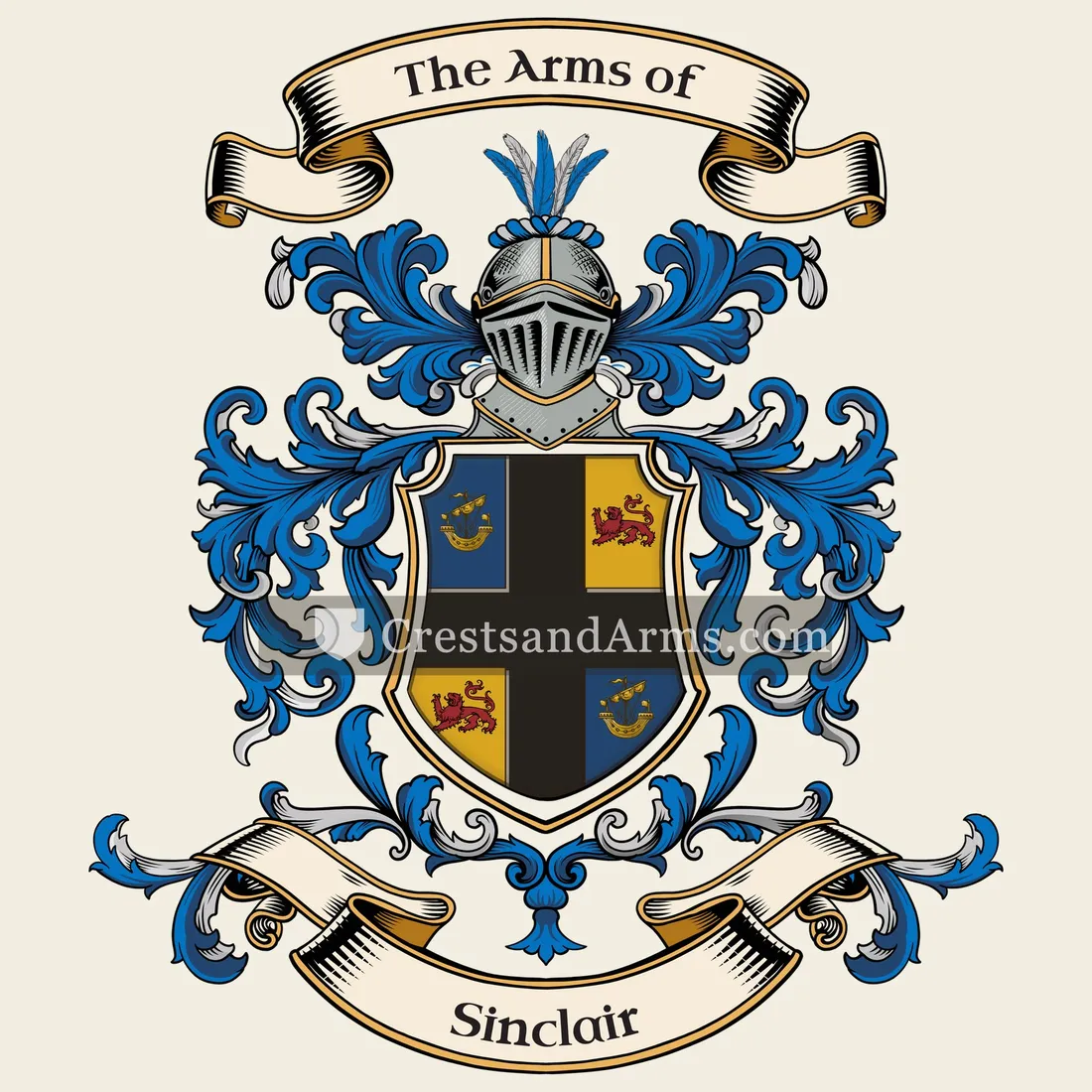
cross symbolChristian faith and service
shipEnterprise, and a great voyage undertaken
lionCourage, strength and royalty
Colours
Blue (Azure)Means: Loyalty and truth
Gold (Or)Means: Generosity
Black (Sable)Means: Constancy
Red (Gules)Means: Military strength
Historical info
Source
J. B. Rietstap, Armorial Général, Gouda: G. B. van Goor Zonen, 1884–87
Blazon (the actual original written record)
“Ec.: au 1 d'azur à un vaisseau d'or, les voiles ferlées, enclos dans un double trêcheur fleur. et c.-fleur. du même (Orkney); aux 2 et 3 d'or au lion de gu. (Spar); au 4 d'azur à un vaisseau voguant d'or (Caithness). A la croix engr. de sa., br. sur l'écartelé (Sinclair). C.: un coq au nat. S.: deux griffons de sa., bq. et m. d'or. D.: COMMIT THY WORK TO GOD.”
Swedenc. 1455
Digital archive packCoat of arms PNG, gold border print PDF, vector SVG and the certificate of authenticity. Sent to your email in minutes.
Map of Sweden showing where the Sinclair arms are recorded
The Sinclair arms were recorded in Sweden, c. 1455.
Arms such as these were typically recorded in Stockholm.
Stockholm held the Swedish court and the House of Nobility, where every noble family's arms were entered and kept. Families ennobled for service registered there, which is why so many are recorded around the city.
This is where the arms were entered in the register. Families often moved to other parts of the country, so the same name can turn up in more than one region.
The body that granted and recorded arms in Sweden in this period.
Karl Knutsson
Sovereign of the period
Karl Knutsson
1448–1457
Reigning in Netherlands when the Sinclair arms are first recorded.
How Arms Worked in Sweden
In Sweden, a coat of arms belonged to a noble family as a whole rather than just one individual. These arms were passed down through the generations to all legitimate descendants. Younger branches of the family used the same shield without needing to change it. This system ensured that the entire lineage shared the same identity and status under the law.
Granting authority
The Riddarhuset, or House of Nobility, regulated all noble coats of arms in Sweden under royal authority.
How they got arms
Families received their coats of arms through royal grants of nobility which were then officially registered with the House.
Where arms were recorded
Coats of arms were officially recorded in the Swedish House of Nobility register starting in the year 1626.
The family's standing
Recorded among the armigerous families of Sweden.
Origin & History of the Sinclair Family in Sweden
The history of the Sinclair family in Sweden begins with their arrival from Scotland during the fifteenth century. Records confirm that members of the family were living in Stockholm by 1455, where they quickly integrated into the local social and political landscape. These early settlers often served as merchants or military officers, taking advantage of the strong trade connections between the Baltic region and the British Isles. Over the following generations, the family became deeply rooted in Swedish society, eventually gaining status within the national nobility. Their journey from foreign traders to influential figures illustrates how immigrant families helped shape the urban development and administrative growth of medieval Stockholm.
Meaning of the Sinclair family crest colors & symbols
Symbols on this shield
cross symbolChristian faith and service
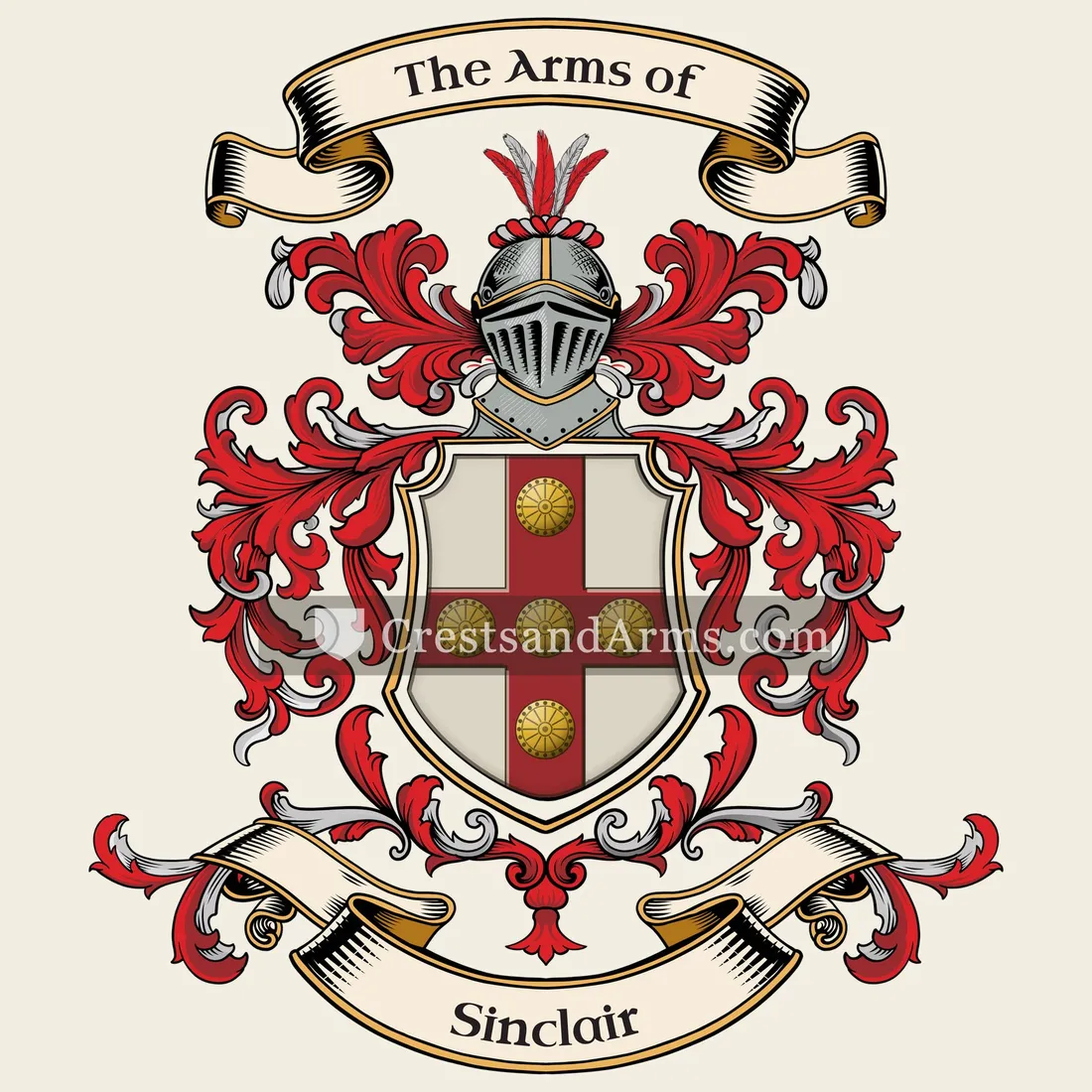
roundelA coin, and one who has been to the crusades
Colours
Silver (Argent)Means: Peace and sincerity
Red (Gules)Means: Military strength
Gold (Or)Means: Generosity
Historical info
Source
Sir Bernard Burke, The General Armory of England, Scotland, Ireland and Wales, London: Harrison & Sons, 1884
Blazon (the actual original written record)
“Originally—Ar. on a cross engr. gu. five bezants. As recorded in 1767, in consequence of an obligation in an [?]”
HaddingtonStevenston · Haddington, c. 1636
Digital archive packCoat of arms PNG, gold border print PDF, vector SVG and the certificate of authenticity. Sent to your email in minutes.
Map of Scotland showing where the Sinclair arms are recorded
The Sinclair arms were recorded in Haddington, c. 1636.
Haddington, now East Lothian, was the best farmland in Scotland and lay close to Edinburgh. Good land near the capital stayed in the hands of families of standing, and standing brought arms.
This is where the arms were entered in the register. Families often moved to other parts of the country, so the same name can turn up in more than one region.
The body that granted and recorded arms in Scotland in this period.
Charles I of England
Sovereign of the period
Charles I of England
1625–1649
Reigning in Netherlands when the Sinclair arms are first recorded.
How Arms Worked in Scotland
Scottish heraldry is unique because it treats a coat of arms as a piece of personal property protected by law. Only one person can own a specific design at any given time. When a family grows, the head keeps the original shield while other relatives must apply for their own distinct version with slight changes to prove their specific identity.
Granting authority
The Court of the Lord Lyon acts as the official body that regulates and controls all heraldic matters throughout Scotland.
How they got arms
Individuals obtain a legal right to their arms through a formal petition process that confirms their identity and family connection.
Where arms were recorded
All valid coats of arms are officially entered into the Public Register of All Arms and Bearings starting from 1672.
The family's standing
Recorded among the armigerous families of Haddington.
Origin & History of the Sinclair Family in Scotland
The Sinclair family name traces its roots back to the Norman conquest of England, eventually spreading north into Scotland during the twelfth century. The family gained significant influence as they integrated into the Scottish nobility, particularly through their long-standing ties to the earldom of Orkney and their expansive landholdings across the country. By the seventeenth century, the Sinclairs had established deep roots in various regions, including the town of Haddington. Records from 1636 confirm that members of the family were active residents in this area, participating in the local social and economic life of the Scottish Lowlands. This transition from powerful northern landowners to established figures in towns like Haddington illustrates how the family successfully adapted to the changing political landscape of Scotland over several centuries.
Sinclair Meaning & Related Branches
Root word
Sanctus Clarus
Latin for holy or saintly and clear or bright.
This name
SinclairDerived from the Norman place name Saint-Clair, referring to a location dedicated to Saint Clarus.
also spelled
Sincler
Synclair
Sinkler
Stclair
Related arms
St Clairvariant spelling
Erskinerecorded with Sinclair, same area
Stewartrecorded with Sinclair, same area
Documented Sources
J. B. Rietstap, Armorial Général, Gouda: G. B. van Goor Zonen, 1884–87
Zeeuws Archief, Burgerlijke Stand Zeeland (1811–1950)


 shipEnterprise, and a great voyage undertaken
 lionCourage, strength and royalty
 shipEnterprise, and a great voyage undertaken
 lionCourage, strength and royalty


 cross symbolChristian faith and service


 roundelA coin, and one who has been to the crusades