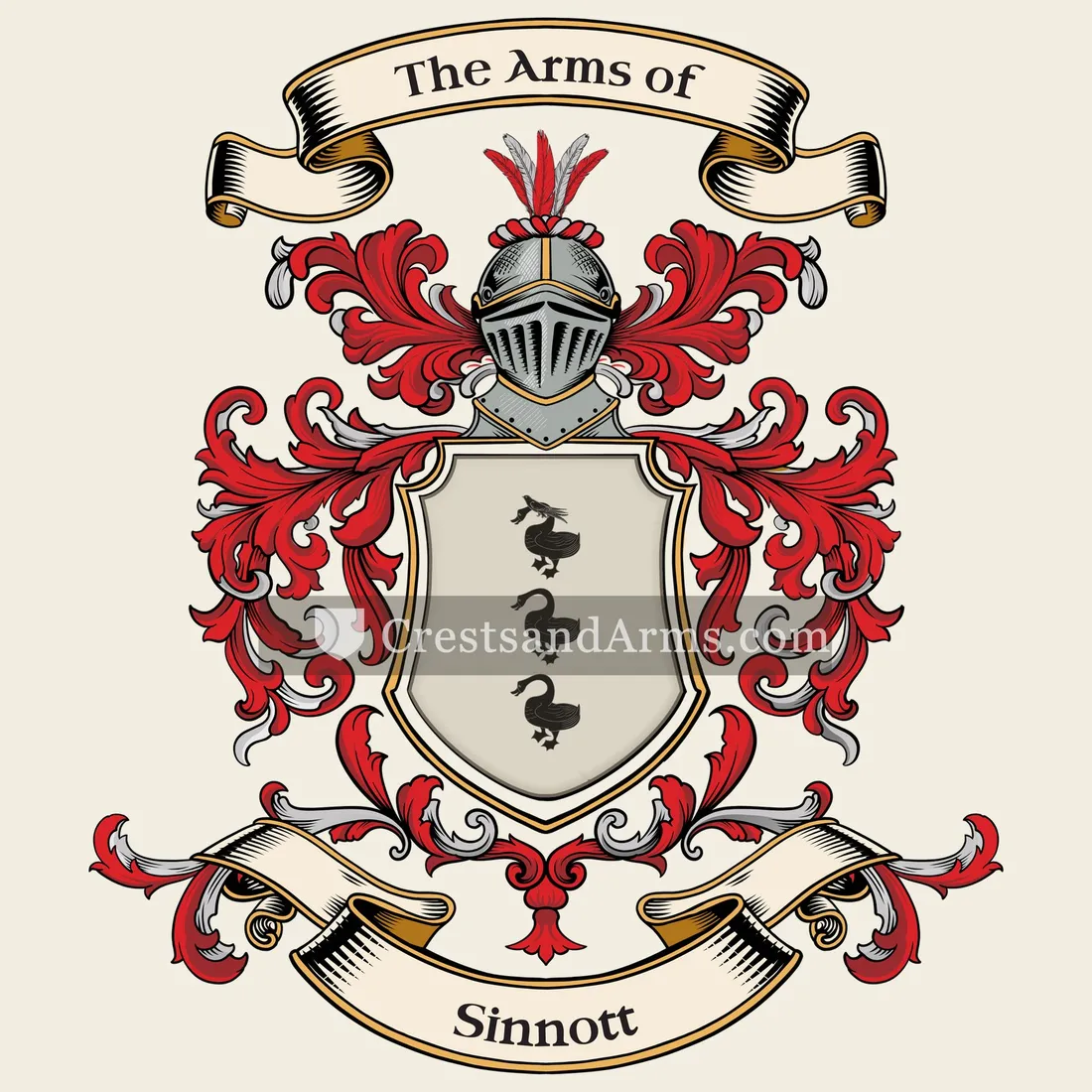
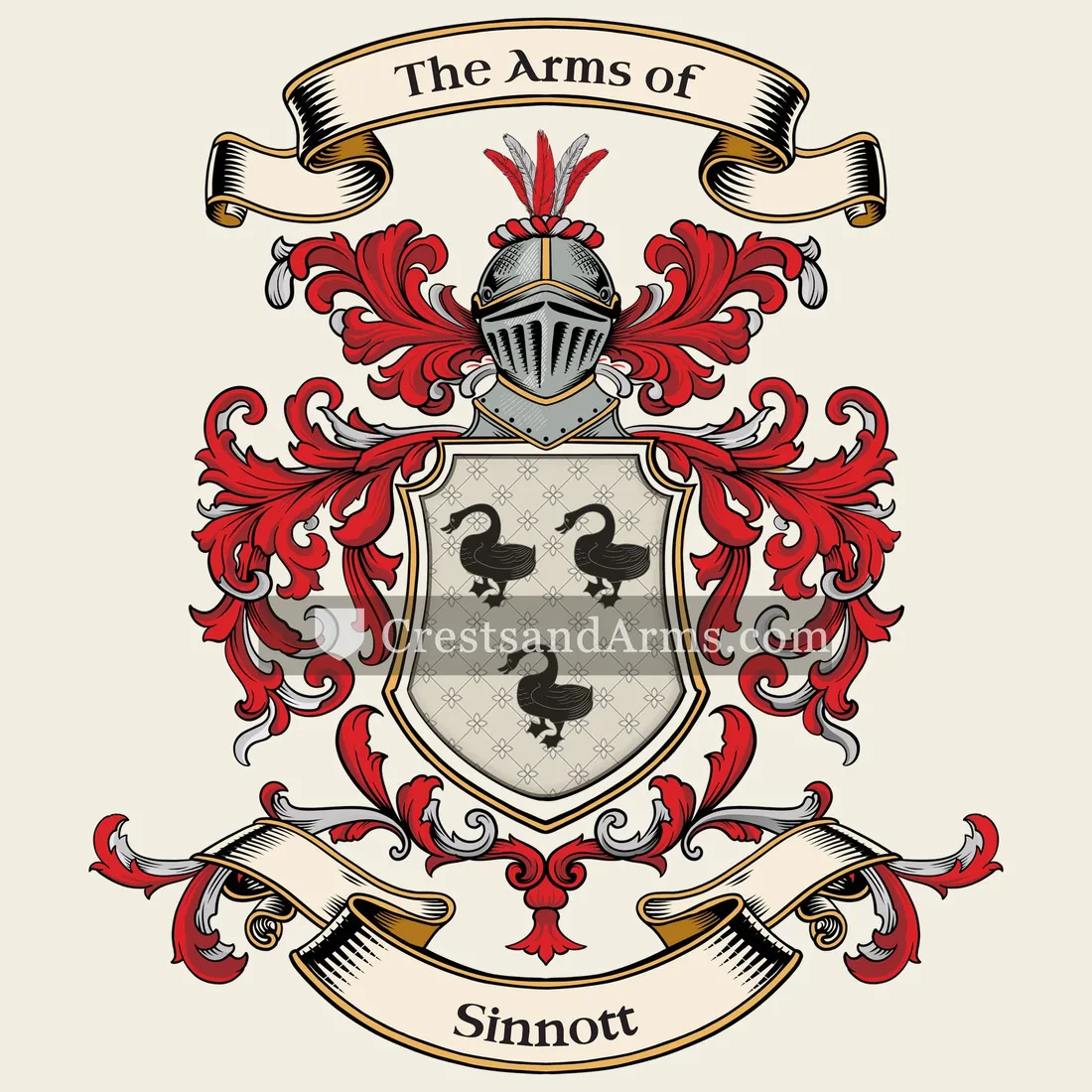
Map of Ireland showing where the Sinnott arms are recorded
The Sinnott arms were recorded in Wexford, c. 1606.
Wexford was the corner of Ireland closest to Wales, settled early by Norman families. They held their land under arms and kept it for generations, which is why so many Wexford names carry recorded shields.
This is where the arms were entered in the register. Families often moved to other parts of the country, so the same name can turn up in more than one region.
The body that granted and recorded arms in Ireland in this period.
James VI and I
Sovereign of the period
James VI and I
1603–1625
Reigning in Ireland when the Sinnott arms are first recorded.
How Arms Worked in Ireland
The Ulster King of Arms granted coats of arms to individuals who proved their social standing and good character. These symbols were typically inherited by all legitimate descendants of the original holder. If a family branch wanted a unique look, they could apply for a specific change to their design through the office to ensure their identity remained distinct.
Granting authority
The Ulster King of Arms acted as the official body that regulated and issued all coats of arms throughout Ireland.
How they got arms
Families obtained their arms through formal grants issued by the office after proving their eligibility and paying the required fees.
Where arms were recorded
All official grants were recorded in the registers held by the Ulster King of Arms starting from the year 1552.
The family's standing
Recorded among the armigerous families of Wexford.
Origin & History of the Sinnott Family in Ireland
The Sinnott family name has deep roots in County Wexford, where the family established a significant presence by the early seventeenth century. The name is believed to be of Norman origin, likely derived from the Old French personal name Sinod. After the Anglo-Norman invasion of Ireland in the late twelfth century, families like the Sinnotts settled in the fertile lands of the southeast. By 1606, records show that members of the family were well-established as landowners and local figures within the Wexford region. They became deeply integrated into the social and political life of the area over the following centuries. Despite the many changes in Irish land ownership and governance during this period, the family maintained a strong connection to their ancestral home in Wexford. This long history highlights how Norman settlers gradually transformed into a distinct part of the Irish landscape.
Meaning of the Sinnott family crest colors & symbols
Symbols on this shield
swanGrace, light and the poet's art
Colours
Silver (Argent)Means: Peace and sincerity
Black (Sable)Means: Constancy
Historical info
Source
Sir Bernard Burke, The General Armory of England, Scotland, Ireland and Wales, London: Harrison & Sons, 1884
Blazon (the actual original written record)
“Ar. three swans sa. ducally gorged or”
SpainCadiz, c. 1580
Digital archive packCoat of arms PNG, gold border print PDF, vector SVG and the certificate of authenticity. Sent to your email in minutes.
Map of Spain showing where the Sinnott arms are recorded
The Sinnott arms were recorded in Cadiz, c. 1580.
This is where the arms were entered in the register. Families often moved to other parts of the country, so the same name can turn up in more than one region.
The body that granted and recorded arms in Spain in this period.
Philip II of Spain
Sovereign of the period
Philip II of Spain
1556–1598
Reigning in Ireland when the Sinnott arms are first recorded.
How Arms Worked in Spain
In Spain, a coat of arms was considered a form of property that belonged to the entire family line. These arms were passed down from a father to all his children equally. Younger branches of the family usually kept the original design without needing to add any special marks to distinguish their specific line.
Granting authority
The Cronista Rey de Armas was the official body that regulated and granted coats of arms throughout Spain.
How they got arms
Families often obtained their arms through royal grants or by proving their noble status to the official heraldic authority.
Where arms were recorded
Coats of arms were officially recorded in the registers of the Cronista Rey de Armas starting in 1496.
The family's standing
Recorded among the armigerous families of Spain.
Origin & History of the Sinnott Family in Spain
The history of the Sinnott family in Spain is deeply connected to the strategic port city of Cadiz during the late sixteenth century. By 1580, members of the family had established a presence in this bustling maritime hub, which served as a primary gateway for trade and military activity between Europe and the Americas. At this time, Cadiz was a melting pot of international merchants, soldiers, and sailors who navigated the complex political landscape of the Spanish Empire. The Sinnotts likely integrated into this environment by utilizing their skills in commerce or naval logistics to support the crown’s expansive interests. Their residency in such a vital location suggests that the family held a position of relative influence, allowing them to participate in the lucrative exchanges that defined the era. Through their involvement in the life of the city, these early settlers helped bridge the gap between their ancestral roots and the growing global reach of the Spanish state.
Sinnott Meaning & Related Branches
Root word
Synod
Derived from the Latin synodus meaning an assembly or meeting.
This name
SinnottAn occupational or locative name for someone associated with a church council or assembly.
also spelled
Sinnott
Documented Sources
Sir Bernard Burke, The General Armory of England, Scotland, Ireland and Wales, London: Harrison & Sons, 1884
Colfer, Billy. Wexford: A Town and its Landscape. 2008
Curtis, Edmund. A History of Medieval Ireland. 1938
National Archives of Ireland. Inquisitionum in Officio Rotulorum Cancellariae Hiberniae Asservatarum Repertorium. 1826
Digital archive packCoat of arms PNG, gold border print PDF, vector SVG and the certificate of authenticity. Sent to your email in minutes.


 swanGrace, light and the poet's art
 martletA younger son, who must win his own land
 swanGrace, light and the poet's art
 martletA younger son, who must win his own land