Map of Denmark showing where the Sinsel arms are recorded
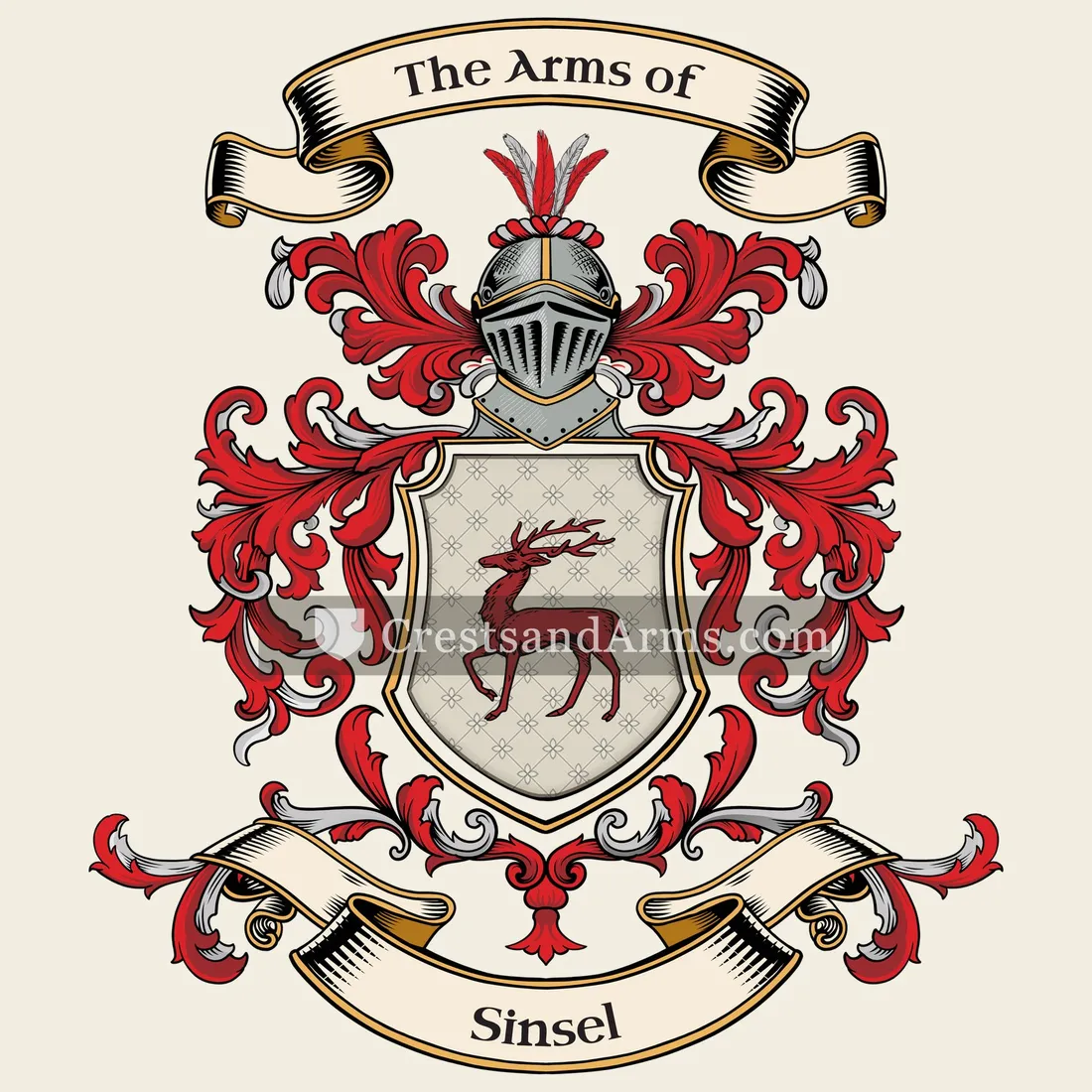
The Sinsel arms were recorded in Denmark, c. 1722.
Arms such as these were typically recorded in Sjaælland.
Zealand held the Danish court, the crown's offices and Copenhagen itself. Families who served the king kept estates within reach of it, and royal service was the ordinary route to a coat of arms.
This is where the arms were entered in the register. Families often moved to other parts of the country, so the same name can turn up in more than one region.
The body that granted and recorded arms in Denmark in this period.
Frederik IV of Denmark
Sovereign of the period
Frederik IV of Denmark
1699–1730
Reigning in Denmark when the Sinsel arms are first recorded.
How Arms Worked in Denmark
Danish heraldry during this period was closely tied to noble status and royal favor rather than being open to all citizens. Arms were typically granted by the monarch to individuals, and these symbols were then shared by all members of the noble house. If a family line died out, the right to use those specific arms ended with them.
Granting authority
The Danish royal chancery held the power to issue and regulate official coats of arms for the kingdom.
How they got arms
Families usually received their arms through a formal royal grant that confirmed their noble status and rights.
Where arms were recorded
These grants were officially recorded in the Danish Royal Chancery records starting in the sixteenth century.
The family's standing
Recorded among the armigerous families of Denmark.
Origin & History of the Sinsel Family in Denmark
The family name Sinsel traces its roots back to the island of Sjælland in Denmark during the early 18th century. Historical records confirm that members of the family were established in this region by 1722. During this period, Sjælland was the heart of the Danish kingdom, and families often lived in small agricultural communities or near the bustling capital of Copenhagen. The name itself likely originated as a descriptive term or a geographic identifier, which was a common practice for surnames in Northern Europe at the time. As the family grew, they became part of the local social fabric, participating in the parish life and rural economy that defined Danish society during the late Enlightenment. By studying these early church and census records, we can see that the Sinsel family was firmly rooted in the landscape of eastern Denmark long before the modern era of migration.
Sinsel Meaning & Related Branches
Root word
Sintzel
A diminutive form of the Germanic name Sinto or Sinto.
This name
SinselDerived from a nickname for a person with a specific physical trait or behavior.
also spelled
Skinkell
Skinkele
Skinkl
Documented Sources
J. B. Rietstap, Armorial Général, Gouda: G. B. van Goor Zonen, 1884–87
Rigsarkivet (Danish National Archives), Kirkebøger (Parish Registers), Sjælland Stift


 stagPeace and harmony, and one who will not fight unprovoked
 stagPeace and harmony, and one who will not fight unprovoked