Map of Germany showing where the Sirman arms are recorded
The Sirman arms were recorded in Hambourg, c. 1765.
This is where the arms were entered in the register. Families often moved to other parts of the country, so the same name can turn up in more than one region.
The body that granted and recorded arms in Germany in this period.
Francis I, Holy Roman Emperor
Sovereign of the period
Francis I, Holy Roman Emperor
1745–1765
Reigning in Germany when the Sirman arms are first recorded.
How Arms Worked in Germany
In the Holy Roman Empire, coats of arms were often granted to individuals by the Emperor or his representatives. These arms were then passed down through the generations to all legitimate descendants of the original holder. Younger branches of a family usually kept the same shield design without needing to change it, as the arms belonged to the entire lineage.
Granting authority
The Holy Roman Emperor held the sole power to grant new coats of arms throughout his vast imperial territories.
How they got arms
Families typically obtained their coats of arms through a formal imperial grant or by proving their noble status to the authorities.
Where arms were recorded
These grants were officially recorded in the Imperial Chancery registers, which began keeping formal records of such honors during the Middle Ages.
The family's standing
Recorded among the armigerous families of Germany.
Origin & History of the Sirman Family in Germany
The history of the Sirman family in Germany is rooted in the vibrant urban landscape of Hamburg during the mid-eighteenth century. By 1765, records confirm that members of the family were already established residents of this bustling port city. During this period, Hamburg served as a major center for international trade and commerce, attracting families who sought opportunities in shipping, craftsmanship, and mercantile exchange. The name likely emerged from the linguistic traditions of Northern Germany, where surnames were often shaped by local dialects and the specific occupations or geographic origins of the inhabitants. As the family integrated into the social fabric of the city, they participated in the steady growth of Hamburg as a gateway to the North Sea. Their presence in such a significant commercial hub suggests that early generations were likely involved in the professional networks that defined the city’s identity as a center for global interaction.
Meaning of the Sirman family crest colors & symbols
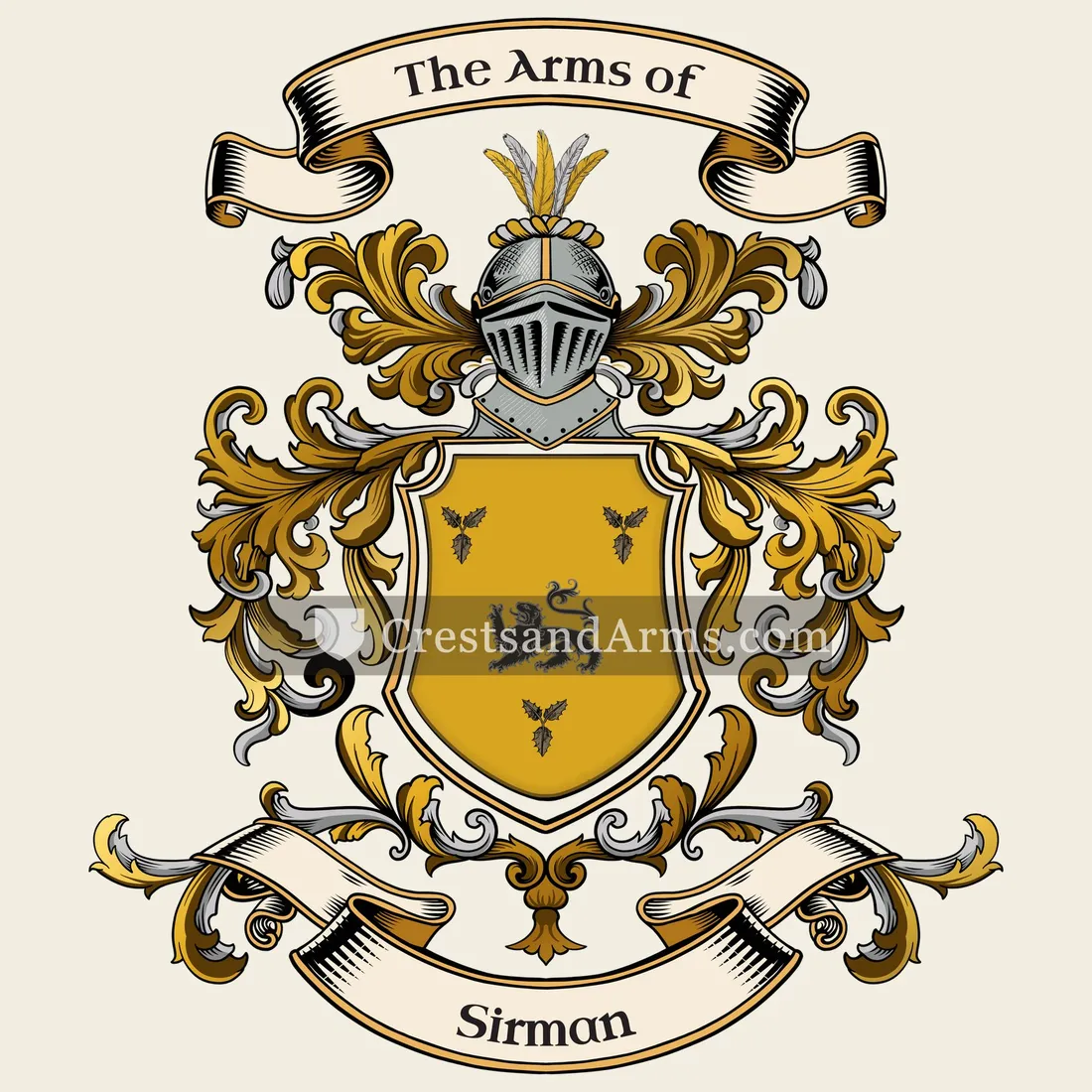
Symbols on this shield
lionCourage, strength and royalty
hollyTruth, and protection through winter
Colours
Gold (Or)Means: Generosity
Black (Sable)Means: Constancy
Historical info
Source
Sir Bernard Burke, The General Armory of England, Scotland, Ireland and Wales, London: Harrison & Sons, 1884
Blazon (the actual original written record)
“Or, a lion ramp. sa. armed and langued gu. betw. three holly leaves slipped ppr”
GloucesterTredington · Gloucester, c. 1620
Digital archive packCoat of arms PNG, gold border print PDF, vector SVG and the certificate of authenticity. Sent to your email in minutes.
Map of England showing where the Sirman arms are recorded
The Sirman arms were recorded in Gloucester, c. 1620.
Gloucestershire had good farmland, a cloth trade in its valleys and a river carrying goods to Bristol. All three made money, and money bought the estates that brought arms with them.
This is where the arms were entered in the register. Families often moved to other parts of the country, so the same name can turn up in more than one region.
The body that granted and recorded arms in England in this period.
James VI and I
Sovereign of the period
James VI and I
1603–1625
Reigning in Germany when the Sirman arms are first recorded.
How Arms Worked in England
English heraldry allowed arms to be shared by all legitimate descendants of the original owner. These symbols were treated as personal property that moved through the generations to all children. While the eldest son kept the original design, other family members could use the same shield without needing to change it or register their own unique versions.
Granting authority
The College of Arms in London has regulated the use of coats of arms throughout England and Wales since 1484.
How they got arms
Families typically obtained their coats of arms through a formal grant from the Crown or by proving their ancient right to them.
Where arms were recorded
All official coats of arms are recorded in the registers kept at the College of Arms, which date back to the fifteenth century.
The family's standing
Recorded among the armigerous families of Gloucester.
Origin & History of the Sirman Family in England
The family name Sirman has deep roots in the English county of Gloucestershire, where records confirm members of the family were living as early as 1620. During this period, the name was often associated with families who lived in rural parishes and engaged in local trade or agriculture. The name itself likely evolved from a descriptive term used to identify a person’s occupation or their status within the local community. As the family established themselves in the Severn Valley, they became part of the social fabric of the region, participating in the daily life of the English countryside. By the 17th century, the Sirmans were typical of the families who helped maintain the local economy and parish records of Gloucestershire, leaving behind a legacy that reflects the quiet persistence of English life during the Stuart era.
Sirman Meaning & Related Branches
Root word
Sürman
Old High German term for a man from the south.
This name
SirmanA topographic or habitational name denoting someone who originated from southern regions.
also spelled
Surmane
Surmann
Surmanne
Surmon
Serman
Documented Sources
J. B. Rietstap, Armorial Général, Gouda: G. B. van Goor Zonen, 1884–87


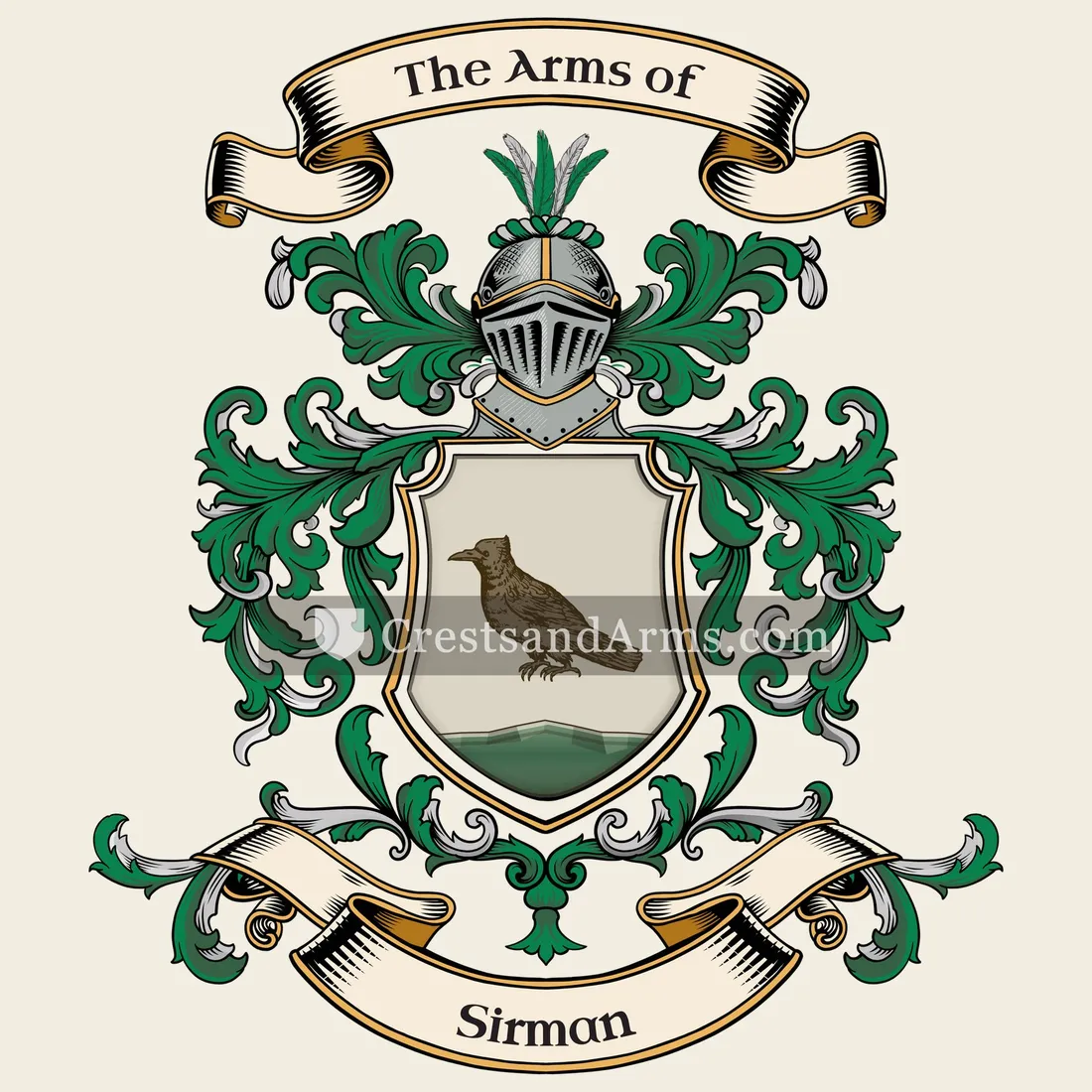
 mountThe ground held, and steadfastness upon it
 dovePeace, love and the Holy Spirit
 mountThe ground held, and steadfastness upon it
 dovePeace, love and the Holy Spirit


 lionCourage, strength and royalty
 hollyTruth, and protection through winter