Map of Germany showing where the Sitek arms are recorded
The Sitek arms were recorded in Westphalia, c. 1765.
Westphalia was a land of small estates and fortified farmhouses in western Germany. Its families were numerous and not especially rich, but each held its own ground, and holding ground was what brought arms.
This is where the arms were entered in the register. Families often moved to other parts of the country, so the same name can turn up in more than one region.
The body that granted and recorded arms in Germany in this period.
Francis I, Holy Roman Emperor
Sovereign of the period
Francis I, Holy Roman Emperor
1745–1765
Reigning in Germany when the Sitek arms are first recorded.
How Arms Worked in Germany
In the Holy Roman Empire, coats of arms were often granted to individuals by the Emperor or his representatives. These arms were then passed down through the generations to all legitimate descendants of the original holder. Younger branches of a family usually kept the same shield design without needing to change it, as the arms belonged to the entire lineage.
Granting authority
The Holy Roman Emperor held the sole power to grant new coats of arms throughout his vast imperial territories.
How they got arms
Families typically obtained their coats of arms through a formal imperial grant or by proving their noble status to the authorities.
Where arms were recorded
These grants were officially recorded in the Imperial Chancery registers, which began keeping formal records of such honors during the Middle Ages.
The family's standing
Recorded among the armigerous families of Westphalia.
Origin & History of the Sitek Family in Germany
The surname Sitek is deeply rooted in the historical landscape of Westphalia, where records confirm the family’s presence as early as 1765. During this period, Westphalia was a region defined by its transition from traditional agrarian life to early industrial growth. Families like the Siteks often lived in small, tight-knit rural communities where surnames were frequently tied to local geography or specific occupations. As the eighteenth century progressed, the region faced significant social changes due to shifting borders and the influence of neighboring powers. The Sitek family likely navigated these years by working in local trades or farming, contributing to the steady development of the Westphalian economy. By maintaining their presence in the region, the family became part of the long-standing cultural fabric that shaped the identity of modern-day Germany.
Coat of Arms & Family Crest Details
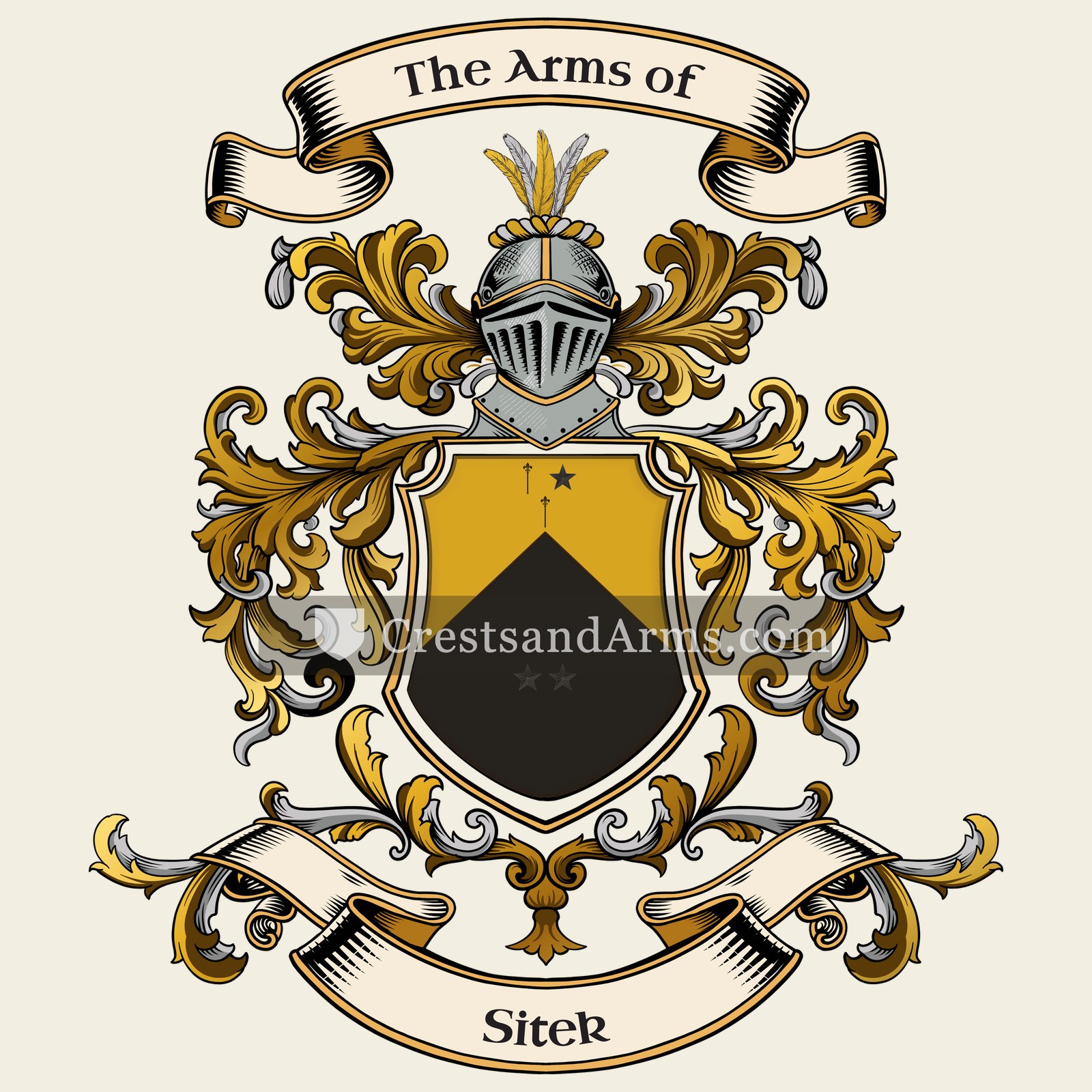
Symbols on this shield
batonAuthority and office held under the crown
mulletThe third son, and a divine quality from above
Colours
Gold (Or)Means: Generosity
Black (Sable)Means: Constancy
Historical info
Source
J. B. Rietstap, Armorial Général, Gouda: G. B. van Goor Zonen, 1884–87
Blazon (the actual original written record)
“D'or à deux bourdons de pèlerin de sa., passés en saut., acc. en chef d'une étoile du même; le champ chapé-ployé aussi de sa., à deux étoiles d'or. C.: un jeune homme iss., hab. aux armes de l'écu (moins les bourdons), tenant de ses mains levées deux bourdons de pèlerin de sa., passés en saut. au-dessus de sa tête, le bourdon à dextre orné d'un ruban flottant d'or et celui à sen. d'un ruban flottant de sa.”
SwitzerlandBerne, c. 1745
Digital archive packCoat of arms PNG, gold border print PDF, vector SVG and the certificate of authenticity. Sent to your email in minutes.
Map of Switzerland showing where the Sitek arms are recorded
The Sitek arms were recorded in Berne, c. 1745.
This is where the arms were entered in the register. Families often moved to other parts of the country, so the same name can turn up in more than one region.
The body that granted and recorded arms in Switzerland in this period.
How Arms Worked in Switzerland
In Switzerland, coats of arms were not restricted to the nobility and were often adopted by common citizens and families. These symbols were passed down through generations to show family identity. When branches of a family grew, they often changed small details of the design to distinguish their own line from the original group.
Granting authority
Cantonal and civic authorities managed the use of coats of arms within their specific regions and local jurisdictions.
How they got arms
Families typically assumed their own coats of arms based on local custom rather than receiving them from a central monarch.
Where arms were recorded
Arms were recorded in various cantonal and civic registers starting from the fourteenth century throughout the Swiss region.
The family's standing
Recorded among the armigerous families of Switzerland.
Origin & History of the Sitek Family in Switzerland
The history of the Sitek family in Switzerland is rooted in the mid-eighteenth century, specifically within the city of Berne. By 1745, records confirm that members of the family were established residents in this influential Swiss canton. During this period, Berne was a center of political power and trade, and families living there were often integrated into the local guild systems or administrative structures that defined urban life. While the name Sitek has roots that stretch across Central and Eastern Europe, its presence in Berne suggests that these early ancestors were part of the mobile population of craftsmen or merchants who moved across borders to seek new opportunities. Living in Berne during the 1700s meant navigating a society governed by strict social hierarchies and a strong tradition of record-keeping, which allowed the family to maintain a documented presence in the region. This early foothold in Switzerland highlights the family’s ability to adapt to new cultural and economic environments during a time of significant transition in European history.
Related Branches & Arms
Root word
Sito
A Slavic term referring to a sieve or a sifter.
This name
SitekAn occupational surname for a person who manufactured or used sieves.
also spelled
Stek
Documented Sources
J. B. Rietstap, Armorial Général, Gouda: G. B. van Goor Zonen, 1884–87


 saltireResolution, and St Andrew's cross
 saltireResolution, and St Andrew's cross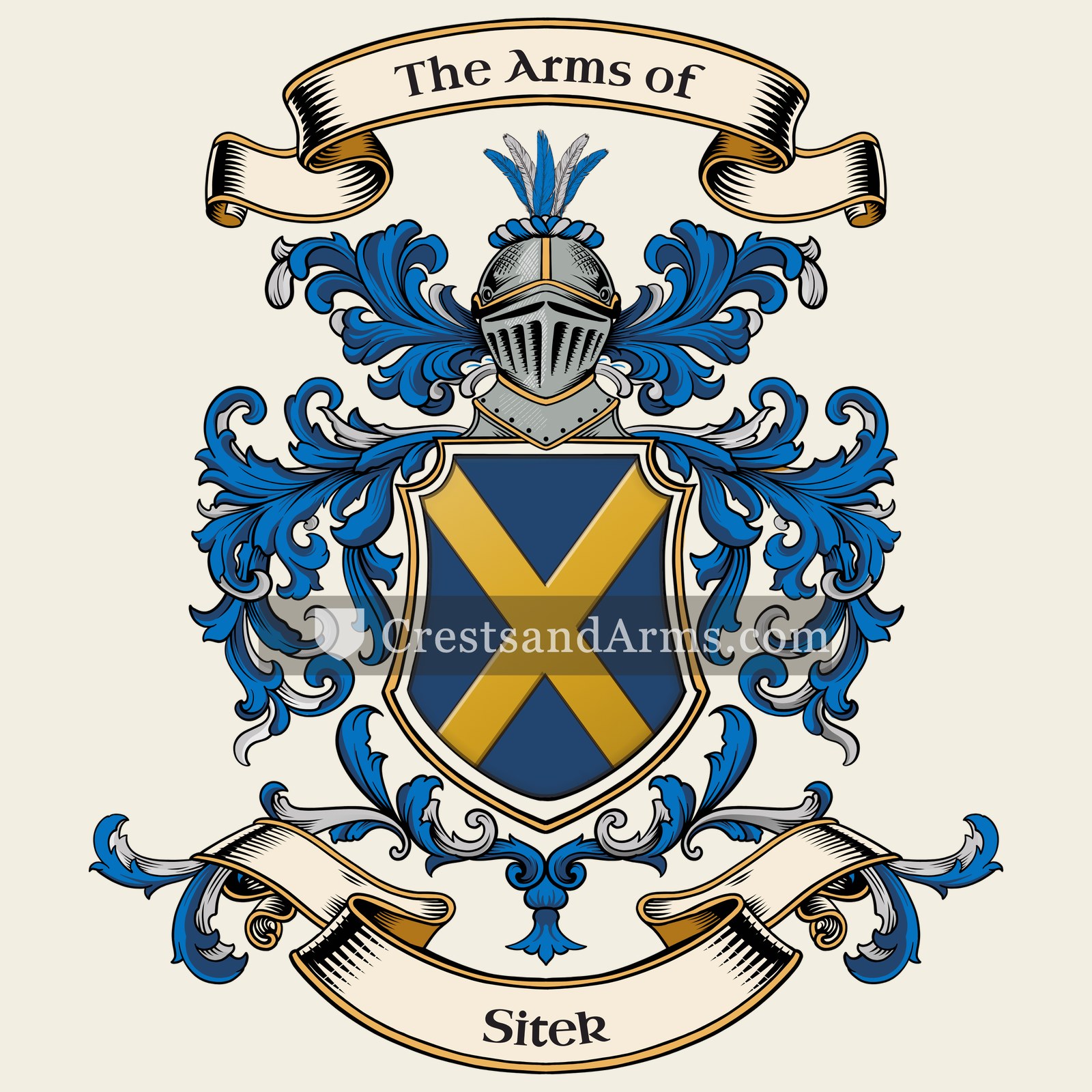


 batonAuthority and office held under the crown
 mulletThe third son, and a divine quality from above