A record of documented arms, meaning and origin, researched for the Slade family lines. Documented in 3 countries.
Reg. 2461 · French, T–V
Coat of Arms & Family Crest Details
Symbols on this shield
paleMilitary strength, and a fortified defence
chiefAuthority, wisdom and dominion
mountThe ground held, and steadfastness upon it
horseReadiness to serve king and country
bombOne who has faced a great siege
Colours
Silver (Argent)Means: Peace and sincerity
ErmineMeans: Dignity
Black (Sable)Means: Constancy
Historical info
Source
J. B. Rietstap, Armorial Général, Gouda: G. B. van Goor Zonen, 1884–87
Blazon (the actual original written record)
“Palé contre-palé d'arg. et de sa. de trois pièces, chaque pièce d'arg. ch. d'une tête et col de cheval du sec.; au chef d'herm., ch. de deux bombes de sa., allumées de gu. C.: une tête de cheval de sa., mouv. d'un tertre de sin.; le tout entouré d'une chaîne d'or, en demi-cercle. D.: FIDUS ET AUDAX.”
SomersetshireSomersetshire, c. 1725
Digital archive packCoat of arms PNG, gold border print PDF, vector SVG and the certificate of authenticity. Sent to your email in minutes.
Map of France showing where the Slade arms are recorded
The Slade arms were recorded in Somersetshire, c. 1725.
This is where the arms were entered in the register. Families often moved to other parts of the country, so the same name can turn up in more than one region.
The body that granted and recorded arms in France in this period.
Louis XV of France
Sovereign of the period
Louis XV of France
1715–1774
Reigning in France when the Slade arms are first recorded.
How Arms Worked in France
In France, a coat of arms was a mark of honor that passed down through the male line to all legitimate descendants. Families often used the same shield without changes to show their shared heritage. If a branch wanted to stand out, they could add a small mark to their shield to show their specific place in the family tree.
Granting authority
The Juge d'armes de France acted as the official authority that regulated and verified coats of arms across the country.
How they got arms
Families typically inherited their arms from ancestors, though they could also receive them through royal grants or by proving their noble status.
Where arms were recorded
Coats of arms were officially recorded in the Armorial Général de France, which began its main collection in the year 1696.
The family's standing
Recorded among the armigerous families of Somersetshire.
Origin & History of the Slade Family in France
The name Slade is primarily recognized as an English topographic surname, derived from the Old English word "slaed," which refers to a valley or a damp, low-lying piece of land. While the family established a strong presence in Somersetshire by 1725, some researchers suggest the name may have roots in the ancient migration patterns between France and England. Following the Norman Conquest of 1066, many settlers moved across the English Channel, bringing their local naming customs with them. It is possible that individuals bearing similar names in Northern France, often associated with marshy terrain or specific valley locations, integrated into the English landscape over several generations. By the time the family became well-documented in the Somerset region, they were already part of a long-standing tradition of families who defined their identity by the specific geography of their ancestral homes.
Coat of Arms & Family Crest Details
Symbols on this shield
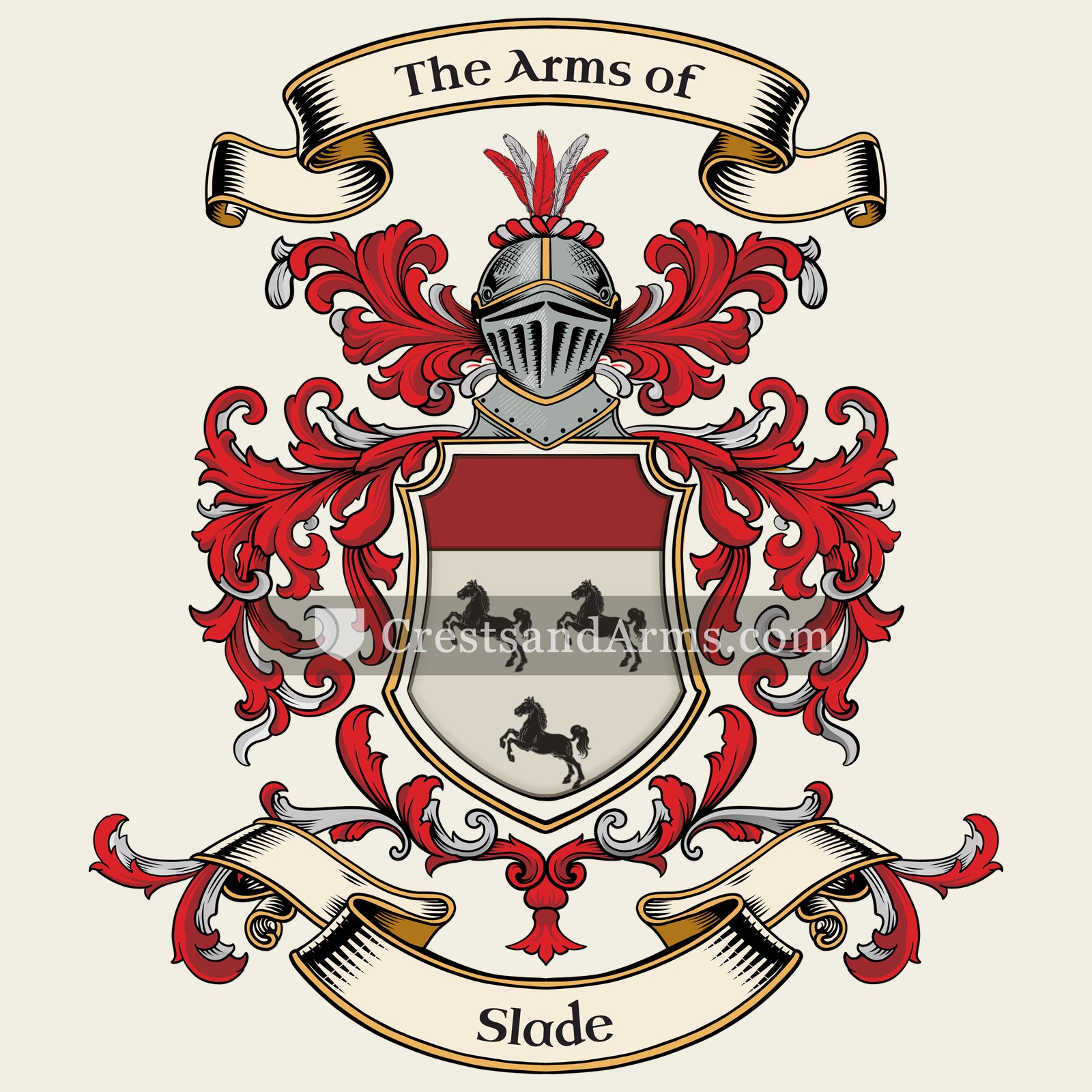
chiefAuthority, wisdom and dominion
horseReadiness to serve king and country
Colours
Silver (Argent)Means: Peace and sincerity
Red (Gules)Means: Military strength
Black (Sable)Means: Constancy
Historical info
Source
Sir Bernard Burke, The General Armory of England, Scotland, Ireland and Wales, London: Harrison & Sons, 1884
Blazon (the actual original written record)
“Ar. three horses' heads erased sa. a chief gu”
HantsHants, c. 1620
Digital archive packCoat of arms PNG, gold border print PDF, vector SVG and the certificate of authenticity. Sent to your email in minutes.
Map of England showing where the Slade arms are recorded
The Slade arms were recorded in Hants, c. 1620.
Hampshire had the naval dockyards at Portsmouth on one side and good farmland on the other. Sea money and land money both bought estates, and an estate was what brought a family its coat of arms.
This is where the arms were entered in the register. Families often moved to other parts of the country, so the same name can turn up in more than one region.
The body that granted and recorded arms in England in this period.
James VI and I
Sovereign of the period
James VI and I
1603–1625
Reigning in France when the Slade arms are first recorded.
How Arms Worked in England
English heraldry allowed arms to be shared by all legitimate descendants of the original owner. These symbols were treated as personal property that moved through the generations to all children. While the eldest son kept the original design, other family members could use the same shield without needing to change it or register their own unique versions.
Granting authority
The College of Arms in London has regulated the use of coats of arms throughout England and Wales since 1484.
How they got arms
Families typically obtained their coats of arms through a formal grant from the Crown or by proving their ancient right to them.
Where arms were recorded
All official coats of arms are recorded in the registers kept at the College of Arms, which date back to the fifteenth century.
The family's standing
Recorded among the armigerous families of Hants.
Origin & History of the Slade Family in England
The surname Slade is a topographical name that originated in Old English, derived from the word *slaed*, which refers to a valley, a glade, or a low-lying marshy strip of land. Families who carried this name typically lived near such geographical features, as early English surnames were often chosen to describe a person’s immediate surroundings or place of residence. By the early 17th century, the name was well-established across various English counties, including Hampshire, where records confirm the presence of the Slade family by 1620. During this period, the family would have been part of the local agrarian society, likely working the land or participating in the trade networks that defined life in southern England. As the name spread through different regions, it evolved from a simple description of a landscape into a permanent family identifier passed down through generations.
Coat of Arms & Family Crest Details
Symbols on this shield
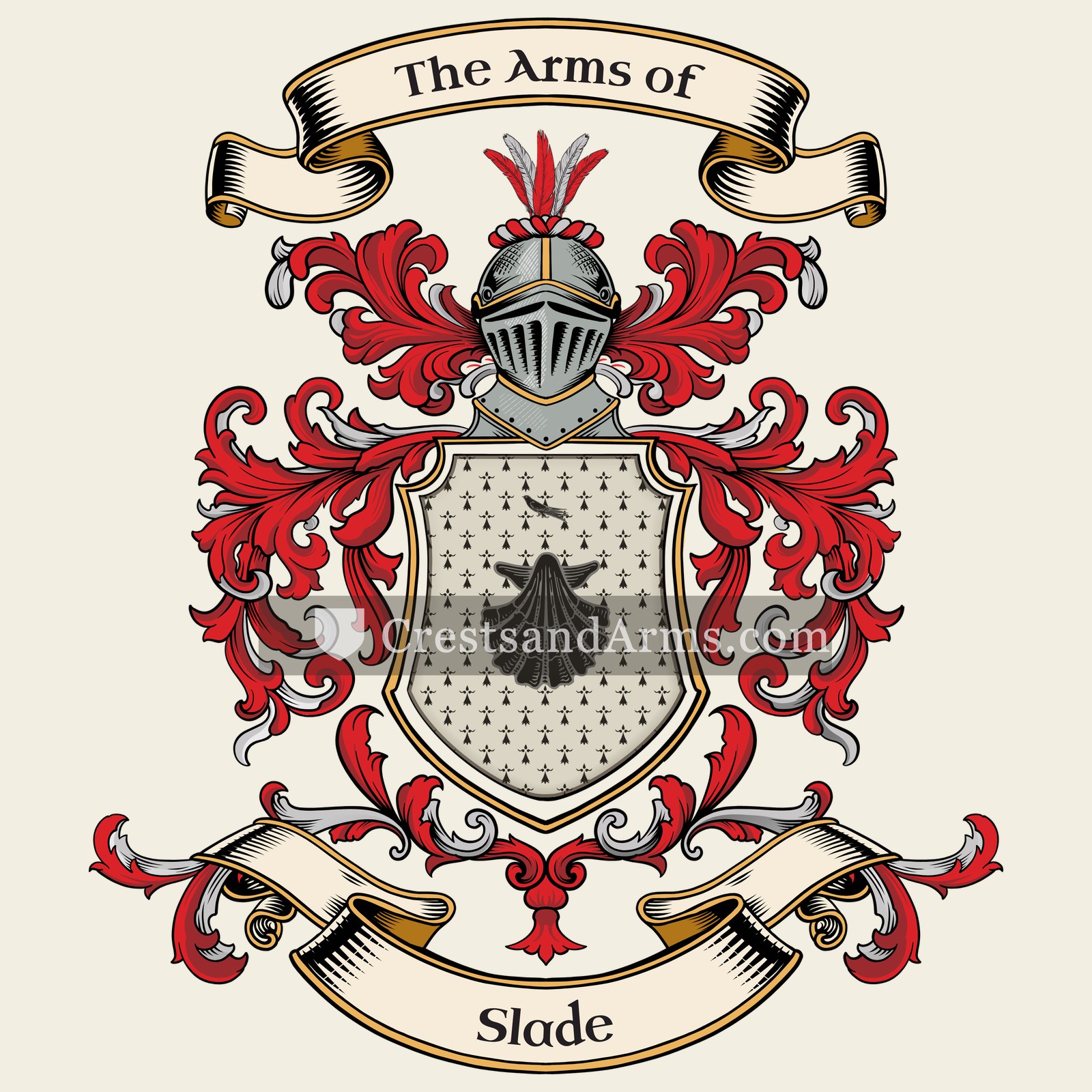
escallopThe pilgrim's shell, and a long journey made
martletA younger son, who must win his own land
Colours
ErmineMeans: Dignity
Black (Sable)Means: Constancy
Historical info
Source
Sir Bernard Burke, The General Armory of England, Scotland, Ireland and Wales, London: Harrison & Sons, 1884
Blazon (the actual original written record)
“Erm. an escallop sa. a martlet for diff”
Irelandc. 1597
Digital archive packCoat of arms PNG, gold border print PDF, vector SVG and the certificate of authenticity. Sent to your email in minutes.
Map of Ireland showing where the Slade arms are recorded
The Slade arms were recorded in Ireland, c. 1597.
Arms such as these were typically recorded in Dublin.
Dublin was the seat of government in Ireland and the place where grants were sought and recorded. Families with business at the castle or the courts settled nearby, and settling there put their arms on record.
This is where the arms were entered in the register. Families often moved to other parts of the country, so the same name can turn up in more than one region.
The body that granted and recorded arms in Ireland in this period.
Elizabeth I of England
Sovereign of the period
Elizabeth I of England
1558–1603
Reigning in France when the Slade arms are first recorded.
How Arms Worked in Ireland
The Ulster King of Arms granted coats of arms to individuals who proved their social standing and good character. These symbols were typically inherited by all legitimate descendants of the original holder. If a family branch wanted a unique look, they could apply for a specific change to their design through the office to ensure their identity remained distinct.
Granting authority
The Ulster King of Arms acted as the official body that regulated and issued all coats of arms throughout Ireland.
How they got arms
Families obtained their arms through formal grants issued by the office after proving their eligibility and paying the required fees.
Where arms were recorded
All official grants were recorded in the registers held by the Ulster King of Arms starting from the year 1552.
The family's standing
Recorded among the armigerous families of Ireland.
Origin & History of the Slade Family in Ireland
The history of the Slade name in Ireland is deeply connected to the administrative and social shifts occurring in Dublin during the late sixteenth century. Records confirm that members of the Slade family were established in the city by 1597, a time when Dublin served as the primary hub for English colonial administration and trade. The name itself is of Old English origin, typically used to describe a person who lived in a valley or a strip of marshy land. As these individuals settled into the urban environment of Dublin, they likely integrated into the merchant and professional classes that supported the growing city. Over the following decades, the family name appeared in various legal and property documents, reflecting their transition from new arrivals to residents who were active in the civic life of the capital. This early presence suggests that the Slades were part of the broader movement of families who relocated to Ireland to participate in the expanding economic opportunities of the era.
Related Branches & Arms
Root word
slaed
An Old English term referring to a valley or a glade.
This name
SladeA topographic surname for someone who lived in a valley or a damp, low-lying area.
also spelled
Slaide
Slayde
Slaed
Slaid
Slayd
Related arms
Mill de Camois-Courtsimilar arms
Mill de Mottisfontsimilar arms
Documented Sources
J. B. Rietstap, Armorial Général, Gouda: G. B. van Goor Zonen, 1884–87
Reaney, P.H., A Dictionary of English Surnames, 1958
Bardsley, Charles Wareing, A Dictionary of English and Welsh Surnames, 1901
The National Archives, Probate records of the Prerogative Court of Canterbury, 1725
Somerset Archives and Local Studies, Parish registers of Somerset, 1725
Digital archive packCoat of arms PNG, gold border print PDF, vector SVG and the certificate of authenticity. Sent to your email in minutes.


 paleMilitary strength, and a fortified defence
 chiefAuthority, wisdom and dominion
 mountThe ground held, and steadfastness upon it
 horseReadiness to serve king and country
 bombOne who has faced a great siege
 paleMilitary strength, and a fortified defence
 chiefAuthority, wisdom and dominion
 mountThe ground held, and steadfastness upon it
 horseReadiness to serve king and country
 bombOne who has faced a great siege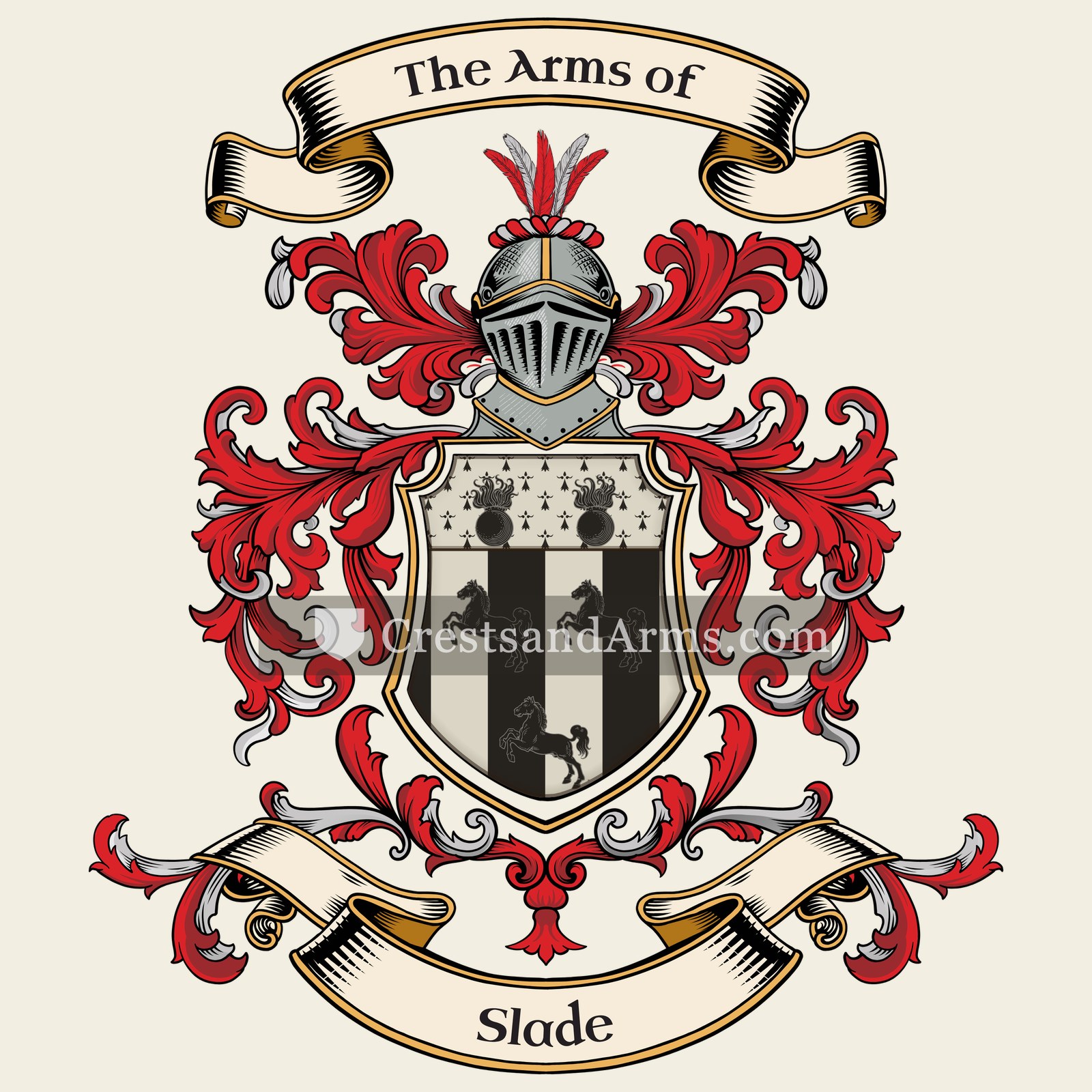




 escallopThe pilgrim's shell, and a long journey made
 martletA younger son, who must win his own land