Map of Netherlands showing where the Sluis arms are recorded
The Sluis arms were recorded in Schiedam, c. 1725.
This is where the arms were entered in the register. Families often moved to other parts of the country, so the same name can turn up in more than one region.
Region
Schiedam
Town
Schiedam
First recorded
1725
Granting Authority for the Sluis Arms
Hoge Raad van Adel
Photograph made by me · CC BY-SA 3.0
The body that granted and recorded arms in Netherlands in this period.
How Arms Worked in Netherlands
In the Netherlands, coats of arms were often used by noble families and those who held specific public offices. These arms were passed down through the generations to legitimate descendants. Younger branches of a family usually kept the original design without needing to add special marks. This system ensured that the family identity remained clear and consistent over many years.
Granting authority
The Hoge Raad van Adel is the official body that regulates and manages noble titles and coats of arms in the Netherlands.
How they got arms
Families typically obtained their coats of arms through official royal grants or by proving their long-standing historical use of the symbols.
Where arms were recorded
Coats of arms are officially recorded in the registers held by the Hoge Raad van Adel, which began its work in 1814.
The family's standing
Recorded among the armigerous families of Netherlands.
Origin & History of the Sluis Family in Netherlands
The surname Sluis is a classic example of a topographic name, which means it was derived from the physical landscape where the family lived. In the Dutch language, the word "sluis" refers to a sluice or a lock, which is a mechanical gate used to control water levels in canals and rivers. Because the Netherlands has a long history of reclaiming land from the sea and managing complex water systems, many families took their names from the nearby infrastructure that defined their daily lives. By 1725, records confirm that members of the Sluis family were established in the city of Schiedam. This location was significant because Schiedam was a bustling center for trade and industry, particularly famous for its gin distilleries and its strategic position along the water. Living near a sluice in such a busy port town suggests that early ancestors were likely involved in the maritime economy, trade, or the essential maintenance of the local canal networks that kept the city functioning.
Meaning of the Sluis family crest colors & symbols
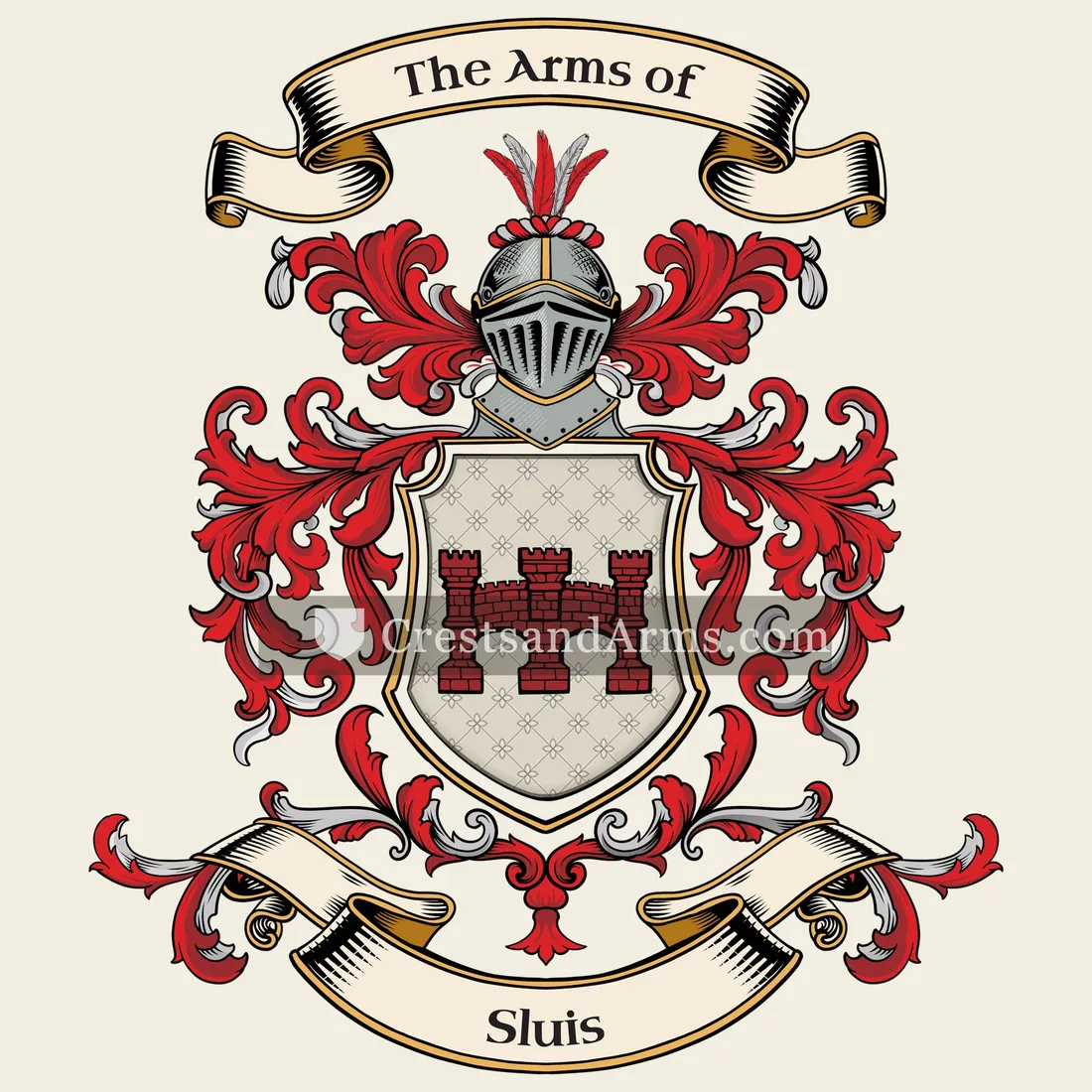
Symbols on this shield
bridgeOne who joins what was divided
Colours
Silver (Argent)Means: Peace and sincerity
Red (Gules)Means: Military strength
Historical info
Source
J. B. Rietstap, Armorial Général, Gouda: G. B. van Goor Zonen, 1884–87
Blazon (the actual original written record)
“D'arg. à un pont demi-circulaire de quatre arches de gu., maçonné de sa.”
FranceMonnikendam, c. 1725
Digital archive packCoat of arms PNG, gold border print PDF, vector SVG and the certificate of authenticity. Sent to your email in minutes.
Map of France showing where the Sluis arms are recorded
The Sluis arms were recorded in Monnikendam, c. 1725.
Arms such as these were typically recorded in Bretagne.
More families held coats of arms in Bretagne than anywhere else in France. The land was divided into many small estates rather than a few large ones, so far more households counted as gentry, and each needed a shield of its own to be told apart.
This is where the arms were entered in the register. Families often moved to other parts of the country, so the same name can turn up in more than one region.
The body that granted and recorded arms in France in this period.
Louis XV of France
Sovereign of the period
Louis XV of France
1715–1774
Reigning in Netherlands when the Sluis arms are first recorded.
How Arms Worked in France
In France, a coat of arms was a mark of honor that passed down through the male line to all legitimate descendants. Families often used the same shield without changes to show their shared heritage. If a branch wanted to stand out, they could add a small mark to their shield to show their specific place in the family tree.
Granting authority
The Juge d'armes de France acted as the official authority that regulated and verified coats of arms across the country.
How they got arms
Families typically inherited their arms from ancestors, though they could also receive them through royal grants or by proving their noble status.
Where arms were recorded
Coats of arms were officially recorded in the Armorial Général de France, which began its main collection in the year 1696.
The family's standing
Recorded among the armigerous families of France.
Origin & History of the Sluis Family in France
The surname Sluis is deeply rooted in the geography of the Low Countries, where it originally described individuals living near a sluice or a water control gate. While the name is most common in Dutch-speaking regions, its presence in Brittany by 1725 suggests a period of migration driven by trade, religious shifts, or military service. During the early 18th century, Brittany served as a vital maritime hub, attracting skilled workers and merchants from across Northern Europe who sought new opportunities in the Atlantic ports. Families like the Sluis clan often integrated into these coastal communities by adapting their names to local phonetic patterns while maintaining their identity as outsiders with specialized knowledge of water management or seafaring. This migration pattern reflects the broader movement of people across European borders during the Enlightenment, where professional skills often mattered more than regional origins. By settling in Brittany, these early family members became part of the complex social fabric of French port life, bridging the gap between their northern heritage and their new home in the west.
Sluis Meaning & Related Branches
Root word
Sluice
A sliding gate or channel for controlling the flow of water.
This name
SluisA topographic name for someone who lived near a water gate or canal lock.
also spelled
Sluis
Documented Sources
J. B. Rietstap, Armorial Général, Gouda: G. B. van Goor Zonen, 1884–87
Stadsarchief Schiedam, Doop-, trouw- en begraafboeken (DTB) 1725
Nationaal Archief, Collectie DTB (Doop-, Trouw- en Begraafregisters)
Van Berkel, G. and Samplonius, K., Nederlandse plaatsnamen verklaard, 2018
Debrabandere, F., Woordenboek van de familienamen in België en Noord-Frankrijk, 2003
Digital archive packCoat of arms PNG, gold border print PDF, vector SVG and the certificate of authenticity. Sent to your email in minutes.


 chiefAuthority, wisdom and dominion
 wheelFortune's turning, and the carter's trade
 martletA younger son, who must win his own land
 chiefAuthority, wisdom and dominion
 wheelFortune's turning, and the carter's trade
 martletA younger son, who must win his own land
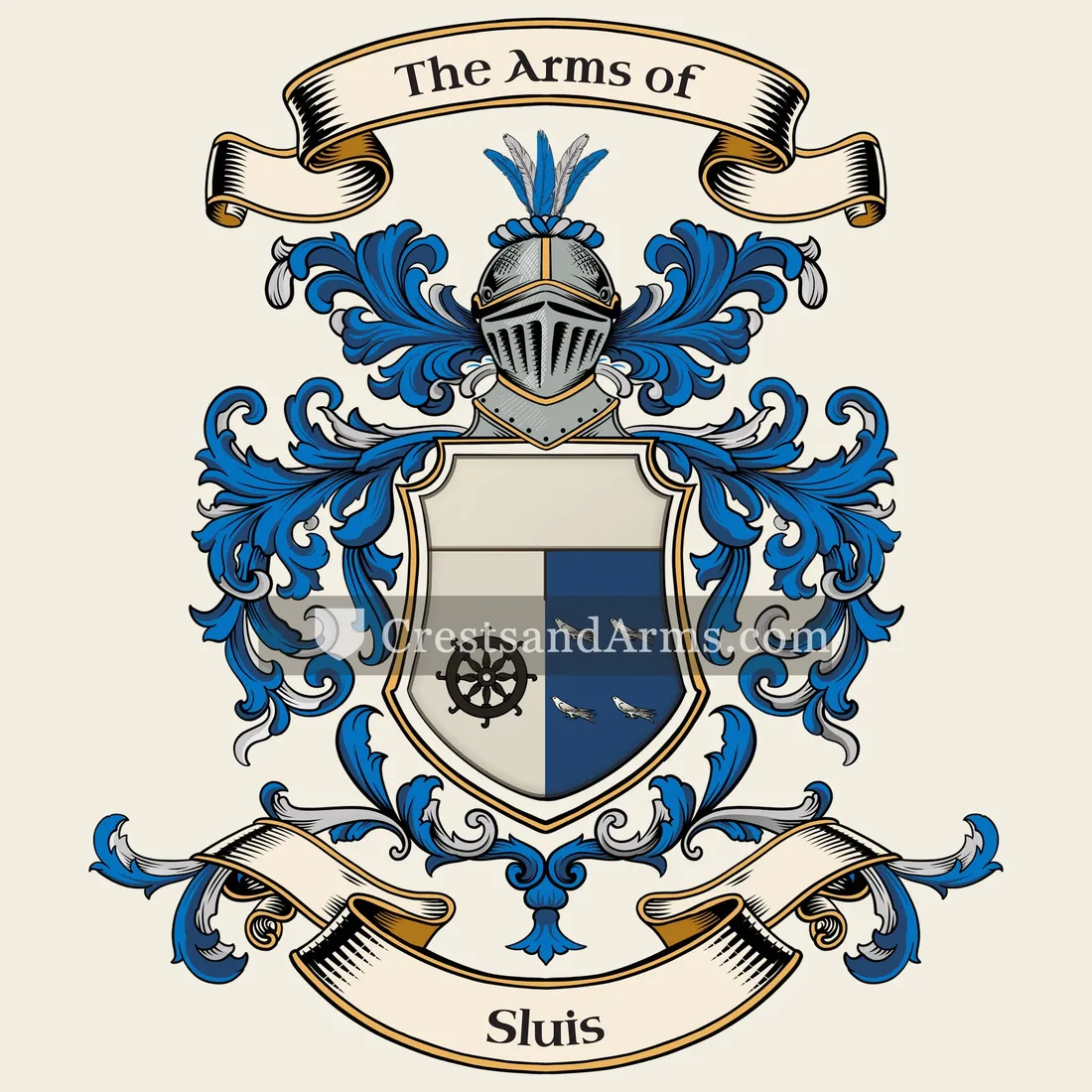

 bridgeOne who joins what was divided