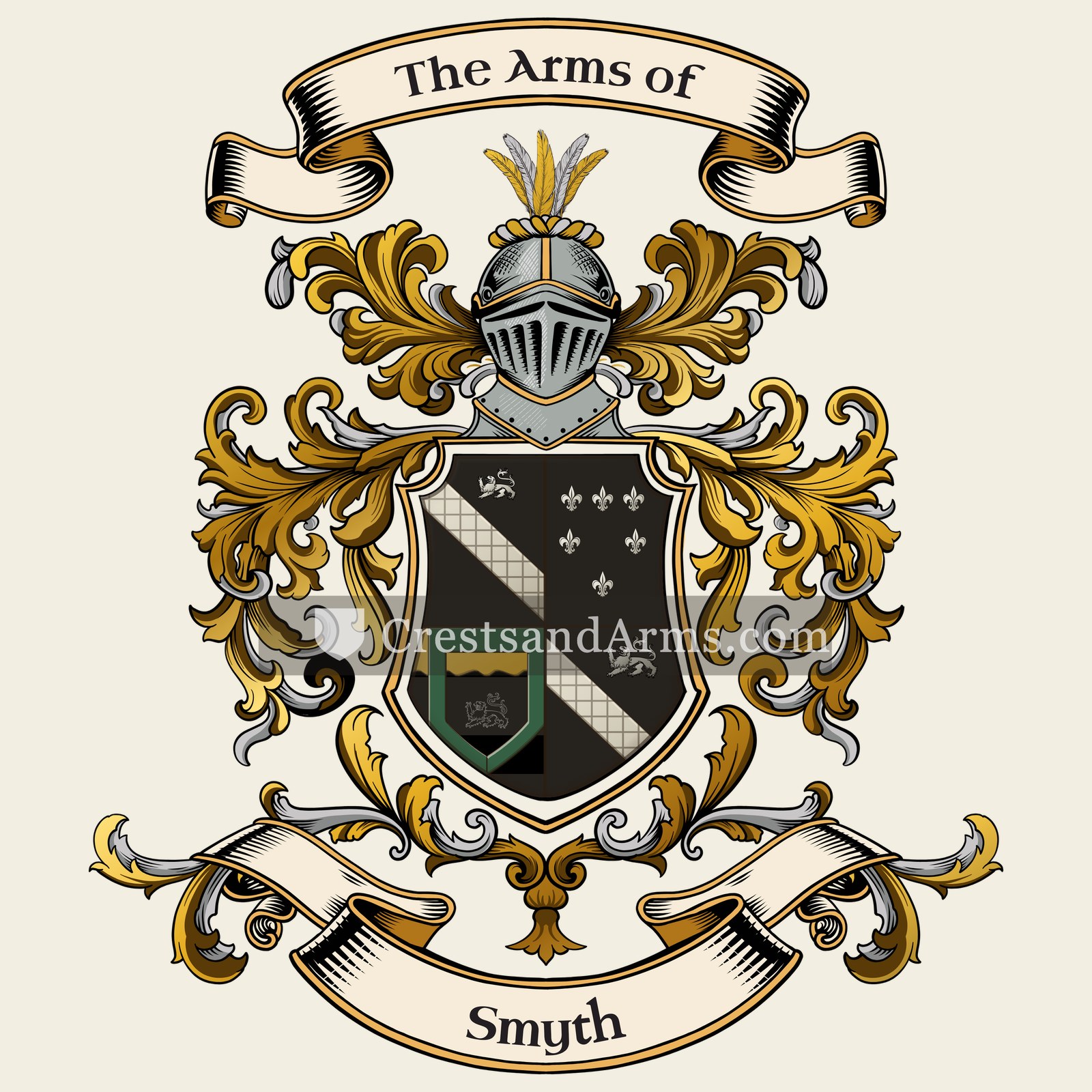
A record of documented arms, meaning and origin, researched for the Smyth family lines. Documented in 3 countries.
Reg. 2769 · French, T–V
Coat of Arms & Family Crest Details
Symbols on this shield
chiefAuthority, wisdom and dominion
saltireResolution, and St Andrew's cross
vairProtection, and the winter fur
lionCourage, strength and royalty
mulletThe third son, and a divine quality from above
roundelA coin, and one who has been to the crusades
Colours
Red (Gules)Means: Military strength
Silver (Argent)Means: Peace and sincerity
VairMeans: Protection
Blue (Azure)Means: Loyalty and truth
Historical info
Source
J. B. Rietstap, Armorial Général, Gouda: G. B. van Goor Zonen, 1884–87
Blazon (the actual original written record)
“Ec.: aux 1 et 4 de gu. au lion d'arg; au chef du même, ch. d'une étoile d'azur entre deux tourt. de gu. (Smyth); aux 2 et 3 de gu. au saut. de vair (Prendergast) C.: 1° une tête de lion d'arg. (Smyth); 2° une antelope pass. au nat., accornée et onglée d'or (Prendergast). S.: à dextre un lion au nat., coll. de gu., enchaîné d'or; à sen. une antelope au nat., accornée et onglée d'or, coll. de gu., enchaînée d'or. D.: VINCIT VERITAS.”
Francec. 1725
Digital archive packCoat of arms PNG, gold border print PDF, vector SVG and the certificate of authenticity. Sent to your email in minutes.
Map of France showing where the Smyth arms are recorded
The Smyth arms were recorded in France, c. 1725.
Arms such as these were typically recorded in Bretagne.
More families held coats of arms in Bretagne than anywhere else in France. The land was divided into many small estates rather than a few large ones, so far more households counted as gentry, and each needed a shield of its own to be told apart.
This is where the arms were entered in the register. Families often moved to other parts of the country, so the same name can turn up in more than one region.
The body that granted and recorded arms in France in this period.
Louis XV of France
Sovereign of the period
Louis XV of France
1715–1774
Reigning in France when the Smyth arms are first recorded.
How Arms Worked in France
In France, a coat of arms was a mark of honor that passed down through the male line to all legitimate descendants. Families often used the same shield without changes to show their shared heritage. If a branch wanted to stand out, they could add a small mark to their shield to show their specific place in the family tree.
Granting authority
The Juge d'armes de France acted as the official authority that regulated and verified coats of arms across the country.
How they got arms
Families typically inherited their arms from ancestors, though they could also receive them through royal grants or by proving their noble status.
Where arms were recorded
Coats of arms were officially recorded in the Armorial Général de France, which began its main collection in the year 1696.
The family's standing
Recorded among the armigerous families of France.
Origin & History of the Smyth Family in France
The name Smyth, while traditionally associated with English origins, has a distinct historical presence in the Brittany region of France dating back to at least 1725. During this period, the name often appeared in local parish registers as families navigated the complex social landscape of the French countryside. Many individuals carrying this name were likely involved in skilled trades, as the root of the word refers to those who worked with metal. In Brittany, these families often integrated into the local community by adopting French naming conventions while maintaining their distinct ancestral identity. Their presence in the region suggests a history of migration and adaptation, as families moved across the English Channel to find new opportunities in trade and agriculture. By living in coastal towns and rural parishes, these early members of the family helped shape the local culture through their craftsmanship and daily labor.
Coat of Arms & Family Crest Details
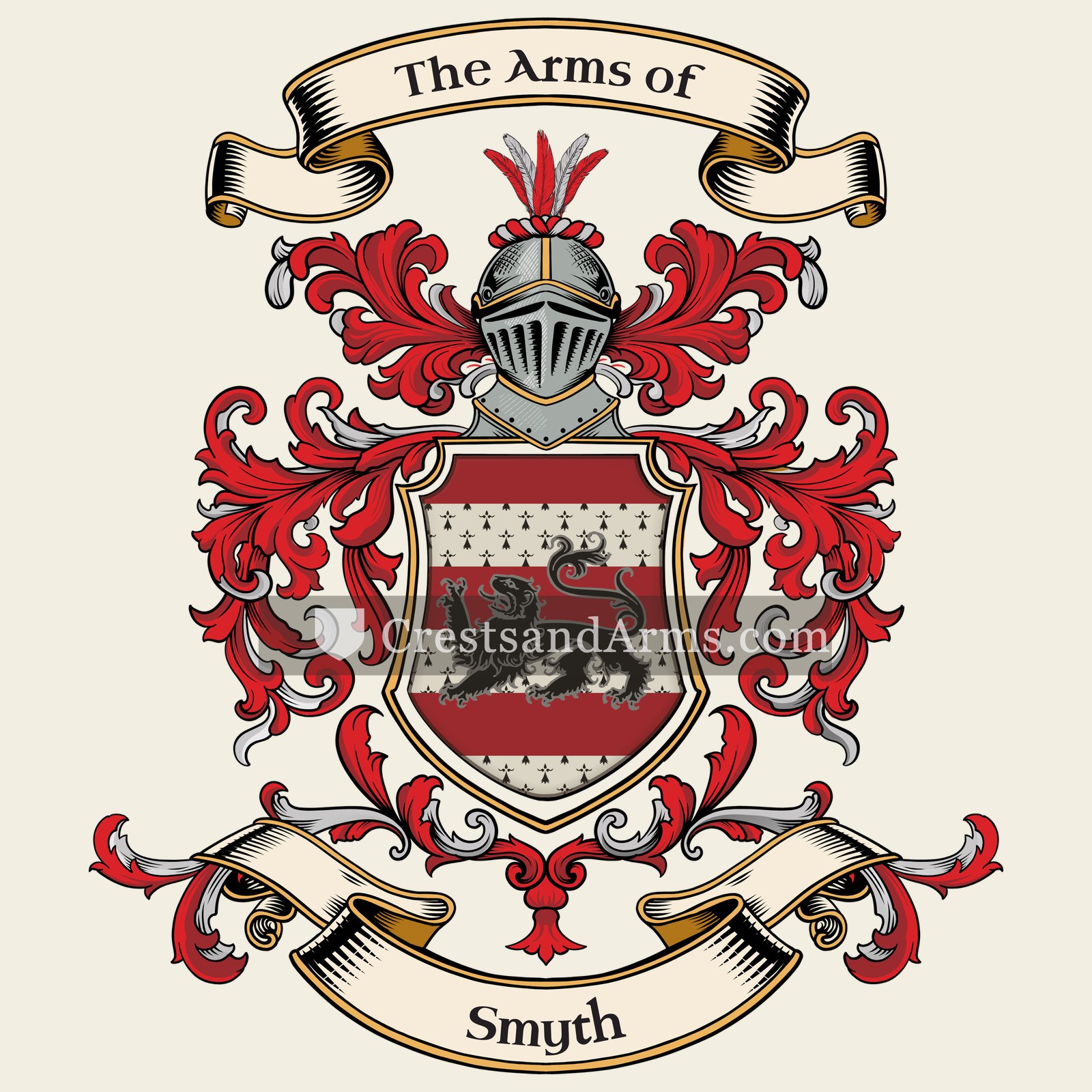
Symbols on this shield
lionCourage, strength and royalty
Colours
ErmineMeans: Dignity
Black (Sable)Means: Constancy
Red (Gules)Means: Military strength
Historical info
Source
Sir Bernard Burke, The General Armory of England, Scotland, Ireland and Wales, London: Harrison & Sons, 1884
Blazon (the actual original written record)
“Barry of six erm. and gu. a lion ramp. sa. crowned or”
StaffordNewcastle-under-Lyme · Stafford, c. 1561
Digital archive packCoat of arms PNG, gold border print PDF, vector SVG and the certificate of authenticity. Sent to your email in minutes.
Map of England showing where the Smyth arms are recorded
The Smyth arms were recorded in Stafford, c. 1561.
Staffordshire was mixed country of moorland, farmland and early ironworking. Its landed families were spread widely rather than concentrated, and each holding brought its own claim to arms.
This is where the arms were entered in the register. Families often moved to other parts of the country, so the same name can turn up in more than one region.
The body that granted and recorded arms in England in this period.
Elizabeth I of England
Sovereign of the period
Elizabeth I of England
1558–1603
Reigning in France when the Smyth arms are first recorded.
How Arms Worked in England
English heraldry allowed arms to be shared by all legitimate descendants of the original owner. These symbols were treated as personal property that moved through the generations to all children. While the eldest son kept the original design, other family members could use the same shield without needing to change it or register their own unique versions.
Granting authority
The College of Arms in London has regulated the use of coats of arms throughout England and Wales since 1484.
How they got arms
Families typically obtained their coats of arms through a formal grant from the Crown or by proving their ancient right to them.
Where arms were recorded
All official coats of arms are recorded in the registers kept at the College of Arms, which date back to the fifteenth century.
The family's standing
Recorded among the armigerous families of Stafford.
Origin & History of the Smyth Family in England
The surname Smyth is an occupational name that originated from the Old English word *smith*, which referred to a person who worked with metal. During the medieval period, the village blacksmith was a vital member of every community because he created the tools, weapons, and hardware necessary for daily life. As surnames became permanent and hereditary in England, families often adopted the name of their trade to distinguish themselves from others in the village. By the time records place members of the Smyth family in Stafford in 1561, the name was already well-established across the country. These early ancestors likely lived in a bustling market town where their skills in ironwork were essential for local agriculture and trade. Because metalworking was a highly respected and necessary craft, the name spread rapidly through different regions, eventually becoming one of the most common surnames in the English language.
Coat of Arms & Family Crest Details
Symbols on this shield
chiefAuthority, wisdom and dominion
bordureA difference between branches of one family
lionCourage, strength and royalty
fleur de lisPurity, light, and the sixth son
Colours
Black (Sable)Means: Constancy
Silver (Argent)Means: Peace and sincerity
ErmineMeans: Dignity
Gold (Or)Means: Generosity
Green (Vert)Means: Hope
Historical info
Source
Sir Bernard Burke, The General Armory of England, Scotland, Ireland and Wales, London: Harrison & Sons, 1884
Blazon (the actual original written record)
“Quarterly, 1st and 4th, sa. a lion ramp. ar. a bendlet compony or and gu.; 2nd, sa. six fleurs-de-lis ar. three, two, and one, for PENNE; 3rd, az. two bars wavy erm. on a chief or, a demi lion ramp. issuant sa. all within a border engr. vert”
DublinDublin, c. 1597
Digital archive packCoat of arms PNG, gold border print PDF, vector SVG and the certificate of authenticity. Sent to your email in minutes.
Map of Ireland showing where the Smyth arms are recorded
The Smyth arms were recorded in Dublin, c. 1597.
Dublin was the seat of government in Ireland and the place where grants were sought and recorded. Families with business at the castle or the courts settled nearby, and settling there put their arms on record.
This is where the arms were entered in the register. Families often moved to other parts of the country, so the same name can turn up in more than one region.
The body that granted and recorded arms in Ireland in this period.
Elizabeth I of England
Sovereign of the period
Elizabeth I of England
1558–1603
Reigning in France when the Smyth arms are first recorded.
How Arms Worked in Ireland
The Ulster King of Arms granted coats of arms to individuals who proved their social standing and good character. These symbols were typically inherited by all legitimate descendants of the original holder. If a family branch wanted a unique look, they could apply for a specific change to their design through the office to ensure their identity remained distinct.
Granting authority
The Ulster King of Arms acted as the official body that regulated and issued all coats of arms throughout Ireland.
How they got arms
Families obtained their arms through formal grants issued by the office after proving their eligibility and paying the required fees.
Where arms were recorded
All official grants were recorded in the registers held by the Ulster King of Arms starting from the year 1552.
The family's standing
Recorded among the armigerous families of Dublin.
Origin & History of the Smyth Family in Ireland
The surname Smyth arrived in Ireland primarily through English settlers who moved to the country during the late sixteenth century. By 1597, records confirm that members of the Smyth family were already established in Dublin, where they integrated into the city’s growing administrative and merchant classes. During this period, the name was often associated with individuals who held positions in the colonial government or served in the military. As these families settled into urban life, they became part of the shifting social landscape of a changing Ireland. Over the following generations, the name spread from the capital into various rural regions, eventually becoming one of the most common surnames across the island. The history of the Smyth family in Ireland reflects the broader patterns of migration and settlement that defined the era.
Related Branches & Arms
Root word
Smitan
A Proto-Germanic verb meaning to smite or strike.
This name
SmythAn occupational surname for a metalworker or blacksmith who strikes metal.
also spelled
Smith
Smithe
Smithes
Related arms
Cardelyon, or Cardelonsame arms
Cardetonsame arms
Kennedysame arms
Smithvariant spelling
Documented Sources
J. B. Rietstap, Armorial Général, Gouda: G. B. van Goor Zonen, 1884–87
Archives départementales du Morbihan, Registres paroissiaux et d'état civil
Archives départementales du Finistère, Registres paroissiaux et d'état civil
Dauzat, Albert, Dictionnaire étymologique des noms et prénoms de France, 1951
Morlet, Marie-Thérèse, Dictionnaire étymologique des noms de famille, 1991
Digital archive packCoat of arms PNG, gold border print PDF, vector SVG and the certificate of authenticity. Sent to your email in minutes.


 chiefAuthority, wisdom and dominion
 saltireResolution, and St Andrew's cross
 lionCourage, strength and royalty
 mulletThe third son, and a divine quality from above
 roundelA coin, and one who has been to the crusades
 chiefAuthority, wisdom and dominion
 saltireResolution, and St Andrew's cross
 lionCourage, strength and royalty
 mulletThe third son, and a divine quality from above
 roundelA coin, and one who has been to the crusades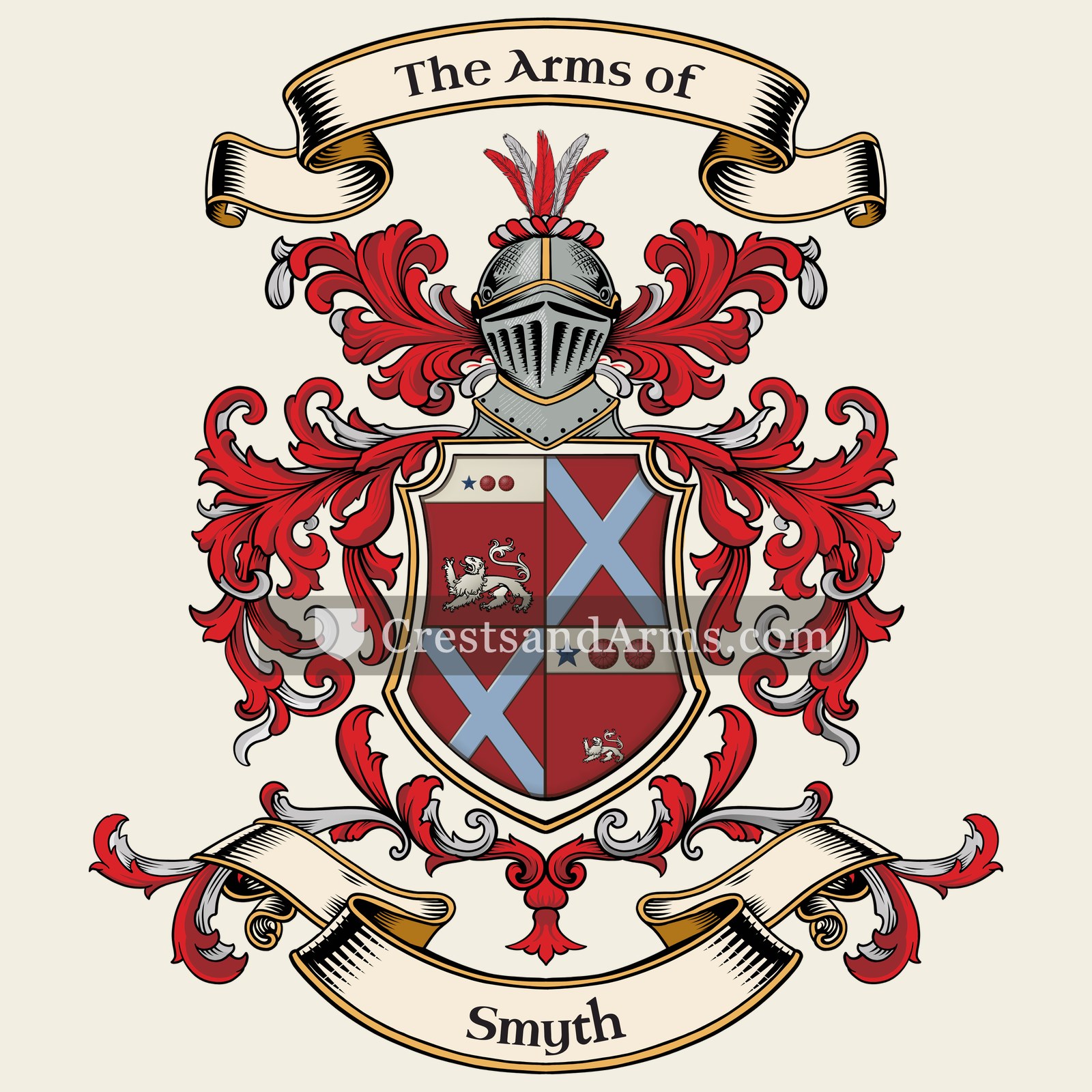




 bordureA difference between branches of one family
 fleur de lisPurity, light, and the sixth son