Map of Denmark showing where the Sommer arms are recorded
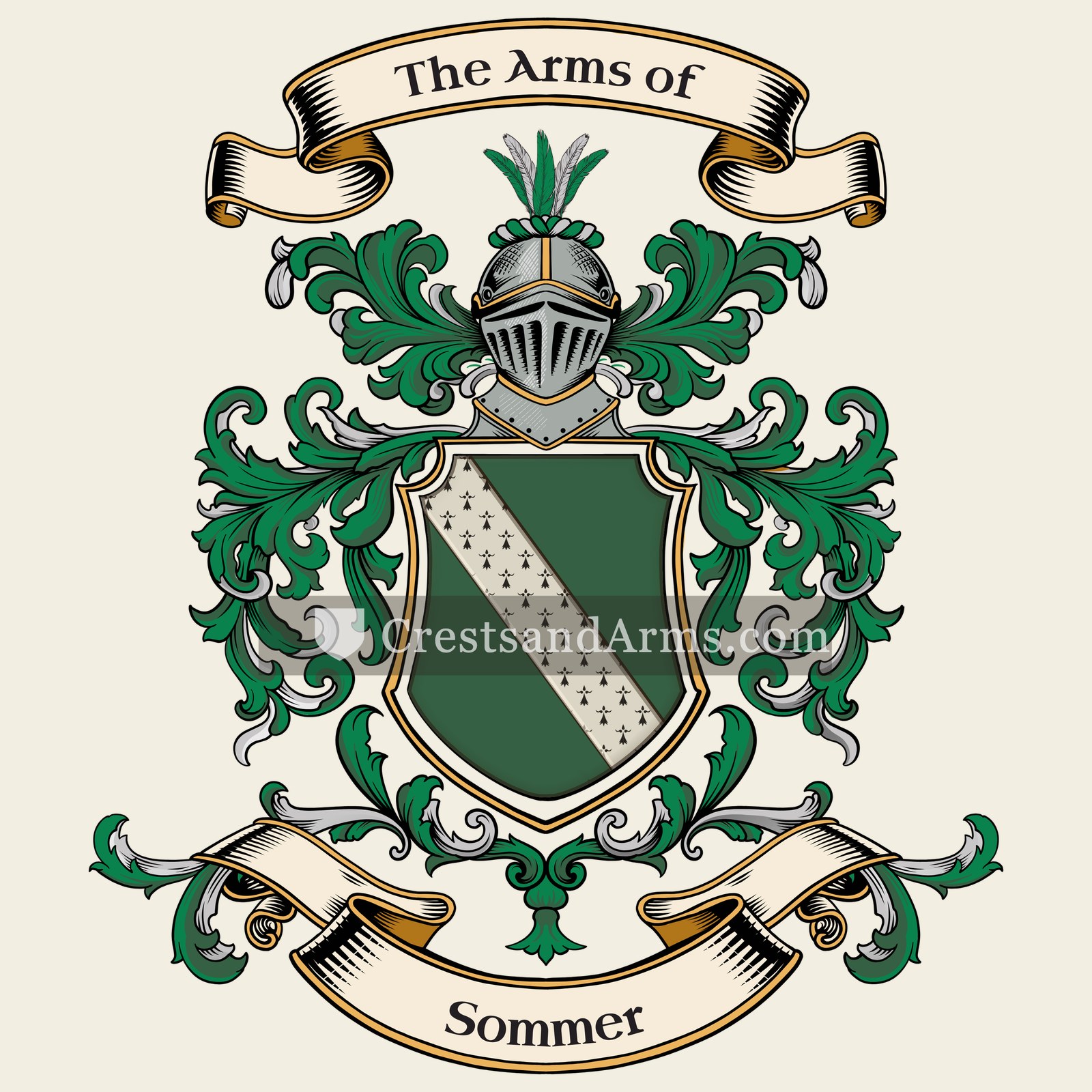
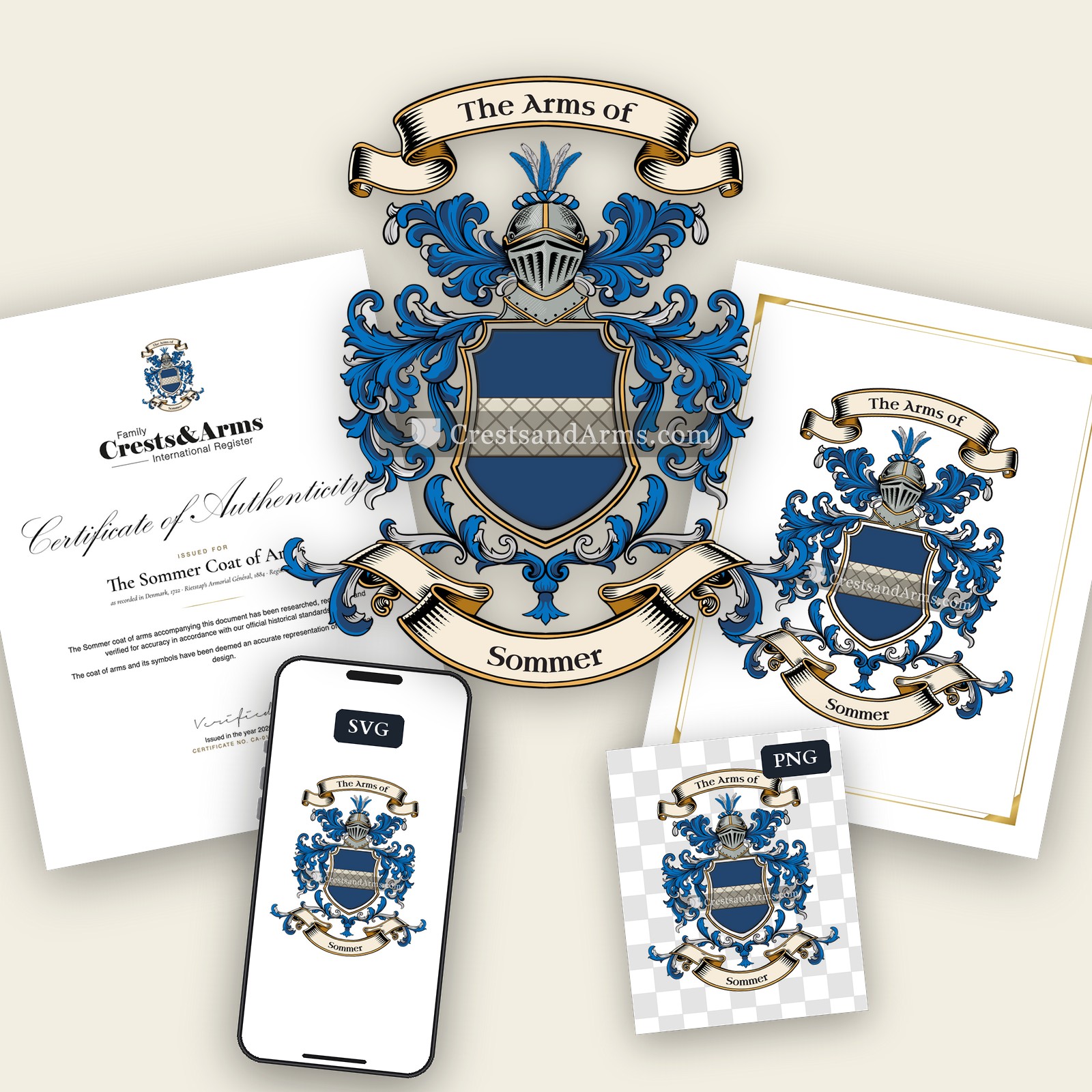
The Sommer arms were recorded in Denmark, c. 1722.
Arms such as these were typically recorded in Sjaælland.
Zealand held the Danish court, the crown's offices and Copenhagen itself. Families who served the king kept estates within reach of it, and royal service was the ordinary route to a coat of arms.
This is where the arms were entered in the register. Families often moved to other parts of the country, so the same name can turn up in more than one region.
The body that granted and recorded arms in Denmark in this period.
Frederik IV of Denmark
Sovereign of the period
Frederik IV of Denmark
1699–1730
Reigning in Denmark when the Sommer arms are first recorded.
How Arms Worked in Denmark
Danish heraldry during this period was closely tied to noble status and royal favor rather than being open to all citizens. Arms were typically granted by the monarch to individuals, and these symbols were then shared by all members of the noble house. If a family line died out, the right to use those specific arms ended with them.
Granting authority
The Danish royal chancery held the power to issue and regulate official coats of arms for the kingdom.
How they got arms
Families usually received their arms through a formal royal grant that confirmed their noble status and rights.
Where arms were recorded
These grants were officially recorded in the Danish Royal Chancery records starting in the sixteenth century.
The family's standing
Recorded among the armigerous families of Denmark.
Origin & History of the Sommer Family in Denmark
The surname Sommer is a descriptive name that originated from the Old Norse word *sumar*, which was commonly used to identify people who were born during the summer months or those who possessed a particularly sunny and cheerful disposition. By the time the family was firmly established on the island of Sjælland in 1722, the name had evolved from a simple nickname into a formal hereditary surname passed down through generations. During this period in Denmark, the lives of families like the Sommers were deeply tied to the land and the local parish church, which served as the primary record keeper for births, marriages, and deaths. As the family grew, they became part of the rural social fabric of Sjælland, navigating the agricultural traditions and the changing legal landscape of the eighteenth century. This era marked a transition where surnames became essential for tax records and military conscription, helping to solidify the identity of the Sommer family within their local community.
Coat of Arms & Family Crest Details
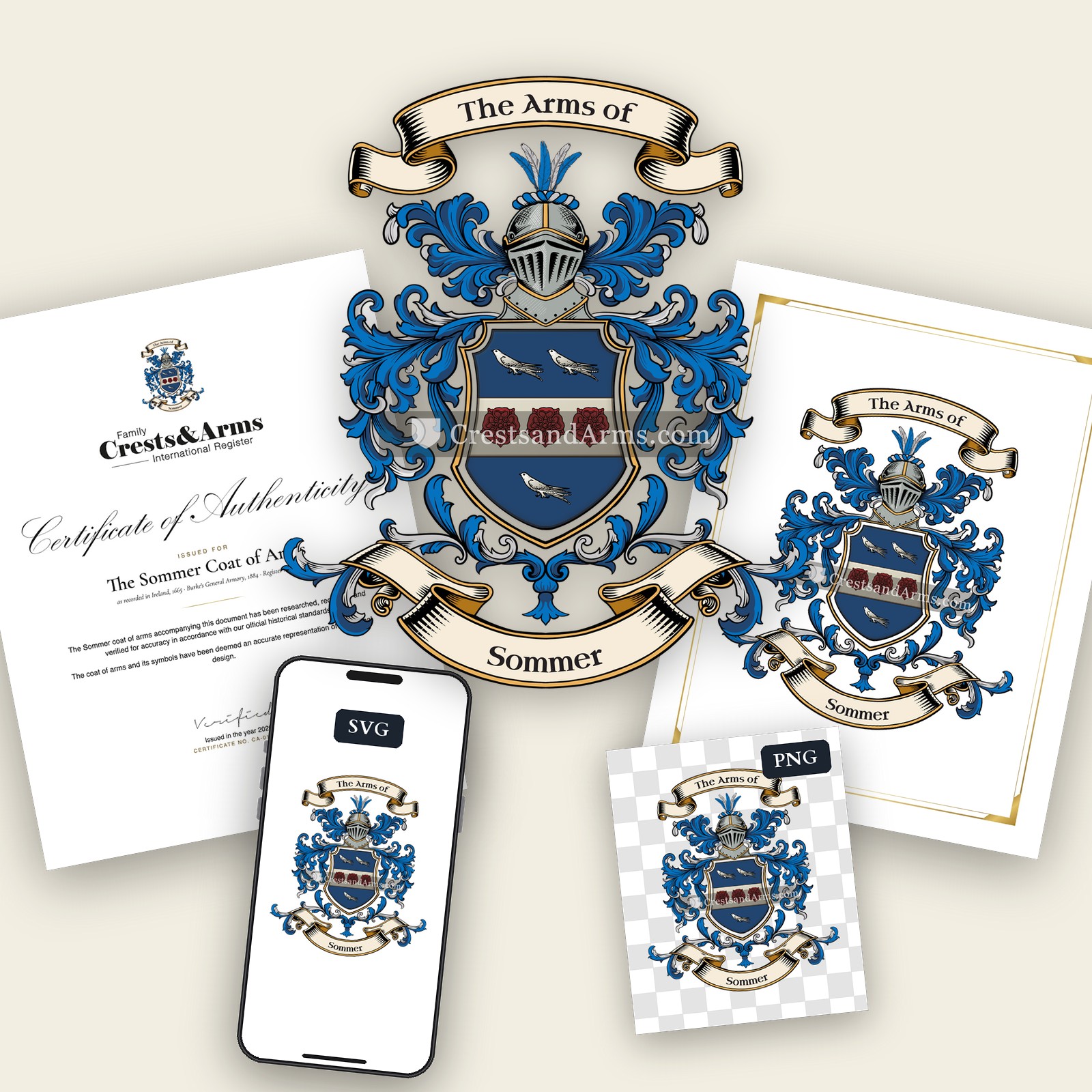
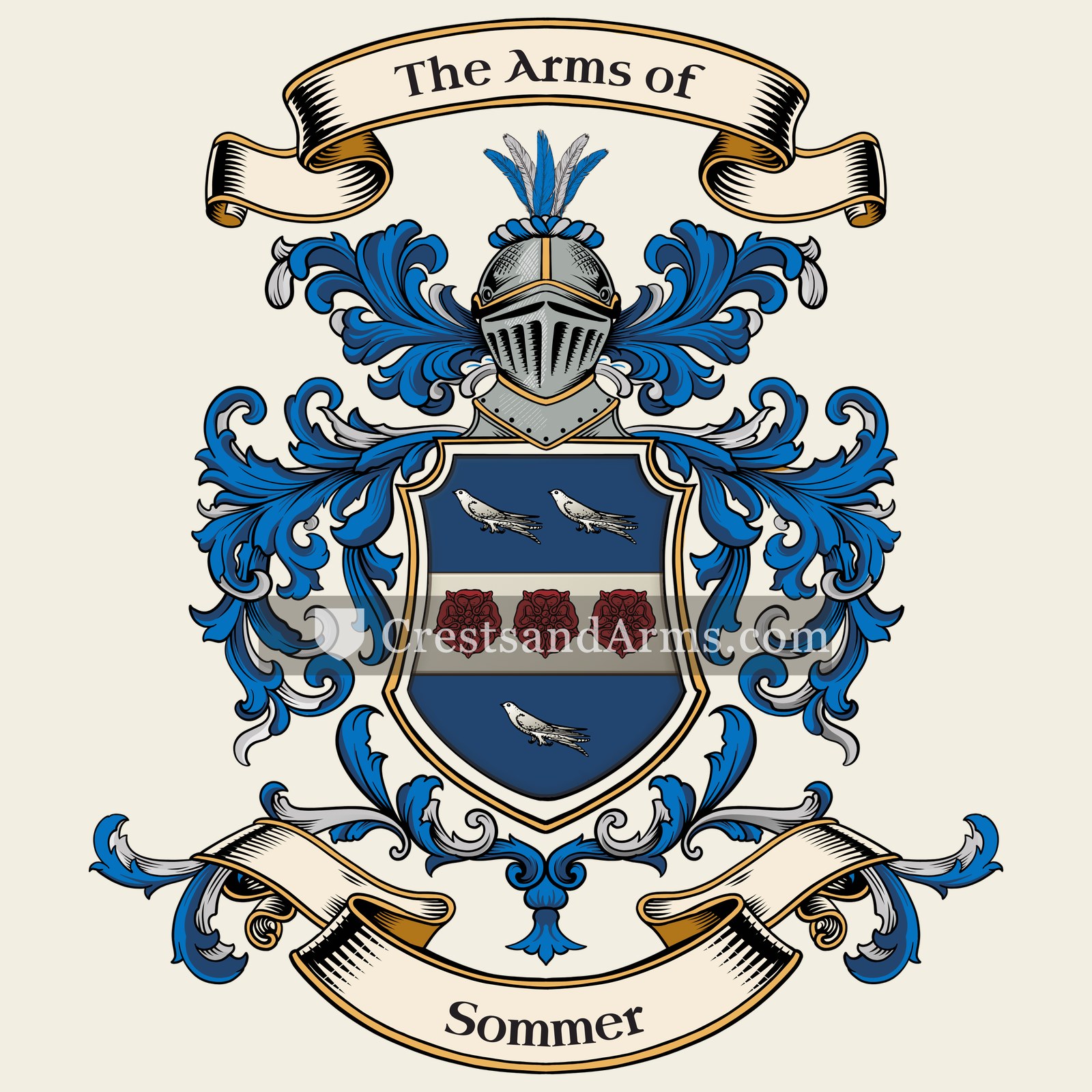
Symbols on this shield
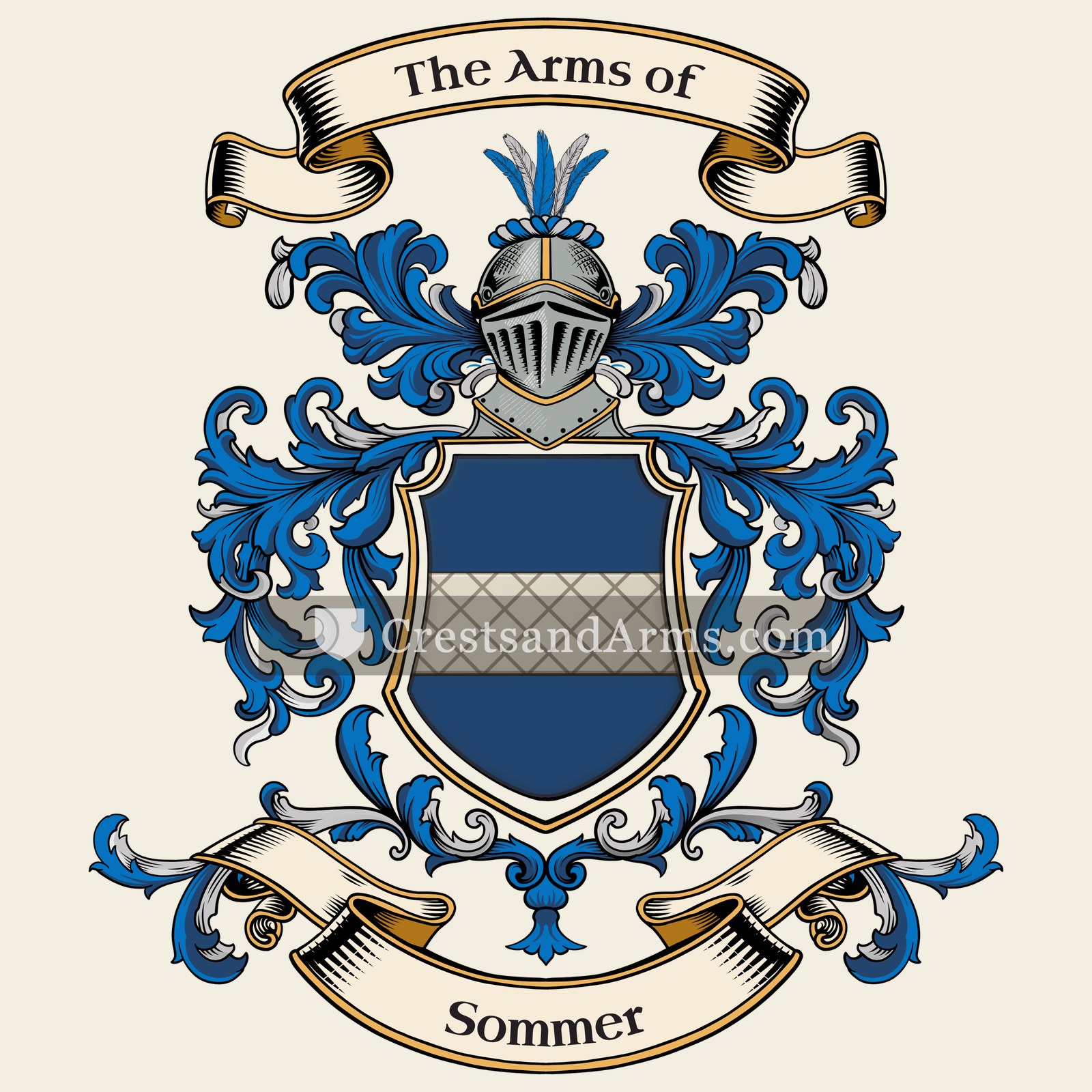
fessThe military belt, and readiness to serve
martletA younger son, who must win his own land
roseThe seventh son, and beauty with grace
Colours
Blue (Azure)Means: Loyalty and truth
Silver (Argent)Means: Peace and sincerity
Red (Gules)Means: Military strength
Historical info
Source
Sir Bernard Burke, The General Armory of England, Scotland, Ireland and Wales, London: Harrison & Sons, 1884
Blazon (the actual original written record)
“Az. on a fess betw. three swallows volant ar. as many roses gu”
DublinDublin, c. 1665
Digital archive packCoat of arms PNG, gold border print PDF, vector SVG and the certificate of authenticity. Sent to your email in minutes.
Map of Ireland showing where the Sommer arms are recorded
The Sommer arms were recorded in Dublin, c. 1665.
Dublin was the seat of government in Ireland and the place where grants were sought and recorded. Families with business at the castle or the courts settled nearby, and settling there put their arms on record.
This is where the arms were entered in the register. Families often moved to other parts of the country, so the same name can turn up in more than one region.
The body that granted and recorded arms in Ireland in this period.
Charles II of England
Sovereign of the period
Charles II of England
1660–1685
Reigning in Denmark when the Sommer arms are first recorded.
How Arms Worked in Ireland
The Ulster King of Arms granted coats of arms to individuals who proved their social standing and good character. These symbols were typically inherited by all legitimate descendants of the original holder. If a family branch wanted a unique look, they could apply for a specific change to their design through the office to ensure their identity remained distinct.
Granting authority
The Ulster King of Arms acted as the official body that regulated and issued all coats of arms throughout Ireland.
How they got arms
Families obtained their arms through formal grants issued by the office after proving their eligibility and paying the required fees.
Where arms were recorded
All official grants were recorded in the registers held by the Ulster King of Arms starting from the year 1552.
The family's standing
Recorded among the armigerous families of Dublin.
Origin & History of the Sommer Family in Ireland
The history of the Sommer name in Ireland is closely tied to the shifting social landscape of the seventeenth century. While the name has deep roots in Germanic and Northern European regions, its presence in Dublin by 1665 suggests that early members were likely part of a wave of merchants or skilled tradespeople who settled in the city during the Restoration period. At this time, Dublin was a growing hub for international trade, and individuals with the surname Sommer often integrated into the urban economy as craftsmen or commercial agents. These early settlers lived through a time of significant political transition, as the city expanded its influence as a center for administration and maritime commerce. By establishing themselves in the capital, the Sommer family became part of the diverse demographic fabric that defined Dublin’s development in the late 1600s. Their early presence reflects the broader movement of people across the Irish Sea who sought new opportunities in a developing colonial and mercantile environment.
Coat of Arms & Family Crest Details
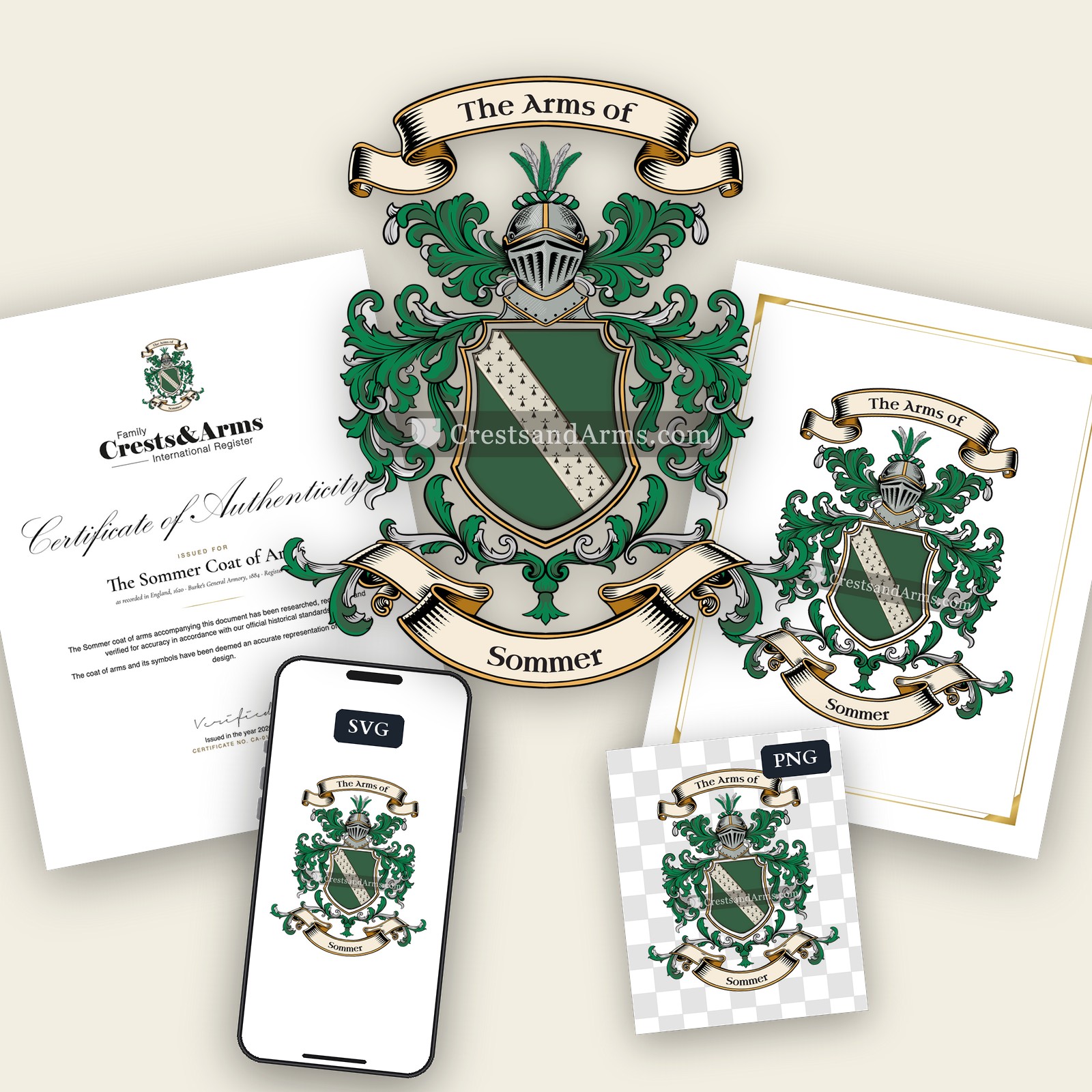
Symbols on this shield
bendDefence, and the scarf of a commander
Colours
Green (Vert)Means: Hope
ErmineMeans: Dignity
Historical info
Source
Sir Bernard Burke, The General Armory of England, Scotland, Ireland and Wales, London: Harrison & Sons, 1884
Blazon (the actual original written record)
“Vert a bend indented erm”
EnglandLondon, c. 1620
Digital archive packCoat of arms PNG, gold border print PDF, vector SVG and the certificate of authenticity. Sent to your email in minutes.
Map of England showing where the Sommer arms are recorded
The Sommer arms were recorded in London, c. 1620.
This is where the arms were entered in the register. Families often moved to other parts of the country, so the same name can turn up in more than one region.
The body that granted and recorded arms in England in this period.
James VI and I
Sovereign of the period
James VI and I
1603–1625
Reigning in Denmark when the Sommer arms are first recorded.
How Arms Worked in England
English heraldry allowed arms to be shared by all legitimate descendants of the original owner. These symbols were treated as personal property that moved through the generations to all children. While the eldest son kept the original design, other family members could use the same shield without needing to change it or register their own unique versions.
Granting authority
The College of Arms in London has regulated the use of coats of arms throughout England and Wales since 1484.
How they got arms
Families typically obtained their coats of arms through a formal grant from the Crown or by proving their ancient right to them.
Where arms were recorded
All official coats of arms are recorded in the registers kept at the College of Arms, which date back to the fifteenth century.
The family's standing
Recorded among the armigerous families of England.
Origin & History of the Sommer Family in England
The surname Sommer has deep roots in the Germanic languages, where it originally served as a descriptive name for someone born during the summer months or perhaps someone who performed seasonal labor. By the time members of the family were documented in London in 1620, the name had already evolved through various spellings as it moved across borders and adapted to the English language. During the early seventeenth century, London was a bustling center of trade and migration, making it a common destination for families seeking new opportunities. Settlers with this name often integrated into the city’s growing merchant class or skilled trades, contributing to the diverse social fabric of the capital. As these individuals established their lives in England, the name became a permanent part of the local landscape, reflecting both the family’s continental origins and their transition into English society.
Sommer Meaning & Related Branches
Root word
sumar
Old Norse word for the season of summer.
This name
SommerA topographic or occupational name for someone associated with the summer season.
also spelled
Somer
Sommar
Somers
Related arms
Somervariant spelling
Summervariant spelling
Somersvariant spelling
Documented Sources
J. B. Rietstap, Armorial Général, Gouda: G. B. van Goor Zonen, 1884–87
Karker, Allan. Dansk Navneskik. 1993
Nielsen, Oluf. Olddanske Personnavne. 1883
Rigsarkivet (Danish National Archives), Kirkebøger (Parish Registers) for Sjælland, 1722
Rigsarkivet (Danish National Archives), Folketællinger (Census Records)
Digital archive packCoat of arms PNG, gold border print PDF, vector SVG and the certificate of authenticity. Sent to your email in minutes.


 fessThe military belt, and readiness to serve
 fessThe military belt, and readiness to serve


 martletA younger son, who must win his own land
 roseThe seventh son, and beauty with grace


 bendDefence, and the scarf of a commander