Map of Denmark showing where the Soppe arms are recorded
The Soppe arms were recorded in Denmark, c. 1722.
Arms such as these were typically recorded in Sjaælland.
Zealand held the Danish court, the crown's offices and Copenhagen itself. Families who served the king kept estates within reach of it, and royal service was the ordinary route to a coat of arms.
This is where the arms were entered in the register. Families often moved to other parts of the country, so the same name can turn up in more than one region.
The body that granted and recorded arms in Denmark in this period.
Frederik IV of Denmark
Sovereign of the period
Frederik IV of Denmark
1699–1730
Reigning in Denmark when the Soppe arms are first recorded.
How Arms Worked in Denmark
Danish heraldry during this period was closely tied to noble status and royal favor rather than being open to all citizens. Arms were typically granted by the monarch to individuals, and these symbols were then shared by all members of the noble house. If a family line died out, the right to use those specific arms ended with them.
Granting authority
The Danish royal chancery held the power to issue and regulate official coats of arms for the kingdom.
How they got arms
Families usually received their arms through a formal royal grant that confirmed their noble status and rights.
Where arms were recorded
These grants were officially recorded in the Danish Royal Chancery records starting in the sixteenth century.
The family's standing
Recorded among the armigerous families of Denmark.
Origin & History of the Soppe Family in Denmark
The history of the Soppe family in Denmark is rooted in the rural landscapes of Sjælland, where the name first appears in formal records during the early 18th century. By 1722, members of the family were established as active participants in the local community, likely working within the agricultural systems that defined life on the island at that time. During this era, surnames in Denmark were often fluid and tied to specific farmsteads or patronymic traditions, making the consistent appearance of the Soppe name a notable marker of a distinct family lineage. As the family navigated the social and economic shifts of the 1700s, they remained connected to the regional identity of Sjælland. Their presence in these early parish registers provides a clear window into the lives of common citizens who helped shape the local history of the Danish countryside.
Meaning of the Soppe family crest colors & symbols
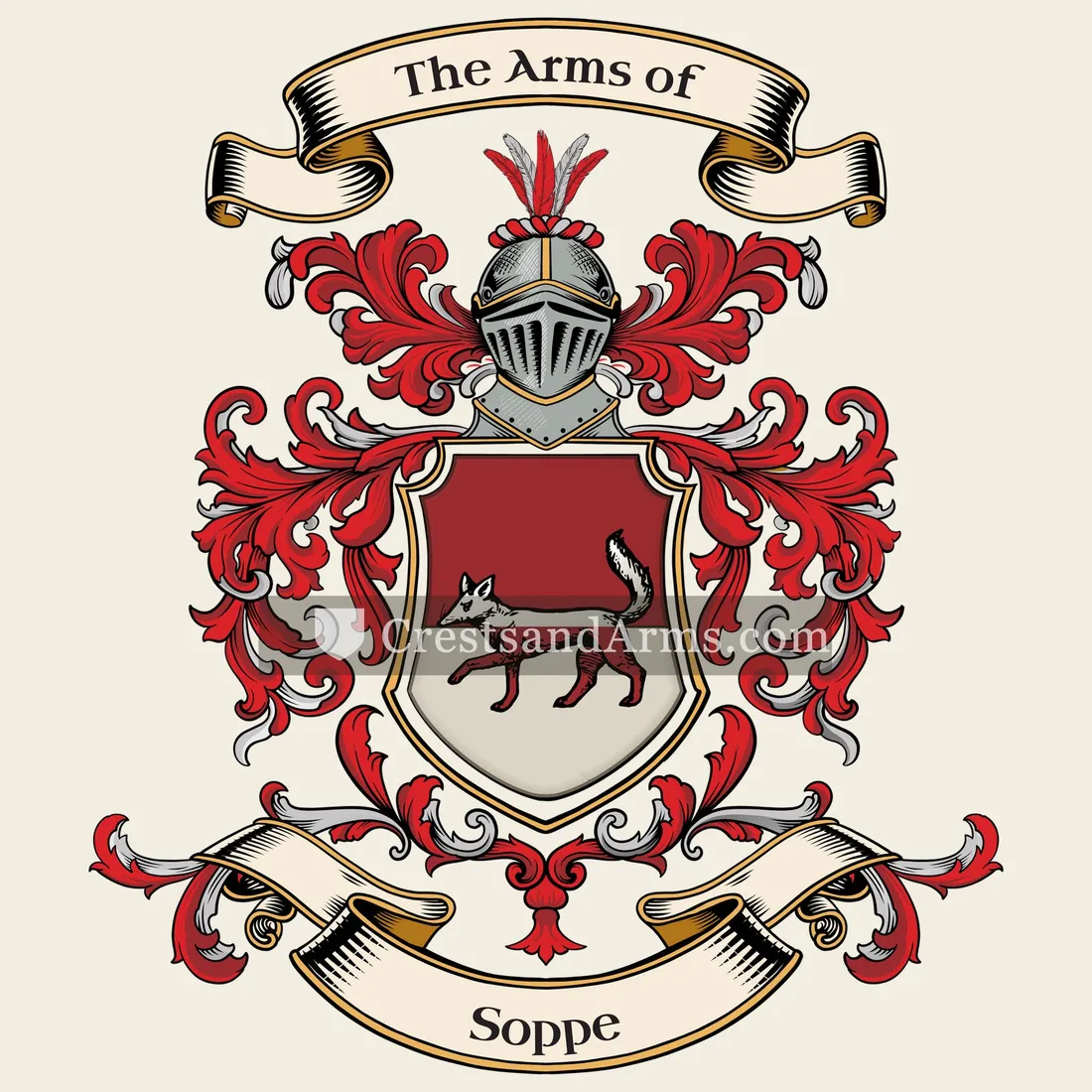
Symbols on this shield
foxWit and wisdom in defence
Colours
Red (Gules)Means: Military strength
Silver (Argent)Means: Peace and sincerity
Historical info
Source
J. B. Rietstap, Armorial Général, Gouda: G. B. van Goor Zonen, 1884–87
Blazon (the actual original written record)
“Coupé de gu. sur arg.; à un renard (dolce) ramp. de l'un en l'autre. Cq. cour. C.: une panthère iss. d'arg.”
DalmatiaDalmatia, c. 1775
Digital archive packCoat of arms PNG, gold border print PDF, vector SVG and the certificate of authenticity. Sent to your email in minutes.
Map of Italy showing where the Soppe arms are recorded
The Soppe arms were recorded in Dalmatia, c. 1775.
Dalmatia was a string of walled towns along the Adriatic coast, each with its own leading families. Sea trade made them wealthy, and the towns kept lists of the houses entitled to arms.
This is where the arms were entered in the register. Families often moved to other parts of the country, so the same name can turn up in more than one region.
The body that granted and recorded arms in Italy in this period.
Alvise Giovanni Mocenigo
Sovereign of the period
Alvise Giovanni Mocenigo
1763–1778
Reigning in Denmark when the Soppe arms are first recorded.
How Arms Worked in Italy
In the Italian states, coats of arms were often used by noble families to show their status and history. These symbols were passed down through the generations to all legitimate male descendants. Younger branches of a family usually kept the original design but sometimes added small changes to distinguish their specific line from the main branch.
Granting authority
Various local rulers and city governments controlled the use of coats of arms across the different Italian states.
How they got arms
Families often assumed their own arms or received them as official grants from local lords, popes, or city councils.
Where arms were recorded
Arms were recorded in local city archives or private family books rather than in one single national register.
The family's standing
Recorded among the armigerous families of Dalmatia.
Origin & History of the Soppe Family in Italy
The history of the Soppe family name is deeply connected to the movement of people across the Adriatic Sea between Italy and the Dalmatian coast. By the late 18th century, records confirm that members of the family were established in Dalmatia, a region that maintained strong cultural and economic ties to the Italian peninsula throughout history. During this era, the Venetian Republic exerted significant influence over the Adriatic, facilitating the migration of families who moved between Italian port cities and Dalmatian coastal towns for trade and administrative roles. The name likely evolved as these individuals integrated into the local society of the region while maintaining their Mediterranean heritage. Because the family was present in Dalmatia by 1775, it is probable that their ancestors were part of the long-standing network of merchants and sailors who bridged the gap between the two shores of the Adriatic for generations.
Soppe Meaning & Related Branches
Root word
Sop
A Germanic term referring to a piece of bread dipped in liquid.
This name
SoppeA topographic or occupational name for someone who prepared or consumed soaked bread or broth.
also spelled
Sope
Documented Sources
J. B. Rietstap, Armorial Général, Gouda: G. B. van Goor Zonen, 1884–87
Rigsarkivet (Danish National Archives), Kirkebøger for Sjællands Stift (Parish registers for the Diocese of Sjælland)
Trap, J.P., Statistisk-topographisk Beskrivelse af Kongeriget Danmark (1858)
Digital archive packCoat of arms PNG, gold border print PDF, vector SVG and the certificate of authenticity. Sent to your email in minutes.


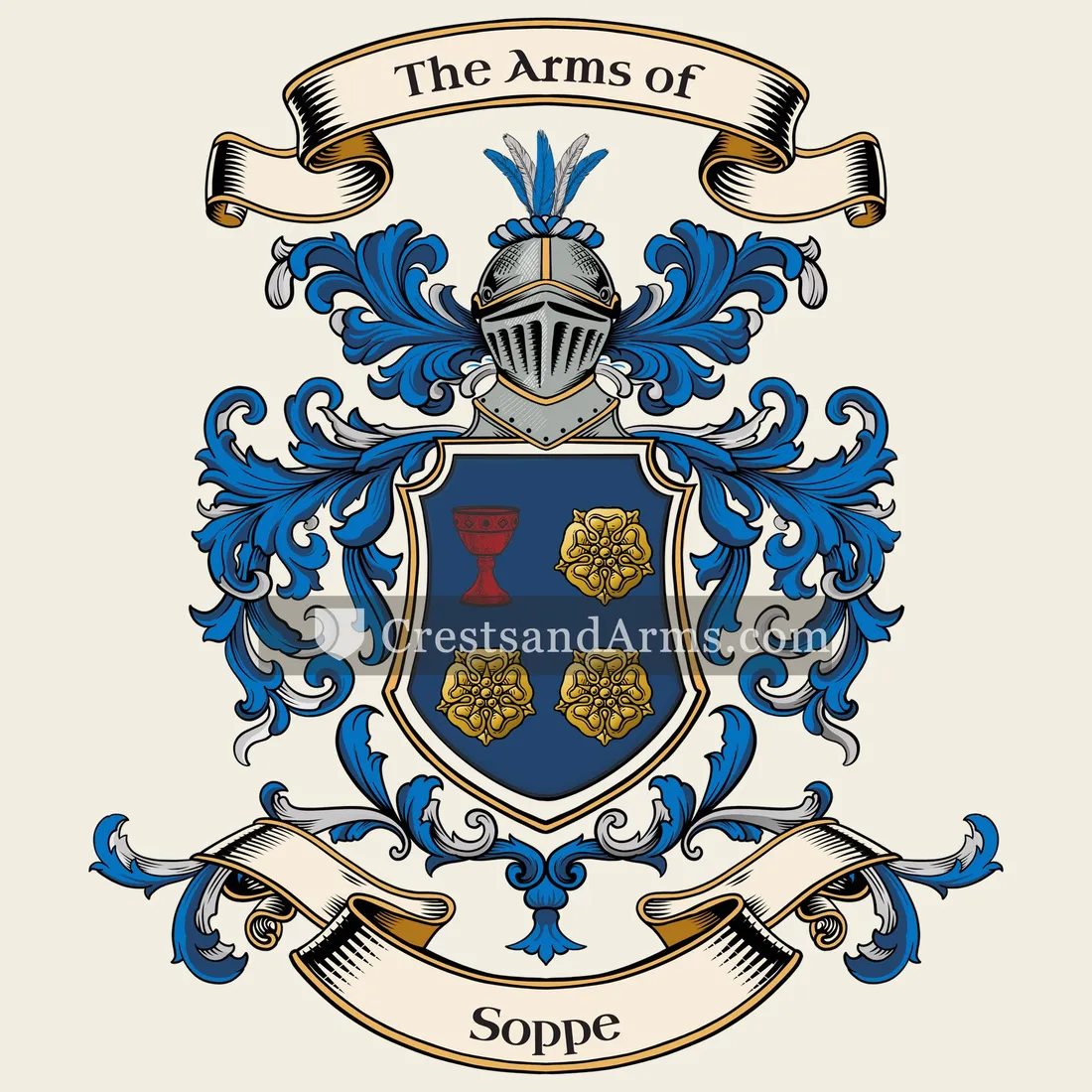
 cupFaith, office, and a trust discharged
 roseThe seventh son, and beauty with grace
 cupFaith, office, and a trust discharged
 roseThe seventh son, and beauty with grace


 foxWit and wisdom in defence