Map of Germany showing where the Sower arms are recorded
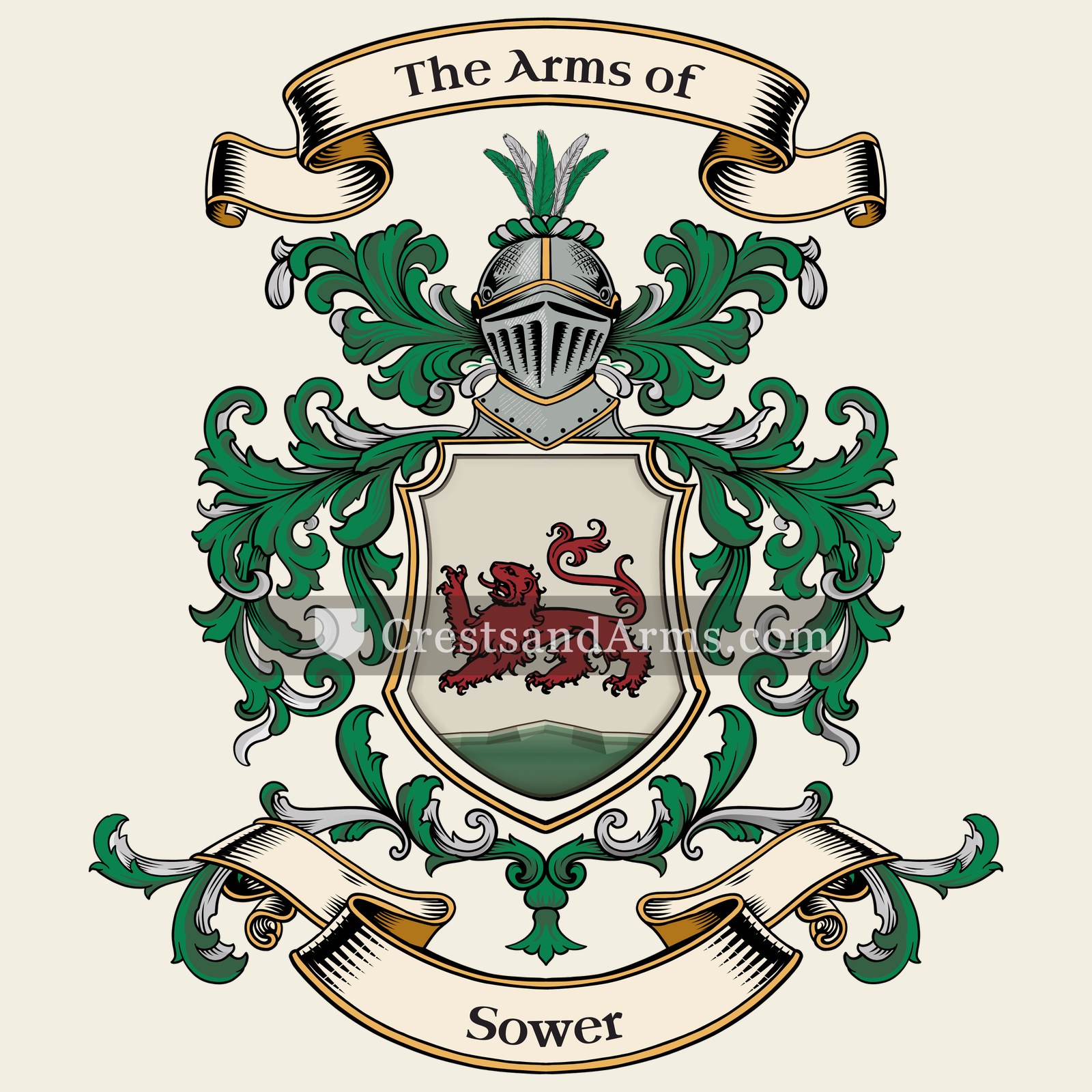
The Sower arms were recorded in Francfort s, c. 1765.
This is where the arms were entered in the register. Families often moved to other parts of the country, so the same name can turn up in more than one region.
The body that granted and recorded arms in Germany in this period.
Francis I, Holy Roman Emperor
Sovereign of the period
Francis I, Holy Roman Emperor
1745–1765
Reigning in Germany when the Sower arms are first recorded.
How Arms Worked in Germany
In the Holy Roman Empire, coats of arms were often granted to individuals by the Emperor or his representatives. These arms were then passed down through the generations to all legitimate descendants of the original holder. Younger branches of a family usually kept the same shield design without needing to change it, as the arms belonged to the entire lineage.
Granting authority
The Holy Roman Emperor held the sole power to grant new coats of arms throughout his vast imperial territories.
How they got arms
Families typically obtained their coats of arms through a formal imperial grant or by proving their noble status to the authorities.
Where arms were recorded
These grants were officially recorded in the Imperial Chancery registers, which began keeping formal records of such honors during the Middle Ages.
The family's standing
Recorded among the armigerous families of Germany.
Origin & History of the Sower Family in Germany
The surname Sower is rooted in the occupational history of early Germanic regions, where it originated as a descriptive term for a sower of seeds or a farmer. By the time members of the family were documented in the settlement of Francfort in 1765, they were part of a wave of immigrants seeking new opportunities in the American colonies. These early settlers often brought with them specialized agricultural knowledge and a strong work ethic that helped them establish roots in the frontier landscape. As the family integrated into the local community, the name evolved in spelling and pronunciation, reflecting the transition from their European origins to their new life in Pennsylvania. The presence of the Sower family in these early records highlights their role as industrious pioneers who contributed to the growth and development of the region during the eighteenth century.
Related Branches & Arms
Root word
Säer
A person who sows seeds or plants crops.
This name
SowerAn occupational surname for a farmer or agricultural worker who sowed seeds in the fields.
also spelled
Saur
Sower
Sour
Documented Sources
J. B. Rietstap, Armorial Général, Gouda: G. B. van Goor Zonen, 1884–87
Faust, Albert Bernhardt. The German Element in the United States. 1909
Strassburger, Ralph Beaver. Pennsylvania German Pioneers: A Publication of the Original Lists of Arrivals in the Port of Philadelphia from 1727 to 1808. 1934
Digital archive packCoat of arms PNG, gold border print PDF, vector SVG and the certificate of authenticity. Sent to your email in minutes.


 mountThe ground held, and steadfastness upon it
 lionCourage, strength and royalty
 mountThe ground held, and steadfastness upon it
 lionCourage, strength and royalty