A record of documented arms, meaning and origin, researched for the Spalding family lines. Documented in 3 countries.
Reg. 1927 · German, T–V
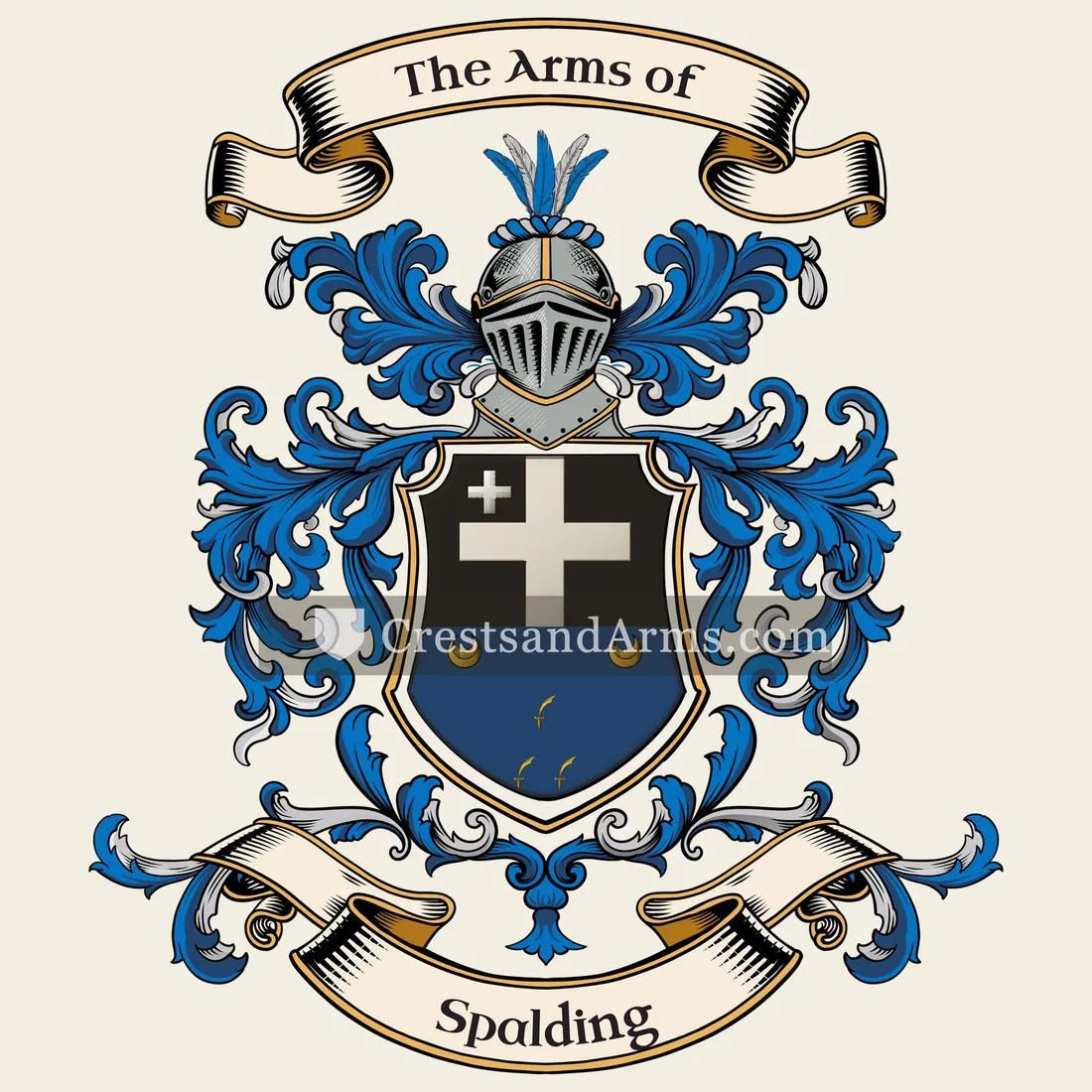
Meaning of the Spalding family crest colors & symbols
Symbols on this shield
cross symbolChristian faith and service
crescentHonour by the sovereign, and the second son
swordJustice, and military honour
Colours
Black (Sable)Means: Constancy
Blue (Azure)Means: Loyalty and truth
Silver (Argent)Means: Peace and sincerity
Gold (Or)Means: Generosity
Historical info
Source
J. B. Rietstap, Armorial Général, Gouda: G. B. van Goor Zonen, 1884–87
Blazon (the actual original written record)
“Coupé: au 1 de sa. à la croix alésée d'arg.; au 2 d'azur à deux croiss. figurés d'or, l'un sur l'autre, celui en p. supp. trois poignards d'or, en bande, en pal et en barre, les pointes en bas. Cq. cour. C.: un croiss. figuré tourné d'or. L.: à dextre d'arg. et de sa., à sen. d'arg. et d'azur.”
Germanyc. 1679
Digital archive packCoat of arms PNG, gold border print PDF, vector SVG and the certificate of authenticity. Sent to your email in minutes.
Map of Germany showing where the Spalding arms are recorded
The Spalding arms were recorded in Germany, c. 1679.
Arms such as these were typically recorded in Bavaria.
Bavaria was a country of old landed families and walled market towns. Estates passed down the same line for centuries, and both the landowners and the leading townsmen kept arms, which is why so many Bavarian names sit in the registers.
This is where the arms were entered in the register. Families often moved to other parts of the country, so the same name can turn up in more than one region.
The body that granted and recorded arms in Germany in this period.
Leopold I, Holy Roman Emperor
Sovereign of the period
Leopold I, Holy Roman Emperor
1658–1705
Reigning in Germany when the Spalding arms are first recorded.
How Arms Worked in Germany
In the Holy Roman Empire, coats of arms were often granted to individuals by the Emperor or his representatives. These arms were then passed down through the generations to all legitimate descendants of the original holder. Younger branches of a family usually kept the same shield design without needing to change it, as the arms belonged to the entire lineage.
Granting authority
The Holy Roman Emperor held the sole power to grant new coats of arms throughout his vast imperial territories.
How they got arms
Families typically obtained their coats of arms through a formal imperial grant or by proving their noble status to the authorities.
Where arms were recorded
These grants were officially recorded in the Imperial Chancery registers, which began keeping formal records of such honors during the Middle Ages.
The family's standing
Recorded among the armigerous families of Germany.
Origin & History of the Spalding Family in Germany
The roots of the Spalding name in Germany are deeply connected to the social and religious landscape of the seventeenth century, particularly within the region of Bavaria. By 1679, records confirm that members of the family were established in this area, living during a time when the Holy Roman Empire was still recovering from the long-term effects of the Thirty Years' War. Families like the Spaldings often moved between small towns and rural estates to find stability or work in local administration and agriculture. Because the name is associated with specific geographic locations, it likely originated as a way to identify individuals based on their home village or a local landmark. As these early ancestors navigated the complex laws and church requirements of the Bavarian electorate, they helped build the foundation for the family’s long-standing presence in the region.
Meaning of the Spalding family crest colors & symbols
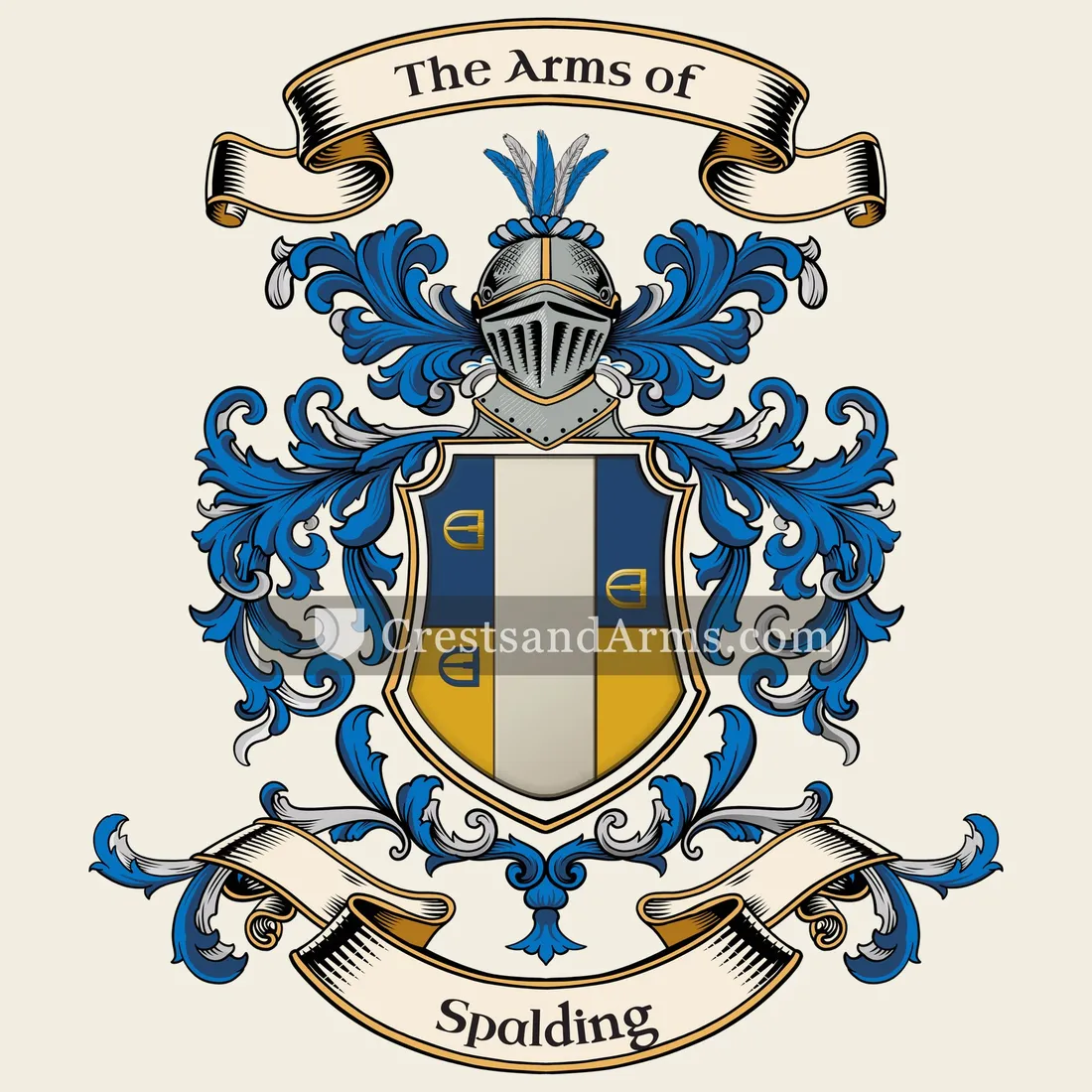
Symbols on this shield
paleMilitary strength, and a fortified defence
buckleFidelity, and a bond firmly held
Colours
Blue (Azure)Means: Loyalty and truth
Gold (Or)Means: Generosity
Historical info
Source
Sir Bernard Burke, The General Armory of England, Scotland, Ireland and Wales, London: Harrison & Sons, 1884
Blazon (the actual original written record)
“Per fess az. and or, a pale counterchanged, three buckles of the second”
Englandc. 1620
Digital archive packCoat of arms PNG, gold border print PDF, vector SVG and the certificate of authenticity. Sent to your email in minutes.
Map of England showing where the Spalding arms are recorded
The Spalding arms were recorded in England, c. 1620.
Arms such as these were typically recorded in York.
Yorkshire is the largest of the English counties, and it held more gentry families than any other. Land there was split among a great many households rather than a few, so a great many of them carried arms.
This is where the arms were entered in the register. Families often moved to other parts of the country, so the same name can turn up in more than one region.
The body that granted and recorded arms in England in this period.
James VI and I
Sovereign of the period
James VI and I
1603–1625
Reigning in Germany when the Spalding arms are first recorded.
How Arms Worked in England
English heraldry allowed arms to be shared by all legitimate descendants of the original owner. These symbols were treated as personal property that moved through the generations to all children. While the eldest son kept the original design, other family members could use the same shield without needing to change it or register their own unique versions.
Granting authority
The College of Arms in London has regulated the use of coats of arms throughout England and Wales since 1484.
How they got arms
Families typically obtained their coats of arms through a formal grant from the Crown or by proving their ancient right to them.
Where arms were recorded
All official coats of arms are recorded in the registers kept at the College of Arms, which date back to the fifteenth century.
The family's standing
Recorded among the armigerous families of England.
Origin & History of the Spalding Family in England
The surname Spalding originates from the town of Spalding in Lincolnshire, England, and follows the tradition of locative names given to families who migrated from their ancestral home to other parts of the country. During the medieval period, people often took the name of their village as a way to identify themselves to others in new regions. By the early 17th century, members of the family had established themselves in the historic city of York. This move was part of a broader trend of families shifting toward growing urban centers to pursue new trades and opportunities. The presence of the Spalding family in York by 1620 reflects their integration into the social and economic life of northern England during a time of significant transition. As they settled in these new communities, the family name served as a lasting link to their geographic roots in the Lincolnshire fens.
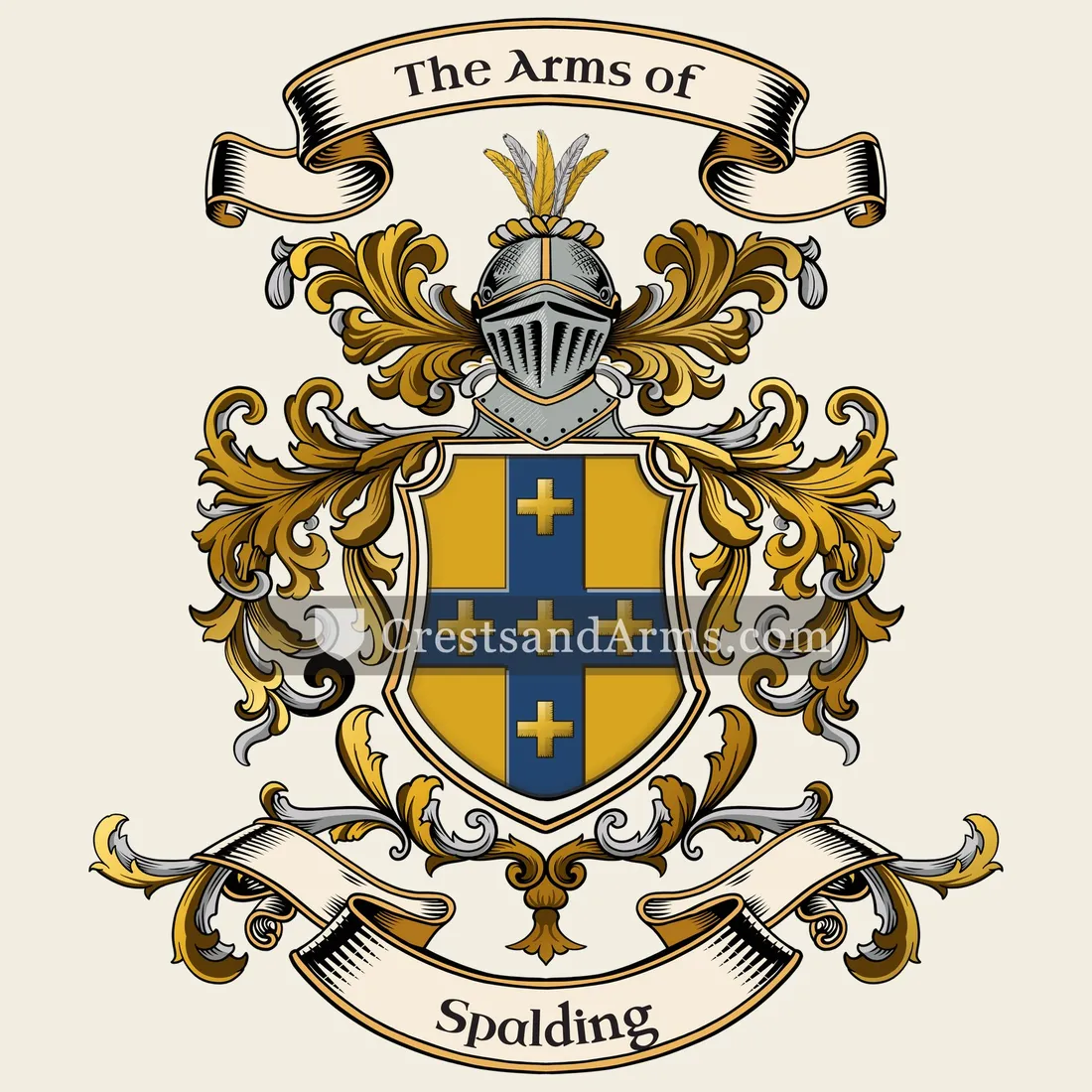
Meaning of the Spalding family crest colors & symbols
Symbols on this shield
cross symbolChristian faith and service
Colours
Gold (Or)Means: Generosity
Blue (Azure)Means: Loyalty and truth
Historical info
Source
Sir Bernard Burke, The General Armory of England, Scotland, Ireland and Wales, London: Harrison & Sons, 1884
Blazon (the actual original written record)
“Or, on a cross az. five crosses crosslet of the first”
Scotlandc. 1685
Digital archive packCoat of arms PNG, gold border print PDF, vector SVG and the certificate of authenticity. Sent to your email in minutes.
Map of Scotland showing where the Spalding arms are recorded
The Spalding arms were recorded in Scotland, c. 1685.
Arms such as these were typically recorded in Edinburgh.
Edinburgh was the seat of Scotland's government, its courts and its heralds. Families with business there settled nearby, and being close to where arms were recorded is exactly why so many of them appear.
This is where the arms were entered in the register. Families often moved to other parts of the country, so the same name can turn up in more than one region.
The body that granted and recorded arms in Scotland in this period.
Charles II of England
Sovereign of the period
Charles II of England
1660–1685
Reigning in Germany when the Spalding arms are first recorded.
How Arms Worked in Scotland
Scottish heraldry is unique because it treats a coat of arms as a piece of personal property protected by law. Only one person can own a specific design at any given time. When a family grows, the head keeps the original shield while other relatives must apply for their own distinct version with slight changes to prove their specific identity.
Granting authority
The Court of the Lord Lyon acts as the official body that regulates and controls all heraldic matters throughout Scotland.
How they got arms
Individuals obtain a legal right to their arms through a formal petition process that confirms their identity and family connection.
Where arms were recorded
All valid coats of arms are officially entered into the Public Register of All Arms and Bearings starting from 1672.
The family's standing
Recorded among the armigerous families of Scotland.
Origin & History of the Spalding Family in Scotland
The history of the Spalding name in Scotland is deeply rooted in the landscape of the eastern lowlands, where the family established itself as a notable presence by the late seventeenth century. While the name likely originated from a place in England, the Scottish branch became firmly integrated into the urban life of Edinburgh by 1685. During this period, the city was a bustling center of trade and legal activity, providing a stable environment for families to build their reputations. Members of the Spalding family were often involved in the professional and mercantile circles that defined the capital, contributing to the growth of the city during a time of significant political transition. By settling in Edinburgh, these early ancestors helped secure the name as a recognized part of the local community, leaving behind records in municipal registers that track their daily lives and social connections.
Spalding Meaning & Related Branches
Root word
Spald
A split or a cleft in the landscape.
This name
SpaldingRefers to someone who lived near a split in the land or a ravine.
also spelled
Spaldinge
Spaldingg
Spaldyng
Spaldin
Related arms
Deanesame arms
Girgonsame arms
Documented Sources
J. B. Rietstap, Armorial Général, Gouda: G. B. van Goor Zonen, 1884–87


 cross symbolChristian faith and service
 crescentHonour by the sovereign, and the second son
 swordJustice, and military honour
 cross symbolChristian faith and service
 crescentHonour by the sovereign, and the second son
 swordJustice, and military honour


 paleMilitary strength, and a fortified defence
 buckleFidelity, and a bond firmly held