Map of Netherlands showing where the Spangenberg arms are recorded
The Spangenberg arms were recorded in Netherlands, c. 1815.
Arms such as these were typically recorded in Friesland.
Friesland was low, wet country on the northern coast of the Netherlands, farmed by families who had held the same land for centuries. Free landholders were unusually common there, and a free landholder could carry arms.
This is where the arms were entered in the register. Families often moved to other parts of the country, so the same name can turn up in more than one region.
Region
Friesland
First recorded
1815
Granting Authority for the Spangenberg Arms
Hoge Raad van Adel
Photograph made by me · CC BY-SA 3.0
The body that granted and recorded arms in Netherlands in this period.
William I of the Netherlands
Sovereign of the period
William I of the Netherlands
1815–1840
Reigning in Netherlands when the Spangenberg arms are first recorded.
How Arms Worked in Netherlands
In the Netherlands, coats of arms were often used by noble families and those who held specific public offices. These arms were passed down through the generations to legitimate descendants. Younger branches of a family usually kept the original design without needing to add special marks. This system ensured that the family identity remained clear and consistent over many years.
Granting authority
The Hoge Raad van Adel is the official body that regulates and manages noble titles and coats of arms in the Netherlands.
How they got arms
Families typically obtained their coats of arms through official royal grants or by proving their long-standing historical use of the symbols.
Where arms were recorded
Coats of arms are officially recorded in the registers held by the Hoge Raad van Adel, which began its work in 1814.
The family's standing
Recorded among the armigerous families of Netherlands.
Origin & History of the Spangenberg Family in Netherlands
The name Spangenberg traces its roots to the Germanic regions of Europe, where it originally functioned as a topographic surname describing someone who lived near a specific castle or settlement. By the early nineteenth century, records confirm that members of the family had established themselves in the northern province of Friesland in the Netherlands. During this period, the Netherlands underwent significant administrative changes, including the formal registration of surnames under the Napoleonic civil code. Families like the Spangenbergs often moved through these northern territories for work in agriculture or maritime trade, which were the primary economic drivers of the Frisian region at the time. Their presence in Friesland by 1815 suggests that they were part of a broader movement of families settling into stable, documented communities as the modern Dutch state began to take its current form.
Meaning of the Spangenberg family crest colors & symbols
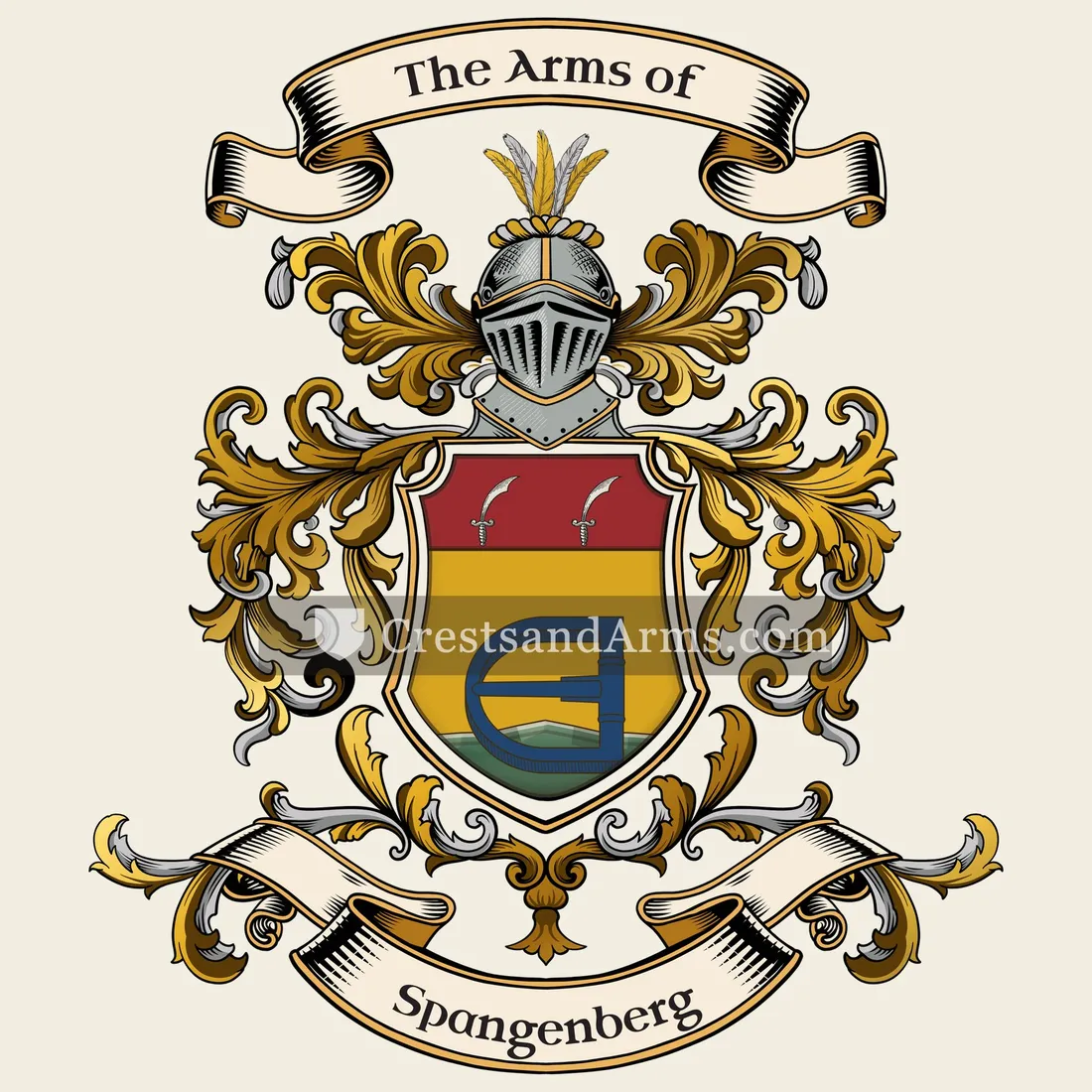
Symbols on this shield
mountThe ground held, and steadfastness upon it
chiefAuthority, wisdom and dominion
buckleFidelity, and a bond firmly held
swordJustice, and military honour
Colours
Gold (Or)Means: Generosity
Red (Gules)Means: Military strength
Green (Vert)Means: Hope
Blue (Azure)Means: Loyalty and truth
Silver (Argent)Means: Peace and sincerity
Historical info
Source
J. B. Rietstap, Armorial Général, Gouda: G. B. van Goor Zonen, 1884–87
Blazon (the actual original written record)
“D'or à un mont de sin., mouv. de la p., sommé d'un fermail en losange d'azur, les quatre angles treffés, l'ardillon à sen.; au chef de gu., ch. de deux épées d'arg., garnies d'or, passées en saut. C.: une tête et col de lion d'azur. L.: d'or et d'azur. D.: DÜPPEL, 16 APRIL 1864.”
Germanyc. 1864
Digital archive packCoat of arms PNG, gold border print PDF, vector SVG and the certificate of authenticity. Sent to your email in minutes.
Map of Germany showing where the Spangenberg arms are recorded
The Spangenberg arms were recorded in Germany, c. 1864.
Arms such as these were typically recorded in Bavaria.
Bavaria was a country of old landed families and walled market towns. Estates passed down the same line for centuries, and both the landowners and the leading townsmen kept arms, which is why so many Bavarian names sit in the registers.
This is where the arms were entered in the register. Families often moved to other parts of the country, so the same name can turn up in more than one region.
The body that granted and recorded arms in Germany in this period.
Wilhelm I
Sovereign of the period
Wilhelm I
1861–1888
Reigning in Netherlands when the Spangenberg arms are first recorded.
How Arms Worked in Germany
Prussian heraldry was strictly tied to social rank and noble status rather than being a free choice for every citizen. These symbols were treated as permanent family property that moved through the generations to all legitimate heirs. If a family branch wanted to change their design to stand out, they had to apply for official permission to alter their specific version of the shield.
Granting authority
The Prussian Heroldsamt acted as the central state office that managed and strictly controlled all noble titles and coats of arms.
How they got arms
Families usually obtained their arms through formal royal grants or by proving their long-standing noble status to the state authorities.
Where arms were recorded
All official coats of arms were kept in the rolls of the Prussian Heroldsamt, which functioned from 1706 until 1918.
The family's standing
Recorded among the armigerous families of Germany.
Origin & History of the Spangenberg Family in Germany
The name Spangenberg originates from a town of the same name located in the state of Hesse, Germany. In the German language, the name is a combination of two words that describe a castle built on a mountain pass. During the Middle Ages, families often adopted the name of their home town to identify themselves as they moved to different regions. While the family had deep roots in central Germany for centuries, records show that members of the Spangenberg family were well-established in Bavaria by 1864. This migration was common during the nineteenth century as people moved across German territories to pursue new opportunities in agriculture and trade. By settling in Bavaria, these family members became part of the local social fabric, contributing to the growth of their communities during a time of significant political change in the region.
Spangenberg Meaning & Related Branches
Root word
Spange and Berg
A clasp or buckle and a mountain or hill.
This name
SpangenbergRefers to a person living near a mountain pass or a buckle-shaped hill.
also spelled
Spangenberge
Spangenbergg
Documented Sources
J. B. Rietstap, Armorial Général, Gouda: G. B. van Goor Zonen, 1884–87
Tresoar (Fries Historisch en Letterkundig Centrum), Burgerlijke Stand van de provincie Friesland
Nederlandse Genealogische Vereniging, Nederland's Patriciaat
Meertens Instituut, Nederlandse Familienamenbank
Digital archive packCoat of arms PNG, gold border print PDF, vector SVG and the certificate of authenticity. Sent to your email in minutes.


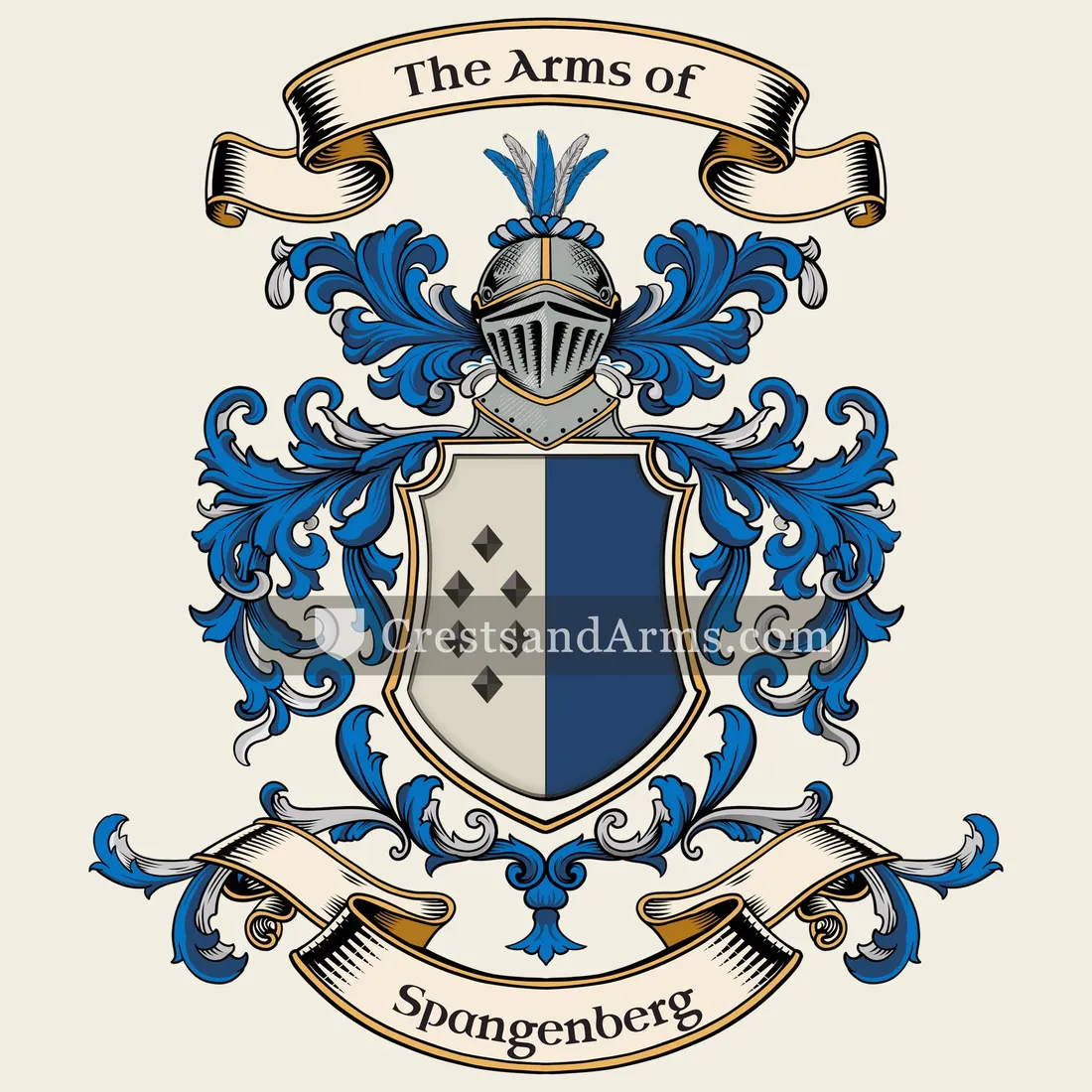
 lozengeHonour and nobility, and the arms of a woman
 lozengeHonour and nobility, and the arms of a woman


 mountThe ground held, and steadfastness upon it
 chiefAuthority, wisdom and dominion
 buckleFidelity, and a bond firmly held
 swordJustice, and military honour