Map of Netherlands showing where the Spoor arms are recorded
The Spoor arms were recorded in Netherlands, c. 1815.
Arms such as these were typically recorded in Friesland.
Friesland was low, wet country on the northern coast of the Netherlands, farmed by families who had held the same land for centuries. Free landholders were unusually common there, and a free landholder could carry arms.
This is where the arms were entered in the register. Families often moved to other parts of the country, so the same name can turn up in more than one region.
Region
Friesland
First recorded
1815
Granting Authority for the Spoor Arms
Hoge Raad van Adel
Photograph made by me · CC BY-SA 3.0
The body that granted and recorded arms in Netherlands in this period.
William I of the Netherlands
Sovereign of the period
William I of the Netherlands
1815–1840
Reigning in Netherlands when the Spoor arms are first recorded.
How Arms Worked in Netherlands
In the Netherlands, coats of arms were often used by noble families and those who held specific public offices. These arms were passed down through the generations to legitimate descendants. Younger branches of a family usually kept the original design without needing to add special marks. This system ensured that the family identity remained clear and consistent over many years.
Granting authority
The Hoge Raad van Adel is the official body that regulates and manages noble titles and coats of arms in the Netherlands.
How they got arms
Families typically obtained their coats of arms through official royal grants or by proving their long-standing historical use of the symbols.
Where arms were recorded
Coats of arms are officially recorded in the registers held by the Hoge Raad van Adel, which began its work in 1814.
The family's standing
Recorded among the armigerous families of Netherlands.
Origin & History of the Spoor Family in Netherlands
The surname Spoor finds its roots in the Low Countries, where it likely originated as a descriptive name linked to the Dutch word for a track or a footprint. In the context of the Netherlands, the name suggests that early ancestors may have been woodsmen, hunters, or individuals who lived near a well-traveled path. By the early 19th century, the family established a notable presence in the northern province of Friesland. This region was historically distinct due to its unique language and legal traditions, which often influenced how families recorded their names during the Napoleonic era. When the Dutch government mandated the formal registration of surnames in 1811, families like the Spoors solidified their identity within the local civil records. These records provide a clear window into the lives of early family members who navigated the changing social landscape of the Netherlands as the country transitioned into a modern kingdom.
Coat of Arms & Family Crest Details
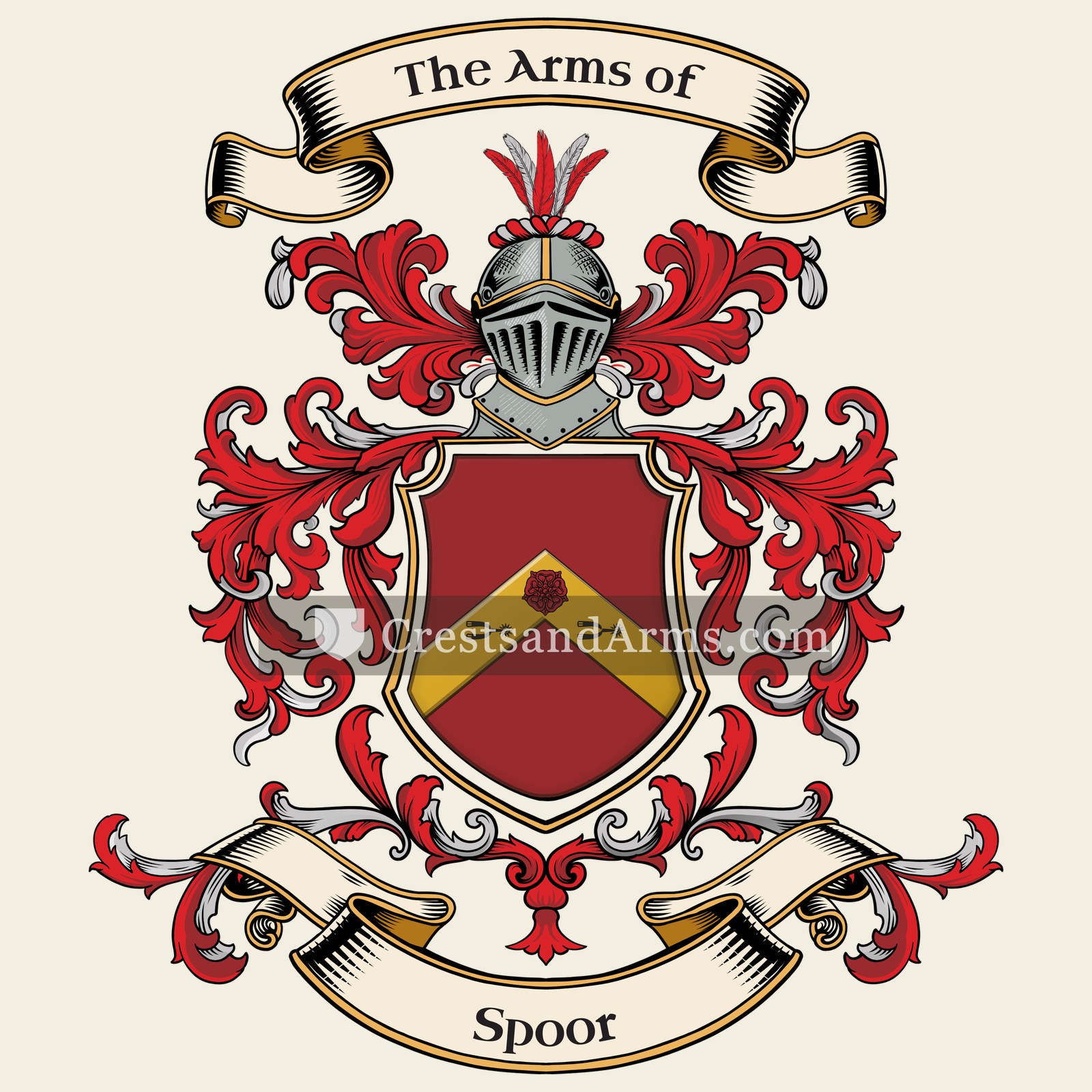
Symbols on this shield
chevronProtection, and faithful service completed
roseThe seventh son, and beauty with grace
spurKnighthood, and readiness to spur on
Colours
Red (Gules)Means: Military strength
Gold (Or)Means: Generosity
Black (Sable)Means: Constancy
Historical info
Source
Sir Bernard Burke, The General Armory of England, Scotland, Ireland and Wales, London: Harrison & Sons, 1884
Blazon (the actual original written record)
“Gu. on a chev. or, a rose of the first betw. two spur-rowels sa”
DurhamWhitburn · Durham, c. 1620
Digital archive packCoat of arms PNG, gold border print PDF, vector SVG and the certificate of authenticity. Sent to your email in minutes.
Map of England showing where the Spoor arms are recorded
The Spoor arms were recorded in Durham, c. 1620.
Durham was governed by its bishop rather than the crown for most of its history, with its own courts and its own landed class. That separate world produced a tight group of families, nearly all of whom held arms.
This is where the arms were entered in the register. Families often moved to other parts of the country, so the same name can turn up in more than one region.
The body that granted and recorded arms in England in this period.
James VI and I
Sovereign of the period
James VI and I
1603–1625
Reigning in Netherlands when the Spoor arms are first recorded.
How Arms Worked in England
English heraldry allowed arms to be shared by all legitimate descendants of the original owner. These symbols were treated as personal property that moved through the generations to all children. While the eldest son kept the original design, other family members could use the same shield without needing to change it or register their own unique versions.
Granting authority
The College of Arms in London has regulated the use of coats of arms throughout England and Wales since 1484.
How they got arms
Families typically obtained their coats of arms through a formal grant from the Crown or by proving their ancient right to them.
Where arms were recorded
All official coats of arms are recorded in the registers kept at the College of Arms, which date back to the fifteenth century.
The family's standing
Recorded among the armigerous families of Durham.
Origin & History of the Spoor Family in England
The name Spoor has deep roots in the northern regions of England, particularly within the county of Durham. By the year 1620, records confirm that the family was well-established in this area, where they were often associated with the rugged landscape and the local industries of the time. The name itself is thought to be a topographic or occupational surname, likely derived from the Middle English word "spore," which referred to a track, a trail, or the metal tool used by riders. This suggests that early members of the family may have been known for their skill in tracking, their work as messengers, or perhaps their trade as blacksmiths who crafted equestrian gear. As the family grew, they became woven into the fabric of Durham society, living through the social and economic shifts of the seventeenth century while maintaining a consistent presence in the region’s parish registers and local legal documents.
Spoor Meaning & Related Branches
Root word
Spor
Old Germanic word meaning a track, trail, or footprint.
This name
SpoorA topographical name for someone who lived near a path or a tracker of game.
also spelled
Spore
Related arms
Bakerrecorded with Spoor, same area
Documented Sources
J. B. Rietstap, Armorial Général, Gouda: G. B. van Goor Zonen, 1884–87
Meertens, P.J., De betekenis van de Nederlandse familienamen, 1950
Van der Schaar, J., Woordenboek van voornamen, 1964
Tresoar (Fries Historisch en Letterkundig Centrum), Burgerlijke Stand van Friesland
Digital archive packCoat of arms PNG, gold border print PDF, vector SVG and the certificate of authenticity. Sent to your email in minutes.


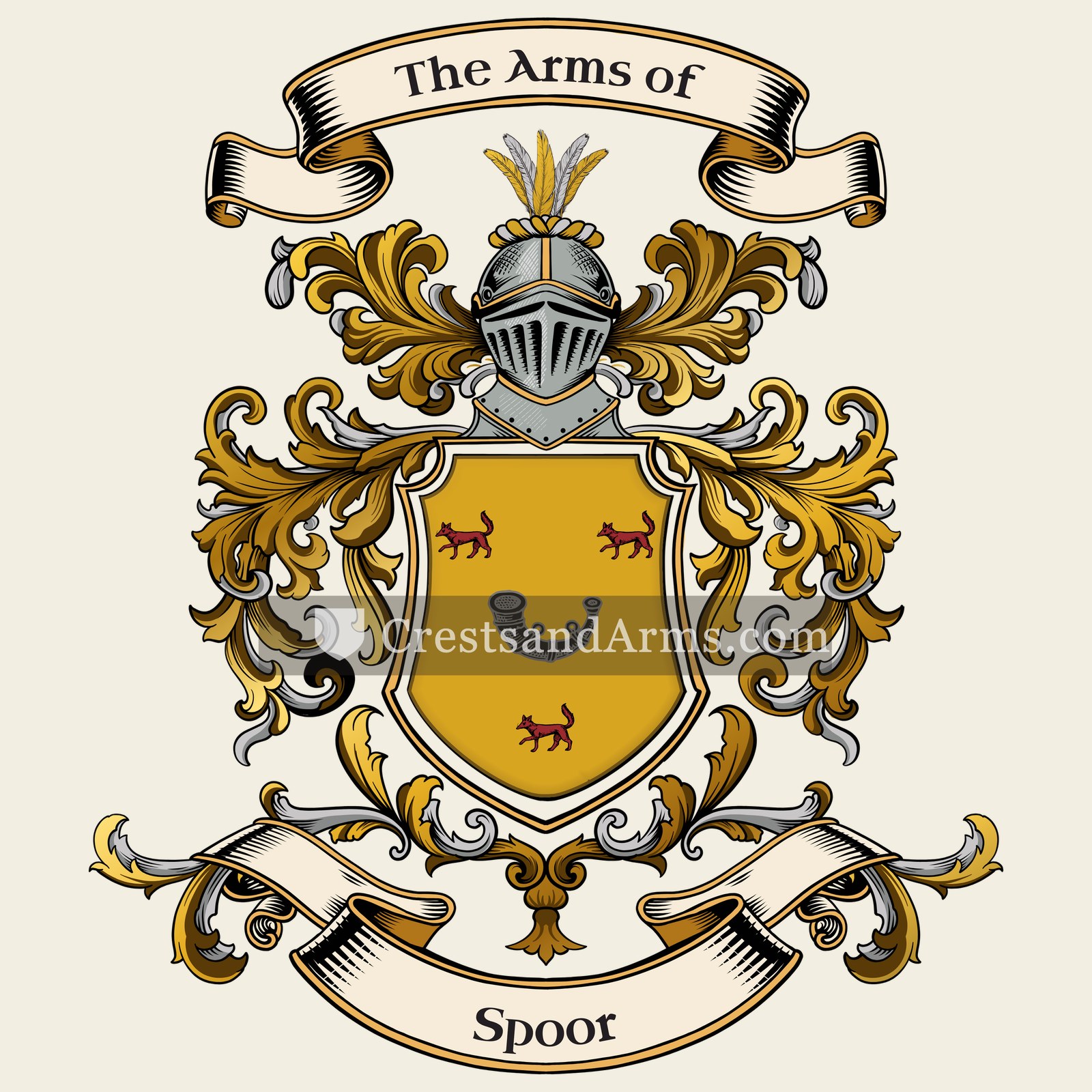
 hunting horn stringedOne who delights in the chase
 foxWit and wisdom in defence
 hunting horn stringedOne who delights in the chase
 foxWit and wisdom in defence


 chevronProtection, and faithful service completed
 roseThe seventh son, and beauty with grace
 spurKnighthood, and readiness to spur on