Map of Germany showing where the Stahl arms are recorded
The Stahl arms were recorded in Germany, c. 1624.
Arms such as these were typically recorded in Bavaria.
Bavaria was a country of old landed families and walled market towns. Estates passed down the same line for centuries, and both the landowners and the leading townsmen kept arms, which is why so many Bavarian names sit in the registers.
This is where the arms were entered in the register. Families often moved to other parts of the country, so the same name can turn up in more than one region.
The body that granted and recorded arms in Germany in this period.
Ferdinand II, Holy Roman Emperor
Sovereign of the period
Ferdinand II, Holy Roman Emperor
1619–1637
Reigning in Germany when the Stahl arms are first recorded.
How Arms Worked in Germany
In the Holy Roman Empire, coats of arms were often granted to individuals by the Emperor or his representatives. These arms were then passed down through the generations to all legitimate descendants of the original holder. Younger branches of a family usually kept the same shield design without needing to change it, as the arms belonged to the entire lineage.
Granting authority
The Holy Roman Emperor held the sole power to grant new coats of arms throughout his vast imperial territories.
How they got arms
Families typically obtained their coats of arms through a formal imperial grant or by proving their noble status to the authorities.
Where arms were recorded
These grants were officially recorded in the Imperial Chancery registers, which began keeping formal records of such honors during the Middle Ages.
The family's standing
Recorded among the armigerous families of Germany.
Origin & History of the Stahl Family in Germany
The surname Stahl originated in Germany as a descriptive name, likely given to individuals who worked as blacksmiths or those known for their strength and resilience. By the early 17th century, the name was well-established across various German regions, including the southern territory of Bavaria. Records confirm that members of the Stahl family were living in Bavaria by 1624, a time when the region was deeply affected by the political and religious turmoil of the Thirty Years' War. During this era, families often stayed rooted in specific villages or towns, where their surname became linked to their trade or their status as local landowners. As the population moved through the German states, the name remained a common marker of those who shaped the metalwork and industrial foundations of their communities.
Coat of Arms & Family Crest Details
Symbols on this shield
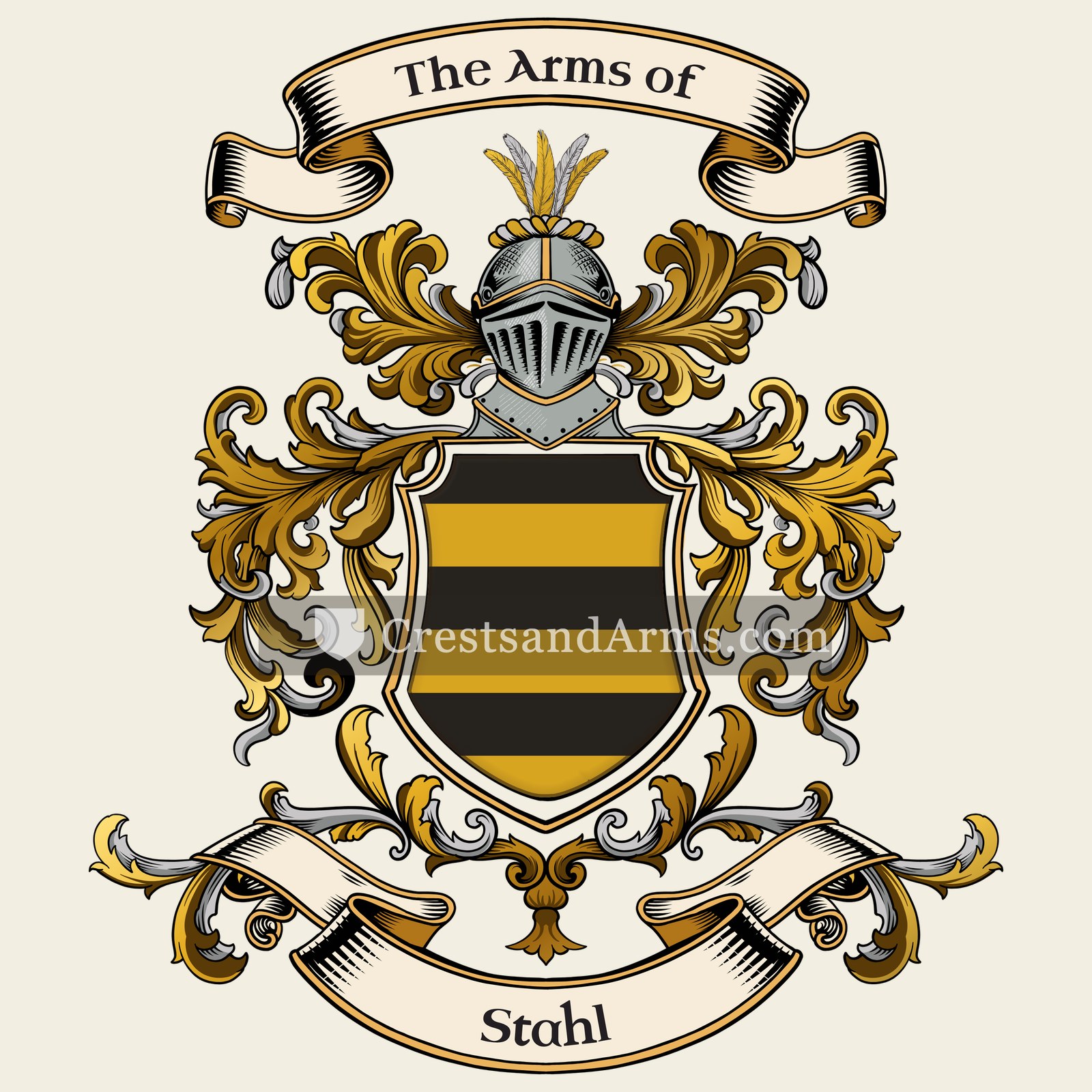
fessThe military belt, and readiness to serve
Colours
Gold (Or)Means: Generosity
Black (Sable)Means: Constancy
Historical info
Source
J. B. Rietstap, Armorial Général, Gouda: G. B. van Goor Zonen, 1884–87
Blazon (the actual original written record)
“Fascé d'or et de sa. de quatre pièces; le champ chapé-ployé d'un fascé d'azur et d'arg. de quatre pièces. Deux cq. cour. C.: 1º un demi-vol fascé d'azur et d'arg. de quatre pièces; l. d'arg. et d'azur; 2º deux pl d'aut., d'or et de sa.; l. d'or et de sa.”
MoraviaMoravia, c. 1799
Digital archive packCoat of arms PNG, gold border print PDF, vector SVG and the certificate of authenticity. Sent to your email in minutes.
Map of Austria showing where the Stahl arms are recorded
The Stahl arms were recorded in Moravia, c. 1799.
Moravia was rich farming country held in large estates by a small number of families. Land there passed down whole for centuries, and unbroken tenure of that kind fills a register.
This is where the arms were entered in the register. Families often moved to other parts of the country, so the same name can turn up in more than one region.
Region
Moravia
First recorded
1799
Granting Authority for the Stahl Arms
Imperial and Royal chancery
Sodacan · CC BY-SA 3.0
The body that granted and recorded arms in Austria in this period.
Francis II, Holy Roman Emperor
Sovereign of the period
Francis II, Holy Roman Emperor
1792–1806
Reigning in Germany when the Stahl arms are first recorded.
How Arms Worked in Austria
Austrian coats of arms were often linked directly to noble titles granted by the Emperor. These symbols belonged to the entire family line rather than just one individual. When a family grew, new branches kept the original design without needing to change it. This system allowed all members of a noble house to share the same identity across many generations.
Granting authority
The Imperial and Royal chancery managed all heraldic matters and controlled the official granting of arms throughout the Austrian lands.
How they got arms
Families typically received their arms through a formal imperial decree that often accompanied the elevation of a person to noble status.
Where arms were recorded
Official records of these grants were kept in the Imperial Register of Nobility which began its formal documentation process in 1453.
The family's standing
Recorded among the armigerous families of Moravia.
Origin & History of the Stahl Family in Austria
The surname Stahl is a German occupational name that translates to steel, reflecting a family history deeply connected to the metalworking trades. In the context of the Austrian Empire, the name gained prominence as skilled craftsmen and blacksmiths moved throughout the region to support the growing industrial and agricultural needs of the Habsburg lands. By 1799, records confirm that members of the Stahl family were well-established in Moravia, which was then a vital crown land within the Austrian Empire. During this period, families with this name often lived in rural or semi-urban settings where their expertise in forging tools and ironwork made them essential members of the local community. The migration of these families across the borders of modern-day Austria and the Czech Republic highlights how trade skills allowed individuals to settle and thrive in diverse imperial territories. Over time, the name became a marker of the family’s long-standing contribution to the technical development of the region.
Stahl Meaning & Related Branches
Root word
Stahl
German word for steel or a hard metal substance.
This name
StahlAn occupational name for a blacksmith or a nickname for a person of great strength.
also spelled
Stal
Stall
Related arms
Staalvariant spelling
Stahelvariant spelling
van der Staalvariant spelling
Documented Sources
J. B. Rietstap, Armorial Général, Gouda: G. B. van Goor Zonen, 1884–87
Bahlow, Hans, Deutsches Namenlexikon: Familien- und Vornamen nach Ursprung und Sinn erklärt, 1967


 paleMilitary strength, and a fortified defence
 griffinValour and vigilance, guarding great treasure
 arrowReadiness for battle, and affliction endured
 paleMilitary strength, and a fortified defence
 griffinValour and vigilance, guarding great treasure
 arrowReadiness for battle, and affliction endured
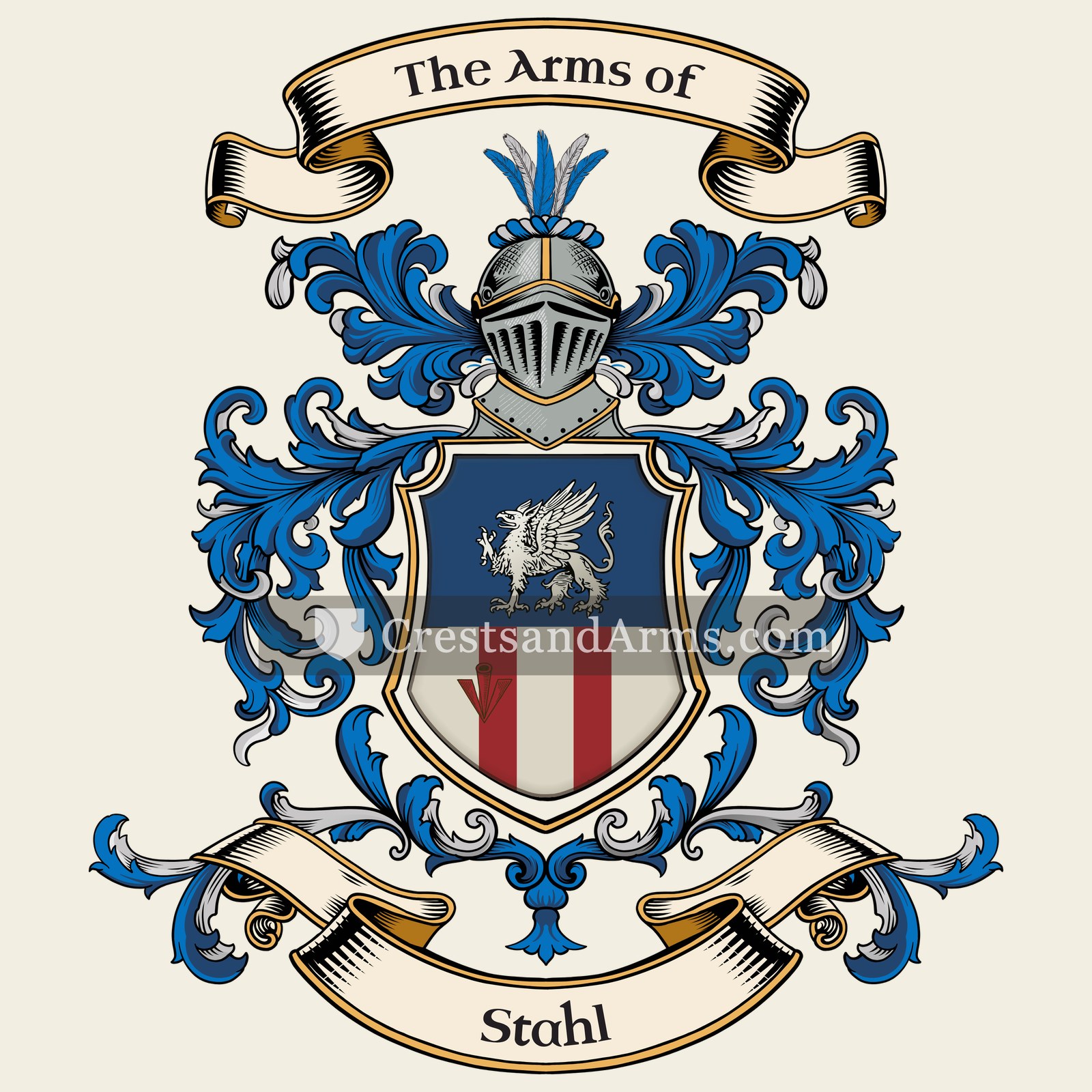


 fessThe military belt, and readiness to serve