A record of documented arms, meaning and origin, researched for the Staller family lines. Documented in 2 countries.
Reg. 5160 · Danish, T–V
Meaning of the Staller family crest colors & symbols
Symbols on this shield
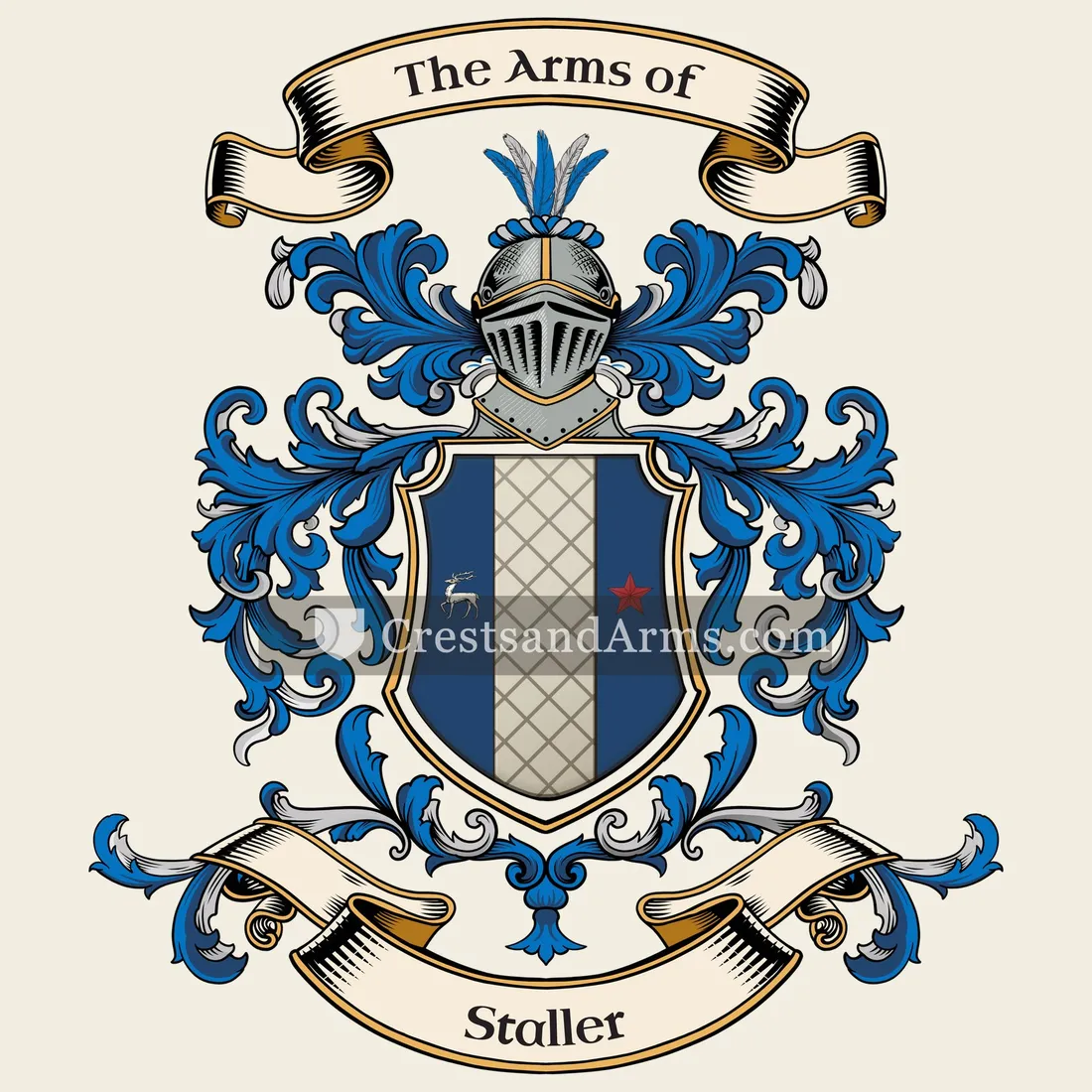
paleMilitary strength, and a fortified defence
stagPeace and harmony, and one who will not fight unprovoked
mulletThe third son, and a divine quality from above
Colours
Blue (Azure)Means: Loyalty and truth
Silver (Argent)Means: Peace and sincerity
Red (Gules)Means: Military strength
Historical info
Source
J. B. Rietstap, Armorial Général, Gouda: G. B. van Goor Zonen, 1884–87
Blazon (the actual original written record)
“D'azur au pal d'arg., adextré d'une demi-ramure de cerf du même et senestré d'une demi-étoile (?) de gu., mouv. du pal. C.: une étoile (?) de gu., entre une ramure de cerf d'arg.”
Denmarkc. 1722
Digital archive packCoat of arms PNG, gold border print PDF, vector SVG and the certificate of authenticity. Sent to your email in minutes.
Map of Denmark showing where the Staller arms are recorded
The Staller arms were recorded in Denmark, c. 1722.
Arms such as these were typically recorded in Sjaælland.
Zealand held the Danish court, the crown's offices and Copenhagen itself. Families who served the king kept estates within reach of it, and royal service was the ordinary route to a coat of arms.
This is where the arms were entered in the register. Families often moved to other parts of the country, so the same name can turn up in more than one region.
The body that granted and recorded arms in Denmark in this period.
Frederik IV of Denmark
Sovereign of the period
Frederik IV of Denmark
1699–1730
Reigning in Denmark when the Staller arms are first recorded.
How Arms Worked in Denmark
Danish heraldry during this period was closely tied to noble status and royal favor rather than being open to all citizens. Arms were typically granted by the monarch to individuals, and these symbols were then shared by all members of the noble house. If a family line died out, the right to use those specific arms ended with them.
Granting authority
The Danish royal chancery held the power to issue and regulate official coats of arms for the kingdom.
How they got arms
Families usually received their arms through a formal royal grant that confirmed their noble status and rights.
Where arms were recorded
These grants were officially recorded in the Danish Royal Chancery records starting in the sixteenth century.
The family's standing
Recorded among the armigerous families of Denmark.
Origin & History of the Staller Family in Denmark
The family name Staller has deep roots in the Danish landscape, with documented evidence placing the family in the region of Sjælland as early as 1722. During this period, the name was closely tied to the social and agricultural structures of rural Denmark. The term "staller" historically referred to a person who managed stables or oversaw the care of livestock, suggesting that the earliest ancestors were likely skilled laborers or estate managers who played a vital role in the local farming economy. As the family established their presence on the island, they became part of the local parish communities, where their lives were recorded in church registers that tracked births, marriages, and deaths. By living and working in Sjælland, the early Staller family contributed to the steady development of the region’s agrarian society, moving through generations as part of the backbone of the Danish countryside.
Meaning of the Staller family crest colors & symbols
Symbols on this shield
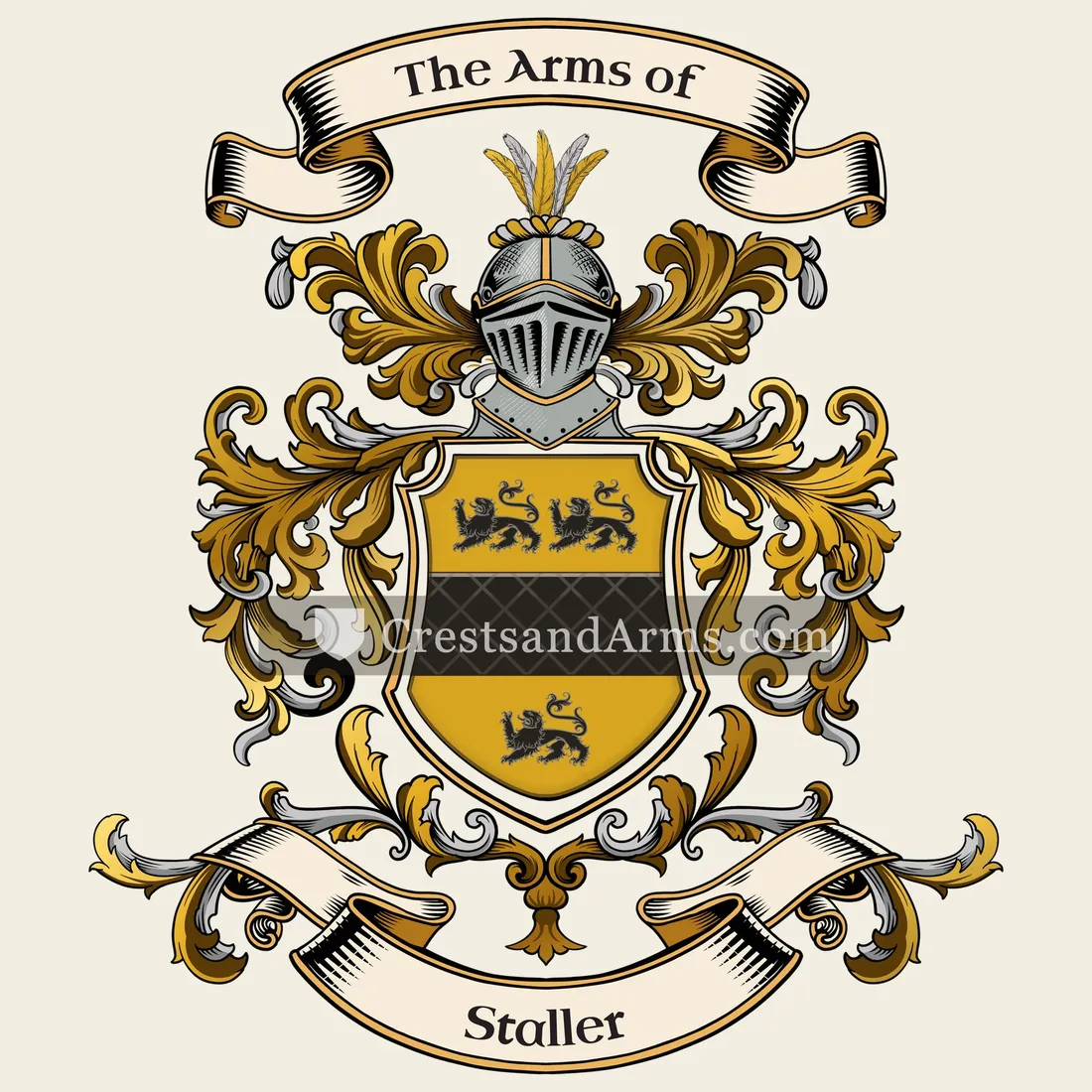
fessThe military belt, and readiness to serve
lionCourage, strength and royalty
Colours
Gold (Or)Means: Generosity
Black (Sable)Means: Constancy
Historical info
Source
Sir Bernard Burke, The General Armory of England, Scotland, Ireland and Wales, London: Harrison & Sons, 1884
Blazon (the actual original written record)
“Or, a fess betw. three lions' heads erased sa. vulned in the neck gu”
Englandc. 1605
Digital archive packCoat of arms PNG, gold border print PDF, vector SVG and the certificate of authenticity. Sent to your email in minutes.
Map of England showing where the Staller arms are recorded
The Staller arms were recorded in England, c. 1605.
Arms such as these were typically recorded in York.
Yorkshire is the largest of the English counties, and it held more gentry families than any other. Land there was split among a great many households rather than a few, so a great many of them carried arms.
This is where the arms were entered in the register. Families often moved to other parts of the country, so the same name can turn up in more than one region.
The body that granted and recorded arms in England in this period.
James VI and I
Sovereign of the period
James VI and I
1603–1625
Reigning in Denmark when the Staller arms are first recorded.
How Arms Worked in England
English heraldry allowed arms to be shared by all legitimate descendants of the original owner. These symbols were treated as personal property that moved through the generations to all children. While the eldest son kept the original design, other family members could use the same shield without needing to change it or register their own unique versions.
Granting authority
The College of Arms in London has regulated the use of coats of arms throughout England and Wales since 1484.
How they got arms
Families typically obtained their coats of arms through a formal grant from the Crown or by proving their ancient right to them.
Where arms were recorded
All official coats of arms are recorded in the registers kept at the College of Arms, which date back to the fifteenth century.
The family's standing
Recorded among the armigerous families of England.
Origin & History of the Staller Family in England
The surname Staller finds its roots in the medieval period, originating as an occupational title for a high-ranking official known as a staller. In the royal courts of early England, a staller served as a prominent officer or a master of the horse, acting as a trusted representative of the king. By the time the family appeared in the historical records of York in 1605, the name had transitioned from a formal job title into a hereditary family name. During this era, York was a bustling center of trade and religious activity, and families like the Stallers were often integrated into the local merchant or artisan classes. The survival of the name in parish registers from the early 17th century suggests that these individuals were established members of the community who lived through a time of significant political and social change in Northern England.
Staller Meaning & Related Branches
Root word
stall
a place for animals or a stable
This name
Stalleran occupational name for a stable keeper or someone who managed a market stall
also spelled
Stallar
Stallor
Stallere
Staler
Documented Sources
J. B. Rietstap, Armorial Général, Gouda: G. B. van Goor Zonen, 1884–87


 paleMilitary strength, and a fortified defence
 stagPeace and harmony, and one who will not fight unprovoked
 mulletThe third son, and a divine quality from above
 paleMilitary strength, and a fortified defence
 stagPeace and harmony, and one who will not fight unprovoked
 mulletThe third son, and a divine quality from above


 fessThe military belt, and readiness to serve
 lionCourage, strength and royalty