A record of documented arms, meaning and origin, researched for the Stancer family lines. Documented in 2 countries.
Reg. 9215 · German, T–V
Coat of Arms & Family Crest Details
Symbols on this shield
griffinValour and vigilance, guarding great treasure
Colours
Black (Sable)Means: Constancy
Blue (Azure)Means: Loyalty and truth
Gold (Or)Means: Generosity
Historical info
Source
J. B. Rietstap, Armorial Général, Gouda: G. B. van Goor Zonen, 1884–87
Blazon (the actual original written record)
“Parti: au 1 de sa. à un griffon d'or; au 2 d'azur à deux pièces de bois d'or, passées en saut., liées au moyen d'un ruban de gu. C.: un homme barbu, iss., hab. d'un parti de sa. et d'azur, ceint d'or, coiffé d'un bonnet pointu d'azur, retr. d'or, tenant sur ses épaules l'une des pièces de bois. L.: à dextre d'or et de sa., à sen. d'or et d'azur.”
BavariaBavaria, c. 1765
Digital archive packCoat of arms PNG, gold border print PDF, vector SVG and the certificate of authenticity. Sent to your email in minutes.
Map of Germany showing where the Stancer arms are recorded
The Stancer arms were recorded in Bavaria, c. 1765.
Bavaria was a country of old landed families and walled market towns. Estates passed down the same line for centuries, and both the landowners and the leading townsmen kept arms, which is why so many Bavarian names sit in the registers.
This is where the arms were entered in the register. Families often moved to other parts of the country, so the same name can turn up in more than one region.
The body that granted and recorded arms in Germany in this period.
Francis I, Holy Roman Emperor
Sovereign of the period
Francis I, Holy Roman Emperor
1745–1765
Reigning in Germany when the Stancer arms are first recorded.
How Arms Worked in Germany
In the Holy Roman Empire, coats of arms were often granted to individuals by the Emperor or his representatives. These arms were then passed down through the generations to all legitimate descendants of the original holder. Younger branches of a family usually kept the same shield design without needing to change it, as the arms belonged to the entire lineage.
Granting authority
The Holy Roman Emperor held the sole power to grant new coats of arms throughout his vast imperial territories.
How they got arms
Families typically obtained their coats of arms through a formal imperial grant or by proving their noble status to the authorities.
Where arms were recorded
These grants were officially recorded in the Imperial Chancery registers, which began keeping formal records of such honors during the Middle Ages.
The family's standing
Recorded among the armigerous families of Bavaria.
Origin & History of the Stancer Family in Germany
The family name Stancer finds its historical roots in the southern German region of Bavaria. By the middle of the eighteenth century, the name was already firmly established within local communities, as evidenced by records from 1765. During this period, Bavaria was a collection of territories deeply influenced by agricultural traditions and the complex social structures of the Holy Roman Empire. Families like the Stancers were typically integrated into the rural economy, often working as skilled tradespeople or landholders who contributed to the stability of their villages. The name itself likely evolved from regional dialects, reflecting the specific linguistic patterns of the Bavarian people during the late 1700s. As these families navigated the challenges of life in central Europe, they helped shape the cultural identity of their local parishes through their daily work and community participation.
Coat of Arms & Family Crest Details
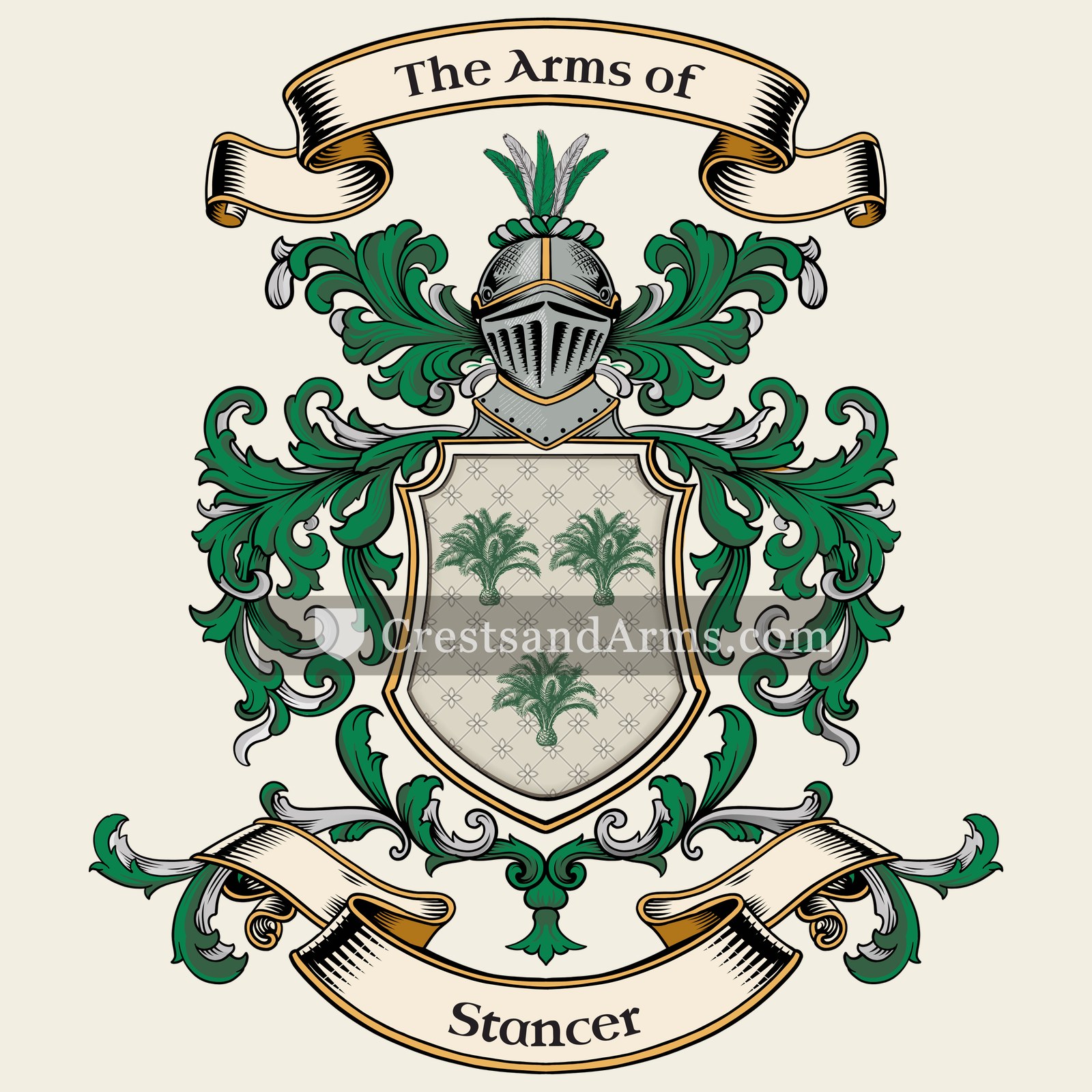
Symbols on this shield
palm treeVictory, and righteousness that flourishes
Colours
Silver (Argent)Means: Peace and sincerity
Green (Vert)Means: Hope
Historical info
Source
Sir Bernard Burke, The General Armory of England, Scotland, Ireland and Wales, London: Harrison & Sons, 1884
Blazon (the actual original written record)
“Ar. three palm branches vert”
Englandc. 1620
Digital archive packCoat of arms PNG, gold border print PDF, vector SVG and the certificate of authenticity. Sent to your email in minutes.
Map of England showing where the Stancer arms are recorded
The Stancer arms were recorded in England, c. 1620.
Arms such as these were typically recorded in York.
Yorkshire is the largest of the English counties, and it held more gentry families than any other. Land there was split among a great many households rather than a few, so a great many of them carried arms.
This is where the arms were entered in the register. Families often moved to other parts of the country, so the same name can turn up in more than one region.
The body that granted and recorded arms in England in this period.
James VI and I
Sovereign of the period
James VI and I
1603–1625
Reigning in Germany when the Stancer arms are first recorded.
How Arms Worked in England
English heraldry allowed arms to be shared by all legitimate descendants of the original owner. These symbols were treated as personal property that moved through the generations to all children. While the eldest son kept the original design, other family members could use the same shield without needing to change it or register their own unique versions.
Granting authority
The College of Arms in London has regulated the use of coats of arms throughout England and Wales since 1484.
How they got arms
Families typically obtained their coats of arms through a formal grant from the Crown or by proving their ancient right to them.
Where arms were recorded
All official coats of arms are recorded in the registers kept at the College of Arms, which date back to the fifteenth century.
The family's standing
Recorded among the armigerous families of England.
Origin & History of the Stancer Family in England
The Stancer family name has deep roots in the city of York, where records confirm members of the family were living as early as 1620. During the seventeenth century, York was a bustling center of trade and religion in Northern England, and the name likely emerged as a descriptive term for a person who worked with stone or lived near a specific landmark. Families in this region often identified themselves by their local occupations or the specific neighborhoods they inhabited. By the time the Stancer name appeared in the city’s official registers, the family was already established as part of the local community. This period was a time of great social change in England, and the Stancer family lived through the transition from the Elizabethan era into the turbulent years of the English Civil War. Their presence in York suggests they were part of the hardworking urban population that helped define the character of the city during the early modern period.
Related Branches & Arms
Root word
Stange
A pole, rod, or stake used as a boundary marker.
This name
StancerAn occupational name for someone who made poles or lived near a prominent boundary stake.
also spelled
Stangar
Stangir
Stangur
Documented Sources
J. B. Rietstap, Armorial Général, Gouda: G. B. van Goor Zonen, 1884–87


 griffinValour and vigilance, guarding great treasure
 griffinValour and vigilance, guarding great treasure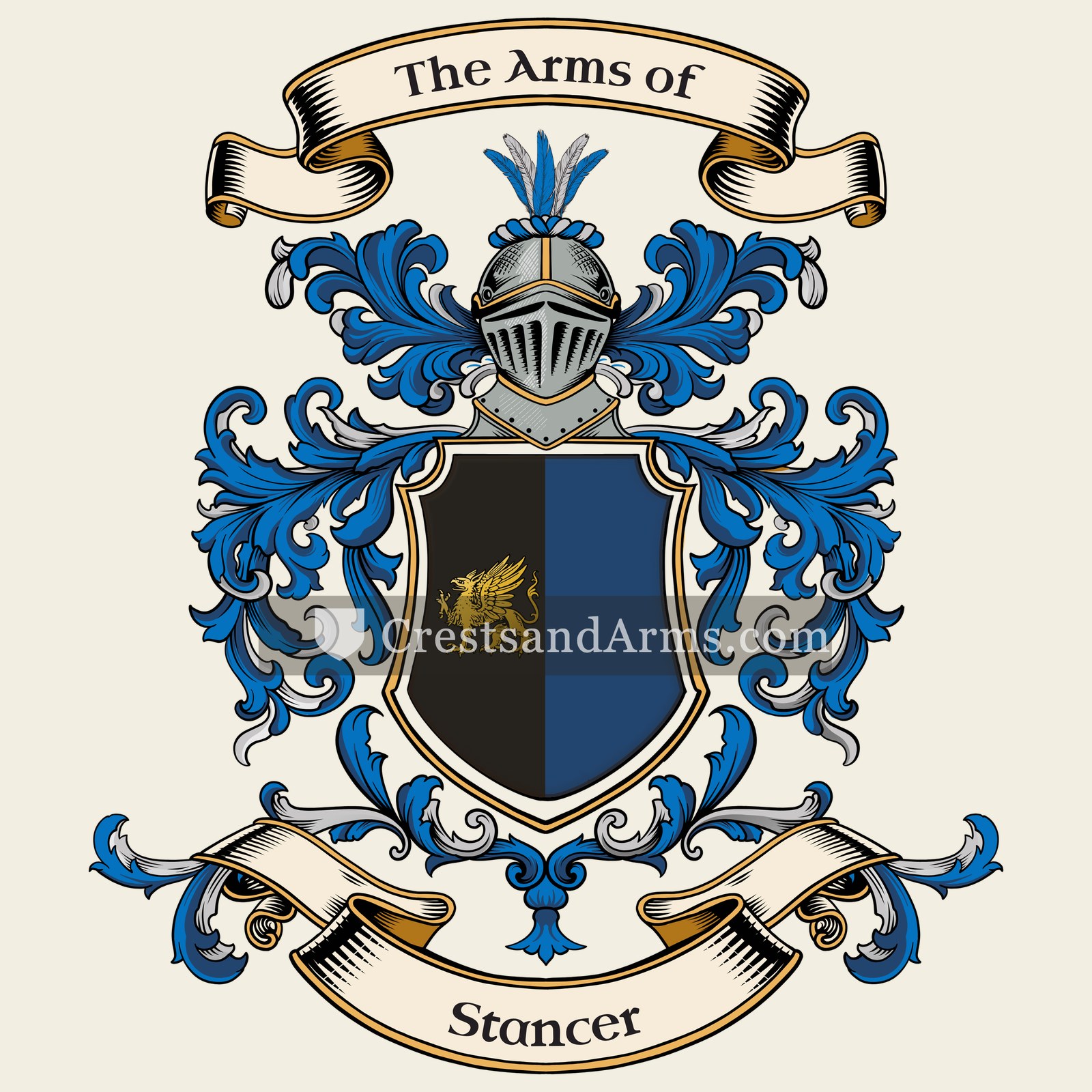


 palm treeVictory, and righteousness that flourishes