Map of Netherlands showing where the Steen arms are recorded
The Steen arms were recorded in Netherlands, c. 1815.
Arms such as these were typically recorded in Friesland.
Friesland was low, wet country on the northern coast of the Netherlands, farmed by families who had held the same land for centuries. Free landholders were unusually common there, and a free landholder could carry arms.
This is where the arms were entered in the register. Families often moved to other parts of the country, so the same name can turn up in more than one region.
Region
Friesland
First recorded
1815
Granting Authority for the Steen Arms
Hoge Raad van Adel
Photograph made by me · CC BY-SA 3.0
The body that granted and recorded arms in Netherlands in this period.
William I of the Netherlands
Sovereign of the period
William I of the Netherlands
1815–1840
Reigning in Netherlands when the Steen arms are first recorded.
How Arms Worked in Netherlands
In the Netherlands, coats of arms were often used by noble families and those who held specific public offices. These arms were passed down through the generations to legitimate descendants. Younger branches of a family usually kept the original design without needing to add special marks. This system ensured that the family identity remained clear and consistent over many years.
Granting authority
The Hoge Raad van Adel is the official body that regulates and manages noble titles and coats of arms in the Netherlands.
How they got arms
Families typically obtained their coats of arms through official royal grants or by proving their long-standing historical use of the symbols.
Where arms were recorded
Coats of arms are officially recorded in the registers held by the Hoge Raad van Adel, which began its work in 1814.
The family's standing
Recorded among the armigerous families of Netherlands.
Origin & History of the Steen Family in Netherlands
The surname Steen is a descriptive name that originates from the Middle Dutch word for stone. In the early history of the Netherlands, such names were often adopted to describe a person who lived near a prominent stone building or a landmark made of rock. By the time official records began to track family lines in the northern province of Friesland during the early nineteenth century, the name was already well-established among local residents. Families bearing this name were often integrated into the agricultural and maritime communities that defined the Frisian landscape. Because the region had a strong tradition of keeping detailed civil registries, the presence of the Steen family in 1815 reflects a long history of settlement in the coastal plains. These early ancestors were likely part of the hardworking population that helped shape the unique cultural identity of the Frisian people through generations of farming and trade.
Coat of Arms & Family Crest Details
Symbols on this shield
escallopThe pilgrim's shell, and a long journey made
Colours
Blue (Azure)Means: Loyalty and truth
Silver (Argent)Means: Peace and sincerity
Historical info
Source
J. B. Rietstap, Armorial Général, Gouda: G. B. van Goor Zonen, 1884–87
Blazon (the actual original written record)
“D'azur a une coquille d'arg. C.: deux prob. d'azur, ch. chacune de trois coquilles d'arg, l'une sur l'autre.”
HolsteinHolstein, c. 1765
Digital archive packCoat of arms PNG, gold border print PDF, vector SVG and the certificate of authenticity. Sent to your email in minutes.
Map of Germany showing where the Steen arms are recorded
The Steen arms were recorded in Holstein, c. 1765.
Holstein was farming country between the North Sea and the Baltic, held in large estates. The same families kept the same land for generations, and generations of holding is what fills a register.
This is where the arms were entered in the register. Families often moved to other parts of the country, so the same name can turn up in more than one region.
The body that granted and recorded arms in Germany in this period.
Francis I, Holy Roman Emperor
Sovereign of the period
Francis I, Holy Roman Emperor
1745–1765
Reigning in Netherlands when the Steen arms are first recorded.
How Arms Worked in Germany
In the Holy Roman Empire, coats of arms were often granted to individuals by the Emperor or his representatives. These arms were then passed down through the generations to all legitimate descendants of the original holder. Younger branches of a family usually kept the same shield design without needing to change it, as the arms belonged to the entire lineage.
Granting authority
The Holy Roman Emperor held the sole power to grant new coats of arms throughout his vast imperial territories.
How they got arms
Families typically obtained their coats of arms through a formal imperial grant or by proving their noble status to the authorities.
Where arms were recorded
These grants were officially recorded in the Imperial Chancery registers, which began keeping formal records of such honors during the Middle Ages.
The family's standing
Recorded among the armigerous families of Holstein.
Origin & History of the Steen Family in Germany
The surname Steen is a topographic name that originated in Northern Germany, specifically within the region of Holstein. In the local Low German dialect, the word "steen" translates directly to "stone," suggesting that the earliest ancestors to carry this name likely lived near a prominent rocky landmark, a stone wall, or a stony piece of farmland. By the middle of the 18th century, the family was well-established in the rural landscapes of Holstein, a region deeply influenced by its proximity to the North and Baltic Seas. During this period, families in Northern Germany were often identified by their relationship to the specific terrain they cultivated or inhabited. As the family grew, the name became a permanent marker of their identity, linking them to the rugged geography of their ancestral home long before modern record-keeping became standardized.
Coat of Arms & Family Crest Details
Symbols on this shield
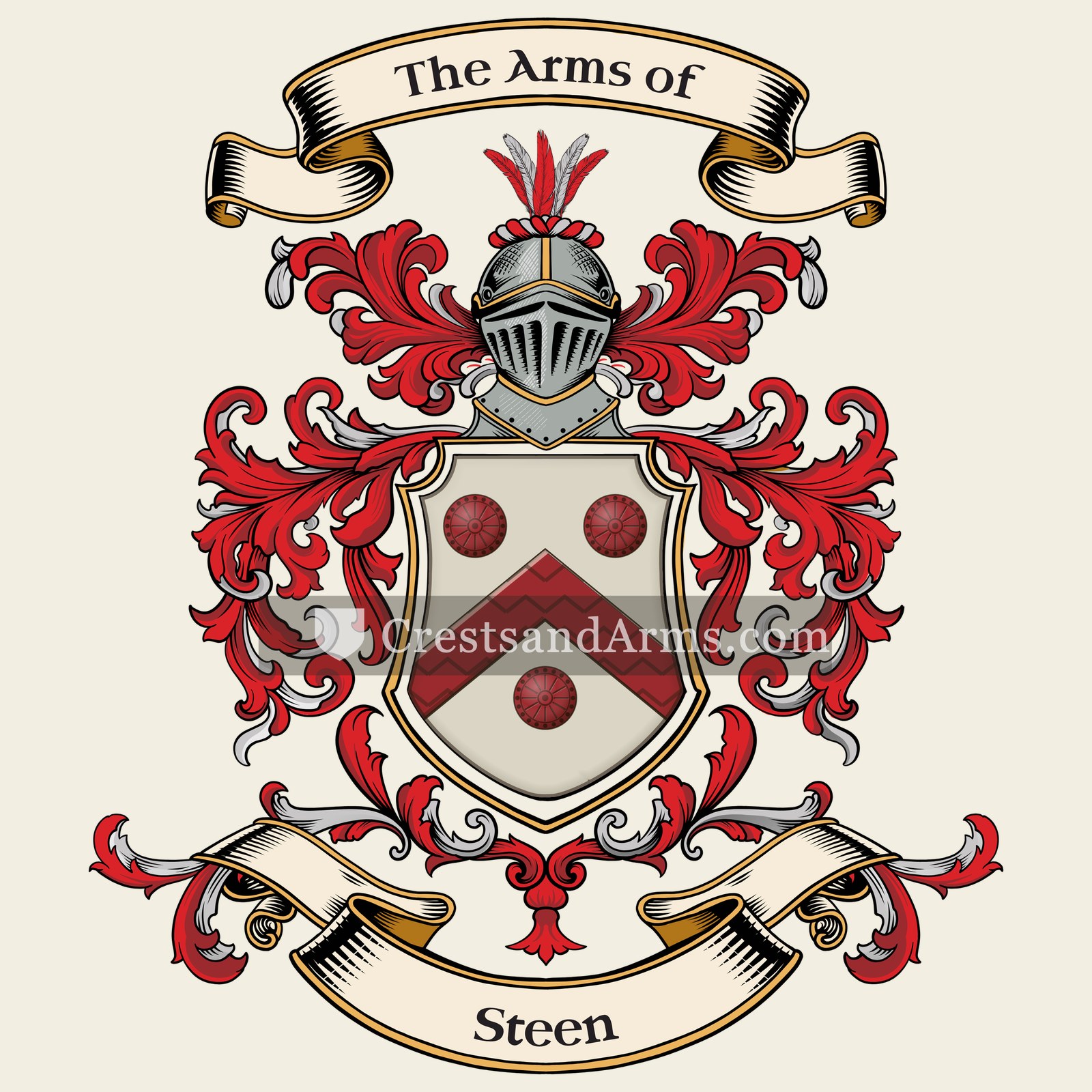
chevronProtection, and faithful service completed
roundelA coin, and one who has been to the crusades
Colours
Silver (Argent)Means: Peace and sincerity
Red (Gules)Means: Military strength
Historical info
Source
J. B. Rietstap, Armorial Général, Gouda: G. B. van Goor Zonen, 1884–87
Blazon (the actual original written record)
“D'arg. au chev. de gu., acc. de trois boules du même. C.: deux bras de carn., parés de gu. jusqu'aux coudes, les mains empoignant une boule de gu.”
Denmarkc. 1722
Digital archive packCoat of arms PNG, gold border print PDF, vector SVG and the certificate of authenticity. Sent to your email in minutes.
Map of Denmark showing where the Steen arms are recorded
The Steen arms were recorded in Denmark, c. 1722.
Arms such as these were typically recorded in Sjaælland.
Zealand held the Danish court, the crown's offices and Copenhagen itself. Families who served the king kept estates within reach of it, and royal service was the ordinary route to a coat of arms.
This is where the arms were entered in the register. Families often moved to other parts of the country, so the same name can turn up in more than one region.
The body that granted and recorded arms in Denmark in this period.
Frederik IV of Denmark
Sovereign of the period
Frederik IV of Denmark
1699–1730
Reigning in Netherlands when the Steen arms are first recorded.
How Arms Worked in Denmark
Danish heraldry during this period was closely tied to noble status and royal favor rather than being open to all citizens. Arms were typically granted by the monarch to individuals, and these symbols were then shared by all members of the noble house. If a family line died out, the right to use those specific arms ended with them.
Granting authority
The Danish royal chancery held the power to issue and regulate official coats of arms for the kingdom.
How they got arms
Families usually received their arms through a formal royal grant that confirmed their noble status and rights.
Where arms were recorded
These grants were officially recorded in the Danish Royal Chancery records starting in the sixteenth century.
The family's standing
Recorded among the armigerous families of Denmark.
Origin & History of the Steen Family in Denmark
The surname Steen is deeply rooted in the rugged landscape of Denmark, where it originates from the Old Norse word for stone. In the early eighteenth century, the family established a clear presence on the island of Sjaelland, a region that served as the political and cultural heart of the Danish kingdom. During this period, the name functioned as a topographic descriptor, likely identifying ancestors who lived near a prominent rock formation or a stony field. Life for the family in 1722 would have been defined by the strict social structures of the Danish countryside, where most people were tied to the land through agricultural labor. As the family grew, they became part of the local fabric of Sjaelland, contributing to the rural economy and the evolving community life of the island. By tracking their presence in these early parish records, we see a family that was firmly integrated into the traditional Danish way of life long before the modern era of industrialization.
Related Branches & Arms
Root word
stain
Proto-Germanic term referring to a stone or rock.
This name
SteenA topographic name for someone who lived near a prominent stone or rocky outcrop.
also spelled
Sten
Related arms
St.-Eesnvariant spelling
Documented Sources
J. B. Rietstap, Armorial Général, Gouda: G. B. van Goor Zonen, 1884–87
AlleFriezen, Burgerlijke Stand (Civil Registry) 1811–1950
Tresoar, Frysk Histoarysk en Letterkundich Sintrum, Bevolkingsregisters (Population Registers)
Van der Schaar, J., Woordenboek van voornamen, 1964
Debrabandere, Frans, Woordenboek van de familienamen in België en Noord-Frankrijk, 1993
Digital archive packCoat of arms PNG, gold border print PDF, vector SVG and the certificate of authenticity. Sent to your email in minutes.


 mulletThe third son, and a divine quality from above
 roseThe seventh son, and beauty with grace
 mulletThe third son, and a divine quality from above
 roseThe seventh son, and beauty with grace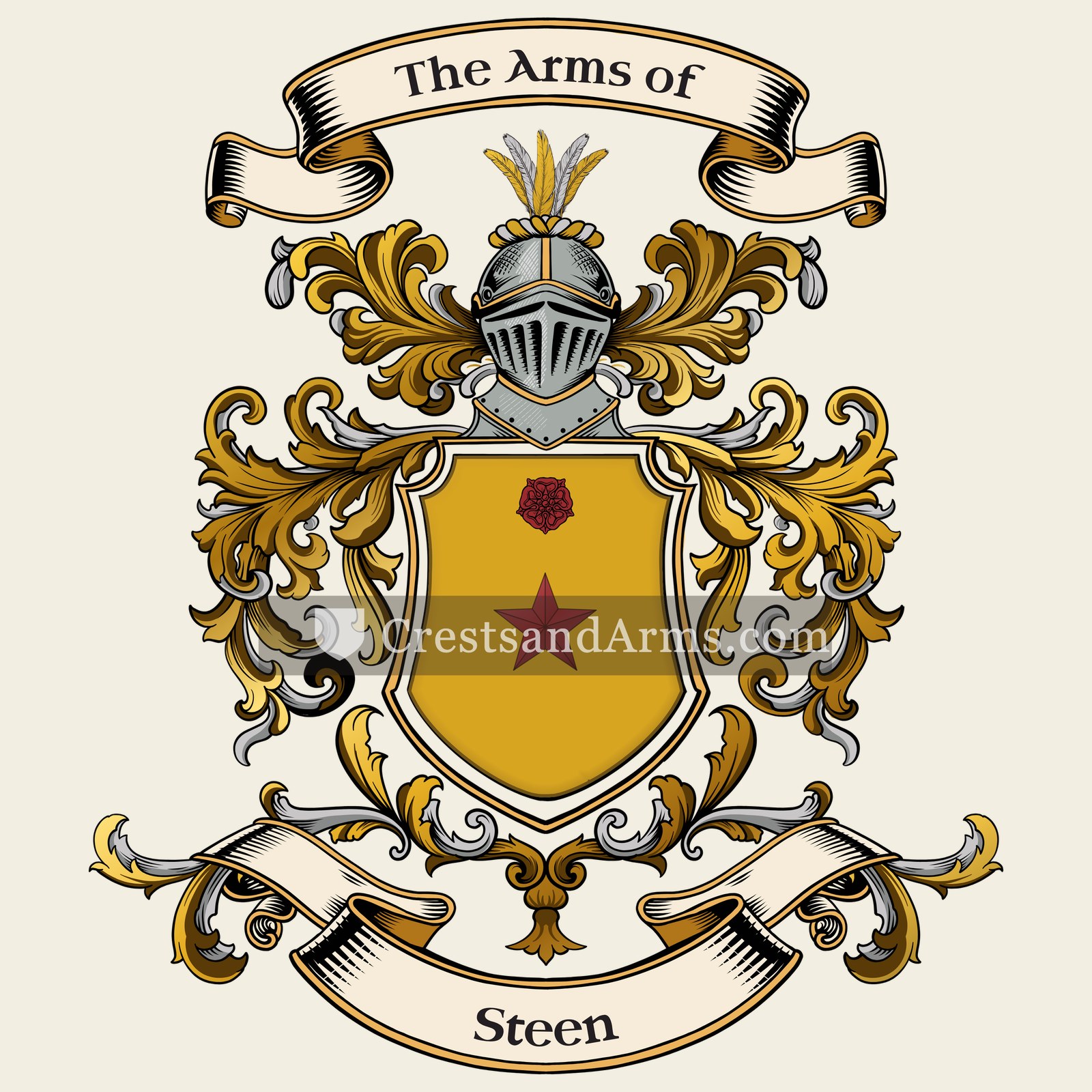


 escallopThe pilgrim's shell, and a long journey made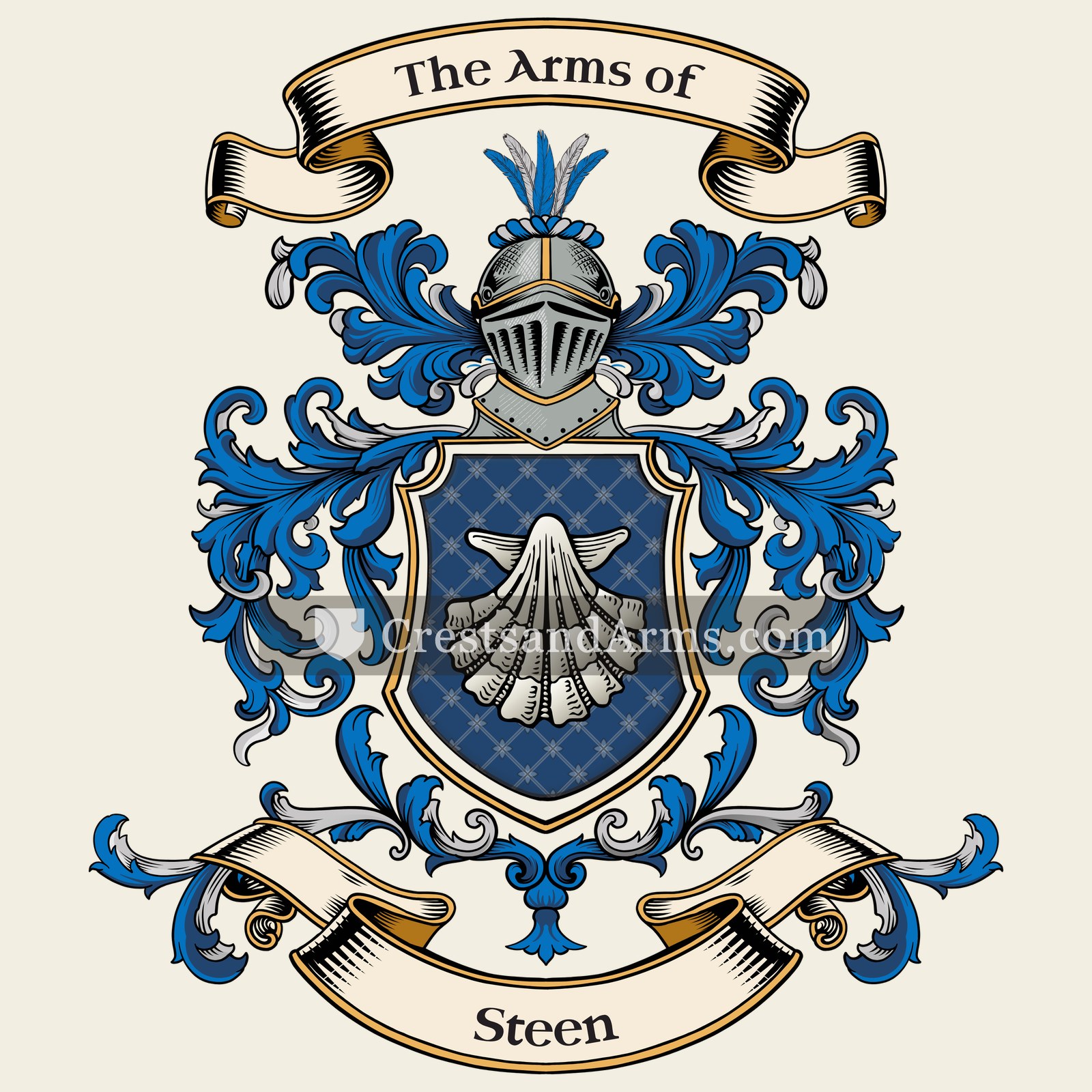


 chevronProtection, and faithful service completed
 roundelA coin, and one who has been to the crusades