Map of Germany showing where the Stefan arms are recorded
The Stefan arms were recorded in Francfort s, c. 1765.
This is where the arms were entered in the register. Families often moved to other parts of the country, so the same name can turn up in more than one region.
The body that granted and recorded arms in Germany in this period.
Francis I, Holy Roman Emperor
Sovereign of the period
Francis I, Holy Roman Emperor
1745–1765
Reigning in Germany when the Stefan arms are first recorded.
How Arms Worked in Germany
In the Holy Roman Empire, coats of arms were often granted to individuals by the Emperor or his representatives. These arms were then passed down through the generations to all legitimate descendants of the original holder. Younger branches of a family usually kept the same shield design without needing to change it, as the arms belonged to the entire lineage.
Granting authority
The Holy Roman Emperor held the sole power to grant new coats of arms throughout his vast imperial territories.
How they got arms
Families typically obtained their coats of arms through a formal imperial grant or by proving their noble status to the authorities.
Where arms were recorded
These grants were officially recorded in the Imperial Chancery registers, which began keeping formal records of such honors during the Middle Ages.
The family's standing
Recorded among the armigerous families of Germany.
Origin & History of the Stefan Family in Germany
The name Stefan is a variation of the Greek name Stephanos, which translates to crown or garland. In Germany, this name became popular during the Middle Ages because of Saint Stephen, the first Christian martyr. By the time your ancestors were living in Frankfurt in 1765, the name had been established for centuries as both a given name and a family surname. During the eighteenth century, Frankfurt was a major center for trade and finance within the Holy Roman Empire. Families like yours often lived in bustling urban environments where they contributed to the local economy as skilled workers or merchants. Because record-keeping in German cities became more formal during this era, families with this name were frequently documented in church registers and city tax rolls. These records show that the Stefan family was part of a stable, growing population that helped define the social fabric of Frankfurt before the industrial changes of the next century.
Coat of Arms & Family Crest Details
Symbols on this shield
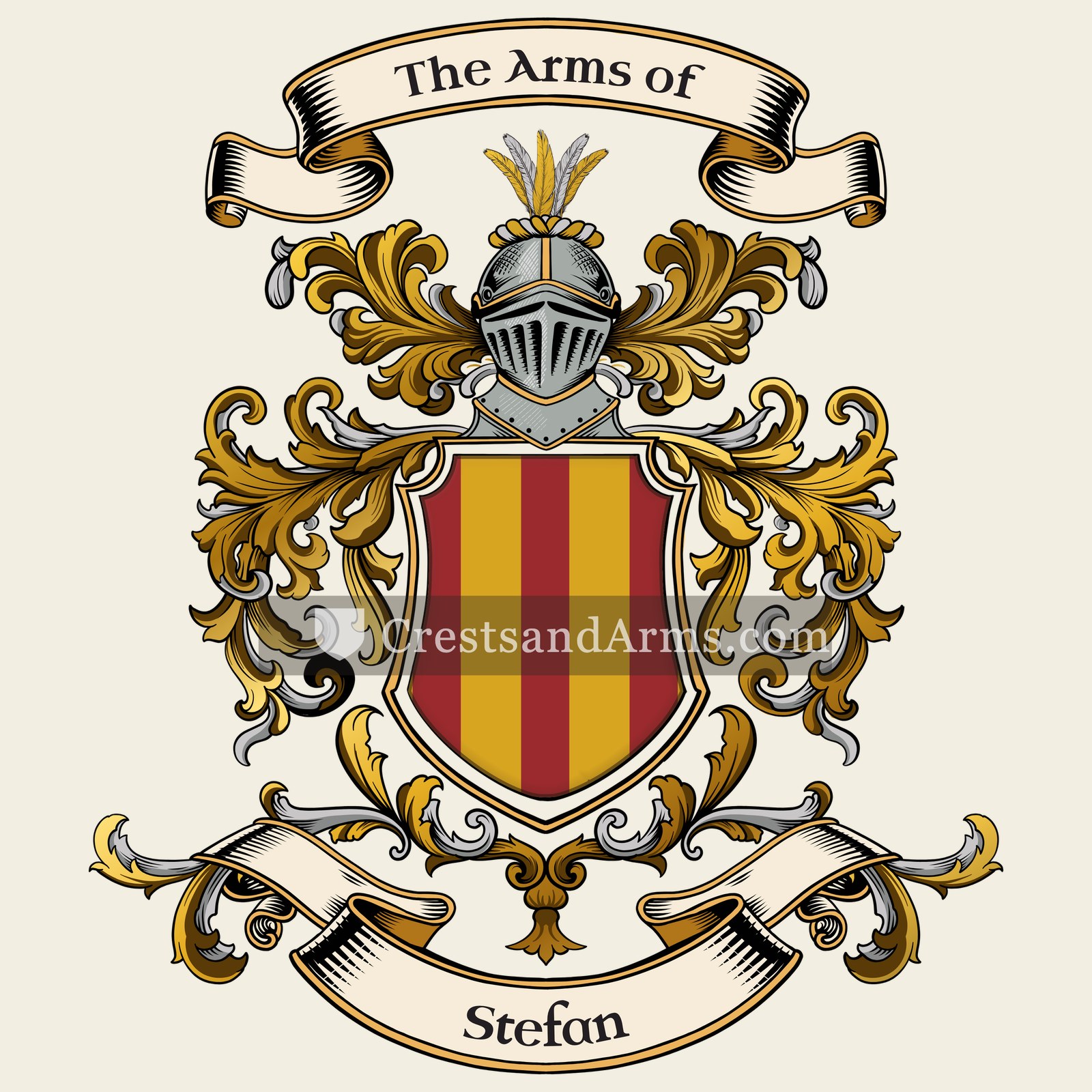
paleMilitary strength, and a fortified defence
Colours
Gold (Or)Means: Generosity
Red (Gules)Means: Military strength
Historical info
Source
J. B. Rietstap, Armorial Général, Gouda: G. B. van Goor Zonen, 1884–87
Blazon (the actual original written record)
“D'or à trois pals de gu. C.: un buste d'homme, hab. d'or aux manches de gu., coiffé d'un bonnet d'or, retr. de gu., panaché de pl. d'aut. de gu. et d'arg.”
SwitzerlandBâle, c. 1745
Digital archive packCoat of arms PNG, gold border print PDF, vector SVG and the certificate of authenticity. Sent to your email in minutes.
Map of Switzerland showing where the Stefan arms are recorded
The Stefan arms were recorded in Bâle, c. 1745.
This is where the arms were entered in the register. Families often moved to other parts of the country, so the same name can turn up in more than one region.
The body that granted and recorded arms in Switzerland in this period.
How Arms Worked in Switzerland
In Switzerland, coats of arms were not restricted to the nobility and were often adopted by common citizens and families. These symbols were passed down through generations to show family identity. When branches of a family grew, they often changed small details of the design to distinguish their own line from the original group.
Granting authority
Cantonal and civic authorities managed the use of coats of arms within their specific regions and local jurisdictions.
How they got arms
Families typically assumed their own coats of arms based on local custom rather than receiving them from a central monarch.
Where arms were recorded
Arms were recorded in various cantonal and civic registers starting from the fourteenth century throughout the Swiss region.
The family's standing
Recorded among the armigerous families of Switzerland.
Origin & History of the Stefan Family in Switzerland
The family name Stefan has deep roots in the Swiss region, with documented evidence placing members of the family in the city of Basel as early as 1745. The name itself is derived from the Greek word stephanos, which translates to crown or garland, and it gained popularity across Europe through the influence of Saint Stephen. In the context of eighteenth-century Basel, families bearing this name were often integrated into the urban fabric of a bustling trade center known for its universities and printing industry. Because Basel served as a vital crossroads between Switzerland, France, and Germany, the Stefan family likely benefited from the city’s role as a hub for merchants and skilled laborers. Over time, these early residents helped establish the name as a recognized part of the local community, contributing to the social and economic life of the region during the late Enlightenment period.
Related Branches & Arms
Root word
Stephanos
Greek word meaning crown or garland
This name
StefanDerived from the Greek term for a crown, symbolizing victory or honor.
also spelled
Stefan
Stephan
Documented Sources
J. B. Rietstap, Armorial Général, Gouda: G. B. van Goor Zonen, 1884–87
Bahlow, Hans, Deutsches Namenlexikon: Familien- und Vornamen nach Ursprung und Sinn erklärt, 1967
Institut für Stadtgeschichte Frankfurt am Main, Bürgerbücher der Stadt Frankfurt am Main, 1700–1800
Heintze, Albert, Die deutschen Familiennamen: geschichtlich, geographisch, sprachlich, 1903
Digital archive packCoat of arms PNG, gold border print PDF, vector SVG and the certificate of authenticity. Sent to your email in minutes.


 cramponFirm hold on what has been gained
 cramponFirm hold on what has been gained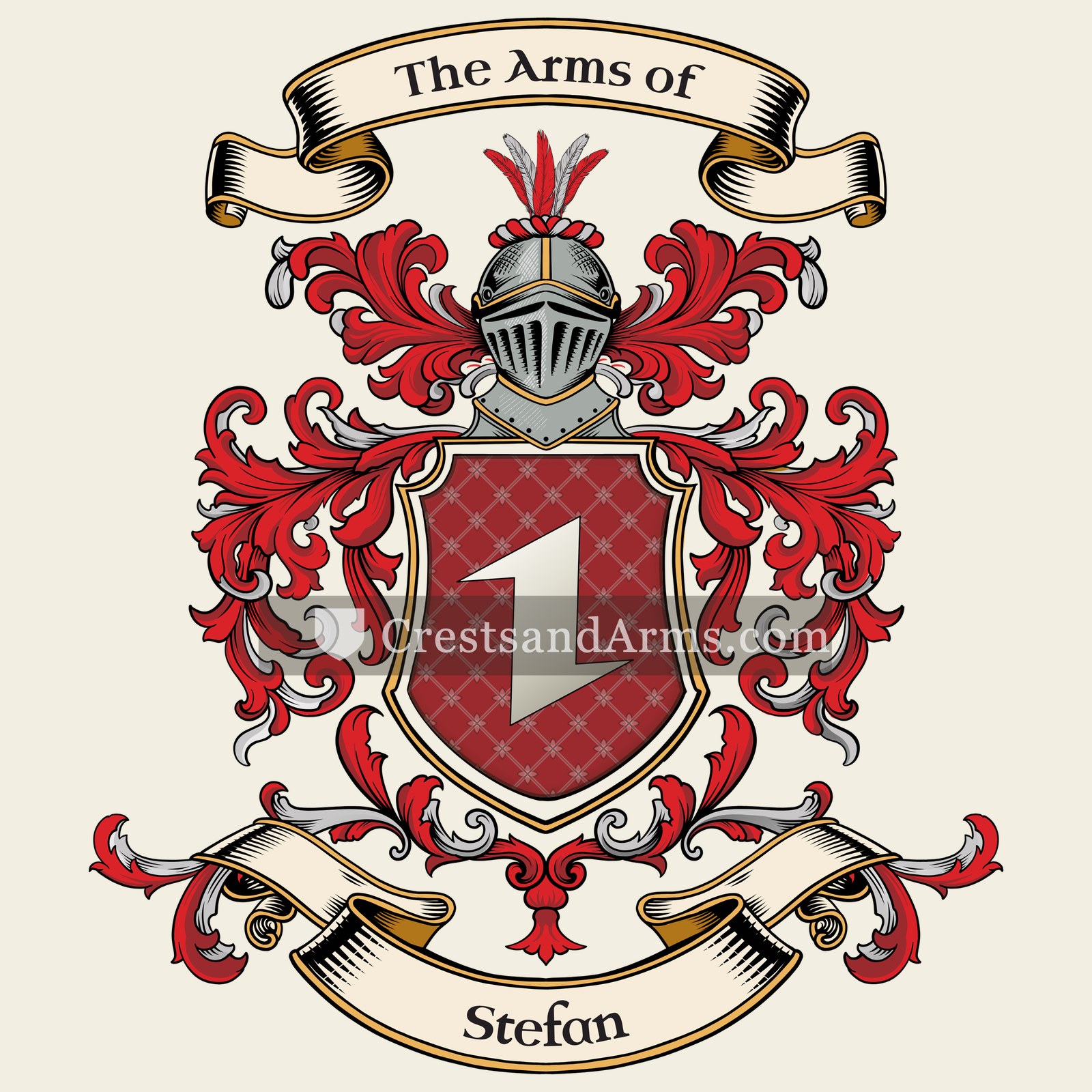


 paleMilitary strength, and a fortified defence