Map of Italy showing where the Stefanko arms are recorded
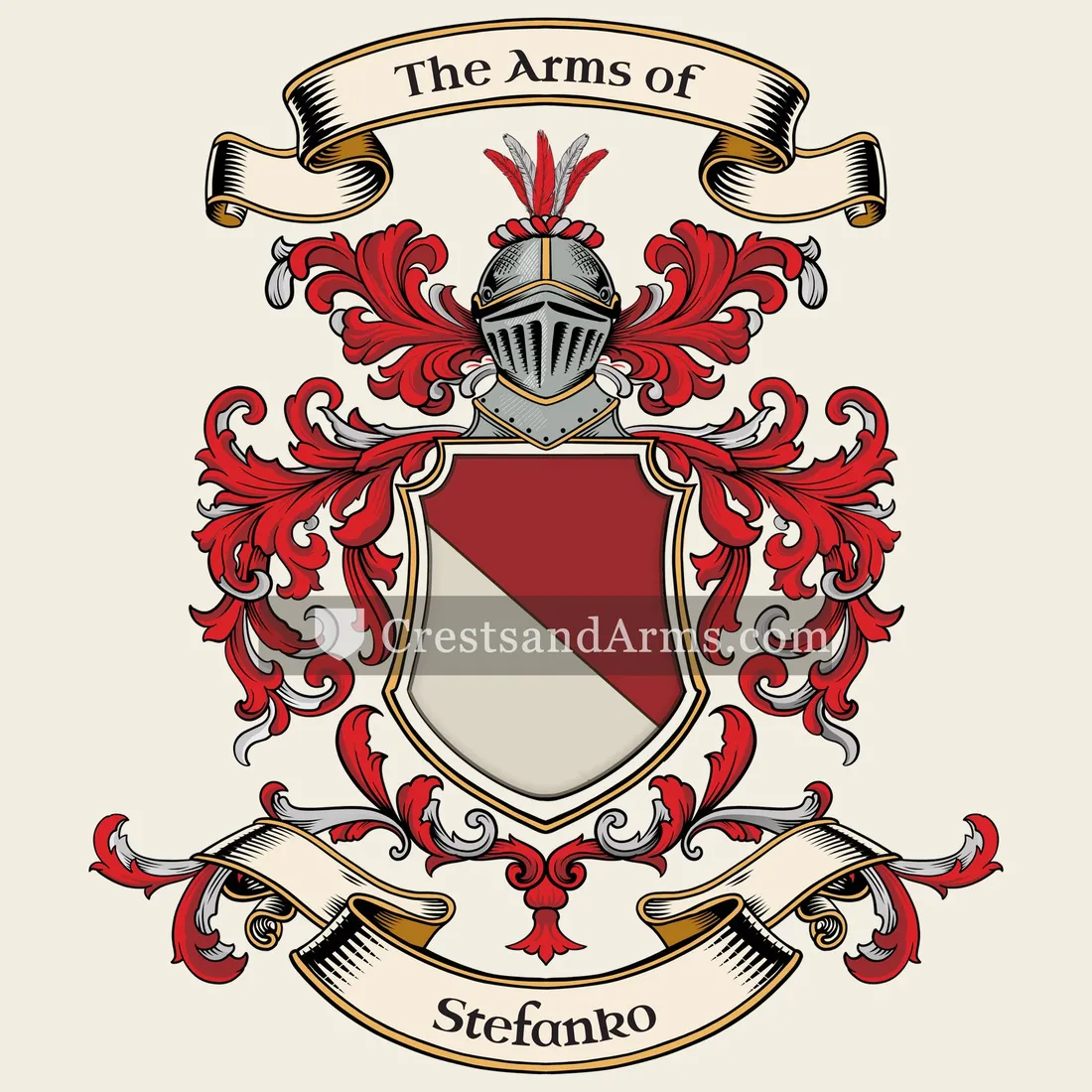
The Stefanko arms were recorded in Dalmatia, c. 1775.
Dalmatia was a string of walled towns along the Adriatic coast, each with its own leading families. Sea trade made them wealthy, and the towns kept lists of the houses entitled to arms.
This is where the arms were entered in the register. Families often moved to other parts of the country, so the same name can turn up in more than one region.
The body that granted and recorded arms in Italy in this period.
Alvise Giovanni Mocenigo
Sovereign of the period
Alvise Giovanni Mocenigo
1763–1778
Reigning in Italy when the Stefanko arms are first recorded.
How Arms Worked in Italy
In the Italian states, coats of arms were often used by noble families to show their status and history. These symbols were passed down through the generations to all legitimate male descendants. Younger branches of a family usually kept the original design but sometimes added small changes to distinguish their specific line from the main branch.
Granting authority
Various local rulers and city governments controlled the use of coats of arms across the different Italian states.
How they got arms
Families often assumed their own arms or received them as official grants from local lords, popes, or city councils.
Where arms were recorded
Arms were recorded in local city archives or private family books rather than in one single national register.
The family's standing
Recorded among the armigerous families of Dalmatia.
Origin & History of the Stefanko Family in Italy
The family name Stefanko is a patronymic surname, which means it was originally derived from the given name Stefan. This name comes from the Greek word stephanos, meaning crown or garland. By the time the family was recorded in the Dalmatian region in 1775, the suffix -ko had been added to the root name. In Slavic naming traditions, this suffix often functioned as a diminutive or a term of endearment, suggesting that the name began as a way to identify someone as the son or descendant of a man named Stefan. Living in Dalmatia during the late 18th century, the family likely navigated a complex cultural landscape shaped by the influence of the Venetian Republic and the surrounding Mediterranean trade routes. Because surnames were often used to distinguish between different households in growing rural communities, the name Stefanko served as a vital link to the family's ancestral roots while helping them establish their identity within the local population.
Stefanko Meaning & Related Branches
Root word
Stephanos
Greek word meaning crown, garland, or wreath of victory.
This name
StefankoA diminutive form indicating a descendant or follower of Stephen.
also spelled
Stefano
Steffan
Documented Sources
J. B. Rietstap, Armorial Général, Gouda: G. B. van Goor Zonen, 1884–87
Skok, Petar. Etimologijski rječnik hrvatskoga ili srpskoga jezika. 1971
Šimunović, Petar. Hrvatska prezimena: podrijetlo, značenje, rasprostranjenost. 2006
State Archives in Zadar (Državni arhiv u Zadru), Matice krštenih (Baptismal Registers) for the Dalmatian region, 1775
Digital archive packCoat of arms PNG, gold border print PDF, vector SVG and the certificate of authenticity. Sent to your email in minutes.