A record of documented arms, meaning and origin, researched for the Steinmetz family lines. Documented in 3 countries.
Reg. 8834 · Dutch, T–V
Coat of Arms & Family Crest Details
Symbols on this shield
cross symbolChristian faith and service
mulletThe third son, and a divine quality from above
lionCourage, strength and royalty
skullMortality remembered, and courage in the face of death
Colours
Red (Gules)Means: Military strength
Blue (Azure)Means: Loyalty and truth
Gold (Or)Means: Generosity
Silver (Argent)Means: Peace and sincerity
Historical info
Source
J. B. Rietstap, Armorial Général, Gouda: G. B. van Goor Zonen, 1884–87
Blazon (the actual original written record)
“Ec.: au 1 de gu. à trois étoiles d'or; au 2 d'azur au lion d'or; au 3 de sa. à une tête de mort d'arg.; au 4 de gu. à trois croisettes pattées d'or. C.: un vol de sa. L. d'arg. et de gu. S.: deux griffons au nat. D.: ALLES MET GOD, NIETS ZONDER KRISTUS.”
Netherlandsc. 1815
Digital archive packCoat of arms PNG, gold border print PDF, vector SVG and the certificate of authenticity. Sent to your email in minutes.
Map of Netherlands showing where the Steinmetz arms are recorded
The Steinmetz arms were recorded in Netherlands, c. 1815.
Arms such as these were typically recorded in Friesland.
Friesland was low, wet country on the northern coast of the Netherlands, farmed by families who had held the same land for centuries. Free landholders were unusually common there, and a free landholder could carry arms.
This is where the arms were entered in the register. Families often moved to other parts of the country, so the same name can turn up in more than one region.
Region
Friesland
First recorded
1815
Granting Authority for the Steinmetz Arms
Hoge Raad van Adel
Photograph made by me · CC BY-SA 3.0
The body that granted and recorded arms in Netherlands in this period.
William I of the Netherlands
Sovereign of the period
William I of the Netherlands
1815–1840
Reigning in Netherlands when the Steinmetz arms are first recorded.
How Arms Worked in Netherlands
In the Netherlands, coats of arms were often used by noble families and those who held specific public offices. These arms were passed down through the generations to legitimate descendants. Younger branches of a family usually kept the original design without needing to add special marks. This system ensured that the family identity remained clear and consistent over many years.
Granting authority
The Hoge Raad van Adel is the official body that regulates and manages noble titles and coats of arms in the Netherlands.
How they got arms
Families typically obtained their coats of arms through official royal grants or by proving their long-standing historical use of the symbols.
Where arms were recorded
Coats of arms are officially recorded in the registers held by the Hoge Raad van Adel, which began its work in 1814.
The family's standing
Recorded among the armigerous families of Netherlands.
Origin & History of the Steinmetz Family in Netherlands
The name Steinmetz is a German occupational surname that translates literally to stone mason. While the name originated in German-speaking regions, families bearing this name migrated into the Netherlands over several centuries due to trade, craftsmanship, and shifting borders. By the early 19th century, records confirm that members of the Steinmetz family were well-established in the northern province of Friesland. During this period, the Netherlands was undergoing significant administrative changes following the Napoleonic era, which led to the formal registration of surnames in civil records. The presence of the family in Friesland by 1815 suggests they were part of a long tradition of skilled workers who moved across European borders to apply their trade. These early ancestors likely integrated into Dutch society by contributing their specialized masonry skills to the construction and maintenance of the unique infrastructure found in the Frisian landscape.
Coat of Arms & Family Crest Details
Symbols on this shield
mountThe ground held, and steadfastness upon it
martletA younger son, who must win his own land
roseThe seventh son, and beauty with grace
Colours
Silver (Argent)Means: Peace and sincerity
Red (Gules)Means: Military strength
Historical info
Source
J. B. Rietstap, Armorial Général, Gouda: G. B. van Goor Zonen, 1884–87
Blazon (the actual original written record)
“Parti: au 1 d'arg. à un oiseau volant au-dessus d'une fleur, tigée et feuillée, posée sur une terrasse, le tout au nat.; au 2 de gu. plein.”
Germanyc. 1750
Digital archive packCoat of arms PNG, gold border print PDF, vector SVG and the certificate of authenticity. Sent to your email in minutes.
Map of Germany showing where the Steinmetz arms are recorded
The Steinmetz arms were recorded in Germany, c. 1750.
Arms such as these were typically recorded in Bavaria.
Bavaria was a country of old landed families and walled market towns. Estates passed down the same line for centuries, and both the landowners and the leading townsmen kept arms, which is why so many Bavarian names sit in the registers.
This is where the arms were entered in the register. Families often moved to other parts of the country, so the same name can turn up in more than one region.
The body that granted and recorded arms in Germany in this period.
Francis I, Holy Roman Emperor
Sovereign of the period
Francis I, Holy Roman Emperor
1745–1765
Reigning in Netherlands when the Steinmetz arms are first recorded.
How Arms Worked in Germany
In the Holy Roman Empire, coats of arms were often granted to individuals by the Emperor or his representatives. These arms were then passed down through the generations to all legitimate descendants of the original holder. Younger branches of a family usually kept the same shield design without needing to change it, as the arms belonged to the entire lineage.
Granting authority
The Holy Roman Emperor held the sole power to grant new coats of arms throughout his vast imperial territories.
How they got arms
Families typically obtained their coats of arms through a formal imperial grant or by proving their noble status to the authorities.
Where arms were recorded
These grants were officially recorded in the Imperial Chancery registers, which began keeping formal records of such honors during the Middle Ages.
The family's standing
Recorded among the armigerous families of Germany.
Origin & History of the Steinmetz Family in Germany
The surname Steinmetz is a classic occupational name that originated in the German-speaking regions of Central Europe during the Middle Ages. In German, the word translates directly to stone cutter or stonemason. During the time when surnames were first becoming common, this name was given to individuals who worked as skilled craftsmen in the construction of stone buildings, cathedrals, and defensive walls. By the middle of the eighteenth century, families bearing this name were well-established in the southern region of Bavaria. These ancestors were likely part of the hardworking middle class that supported the local economy through building and masonry trades. As the family grew, they became a permanent part of the social fabric of the Bavarian countryside, living through the agricultural and industrial shifts that defined life in the Holy Roman Empire and later the German states.
Coat of Arms & Family Crest Details
Symbols on this shield
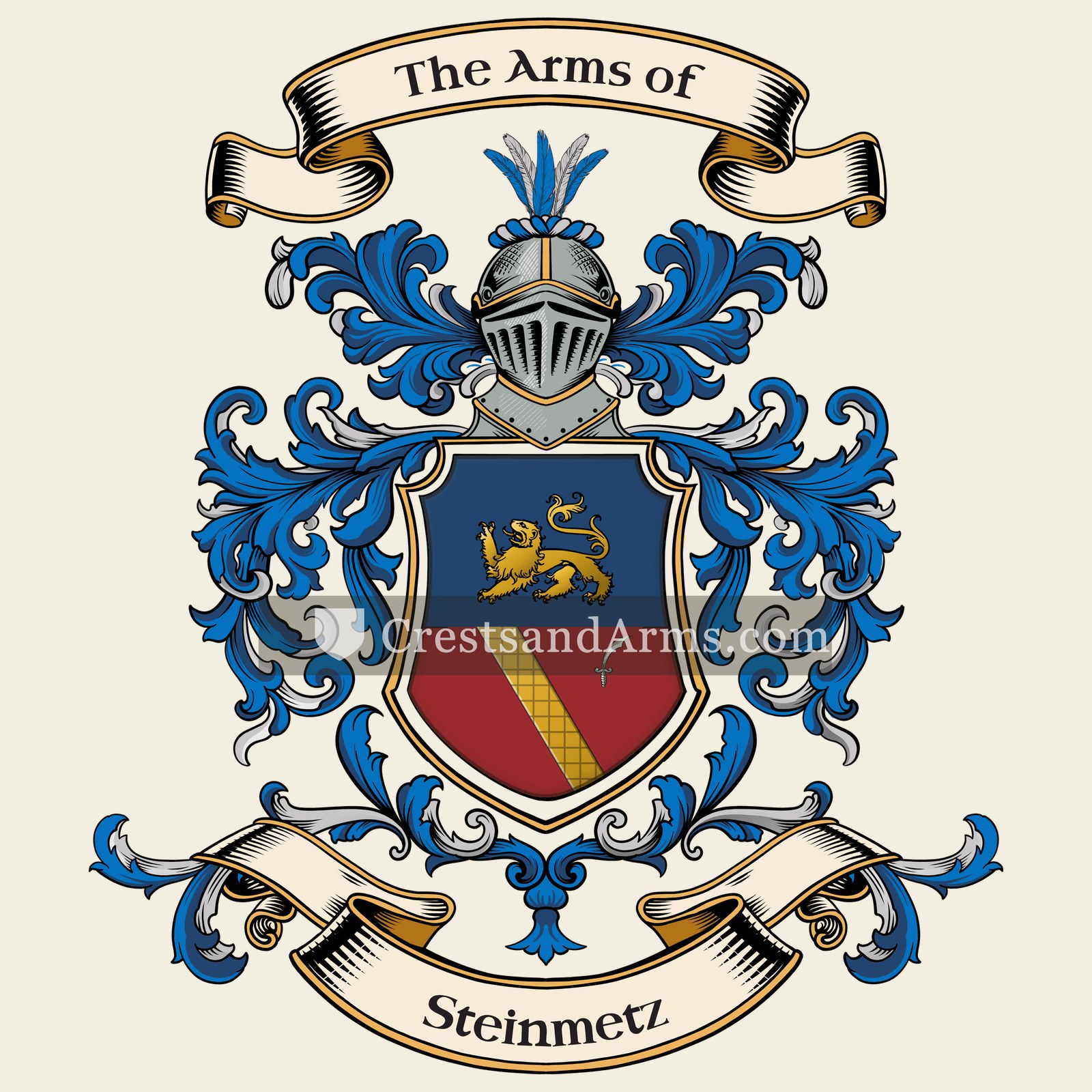
bendDefence, and the scarf of a commander
lionCourage, strength and royalty
swordJustice, and military honour
Colours
Blue (Azure)Means: Loyalty and truth
Red (Gules)Means: Military strength
Gold (Or)Means: Generosity
Silver (Argent)Means: Peace and sincerity
Historical info
Source
J. B. Rietstap, Armorial Général, Gouda: G. B. van Goor Zonen, 1884–87
Blazon (the actual original written record)
“Coupé: au 1 d'azur au lion léopardé d'or, arm. et lamp. de gu.; au 2 de gu. à deux bandes d'or, et une épée d'arg. garnie d'or, posée entre les bandes. Trois cq. cour. C.: 1° un lion iss. et cont. d'or, arm. et lamp. de gu.; 2° une aigle iss. de sa., cour. d'or; 3° l'épée, en pal, entre deux prob. coupées, à dextre de gu. sur arg., à sen. d'or sur azur. L.: à dextre d'or et d'azur, à sen. d'arg. et de gu.”
Austriac. 1763
Digital archive packCoat of arms PNG, gold border print PDF, vector SVG and the certificate of authenticity. Sent to your email in minutes.
Map of Austria showing where the Steinmetz arms are recorded
The Steinmetz arms were recorded in Austria, c. 1763.
Arms such as these were typically recorded in Tyrol.
Tyrol was mountain country in western Austria, where the valleys were held by families who had been there a very long time. Old tenure counted for more than money, and old families carried arms.
This is where the arms were entered in the register. Families often moved to other parts of the country, so the same name can turn up in more than one region.
Region
Tyrol
First recorded
1763
Granting Authority for the Steinmetz Arms
Imperial and Royal chancery
Sodacan · CC BY-SA 3.0
The body that granted and recorded arms in Austria in this period.
Francis I, Holy Roman Emperor
Sovereign of the period
Francis I, Holy Roman Emperor
1745–1765
Reigning in Netherlands when the Steinmetz arms are first recorded.
How Arms Worked in Austria
Austrian coats of arms were often linked directly to noble titles granted by the Emperor. These symbols belonged to the entire family line rather than just one individual. When a family grew, new branches kept the original design without needing to change it. This system allowed all members of a noble house to share the same identity across many generations.
Granting authority
The Imperial and Royal chancery managed all heraldic matters and controlled the official granting of arms throughout the Austrian lands.
How they got arms
Families typically received their arms through a formal imperial decree that often accompanied the elevation of a person to noble status.
Where arms were recorded
Official records of these grants were kept in the Imperial Register of Nobility which began its formal documentation process in 1453.
The family's standing
Recorded among the armigerous families of Austria.
Origin & History of the Steinmetz Family in Austria
The surname Steinmetz is a classic occupational name that originated from the Middle High German words for stone and cutter. In the rugged landscape of Tyrol, where the family was documented as early as 1763, this name identified ancestors who were skilled stonemasons. These craftsmen played a vital role in the development of the region by shaping the local granite and limestone into sturdy homes, churches, and mountain fortifications. Because the Alps required constant building and maintenance to survive harsh winters, families with this trade were highly respected members of their local villages. Over time, the name transitioned from a simple description of a person’s daily work into a permanent family identity that was passed down through generations of Tyrolean builders.
Related Branches & Arms
Root word
Stein and Metze
Stone and cutter or mason
This name
SteinmetzAn occupational surname for a stonemason or someone who cuts stone.
also spelled
Steinmetzen
Related arms
Pottessimilar arms
Stainmetzvariant spelling
Documented Sources
J. B. Rietstap, Armorial Général, Gouda: G. B. van Goor Zonen, 1884–87
Meertens Instituut, Nederlandse Familienamenbank, 2024
Tresoar, Frysk Histoarysk en Letterkundich Sintrum, Burgerlijke Stand van Friesland, 1811-1950
Van der Schaar, J., Woordenboek van familienamen, 1992
Digital archive packCoat of arms PNG, gold border print PDF, vector SVG and the certificate of authenticity. Sent to your email in minutes.


 cross symbolChristian faith and service
 mulletThe third son, and a divine quality from above
 lionCourage, strength and royalty
 skullMortality remembered, and courage in the face of death
 cross symbolChristian faith and service
 mulletThe third son, and a divine quality from above
 lionCourage, strength and royalty
 skullMortality remembered, and courage in the face of death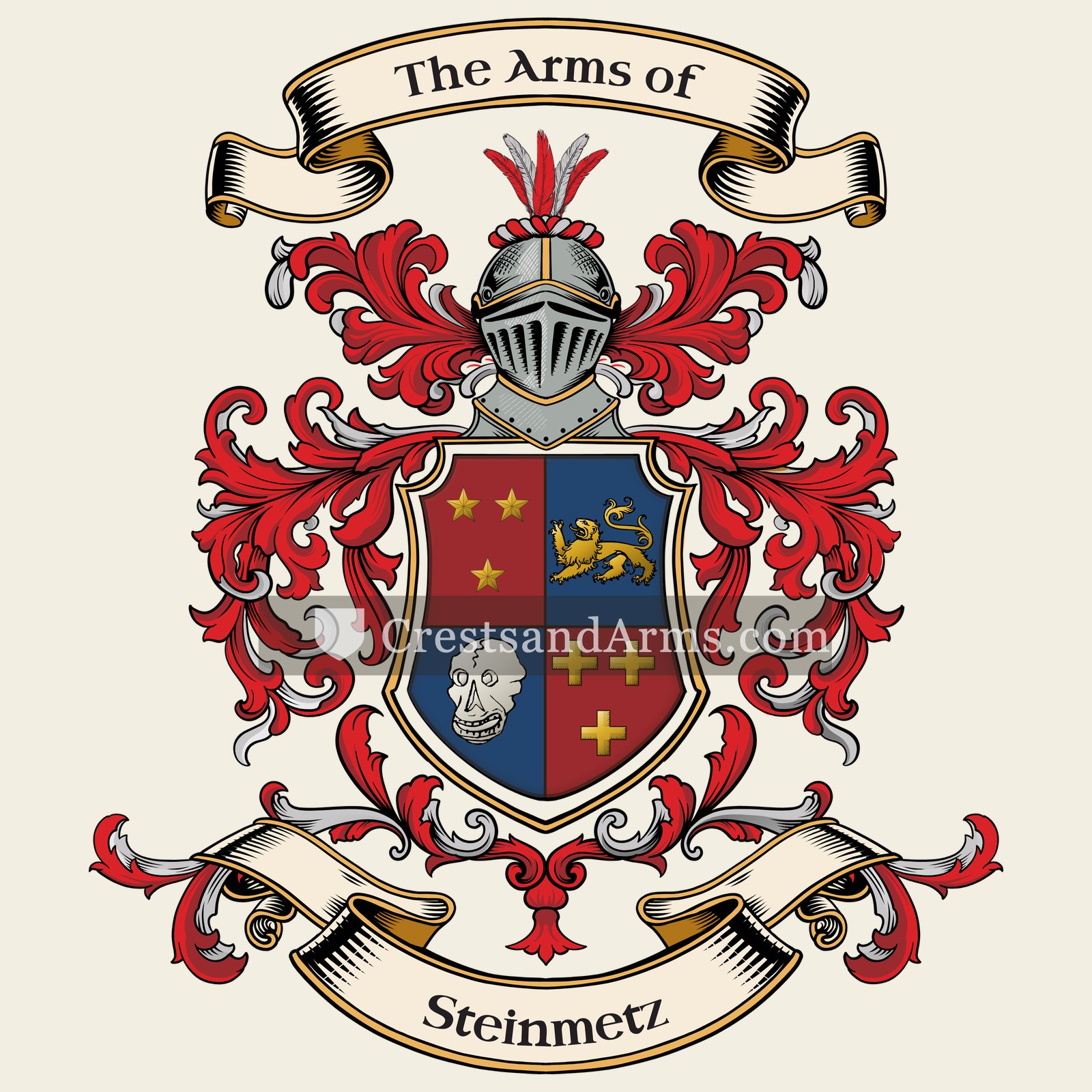


 mountThe ground held, and steadfastness upon it
 martletA younger son, who must win his own land
 roseThe seventh son, and beauty with grace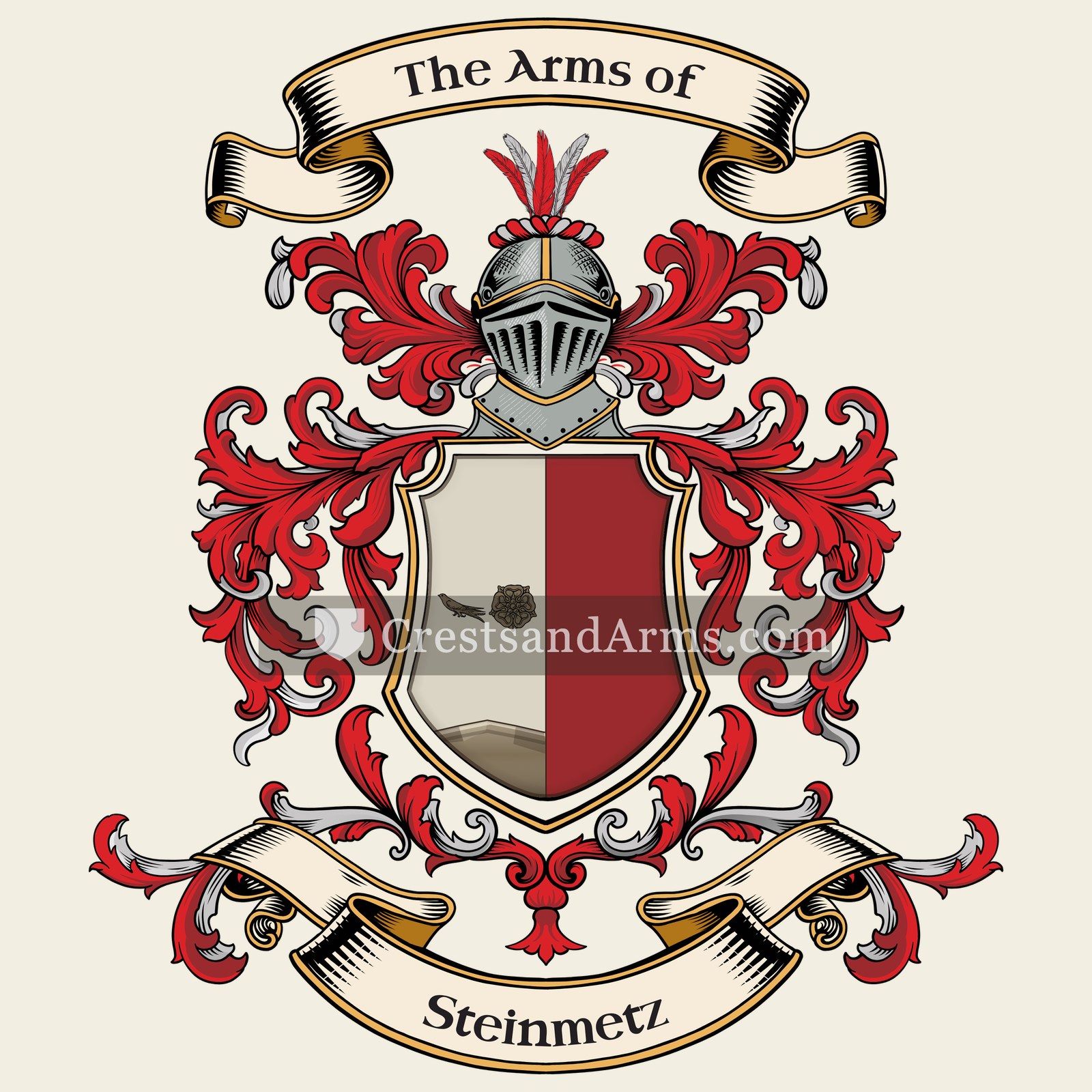


 bendDefence, and the scarf of a commander
 swordJustice, and military honour