A record of documented arms, meaning and origin, researched for the Stepanski family lines. Documented in 2 countries.
Reg. 1740 · Belgian, T–V
Coat of Arms & Family Crest Details
Symbols on this shield
mountThe ground held, and steadfastness upon it
treeLife, endurance and deep roots
Colours
Silver (Argent)Means: Peace and sincerity
Green (Vert)Means: Hope
Historical info
Source
J. B. Rietstap, Armorial Général, Gouda: G. B. van Goor Zonen, 1884–87
Blazon (the actual original written record)
“D'arg. à un arbre de sin., accosté de deux poteaux du même, sommés chacun d'un coq démembré de sa., celui à dextre cont.; le tout soutenu d'une terrasse du sec. C.: un arbre de sin.”
LiegeLiege, c. 1737
Digital archive packCoat of arms PNG, gold border print PDF, vector SVG and the certificate of authenticity. Sent to your email in minutes.
Map of Belgium showing where the Stepanski arms are recorded
The Stepanski arms were recorded in Liege, c. 1737.
Liege was a prosperous town and its surrounding country, living on metalworking and trade. Merchant families grew rich, bought land outside the walls, and took arms as landowners rather than tradesmen.
This is where the arms were entered in the register. Families often moved to other parts of the country, so the same name can turn up in more than one region.
The body that granted and recorded arms in Belgium in this period.
Charles VI, Holy Roman Emperor
Sovereign of the period
Charles VI, Holy Roman Emperor
1711–1740
Reigning in Belgium when the Stepanski arms are first recorded.
How Arms Worked in Belgium
In Belgium, a coat of arms is considered personal property that is passed down through the male line to legitimate descendants. Families often use the same shield design across generations to show their shared heritage. If a branch of the family wants to change the design, they must apply for an official update to their specific version of the arms.
Granting authority
The Conseil héraldique is the official body that regulates and approves all coats of arms in Belgium.
How they got arms
Families obtain their coats of arms through formal royal grants or by confirming their historical right to use existing designs.
Where arms were recorded
All approved coats of arms are officially recorded in the public registers of the Conseil héraldique since 1844.
The family's standing
Recorded among the armigerous families of Liege.
Origin & History of the Stepanski Family in Belgium
The history of the Stepanski family in Belgium begins with their documented presence in the city of Liège by 1737. During this era, Liège was a bustling center of industry and trade within the Prince-Bishopric of Liège, an independent state that attracted many families seeking new opportunities. The name itself suggests roots that likely trace back to Slavic linguistic origins, which was not uncommon in European urban centers that served as crossroads for travelers and merchants moving across the continent. By establishing themselves in Liège, the early Stepanski family members became part of a vibrant local society defined by metalworking and coal mining. These ancestors likely integrated into the local community by adopting the customs and language of the region while maintaining their unique family identity. Their presence in the city records from the mid-eighteenth century highlights a period of stability and growth for the family as they navigated the complex social and economic landscape of the Low Countries.
Coat of Arms & Family Crest Details
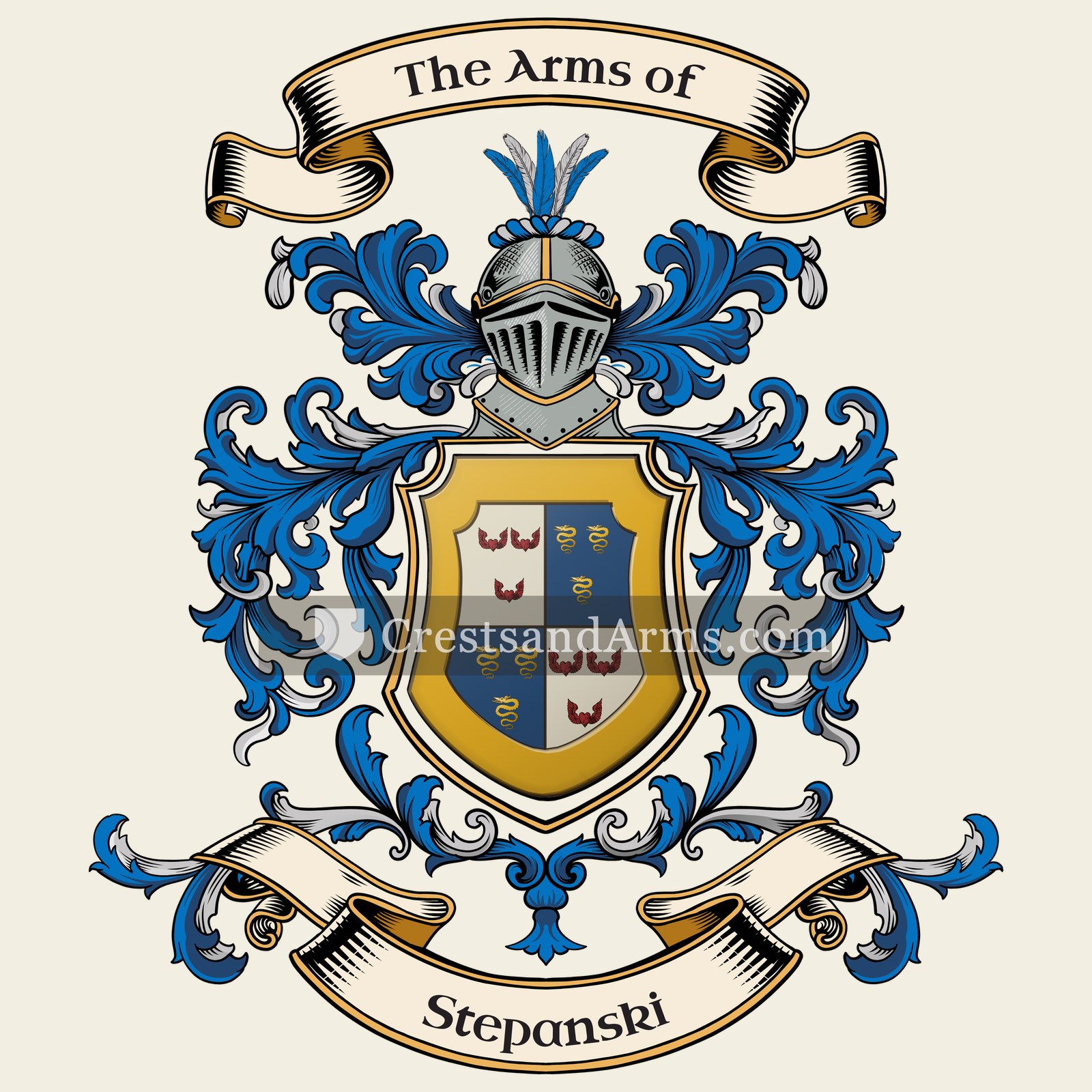
Symbols on this shield
heartSincerity, charity and true affection
serpentWisdom, healing and prudence
Colours
Silver (Argent)Means: Peace and sincerity
Blue (Azure)Means: Loyalty and truth
Gold (Or)Means: Generosity
Red (Gules)Means: Military strength
Historical info
Source
J. B. Rietstap, Armorial Général, Gouda: G. B. van Goor Zonen, 1884–87
Blazon (the actual original written record)
“Ec.: aux 1 et 4 d'arg. à trois coeurs de gu.; aux 2 et 3 d'azur à trois queues d'anguilles d'or en fasces, l'une sur l'autre, mouv. du parti. L'écu bordé d'or. Cq. cour. C.: un coeur de gu., enflammé au nat. L. d'or et de gu.”
Germanyc. 1697
Digital archive packCoat of arms PNG, gold border print PDF, vector SVG and the certificate of authenticity. Sent to your email in minutes.
Map of Germany showing where the Stepanski arms are recorded
The Stepanski arms were recorded in Germany, c. 1697.
Arms such as these were typically recorded in Bavaria.
Bavaria was a country of old landed families and walled market towns. Estates passed down the same line for centuries, and both the landowners and the leading townsmen kept arms, which is why so many Bavarian names sit in the registers.
This is where the arms were entered in the register. Families often moved to other parts of the country, so the same name can turn up in more than one region.
The body that granted and recorded arms in Germany in this period.
Leopold I, Holy Roman Emperor
Sovereign of the period
Leopold I, Holy Roman Emperor
1658–1705
Reigning in Belgium when the Stepanski arms are first recorded.
How Arms Worked in Germany
In the Holy Roman Empire, coats of arms were often granted to individuals by the Emperor or his representatives. These arms were then passed down through the generations to all legitimate descendants of the original holder. Younger branches of a family usually kept the same shield design without needing to change it, as the arms belonged to the entire lineage.
Granting authority
The Holy Roman Emperor held the sole power to grant new coats of arms throughout his vast imperial territories.
How they got arms
Families typically obtained their coats of arms through a formal imperial grant or by proving their noble status to the authorities.
Where arms were recorded
These grants were officially recorded in the Imperial Chancery registers, which began keeping formal records of such honors during the Middle Ages.
The family's standing
Recorded among the armigerous families of Germany.
Origin & History of the Stepanski Family in Germany
The surname Stepanski traces its roots to the cultural landscape of late seventeenth-century Bavaria. By 1697, records confirm that members of the family were already established within this region, which was then a prominent center of the Holy Roman Empire. The name itself reflects the linguistic influence of Slavic migration into German-speaking territories, as it is derived from the given name Stefan. During this period, families often settled in rural agricultural communities or growing market towns where they contributed to the local economy through trade and craftsmanship. Life in Bavaria at the end of the 1600s was defined by the aftermath of major European conflicts and the rebuilding of local infrastructure. As the Stepanski family integrated into the Bavarian social fabric, they became part of the long history of families who moved across borders to find stability and new opportunities in the heart of Central Europe.
Related Branches & Arms
Root word
Stefanus
Derived from the Greek word stephanos meaning crown or garland.
This name
StepanskiA locative surname indicating someone who originated from a place associated with Saint Stephen.
also spelled
Stefani
Steffani
Documented Sources
J. B. Rietstap, Armorial Général, Gouda: G. B. van Goor Zonen, 1884–87
Archives de l'État à Liège, Registres paroissiaux de la ville de Liège, 1737
Kupper, Jean-Louis, Liège et l'Église impériale, 1981
Stiennon, Jacques, Histoire de Liège, 1991
Digital archive packCoat of arms PNG, gold border print PDF, vector SVG and the certificate of authenticity. Sent to your email in minutes.


 mountThe ground held, and steadfastness upon it
 treeLife, endurance and deep roots
 mountThe ground held, and steadfastness upon it
 treeLife, endurance and deep roots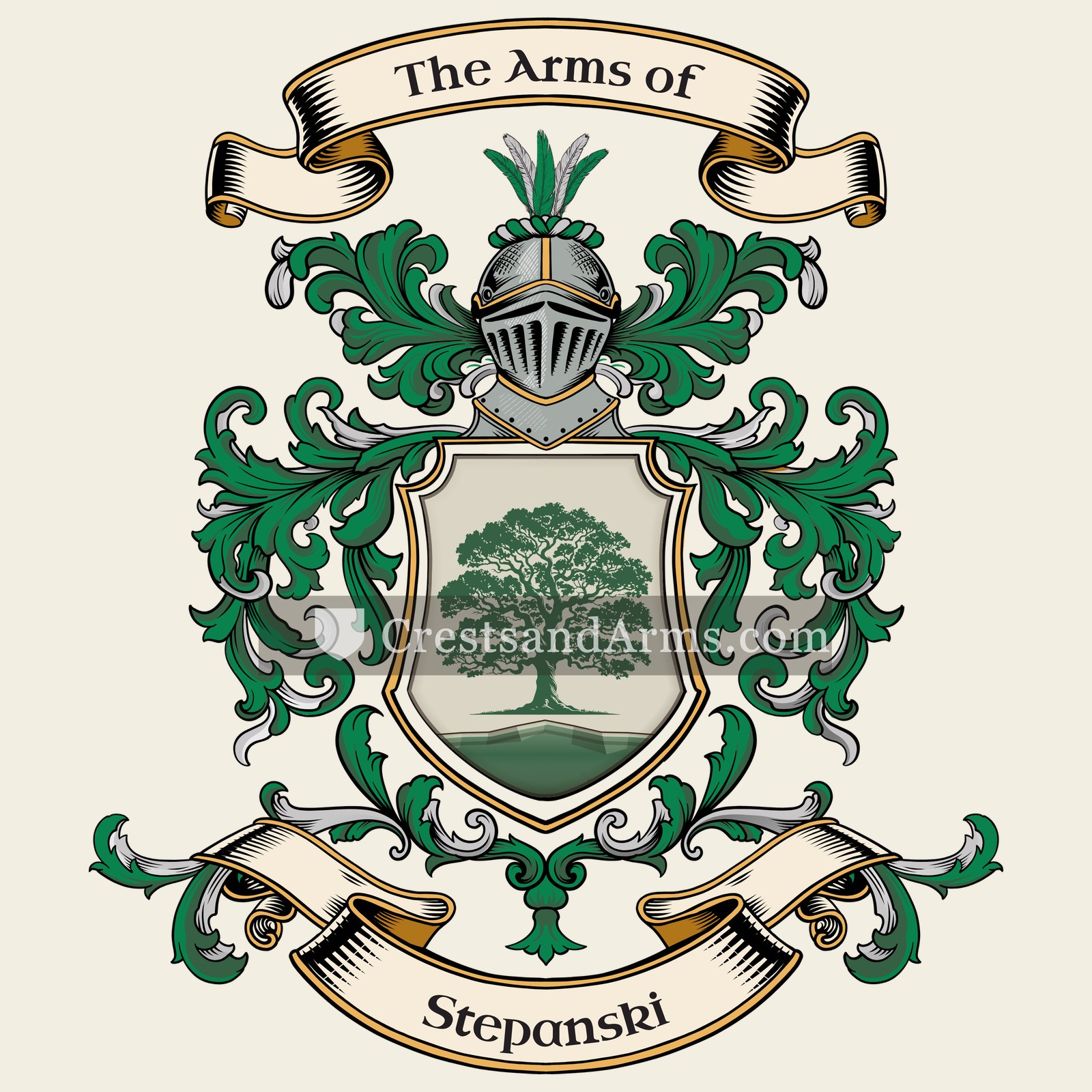


 heartSincerity, charity and true affection
 serpentWisdom, healing and prudence