Map of Denmark showing where the Steube arms are recorded
The Steube arms were recorded in Denmark, c. 1722.
Arms such as these were typically recorded in Sjaælland.
Zealand held the Danish court, the crown's offices and Copenhagen itself. Families who served the king kept estates within reach of it, and royal service was the ordinary route to a coat of arms.
This is where the arms were entered in the register. Families often moved to other parts of the country, so the same name can turn up in more than one region.
The body that granted and recorded arms in Denmark in this period.
Frederik IV of Denmark
Sovereign of the period
Frederik IV of Denmark
1699–1730
Reigning in Denmark when the Steube arms are first recorded.
How Arms Worked in Denmark
Danish heraldry during this period was closely tied to noble status and royal favor rather than being open to all citizens. Arms were typically granted by the monarch to individuals, and these symbols were then shared by all members of the noble house. If a family line died out, the right to use those specific arms ended with them.
Granting authority
The Danish royal chancery held the power to issue and regulate official coats of arms for the kingdom.
How they got arms
Families usually received their arms through a formal royal grant that confirmed their noble status and rights.
Where arms were recorded
These grants were officially recorded in the Danish Royal Chancery records starting in the sixteenth century.
The family's standing
Recorded among the armigerous families of Denmark.
Origin & History of the Steube Family in Denmark
The history of the Steube family in Denmark begins with roots firmly planted on the island of Sjaelland by the early eighteenth century. By 1722, records confirm that members of the family were already established within this region, which served as the cultural and political heart of the Danish kingdom. During this era, the name was closely tied to the social structures of rural and provincial life, where families often lived in close-knit communities centered around local parishes. As the family navigated the landscape of Sjaelland, they participated in the typical rhythms of Danish society, which included agricultural work and local trade. This period was a time of transition for many families in Denmark, as record-keeping became more standardized under the crown. The presence of the Steube name in these early documents suggests that the family was well-integrated into the local population, contributing to the development of their community during a formative time in Danish history.
Coat of Arms & Family Crest Details
Symbols on this shield
hunting horn stringedOne who delights in the chase
Colours
Blue (Azure)Means: Loyalty and truth
Silver (Argent)Means: Peace and sincerity
Historical info
Source
J. B. Rietstap, Armorial Général, Gouda: G. B. van Goor Zonen, 1884–87
Blazon (the actual original written record)
“D'azur à une corne de bouquetin d'arg., en pal. C.: un chicot au nat., en pal.”
Swedenc. 1700
Digital archive packCoat of arms PNG, gold border print PDF, vector SVG and the certificate of authenticity. Sent to your email in minutes.
Map of Sweden showing where the Steube arms are recorded
The Steube arms were recorded in Sweden, c. 1700.
Arms such as these were typically recorded in Stockholm.
Stockholm held the Swedish court and the House of Nobility, where every noble family's arms were entered and kept. Families ennobled for service registered there, which is why so many are recorded around the city.
This is where the arms were entered in the register. Families often moved to other parts of the country, so the same name can turn up in more than one region.
The body that granted and recorded arms in Sweden in this period.
Carl XII of Sweden
Sovereign of the period
Carl XII of Sweden
1697–1718
Reigning in Denmark when the Steube arms are first recorded.
How Arms Worked in Sweden
In Sweden, a coat of arms belonged to a noble family as a whole rather than just one individual. These arms were passed down through the generations to all legitimate descendants. Younger branches of the family used the same shield without needing to change it. This system ensured that the entire lineage shared the same identity and status under the law.
Granting authority
The Riddarhuset, or House of Nobility, regulated all noble coats of arms in Sweden under royal authority.
How they got arms
Families received their coats of arms through royal grants of nobility which were then officially registered with the House.
Where arms were recorded
Coats of arms were officially recorded in the Swedish House of Nobility register starting in the year 1626.
The family's standing
Recorded among the armigerous families of Sweden.
Origin & History of the Steube Family in Sweden
The history of the Steube family in Sweden begins in the bustling urban environment of Stockholm during the early 18th century. By 1700, members of the family had established themselves within the capital, a period when Stockholm was a center for trade and administrative growth under the Swedish Empire. The name itself reflects a Continental European origin, likely brought to Sweden by individuals seeking new professional opportunities or military service during a time of significant movement across the Baltic region. As residents of Stockholm, these early family members lived in a society that was rapidly modernizing and integrating international influences into its local culture. Their presence in the city records from this era suggests they were part of the growing middle class or skilled workforce that helped shape the social fabric of the capital during the transition into the 1700s.
Coat of Arms & Family Crest Details
Symbols on this shield
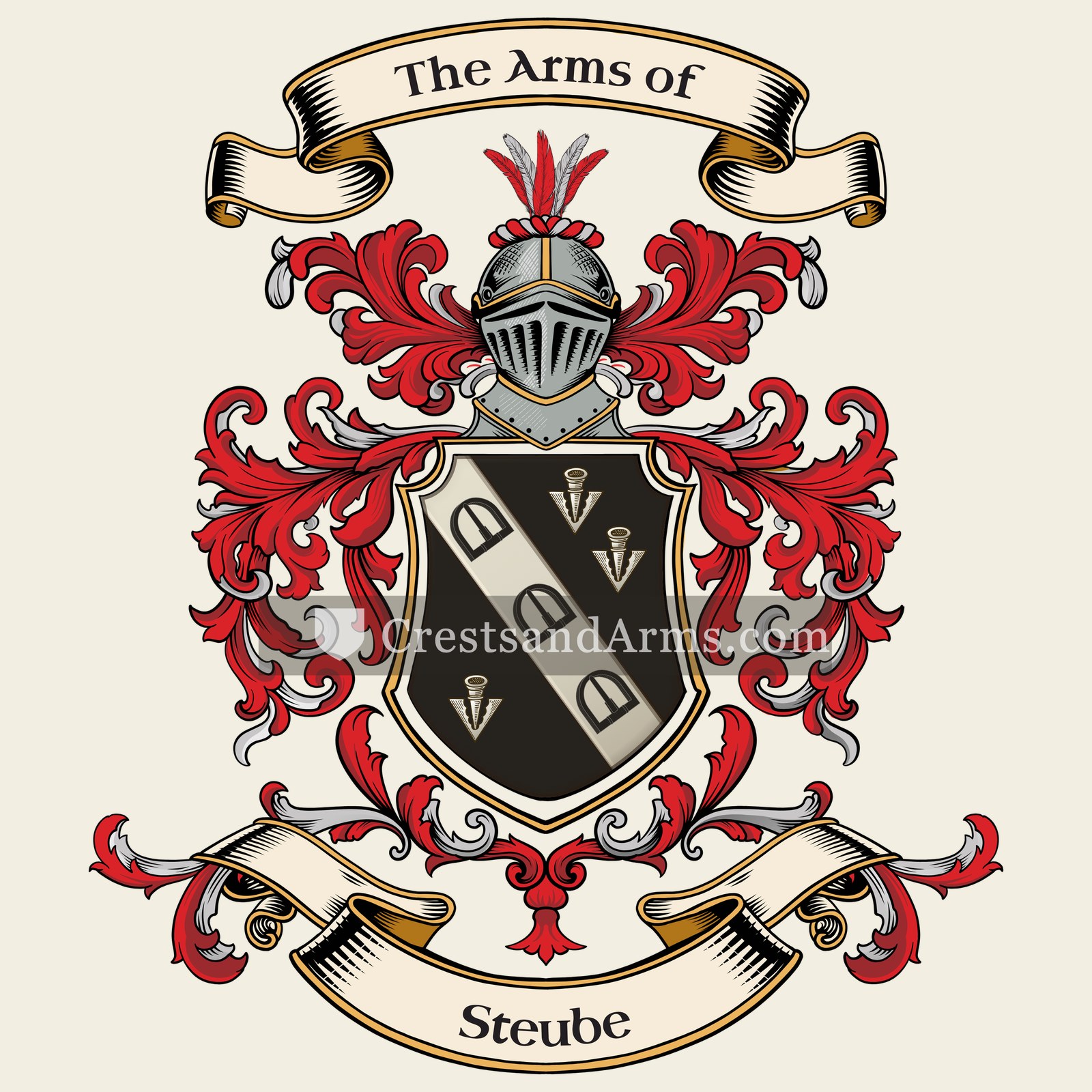
bendDefence, and the scarf of a commander
arms pheon arrowheadReadiness for battle, and the broad arrow of the sovereign
buckleFidelity, and a bond firmly held
Colours
Black (Sable)Means: Constancy
Silver (Argent)Means: Peace and sincerity
Historical info
Source
Sir Bernard Burke, The General Armory of England, Scotland, Ireland and Wales, London: Harrison & Sons, 1884
Blazon (the actual original written record)
“Sa. on a bend betw. three pheons ar. as many round buckles of the first”
SuffolkLaxfield · Suffolk, c. 1620
Digital archive packCoat of arms PNG, gold border print PDF, vector SVG and the certificate of authenticity. Sent to your email in minutes.
Map of England showing where the Steube arms are recorded
The Steube arms were recorded in Suffolk, c. 1620.
Suffolk was wool country, and its cloth towns were among the wealthiest in England. Clothier families bought manors with their profits, and holding a manor was the ordinary route to a coat of arms.
This is where the arms were entered in the register. Families often moved to other parts of the country, so the same name can turn up in more than one region.
The body that granted and recorded arms in England in this period.
James VI and I
Sovereign of the period
James VI and I
1603–1625
Reigning in Denmark when the Steube arms are first recorded.
How Arms Worked in England
English heraldry allowed arms to be shared by all legitimate descendants of the original owner. These symbols were treated as personal property that moved through the generations to all children. While the eldest son kept the original design, other family members could use the same shield without needing to change it or register their own unique versions.
Granting authority
The College of Arms in London has regulated the use of coats of arms throughout England and Wales since 1484.
How they got arms
Families typically obtained their coats of arms through a formal grant from the Crown or by proving their ancient right to them.
Where arms were recorded
All official coats of arms are recorded in the registers kept at the College of Arms, which date back to the fifteenth century.
The family's standing
Recorded among the armigerous families of Suffolk.
Origin & History of the Steube Family in England
The family name Steube has deep roots in the English county of Suffolk, where records confirm members of the family were settled as early as 1620. During the early seventeenth century, Suffolk was a bustling region known for its thriving textile industry and its role as a hub for maritime trade. Families like the Steubes were often part of the hardworking middle class who managed local lands or participated in the regional wool trade that defined the East Anglian economy. Because the name is associated with Germanic linguistic origins, its presence in Suffolk suggests that the family may have arrived as part of the steady stream of continental immigrants who moved to England for religious freedom or economic opportunity during the late Tudor and early Stuart periods. These early settlers integrated into the local parish life, leaving behind traces in baptismal and marriage registers that document their transition into the fabric of English rural society.
Related Branches & Arms
Root word
Stube
A heated room or a stove in a medieval house.
This name
SteubeAn occupational name for someone who lived near or maintained a heated room.
also spelled
Stube
Stub
Stubbs
Stubs
Documented Sources
J. B. Rietstap, Armorial Général, Gouda: G. B. van Goor Zonen, 1884–87
Rigsarkivet (The Danish National Archives), Kirkebøger (Parish Registers) for Sjaelland, 1722
Rigsarkivet (The Danish National Archives), Folketællinger (Census Records), 1787
Trap, J.P., Statistisk-topographisk Beskrivelse af Kongeriget Danmark, 1858
Ilsøe, Harald, Københavns bibliotekshistorie før 1795, 1967
Digital archive packCoat of arms PNG, gold border print PDF, vector SVG and the certificate of authenticity. Sent to your email in minutes.


 mulletThe third son, and a divine quality from above
 mulletThe third son, and a divine quality from above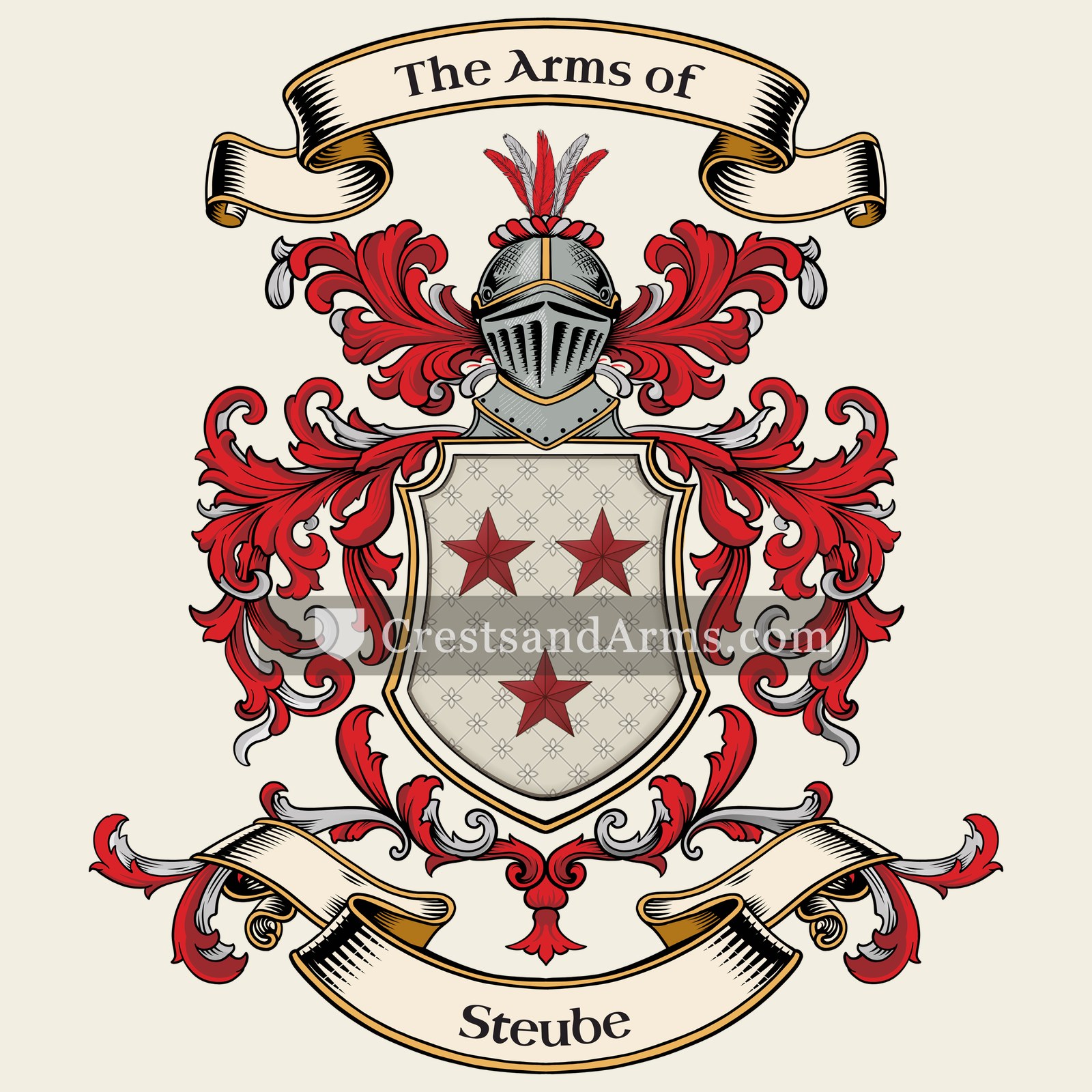


 hunting horn stringedOne who delights in the chase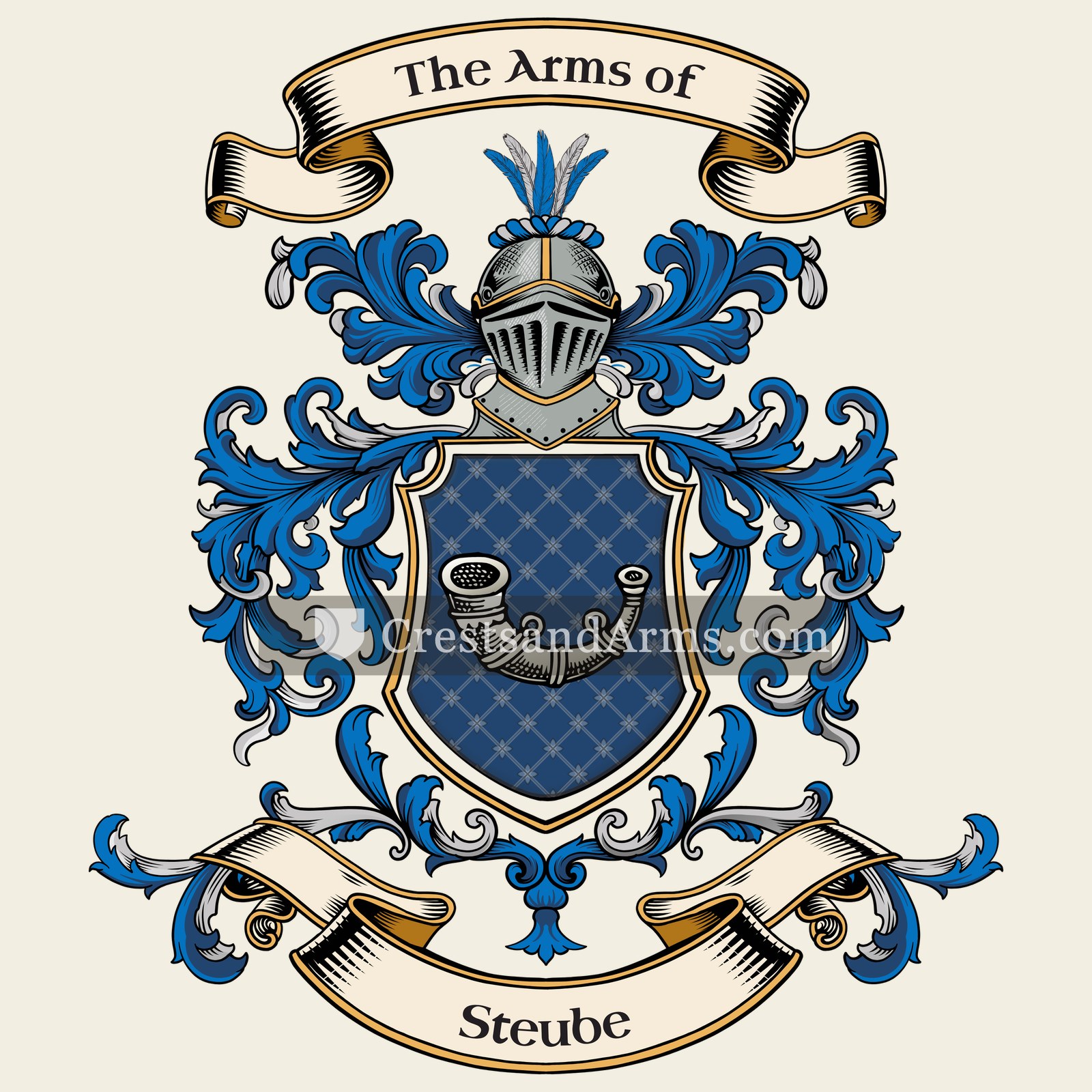


 bendDefence, and the scarf of a commander
 arms pheon arrowheadReadiness for battle, and the broad arrow of the sovereign
 buckleFidelity, and a bond firmly held