A record of documented arms, meaning and origin, researched for the Stinson family lines. Documented in 3 countries.
Reg. 0682 · English, T–V
Coat of Arms & Family Crest Details
Symbols on this shield
chevronProtection, and faithful service completed
chiefAuthority, wisdom and dominion
paleMilitary strength, and a fortified defence
fleur de lisPurity, light, and the sixth son
mulletThe third son, and a divine quality from above
lionCourage, strength and royalty
Colours
ErmineMeans: Dignity
Red (Gules)Means: Military strength
Gold (Or)Means: Generosity
Silver (Argent)Means: Peace and sincerity
Historical info
Source
Sir Bernard Burke, The General Armory of England, Scotland, Ireland and Wales, London: Harrison & Sons, 1884
Blazon (the actual original written record)
“Quarterly, 1st and 4th, erm. a chev. counter-compony or and gu. betw. three fleurs-de-lis of the last, on a chief dancettée of the third as many mullets of the second, for STEVENSON; 2nd and 3rd, per pale gu. and sa. a lion ramp. ar., for BELLAIRS”
LincolnUffington · Lincoln, c. 1620
Digital archive packCoat of arms PNG, gold border print PDF, vector SVG and the certificate of authenticity. Sent to your email in minutes.
Map of England showing where the Stinson arms are recorded
The Stinson arms were recorded in Lincoln, c. 1620.
Lincolnshire was rich farming country, and its wealth was spread across many middling families. Households of that size bought land and took arms, and the county holds a large share of English names.
This is where the arms were entered in the register. Families often moved to other parts of the country, so the same name can turn up in more than one region.
The body that granted and recorded arms in England in this period.
James VI and I
Sovereign of the period
James VI and I
1603–1625
Reigning in England when the Stinson arms are first recorded.
How Arms Worked in England
English heraldry allowed arms to be shared by all legitimate descendants of the original owner. These symbols were treated as personal property that moved through the generations to all children. While the eldest son kept the original design, other family members could use the same shield without needing to change it or register their own unique versions.
Granting authority
The College of Arms in London has regulated the use of coats of arms throughout England and Wales since 1484.
How they got arms
Families typically obtained their coats of arms through a formal grant from the Crown or by proving their ancient right to them.
Where arms were recorded
All official coats of arms are recorded in the registers kept at the College of Arms, which date back to the fifteenth century.
The family's standing
Recorded among the armigerous families of Lincoln.
Origin & History of the Stinson Family in England
The surname Stinson is a patronymic name, which means it originated as a way to identify a person as the son of someone named Stin or Stenson. This name was a common nickname for Stephen, a name that gained immense popularity across England following the Norman Conquest. By the year 1620, records confirm that families bearing this name were well-established in the city of Lincoln. During this era, Lincoln was a major center for trade and agriculture, and families like the Stinsons were often involved in the local merchant guilds or the skilled trades that kept the city running. Because the name was tied to a common first name, it likely emerged independently in several different regions of England as families sought to distinguish themselves from their neighbors. These early Stinsons were part of a growing class of English citizens who were beginning to use fixed surnames to manage land records, tax payments, and legal documents in an increasingly organized society.
Coat of Arms & Family Crest Details
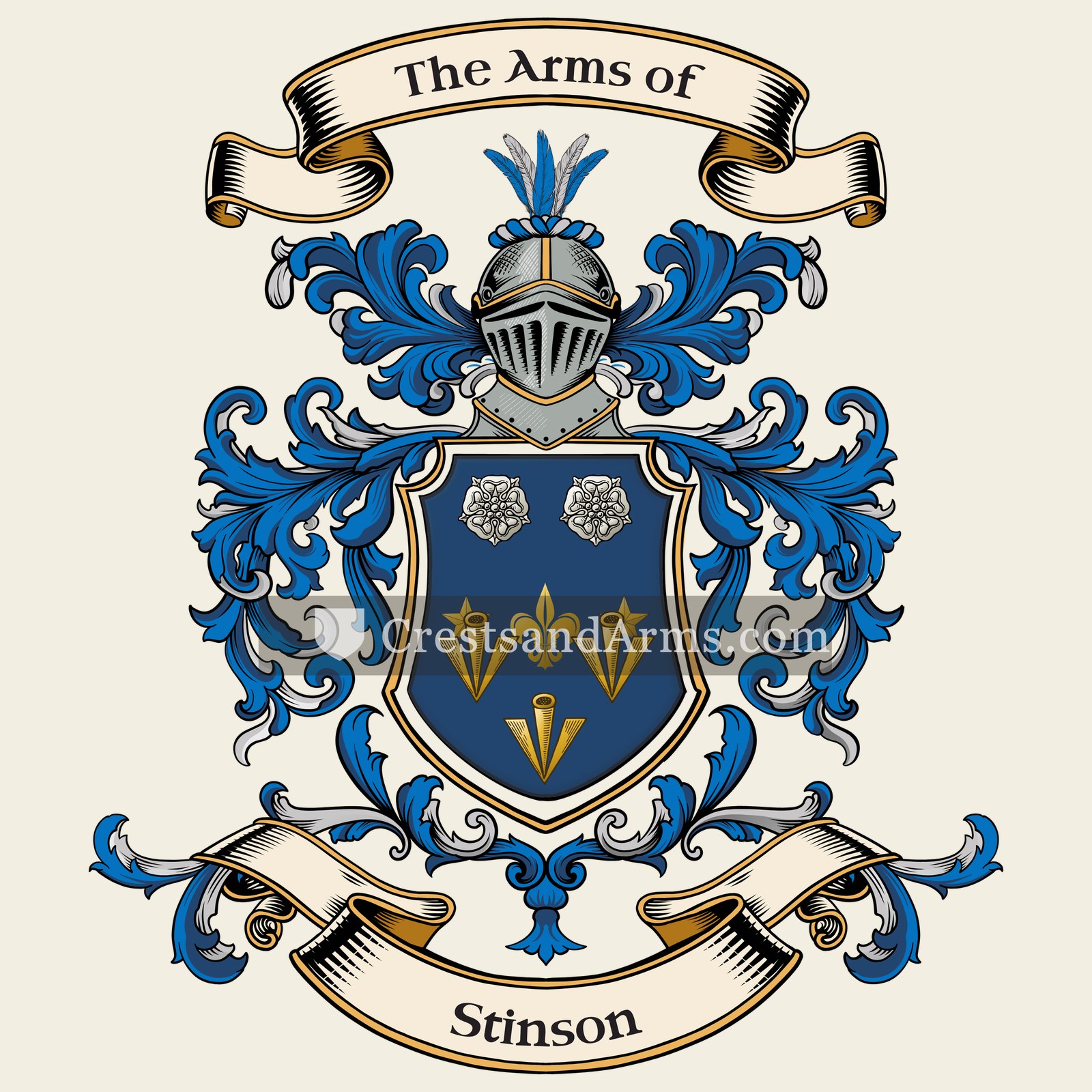
Symbols on this shield
fleur de lisPurity, light, and the sixth son
mulletThe third son, and a divine quality from above
roseThe seventh son, and beauty with grace
arrowReadiness for battle, and affliction endured
Colours
Blue (Azure)Means: Loyalty and truth
Gold (Or)Means: Generosity
Silver (Argent)Means: Peace and sincerity
Historical info
Source
Sir Bernard Burke, The General Armory of England, Scotland, Ireland and Wales, London: Harrison & Sons, 1884
Blazon (the actual original written record)
“Az. a fleur-de-lis within two mullets or, in fess betw. two roses in chief ar. barbed and seeded of the second, and three arrows in base gold, flighted of the third”
DownKillyleagh · Down, c. 1751
Digital archive packCoat of arms PNG, gold border print PDF, vector SVG and the certificate of authenticity. Sent to your email in minutes.
Map of Ireland showing where the Stinson arms are recorded
The Stinson arms were recorded in Down, c. 1751.
Down was north-eastern Irish country settled from Scotland in the seventeenth century. The new landowners took grants and had them recorded, which is why so many Down families carry documented shields.
This is where the arms were entered in the register. Families often moved to other parts of the country, so the same name can turn up in more than one region.
The body that granted and recorded arms in Ireland in this period.
George II of Great Britain
Sovereign of the period
George II of Great Britain
1727–1760
Reigning in England when the Stinson arms are first recorded.
How Arms Worked in Ireland
The Ulster King of Arms granted coats of arms to individuals who proved their social standing and good character. These symbols were typically inherited by all legitimate descendants of the original holder. If a family branch wanted a unique look, they could apply for a specific change to their design through the office to ensure their identity remained distinct.
Granting authority
The Ulster King of Arms acted as the official body that regulated and issued all coats of arms throughout Ireland.
How they got arms
Families obtained their arms through formal grants issued by the office after proving their eligibility and paying the required fees.
Where arms were recorded
All official grants were recorded in the registers held by the Ulster King of Arms starting from the year 1552.
The family's standing
Recorded among the armigerous families of Down.
Origin & History of the Stinson Family in Ireland
The Stinson family name has deep roots in the northern regions of Ireland, particularly within County Down. By the middle of the eighteenth century, the family was well-established in this area, as evidenced by records confirming their presence in the region by 1751. The name is generally considered a variation of the name Stevenson, which reflects a long history of migration and cultural exchange between Scotland and the northern counties of Ireland. During this period, many families with similar names moved across the North Channel to settle in the fertile lands of Ulster. These early settlers often worked as farmers or tradespeople, becoming an integral part of the local community structure. Over time, the spelling evolved into the version used today, marking the family as a distinct part of the social fabric of County Down during a time of significant transition and growth in the region.
Coat of Arms & Family Crest Details
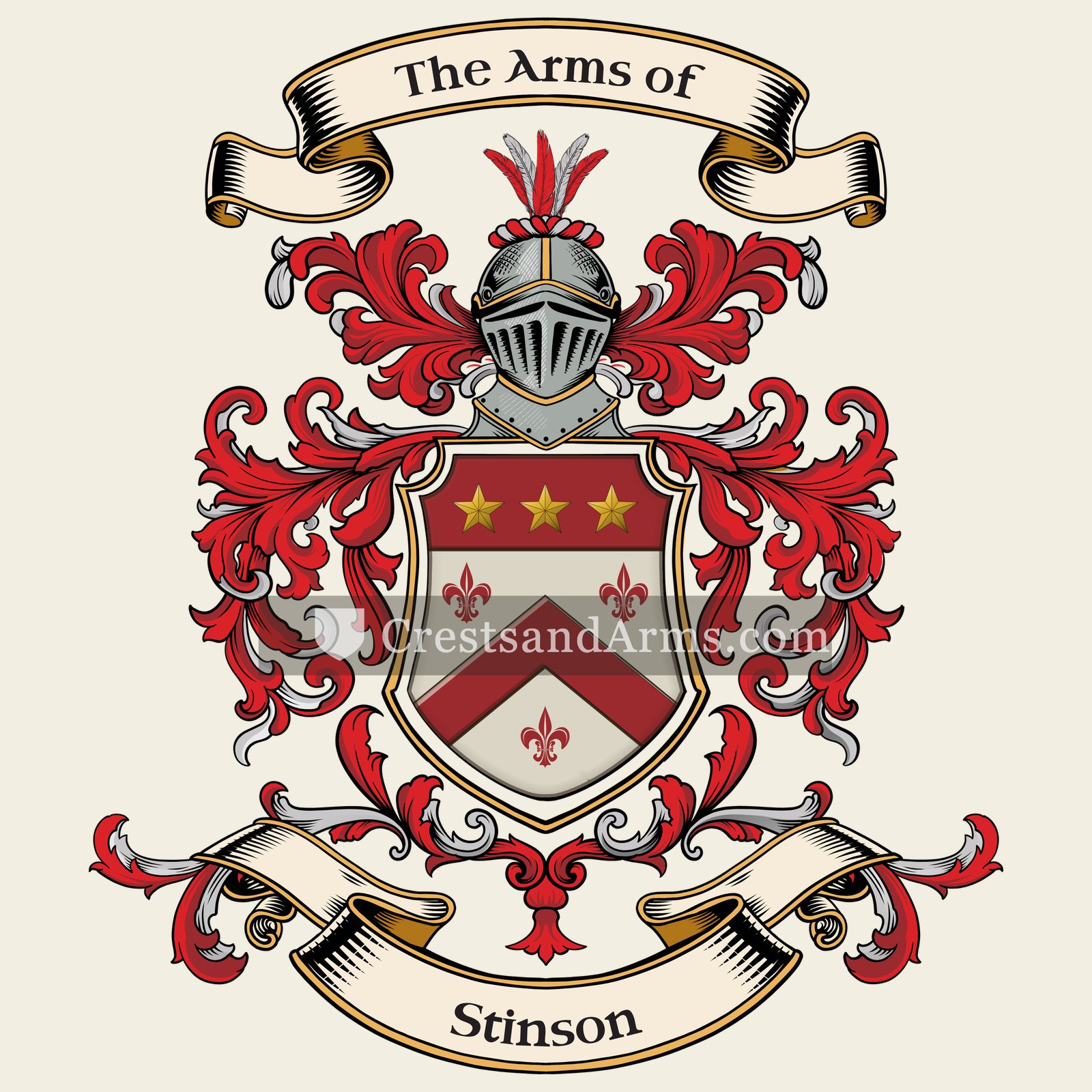
Symbols on this shield
chevronProtection, and faithful service completed
chiefAuthority, wisdom and dominion
fleur de lisPurity, light, and the sixth son
mulletThe third son, and a divine quality from above
Colours
Silver (Argent)Means: Peace and sincerity
Red (Gules)Means: Military strength
Gold (Or)Means: Generosity
Historical info
Source
Sir Bernard Burke, The General Armory of England, Scotland, Ireland and Wales, London: Harrison & Sons, 1884
Blazon (the actual original written record)
“Ar. a chev. betw. three fleurs-de-lis gu. on a chief of the last as many mullets or”
LanarkHermishiels · Lanark, c. 1748
Digital archive packCoat of arms PNG, gold border print PDF, vector SVG and the certificate of authenticity. Sent to your email in minutes.
Map of Scotland showing where the Stinson arms are recorded
The Stinson arms were recorded in Lanark, c. 1748.
Lanarkshire ran along the upper Clyde, farming country with coal beneath it. Its landed families were long-established, and long establishment is what brought them into the register.
This is where the arms were entered in the register. Families often moved to other parts of the country, so the same name can turn up in more than one region.
The body that granted and recorded arms in Scotland in this period.
George II of Great Britain
Sovereign of the period
George II of Great Britain
1727–1760
Reigning in England when the Stinson arms are first recorded.
How Arms Worked in Scotland
Scottish heraldry is unique because it treats a coat of arms as a piece of personal property protected by law. Only one person can own a specific design at any given time. When a family grows, the head keeps the original shield while other relatives must apply for their own distinct version with slight changes to prove their specific identity.
Granting authority
The Court of the Lord Lyon acts as the official body that regulates and controls all heraldic matters throughout Scotland.
How they got arms
Individuals obtain a legal right to their arms through a formal petition process that confirms their identity and family connection.
Where arms were recorded
All valid coats of arms are officially entered into the Public Register of All Arms and Bearings starting from 1672.
The family's standing
Recorded among the armigerous families of Lanark.
Origin & History of the Stinson Family in Scotland
The Stinson surname is a patronymic name, which means it originated as a way to identify a person as the son of someone named Stephen or Steven. While the name has roots across the British Isles, the Stinson family established a notable presence in the Scottish Lowlands by the mid-eighteenth century. Records confirm that members of the family were living in the town of Lanark by 1748. During this period, Lanark was a bustling market town that served as a center for trade and local government. Families like the Stinsons often worked in agriculture or skilled crafts, contributing to the local economy as the region transitioned through the agricultural improvements of the era. Because the name was passed down through oral tradition before being formally recorded in parish registers, it reflects the common naming patterns used by families in the Scottish countryside to distinguish their households within their local communities.
Related Branches & Arms
Root word
Stephen
Derived from the Greek word stephanos meaning crown or garland.
This name
StinsonA patronymic surname meaning son of Stephen or son of the crowned one.
also spelled
Stevinson
Stevynson
Stinson
Documented Sources
Sir Bernard Burke, The General Armory of England, Scotland, Ireland and Wales, London: Harrison & Sons, 1884
Bardsley, Charles Wareing, A Dictionary of English and Welsh Surnames, 1901
Reaney, Percy Hide, A Dictionary of British Surnames, 1958
Lincolnshire Archives, Lincoln City Council Records: Freemen and Guild Registers, 1600–1650
Digital archive packCoat of arms PNG, gold border print PDF, vector SVG and the certificate of authenticity. Sent to your email in minutes.


 chevronProtection, and faithful service completed
 chiefAuthority, wisdom and dominion
 paleMilitary strength, and a fortified defence
 fleur de lisPurity, light, and the sixth son
 mulletThe third son, and a divine quality from above
 lionCourage, strength and royalty
 chevronProtection, and faithful service completed
 chiefAuthority, wisdom and dominion
 paleMilitary strength, and a fortified defence
 fleur de lisPurity, light, and the sixth son
 mulletThe third son, and a divine quality from above
 lionCourage, strength and royalty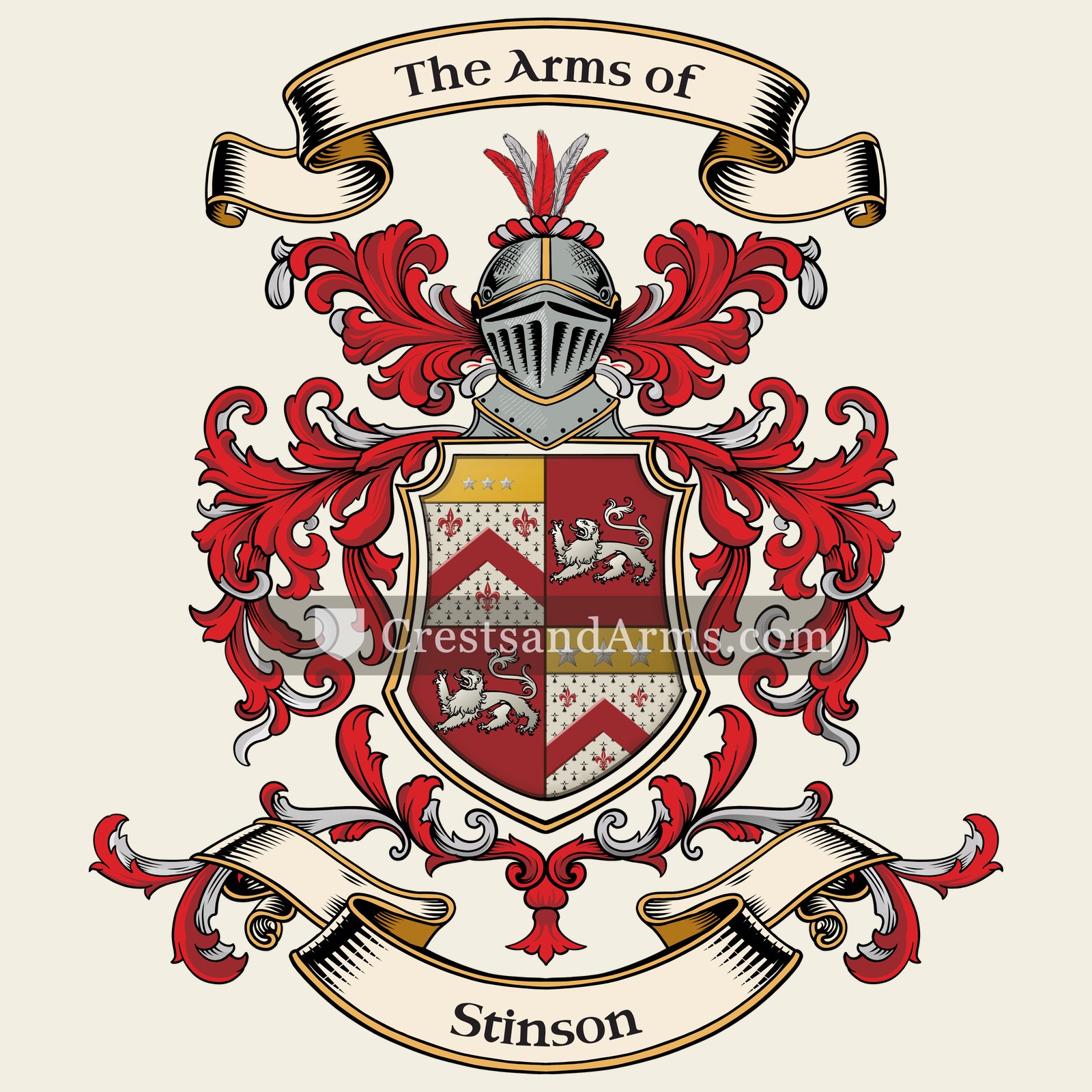


 roseThe seventh son, and beauty with grace
 arrowReadiness for battle, and affliction endured