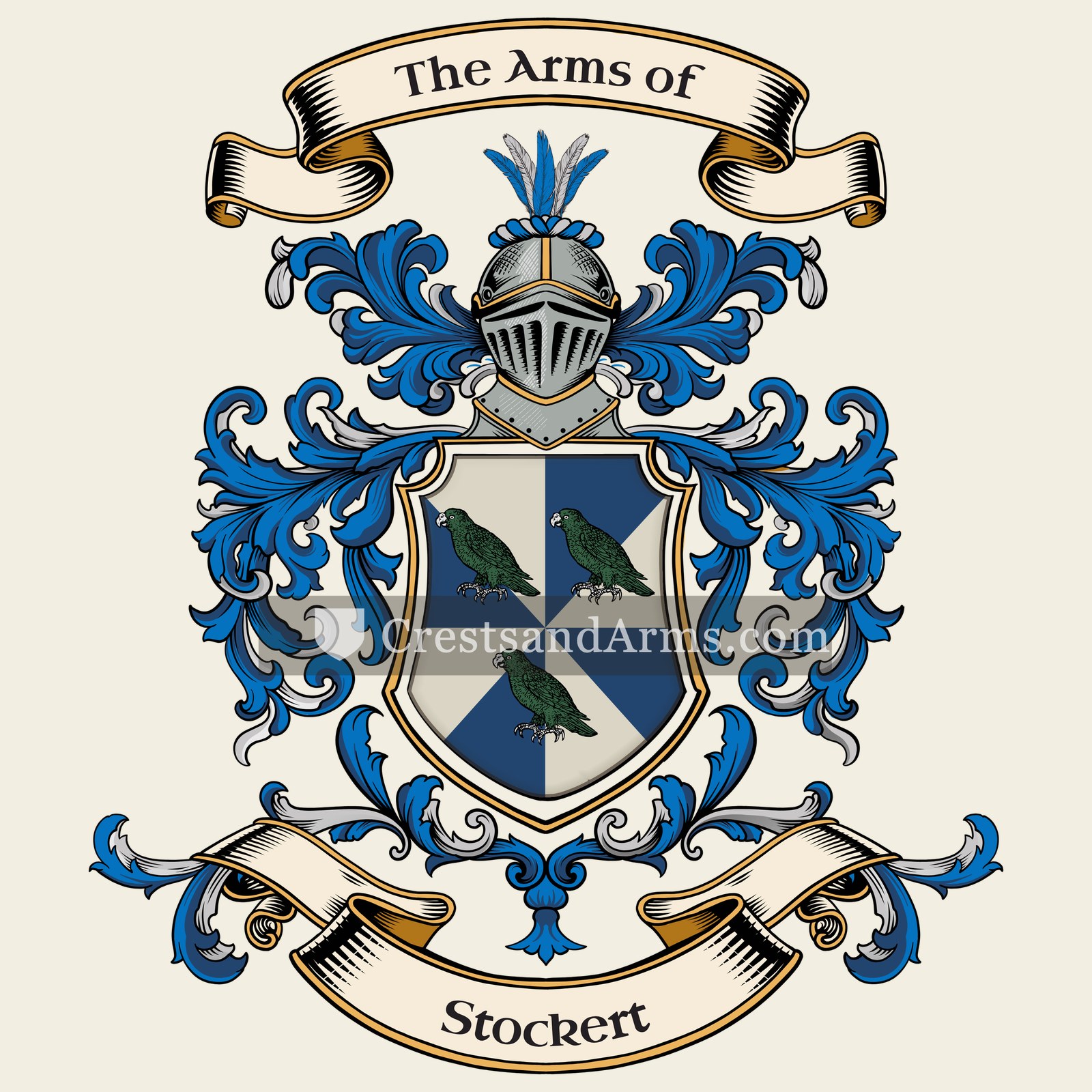
A record of documented arms, meaning and origin, researched for the Stockert family lines. Documented in 3 countries.
Reg. 8097 · German, T–V
Coat of Arms & Family Crest Details
Symbols on this shield
griffinValour and vigilance, guarding great treasure
Colours
Black (Sable)Means: Constancy
Silver (Argent)Means: Peace and sincerity
Gold (Or)Means: Generosity
Historical info
Source
J. B. Rietstap, Armorial Général, Gouda: G. B. van Goor Zonen, 1884–87
Blazon (the actual original written record)
“Tranché: au 1 de sa. à un griffon d'or, tenant un chicot au nat. en pal; au 2 barré d'arg. et de gu. Cq. cour. C.: le griffon, iss., entre deux prob. coupées, à dextre d'arg. sur gu., à sen. d'or sur gu. L.: à dextre d'or et de sa., à sen. d'arg. et de gu.”
Germanyc. 1765
Digital archive packCoat of arms PNG, gold border print PDF, vector SVG and the certificate of authenticity. Sent to your email in minutes.
Map of Germany showing where the Stockert arms are recorded
The Stockert arms were recorded in Germany, c. 1765.
Arms such as these were typically recorded in Bavaria.
Bavaria was a country of old landed families and walled market towns. Estates passed down the same line for centuries, and both the landowners and the leading townsmen kept arms, which is why so many Bavarian names sit in the registers.
This is where the arms were entered in the register. Families often moved to other parts of the country, so the same name can turn up in more than one region.
The body that granted and recorded arms in Germany in this period.
Francis I, Holy Roman Emperor
Sovereign of the period
Francis I, Holy Roman Emperor
1745–1765
Reigning in Germany when the Stockert arms are first recorded.
How Arms Worked in Germany
In the Holy Roman Empire, coats of arms were often granted to individuals by the Emperor or his representatives. These arms were then passed down through the generations to all legitimate descendants of the original holder. Younger branches of a family usually kept the same shield design without needing to change it, as the arms belonged to the entire lineage.
Granting authority
The Holy Roman Emperor held the sole power to grant new coats of arms throughout his vast imperial territories.
How they got arms
Families typically obtained their coats of arms through a formal imperial grant or by proving their noble status to the authorities.
Where arms were recorded
These grants were officially recorded in the Imperial Chancery registers, which began keeping formal records of such honors during the Middle Ages.
The family's standing
Recorded among the armigerous families of Germany.
Origin & History of the Stockert Family in Germany
The family name Stockert is rooted in the linguistic traditions of southern Germany, specifically within the regions of Bavaria. The name is classified as a topographic surname, which means it was originally used to identify people based on the landscape where they lived. In Middle High German, the term "stock" referred to a tree stump or a cleared area of forest. Therefore, the name likely described ancestors who lived near a cleared plot of land or worked in the timber industry. By the mid-18th century, the family was well-established in Bavarian society, with records confirming their presence in the region by 1765. During this era, families were often tied to specific local parishes and agricultural estates, and the name served as a way to distinguish one household from another in growing rural communities. These early Stockerts were part of the hardworking backbone of the Bavarian countryside, living through a period of significant social and economic change in the Holy Roman Empire.
Coat of Arms & Family Crest Details
Symbols on this shield
eagleNobility, strength and a keen mind
treeLife, endurance and deep roots
Colours
Gold (Or)Means: Generosity
Black (Sable)Means: Constancy
Historical info
Source
J. B. Rietstap, Armorial Général, Gouda: G. B. van Goor Zonen, 1884–87
Blazon (the actual original written record)
“D'or à une aigle ess. de sa., posée sur un chicot du même en fasce. C.: un griffon iss. de sa., bq. et onglé d'or.”
Switzerlandc. 1745
Digital archive packCoat of arms PNG, gold border print PDF, vector SVG and the certificate of authenticity. Sent to your email in minutes.
Map of Switzerland showing where the Stockert arms are recorded
The Stockert arms were recorded in Switzerland, c. 1745.
Arms such as these were typically recorded in Bern.
Bern was the largest of the Swiss cantons and ran itself, with its own council and its own courts. Its governing families held office for generations, and office of that kind carried a shield with it.
This is where the arms were entered in the register. Families often moved to other parts of the country, so the same name can turn up in more than one region.
The body that granted and recorded arms in Switzerland in this period.
How Arms Worked in Switzerland
In Switzerland, coats of arms were not restricted to the nobility and were often adopted by common citizens and families. These symbols were passed down through generations to show family identity. When branches of a family grew, they often changed small details of the design to distinguish their own line from the original group.
Granting authority
Cantonal and civic authorities managed the use of coats of arms within their specific regions and local jurisdictions.
How they got arms
Families typically assumed their own coats of arms based on local custom rather than receiving them from a central monarch.
Where arms were recorded
Arms were recorded in various cantonal and civic registers starting from the fourteenth century throughout the Swiss region.
The family's standing
Recorded among the armigerous families of Switzerland.
Origin & History of the Stockert Family in Switzerland
The family name Stockert has deep roots in the Swiss region of Bern, where records confirm members of the family were established by the year 1745. The name itself is derived from the Middle High German word "stock," which often referred to a tree trunk or a stump. In the context of early Swiss history, this suggests that the first people to carry the name likely lived near a prominent landmark made of wood or perhaps worked in forestry and land clearing. During the mid-18th century, Bern was a powerful city-state, and families like the Stockerts were part of a society defined by strict social hierarchies and local guilds. As residents of this region, the family would have been integrated into the local agricultural or trade-based economy that supported the growing urban center. Over time, the name became a permanent fixture in the local records, reflecting the family's role in the development of the Swiss landscape and their endurance within the community of Bern.
Coat of Arms & Family Crest Details
Symbols on this shield
parrotEloquence, and travel in distant lands
Colours
Blue (Azure)Means: Loyalty and truth
Green (Vert)Means: Hope
Silver (Argent)Means: Peace and sincerity
Historical info
Source
Sir Bernard Burke, The General Armory of England, Scotland, Ireland and Wales, London: Harrison & Sons, 1884
Blazon (the actual original written record)
“Gyronny of six az. and ar. three parrots vert”
EnglandLondon, c. 1484
Digital archive packCoat of arms PNG, gold border print PDF, vector SVG and the certificate of authenticity. Sent to your email in minutes.
Map of England showing where the Stockert arms are recorded
The Stockert arms were recorded in London, c. 1484.
This is where the arms were entered in the register. Families often moved to other parts of the country, so the same name can turn up in more than one region.
The body that granted and recorded arms in England in this period.
Richard III of England
Sovereign of the period
Richard III of England
1483–1485
Reigning in Germany when the Stockert arms are first recorded.
How Arms Worked in England
English heraldry allowed arms to be shared by all legitimate descendants of the original owner. These symbols were treated as personal property that moved through the generations to all children. While the eldest son kept the original design, other family members could use the same shield without needing to change it or register their own unique versions.
Granting authority
The College of Arms in London has regulated the use of coats of arms throughout England and Wales since 1484.
How they got arms
Families typically obtained their coats of arms through a formal grant from the Crown or by proving their ancient right to them.
Where arms were recorded
All official coats of arms are recorded in the registers kept at the College of Arms, which date back to the fifteenth century.
The family's standing
Recorded among the armigerous families of England.
Origin & History of the Stockert Family in England
The history of the Stockert family in England begins with their documented presence in London during the year 1484. During this period, the city was a bustling center of trade and craftsmanship, and families with this name likely integrated into the urban economy as merchants or skilled laborers. The name itself is of Germanic origin, typically derived from the word "stock," which referred to a tree trunk or a wooden post. This suggests that the earliest ancestors may have lived near a prominent wooden landmark or worked in a trade involving timber. As they settled into the social fabric of late medieval London, the family became part of the growing class of city dwellers who helped shape the capital’s commercial life. Their early residency in such a significant hub indicates that they were likely connected to the networks of trade and guild activity that defined the city at the end of the fifteenth century.
Related Branches & Arms
Root word
Stoc
Old High German term for a tree trunk or wooden post.
This name
StockertA topographic name for someone living near a tree stump or a cleared forest area.
also spelled
Stoker
Stokker
Stockar
Documented Sources
J. B. Rietstap, Armorial Général, Gouda: G. B. van Goor Zonen, 1884–87
Bahlow, Hans, Deutsches Namenlexikon: Familien- und Vornamen nach Ursprung und Sinn erklärt, 1967
Kohlheim, Rosa and Volker Kohlheim, Duden Familiennamen: Herkunft und Bedeutung von 20.000 Nachnamen, 2005


 griffinValour and vigilance, guarding great treasure
 griffinValour and vigilance, guarding great treasure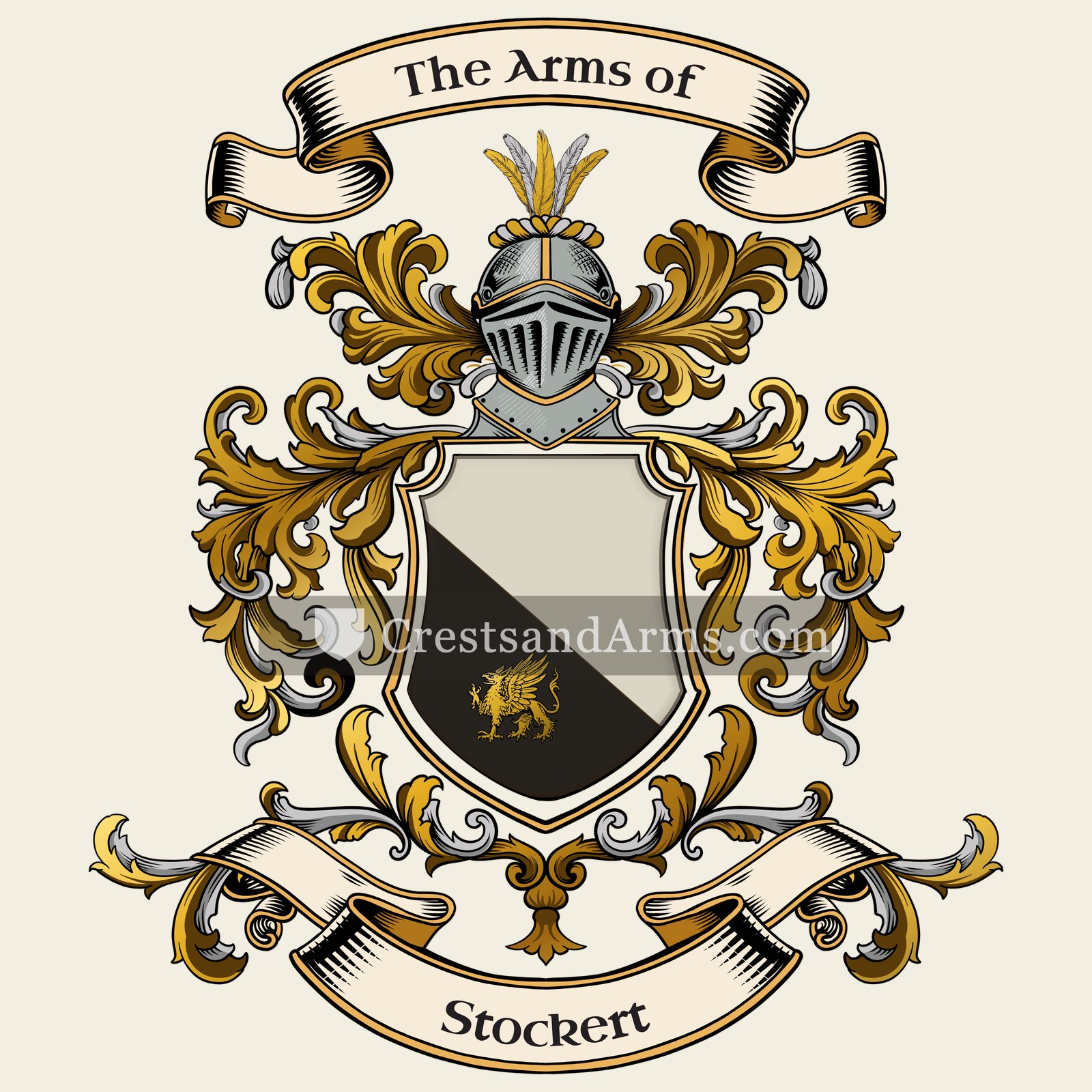


 eagleNobility, strength and a keen mind
 treeLife, endurance and deep roots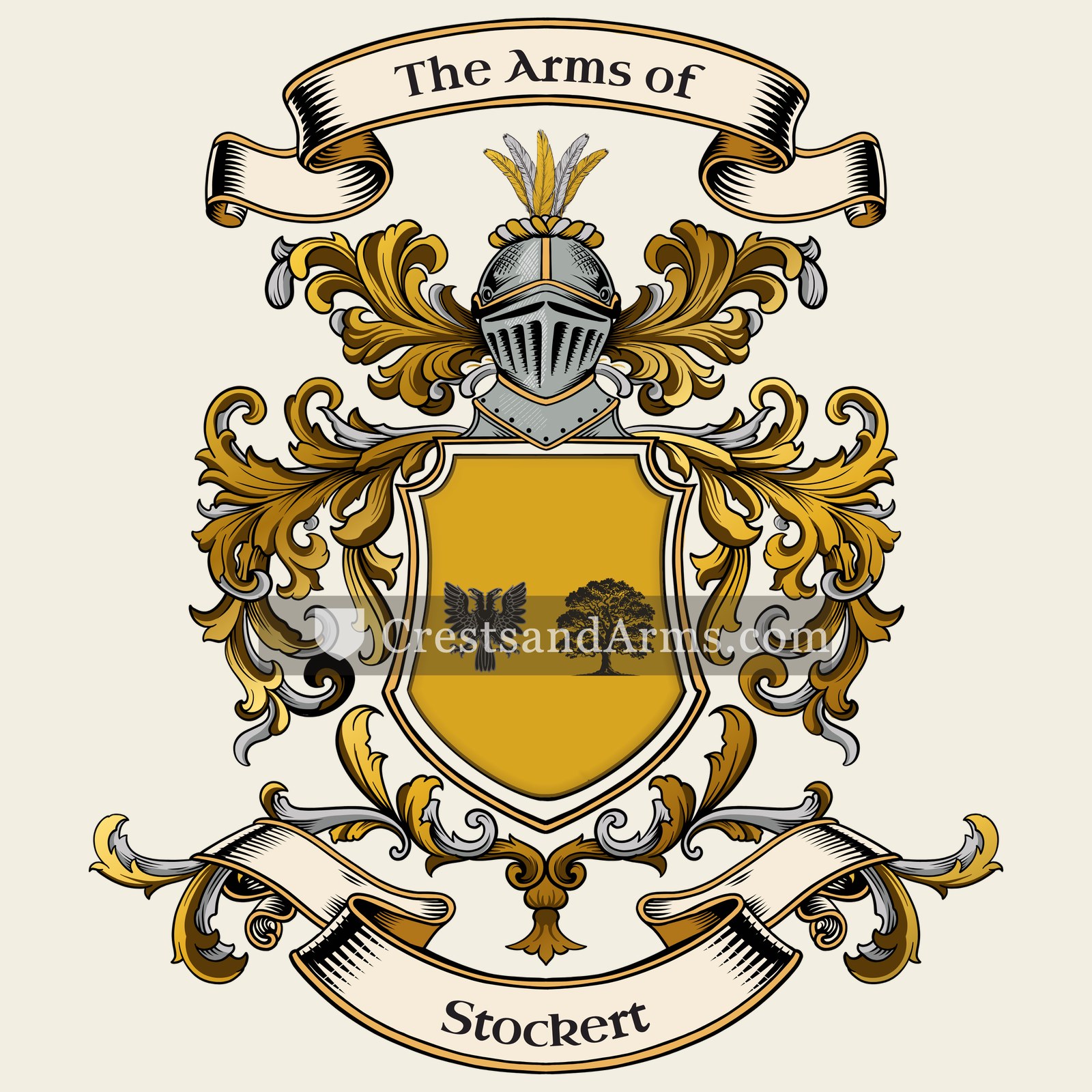

 parrotEloquence, and travel in distant lands