Map of Netherlands showing where the Stokely arms are recorded
The Stokely arms were recorded in Deventer, c. 1815.
This is where the arms were entered in the register. Families often moved to other parts of the country, so the same name can turn up in more than one region.
Region
Deventer
Town
Deventer
First recorded
1815
Granting Authority for the Stokely Arms
Hoge Raad van Adel
Photograph made by me · CC BY-SA 3.0
The body that granted and recorded arms in Netherlands in this period.
William I of the Netherlands
Sovereign of the period
William I of the Netherlands
1815–1840
Reigning in Netherlands when the Stokely arms are first recorded.
How Arms Worked in Netherlands
In the Netherlands, coats of arms were often used by noble families and those who held specific public offices. These arms were passed down through the generations to legitimate descendants. Younger branches of a family usually kept the original design without needing to add special marks. This system ensured that the family identity remained clear and consistent over many years.
Granting authority
The Hoge Raad van Adel is the official body that regulates and manages noble titles and coats of arms in the Netherlands.
How they got arms
Families typically obtained their coats of arms through official royal grants or by proving their long-standing historical use of the symbols.
Where arms were recorded
Coats of arms are officially recorded in the registers held by the Hoge Raad van Adel, which began its work in 1814.
The family's standing
Recorded among the armigerous families of Netherlands.
Origin & History of the Stokely Family in Netherlands
The history of the Stokely name in the Netherlands is deeply connected to the historic city of Deventer. By 1815, records confirm that family members were established residents within this Hanseatic town, which served as a major center for trade and scholarship along the IJssel River. During this period, the Netherlands was undergoing significant administrative changes following the Napoleonic era, leading to the formal registration of surnames in civil records. The name likely reflects a geographical origin, as many Dutch surnames from this era were derived from local landmarks or specific plots of land. Living in Deventer placed the family at the heart of a bustling urban environment where merchants and artisans played a vital role in the recovery of the Dutch economy. These early ancestors were part of a society that valued civic participation and community growth, laying the foundation for the family's presence in the region during the nineteenth century.
Meaning of the Stokely family crest colors & symbols
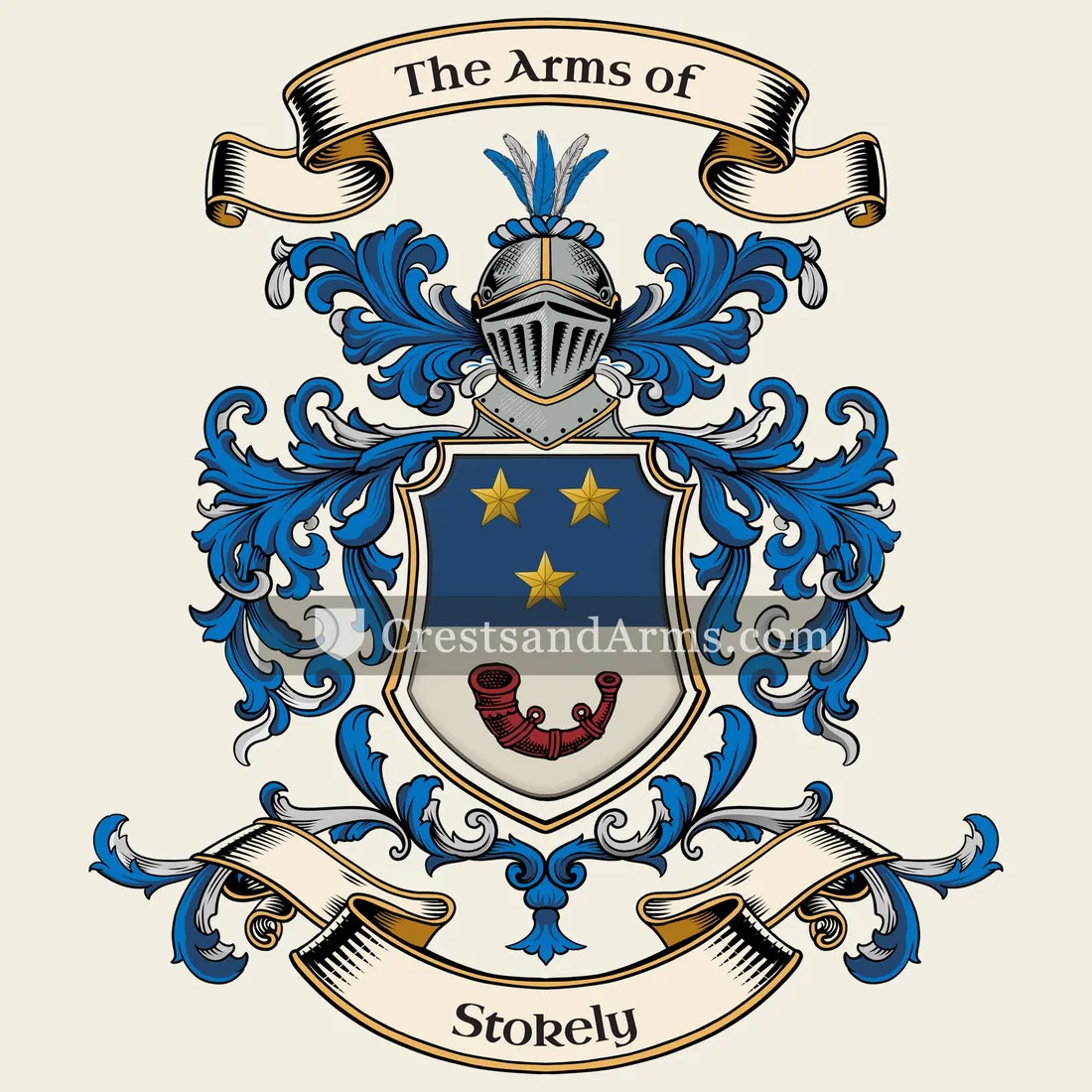
Symbols on this shield
mulletThe third son, and a divine quality from above
hunting horn stringedOne who delights in the chase
Colours
Blue (Azure)Means: Loyalty and truth
Silver (Argent)Means: Peace and sincerity
Gold (Or)Means: Generosity
Red (Gules)Means: Military strength
Historical info
Source
J. B. Rietstap, Armorial Général, Gouda: G. B. van Goor Zonen, 1884–87
Blazon (the actual original written record)
“Coupé: au 1 d'azur à trois étoiles mal-ordonnées d'or; au 2 d'arg. à un cor-de-chasse de gu. C.: un vol d'azur, chaque aile ch. d'une étoile d'arg. L.: d'arg. et d'azur.”
GermanyNuremberg, c. 1765
Digital archive packCoat of arms PNG, gold border print PDF, vector SVG and the certificate of authenticity. Sent to your email in minutes.
Map of Germany showing where the Stokely arms are recorded
The Stokely arms were recorded in Nuremberg, c. 1765.
This is where the arms were entered in the register. Families often moved to other parts of the country, so the same name can turn up in more than one region.
The body that granted and recorded arms in Germany in this period.
Francis I, Holy Roman Emperor
Sovereign of the period
Francis I, Holy Roman Emperor
1745–1765
Reigning in Netherlands when the Stokely arms are first recorded.
How Arms Worked in Germany
In the Holy Roman Empire, coats of arms were often granted to individuals by the Emperor or his representatives. These arms were then passed down through the generations to all legitimate descendants of the original holder. Younger branches of a family usually kept the same shield design without needing to change it, as the arms belonged to the entire lineage.
Granting authority
The Holy Roman Emperor held the sole power to grant new coats of arms throughout his vast imperial territories.
How they got arms
Families typically obtained their coats of arms through a formal imperial grant or by proving their noble status to the authorities.
Where arms were recorded
These grants were officially recorded in the Imperial Chancery registers, which began keeping formal records of such honors during the Middle Ages.
The family's standing
Recorded among the armigerous families of Germany.
Origin & History of the Stokely Family in Germany
The family name Stokely, while often associated with English origins, has a distinct historical presence in the German city of Nuremberg dating back to at least 1765. During the mid-eighteenth century, Nuremberg was a bustling center for trade, skilled craftsmanship, and intellectual growth within the Holy Roman Empire. Families residing in the city at this time were often integrated into the local guild systems or involved in the thriving merchant networks that connected Central Europe to wider markets. The presence of the Stokely name in this region suggests that early members of the family were likely part of this urban middle class, contributing to the city’s reputation for metalwork and precision manufacturing. As residents of a major imperial city, these individuals would have navigated a society defined by strict civic regulations and a strong emphasis on professional specialization. Their history in Nuremberg reflects the broader movement of families across European borders during an era of significant economic change and urban development.
Stokely Meaning & Related Branches
Root word
stok
A tree trunk, stick, or wooden post used as a boundary marker.
This name
StokelyRefers to someone who lived near a prominent tree trunk or boundary post.
also spelled
Stokel
Documented Sources
J. B. Rietstap, Armorial Général, Gouda: G. B. van Goor Zonen, 1884–87
Gemeentearchief Deventer, Bevolkingsregister van de gemeente Deventer, 1815
H.J. van Baalen, Deventer in de negentiende eeuw, 1982
Digital archive packCoat of arms PNG, gold border print PDF, vector SVG and the certificate of authenticity. Sent to your email in minutes.


 martletA younger son, who must win his own land
 martletA younger son, who must win his own land
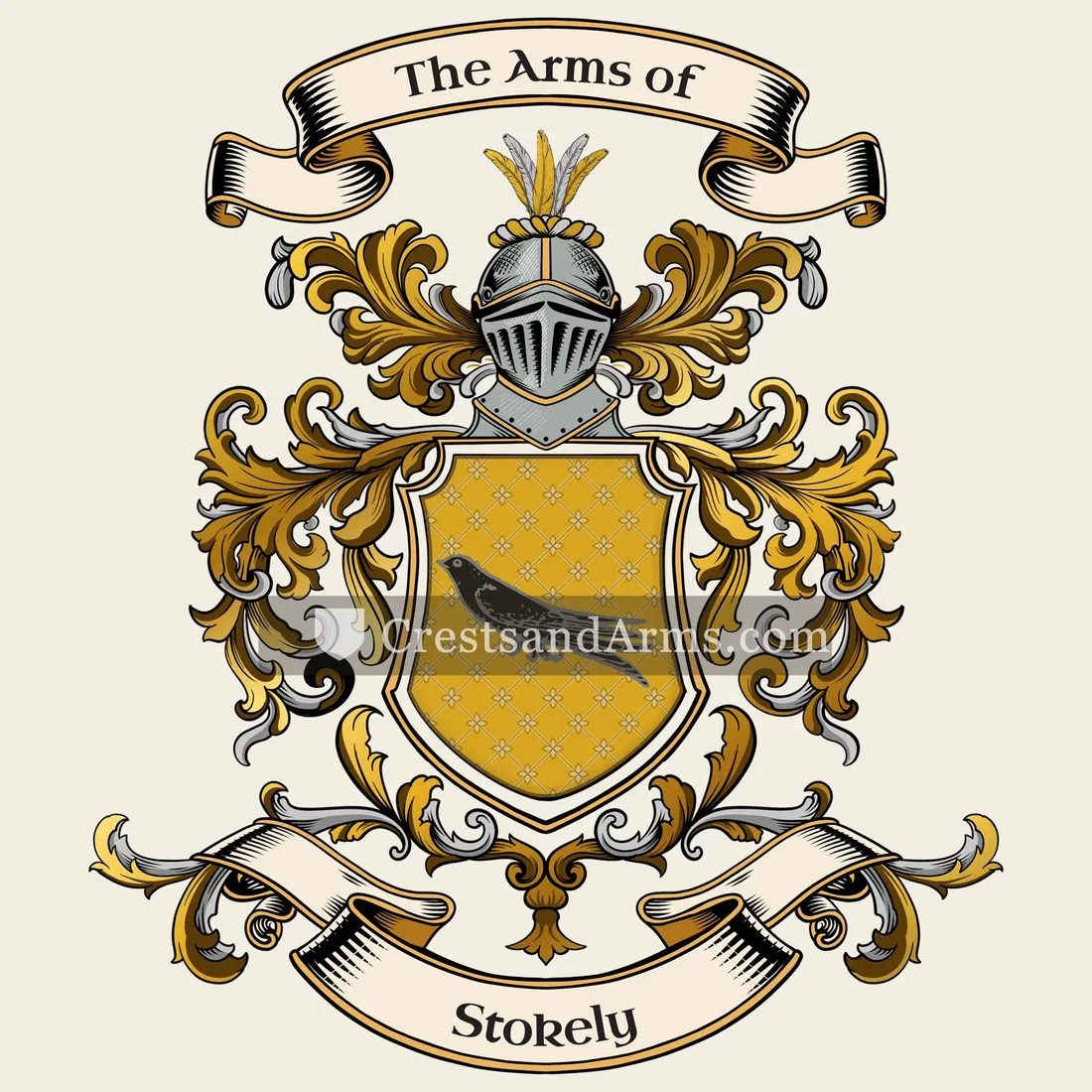


 mulletThe third son, and a divine quality from above
 hunting horn stringedOne who delights in the chase