Map of Netherlands showing where the Stoop arms are recorded
The Stoop arms were recorded in Leyde, c. 1815.
This is where the arms were entered in the register. Families often moved to other parts of the country, so the same name can turn up in more than one region.
Region
Leyde
Town
Leyde
First recorded
1815
Granting Authority for the Stoop Arms
Hoge Raad van Adel
Photograph made by me · CC BY-SA 3.0
The body that granted and recorded arms in Netherlands in this period.
William I of the Netherlands
Sovereign of the period
William I of the Netherlands
1815–1840
Reigning in Netherlands when the Stoop arms are first recorded.
How Arms Worked in Netherlands
In the Netherlands, coats of arms were often used by noble families and those who held specific public offices. These arms were passed down through the generations to legitimate descendants. Younger branches of a family usually kept the original design without needing to add special marks. This system ensured that the family identity remained clear and consistent over many years.
Granting authority
The Hoge Raad van Adel is the official body that regulates and manages noble titles and coats of arms in the Netherlands.
How they got arms
Families typically obtained their coats of arms through official royal grants or by proving their long-standing historical use of the symbols.
Where arms were recorded
Coats of arms are officially recorded in the registers held by the Hoge Raad van Adel, which began its work in 1814.
The family's standing
Recorded among the armigerous families of Netherlands.
Origin & History of the Stoop Family in Netherlands
The surname Stoop has deep roots in the Netherlands, where it functioned as a descriptive name often linked to a person’s physical stature or their occupation. In the Dutch language, the word "stoop" historically referred to a specific type of drinking vessel or a measurement of liquid, suggesting that early ancestors may have been involved in the brewing or tavern trades. By the early 19th century, the family established a notable presence in the city of Leiden. Records from 1815 confirm that members of the Stoop family were active participants in the civic and social life of this historic university town. During this period, the family integrated into the urban fabric of the Netherlands, moving through the changing political landscape of the Napoleonic era and the subsequent formation of the United Kingdom of the Netherlands. Their presence in Leiden highlights a transition from localized trade origins to a settled family line that contributed to the growth of Dutch municipal society.
Coat of Arms & Family Crest Details
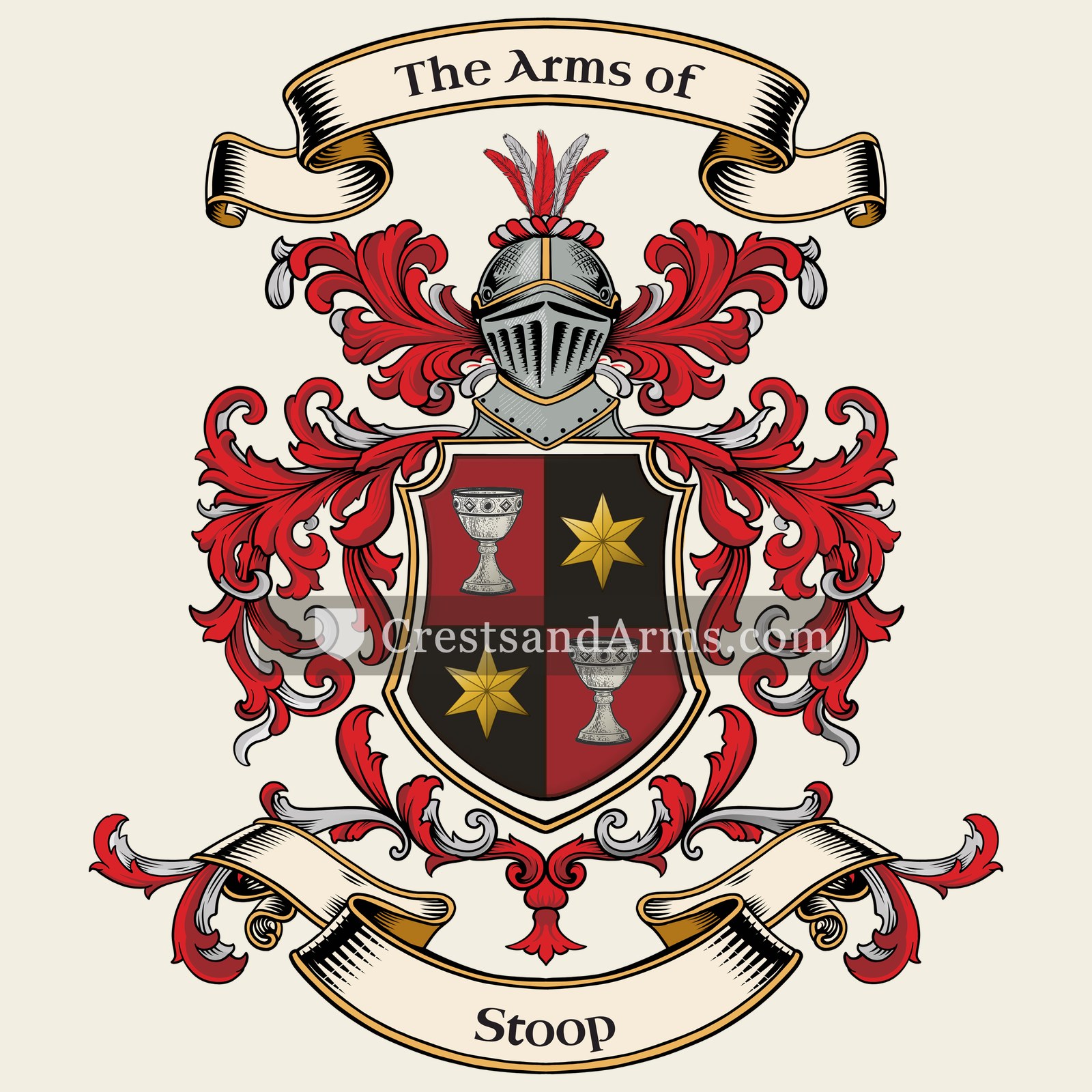
Symbols on this shield
cupFaith, office, and a trust discharged
starThe celestial goddess, and nobility
Colours
Red (Gules)Means: Military strength
Black (Sable)Means: Constancy
Silver (Argent)Means: Peace and sincerity
Gold (Or)Means: Generosity
Historical info
Source
J. B. Rietstap, Armorial Général, Gouda: G. B. van Goor Zonen, 1884–87
Blazon (the actual original written record)
“Ec.: aux 1 et 4 de gu. à une cruche d'arg.; aux 2 et 3 de sa. à une étoile d'or. Cq. cour. C.: un lion assis d'or, tenant dans ses pattes une fleur-de-lis d'arg.”
BelgiumGand, c. 1737
Digital archive packCoat of arms PNG, gold border print PDF, vector SVG and the certificate of authenticity. Sent to your email in minutes.
Map of Belgium showing where the Stoop arms are recorded
The Stoop arms were recorded in Gand, c. 1737.
This is where the arms were entered in the register. Families often moved to other parts of the country, so the same name can turn up in more than one region.
The body that granted and recorded arms in Belgium in this period.
Charles VI, Holy Roman Emperor
Sovereign of the period
Charles VI, Holy Roman Emperor
1711–1740
Reigning in Netherlands when the Stoop arms are first recorded.
How Arms Worked in Belgium
In Belgium, a coat of arms is considered personal property that is passed down through the male line to legitimate descendants. Families often use the same shield design across generations to show their shared heritage. If a branch of the family wants to change the design, they must apply for an official update to their specific version of the arms.
Granting authority
The Conseil héraldique is the official body that regulates and approves all coats of arms in Belgium.
How they got arms
Families obtain their coats of arms through formal royal grants or by confirming their historical right to use existing designs.
Where arms were recorded
All approved coats of arms are officially recorded in the public registers of the Conseil héraldique since 1844.
The family's standing
Recorded among the armigerous families of Belgium.
Origin & History of the Stoop Family in Belgium
The surname Stoop has deep roots in the historical landscape of Flanders, particularly within the city of Ghent. By the year 1737, records confirm that members of the Stoop family were well-established residents of this influential textile center. In the Dutch language, the word stoop historically referred to a specific type of measuring vessel used for liquids, or it could describe a person who held a position of authority, such as a local official or a gatekeeper. Because Ghent was a major hub for trade and craftsmanship during the eighteenth century, it is likely that the family name emerged from these professional roles or the daily commerce of the city. As the family grew, they became woven into the fabric of urban life, participating in the guilds and social structures that defined the region under the Austrian Netherlands. Their presence in Ghent during this era reflects a broader history of families who built their lives around the bustling markets and civic traditions of Belgian history.
Related Branches & Arms
Root word
Stolpe
A wooden post or pillar used in construction.
This name
StoopAn occupational name for someone who lived near a post or marker.
also spelled
Stope
Stoup
Documented Sources
J. B. Rietstap, Armorial Général, Gouda: G. B. van Goor Zonen, 1884–87
Beijer, H.J., Nederlandse Familienamen, 1995
Leiden Municipal Archives (Erfgoed Leiden en Omstreken), Bevolkingsregister van Leiden, 1815
Meertens, P.J., De betekenis van Nederlandse familienamen, 1963
Digital archive packCoat of arms PNG, gold border print PDF, vector SVG and the certificate of authenticity. Sent to your email in minutes.


 lionCourage, strength and royalty
 cupFaith, office, and a trust discharged
 lionCourage, strength and royalty
 cupFaith, office, and a trust discharged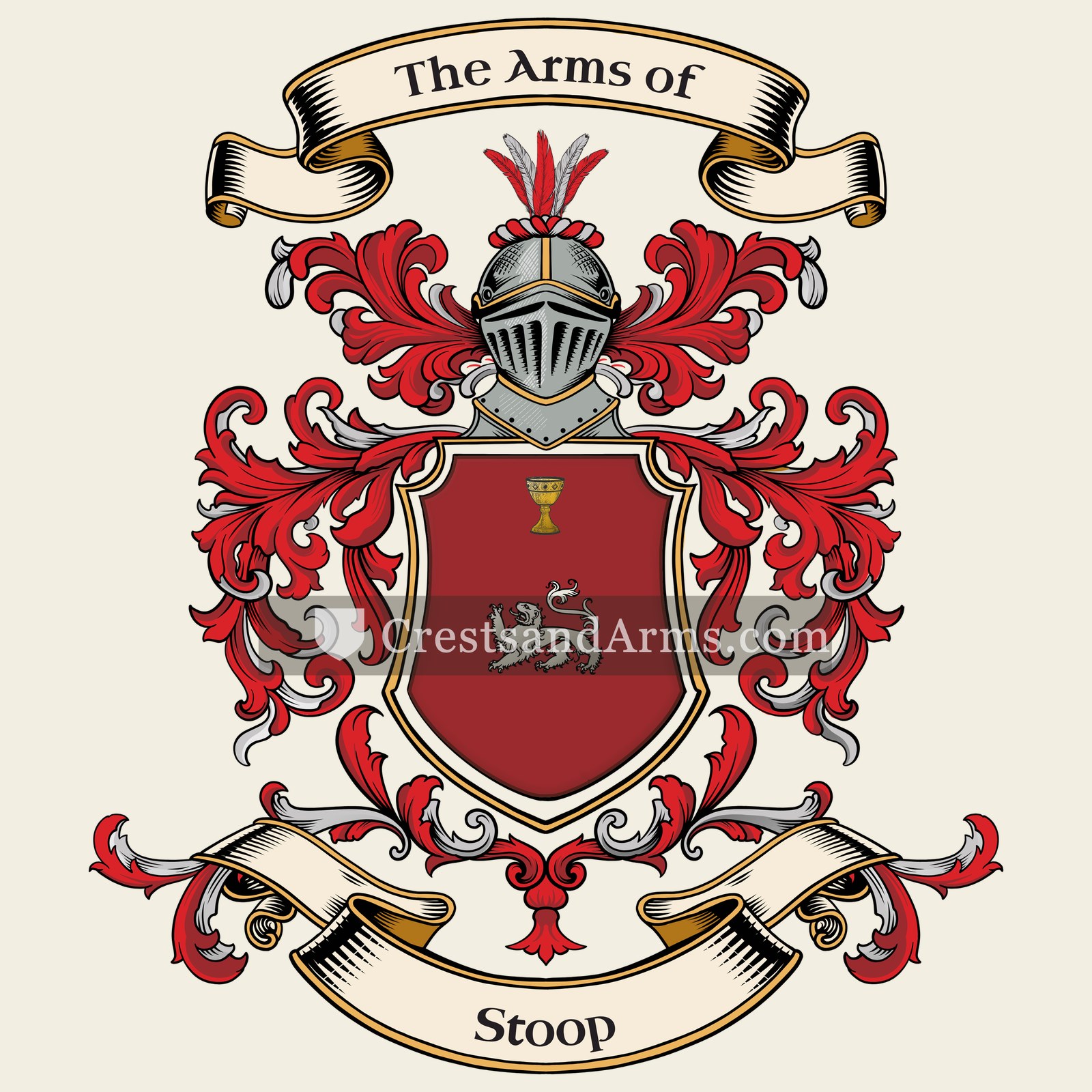


 starThe celestial goddess, and nobility