Map of Netherlands showing where the Storms arms are recorded
The Storms arms were recorded in Netherlands, c. 1815.
Arms such as these were typically recorded in Friesland.
Friesland was low, wet country on the northern coast of the Netherlands, farmed by families who had held the same land for centuries. Free landholders were unusually common there, and a free landholder could carry arms.
This is where the arms were entered in the register. Families often moved to other parts of the country, so the same name can turn up in more than one region.
Region
Friesland
First recorded
1815
Granting Authority for the Storms Arms
Hoge Raad van Adel
Photograph made by me · CC BY-SA 3.0
The body that granted and recorded arms in Netherlands in this period.
William I of the Netherlands
Sovereign of the period
William I of the Netherlands
1815–1840
Reigning in Netherlands when the Storms arms are first recorded.
How Arms Worked in Netherlands
In the Netherlands, coats of arms were often used by noble families and those who held specific public offices. These arms were passed down through the generations to legitimate descendants. Younger branches of a family usually kept the original design without needing to add special marks. This system ensured that the family identity remained clear and consistent over many years.
Granting authority
The Hoge Raad van Adel is the official body that regulates and manages noble titles and coats of arms in the Netherlands.
How they got arms
Families typically obtained their coats of arms through official royal grants or by proving their long-standing historical use of the symbols.
Where arms were recorded
Coats of arms are officially recorded in the registers held by the Hoge Raad van Adel, which began its work in 1814.
The family's standing
Recorded among the armigerous families of Netherlands.
Origin & History of the Storms Family in Netherlands
The surname Storms originated as a descriptive name, likely referring to a person with a forceful personality or someone who lived in an area prone to harsh weather. In the Netherlands, the name has deep roots in the northern province of Friesland. By the early 19th century, records confirm that families bearing the name were well-established in this region. During this period, the Netherlands underwent significant changes in how citizens registered their surnames due to the introduction of the civil registry under Napoleonic rule. Before this time, many families in rural areas like Friesland used patronymics, which meant a person’s last name was based on their father’s first name. The transition to a fixed family name like Storms suggests that these ancestors were part of a shift toward modern record-keeping practices that helped solidify family identities across Dutch provinces.
Coat of Arms & Family Crest Details
Symbols on this shield
fessThe military belt, and readiness to serve
escallopThe pilgrim's shell, and a long journey made
towerGrandeur and solidity, and a stronghold defended
lionCourage, strength and royalty
Colours
Red (Gules)Means: Military strength
Blue (Azure)Means: Loyalty and truth
Gold (Or)Means: Generosity
Silver (Argent)Means: Peace and sincerity
Historical info
Source
J. B. Rietstap, Armorial Général, Gouda: G. B. van Goor Zonen, 1884–87
Blazon (the actual original written record)
“De gu. à cinq coquilles d'arg., rangées en croix; au fr.-q. d'or, ch. d'une fasce d'azur, surch. de trois tours d'arg. et acc. en chef d'un lion naiss. de gu., mouv. de la fasce.”
BelgiumBruxelles, c. 1737
Digital archive packCoat of arms PNG, gold border print PDF, vector SVG and the certificate of authenticity. Sent to your email in minutes.
Map of Belgium showing where the Storms arms are recorded
The Storms arms were recorded in Bruxelles, c. 1737.
This is where the arms were entered in the register. Families often moved to other parts of the country, so the same name can turn up in more than one region.
The body that granted and recorded arms in Belgium in this period.
Charles VI, Holy Roman Emperor
Sovereign of the period
Charles VI, Holy Roman Emperor
1711–1740
Reigning in Netherlands when the Storms arms are first recorded.
How Arms Worked in Belgium
In Belgium, a coat of arms is considered personal property that is passed down through the male line to legitimate descendants. Families often use the same shield design across generations to show their shared heritage. If a branch of the family wants to change the design, they must apply for an official update to their specific version of the arms.
Granting authority
The Conseil héraldique is the official body that regulates and approves all coats of arms in Belgium.
How they got arms
Families obtain their coats of arms through formal royal grants or by confirming their historical right to use existing designs.
Where arms were recorded
All approved coats of arms are officially recorded in the public registers of the Conseil héraldique since 1844.
The family's standing
Recorded among the armigerous families of Belgium.
Origin & History of the Storms Family in Belgium
The history of the Storms family in Belgium is deeply rooted in the urban landscape of Brussels, where records confirm their presence as early as 1737. The name itself is likely derived from the Middle Dutch word "storm," which was often used as a descriptive nickname for a person with a boisterous or energetic personality. During the eighteenth century, Brussels was a bustling center of trade and craftsmanship, and families like the Storms were often integrated into the local guilds or merchant classes that defined city life. As residents of the capital, these early family members lived through a period of significant political transition as the region moved between various European powers. By establishing themselves in Brussels during this era, the Storms family became part of the long-standing demographic fabric of the city, contributing to the local workforce and community long before the modern Belgian state was formed.
Coat of Arms & Family Crest Details
Symbols on this shield
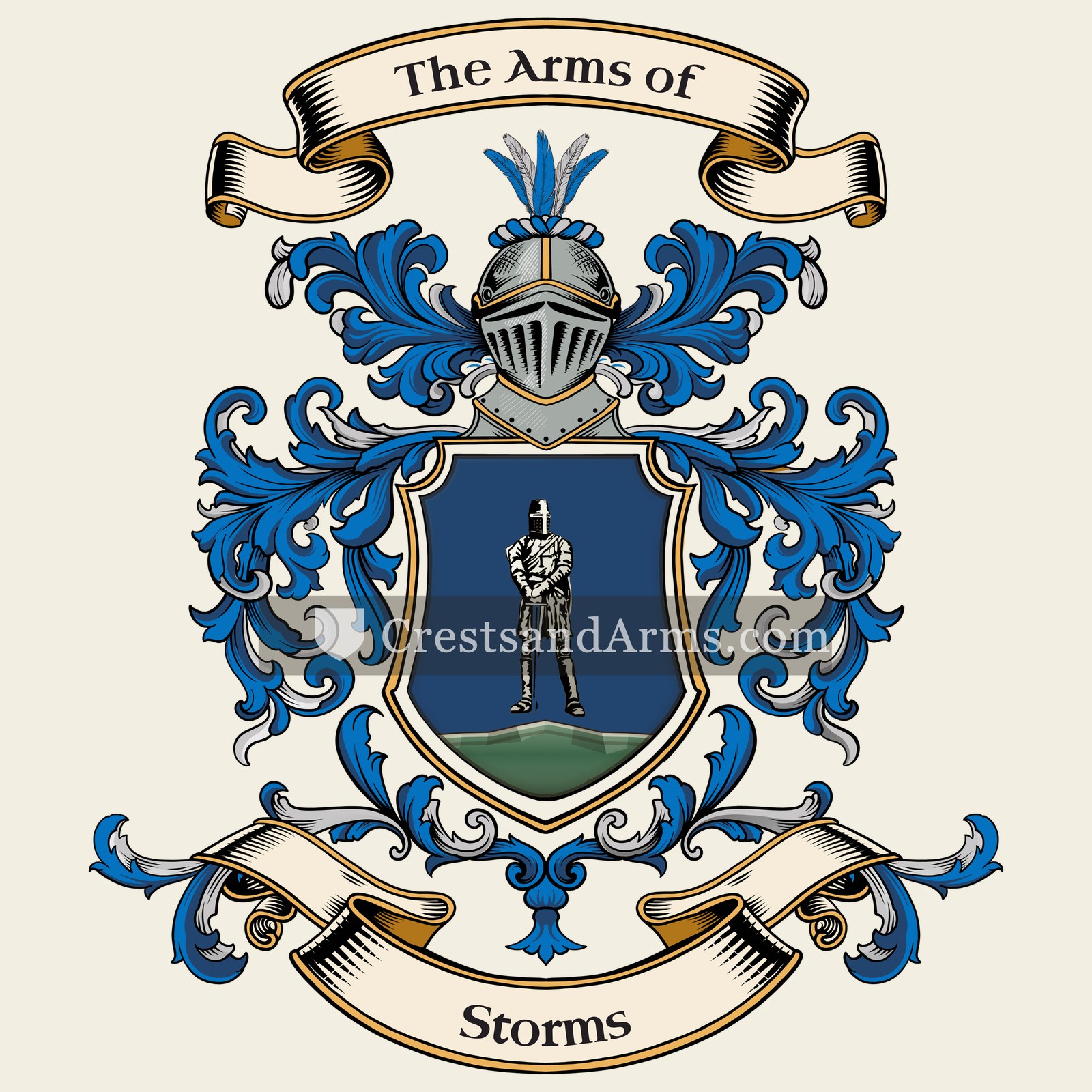
mountThe ground held, and steadfastness upon it
knightChivalry and service in arms
Colours
Blue (Azure)Means: Loyalty and truth
Green (Vert)Means: Hope
Silver (Argent)Means: Peace and sincerity
Historical info
Source
J. B. Rietstap, Armorial Général, Gouda: G. B. van Goor Zonen, 1884–87
Blazon (the actual original written record)
“D'azur à un chevalier, arm. de toutes pièces d'arg., tenant une épée haute, et sortant par une ouverture pratiquée dans un rang de palissades d'arg.; le tout soutenu d'une terrasse de sin. Cq. cour. C.: le chevalier, iss., entre deux bannières, d'or et d'azur, frangées d'or.”
SwedenNorvège, c. 1700
Digital archive packCoat of arms PNG, gold border print PDF, vector SVG and the certificate of authenticity. Sent to your email in minutes.
Map of Sweden showing where the Storms arms are recorded
The Storms arms were recorded in Norvège, c. 1700.
Arms such as these were typically recorded in Stockholm.
Stockholm held the Swedish court and the House of Nobility, where every noble family's arms were entered and kept. Families ennobled for service registered there, which is why so many are recorded around the city.
This is where the arms were entered in the register. Families often moved to other parts of the country, so the same name can turn up in more than one region.
The body that granted and recorded arms in Sweden in this period.
Carl XII of Sweden
Sovereign of the period
Carl XII of Sweden
1697–1718
Reigning in Netherlands when the Storms arms are first recorded.
How Arms Worked in Sweden
In Sweden, a coat of arms belonged to a noble family as a whole rather than just one individual. These arms were passed down through the generations to all legitimate descendants. Younger branches of the family used the same shield without needing to change it. This system ensured that the entire lineage shared the same identity and status under the law.
Granting authority
The Riddarhuset, or House of Nobility, regulated all noble coats of arms in Sweden under royal authority.
How they got arms
Families received their coats of arms through royal grants of nobility which were then officially registered with the House.
Where arms were recorded
Coats of arms were officially recorded in the Swedish House of Nobility register starting in the year 1626.
The family's standing
Recorded among the armigerous families of Sweden.
Origin & History of the Storms Family in Sweden
The family name Storms carries a sense of strength and natural power, rooted in the linguistic traditions of Northern Europe. By the year 1700, records confirm that members of the family were established in Stockholm, a city that served as the bustling heart of the Swedish Empire during a time of significant political and social change. In Sweden, surnames often evolved from descriptive nicknames or locations, and the name Storms likely originated as a reference to a person’s temperament or a connection to the turbulent coastal weather common to the region. As the family navigated life in the capital, they became part of the urban fabric of a growing metropolis. Their presence in early eighteenth-century Stockholm suggests they were likely involved in the trades or administrative roles that supported the city’s expansion. Over time, the name persisted as a distinct identifier, linking the family to the historical development of Swedish society during the transition into the modern era.
Related Branches & Arms
Root word
Storm
A violent atmospheric disturbance involving strong winds and heavy precipitation.
This name
StormsA patronymic surname indicating a descendant of someone nicknamed for a tempestuous personality.
also spelled
Storme
Documented Sources
J. B. Rietstap, Armorial Général, Gouda: G. B. van Goor Zonen, 1884–87
Meertens, P.J., De betekenis van de Nederlandse familienamen, 1963
Nederlands Instituut voor Genealogie, Burgerlijke Stand en Bevolkingsregisters, 1811–1900
Tresoar (Fries Historisch en Letterkundig Centrum), Registers van de Burgerlijke Stand van de provincie Friesland, 1811–1815
Digital archive packCoat of arms PNG, gold border print PDF, vector SVG and the certificate of authenticity. Sent to your email in minutes.


 crownSovereignty, authority and just reward
 crownSovereignty, authority and just reward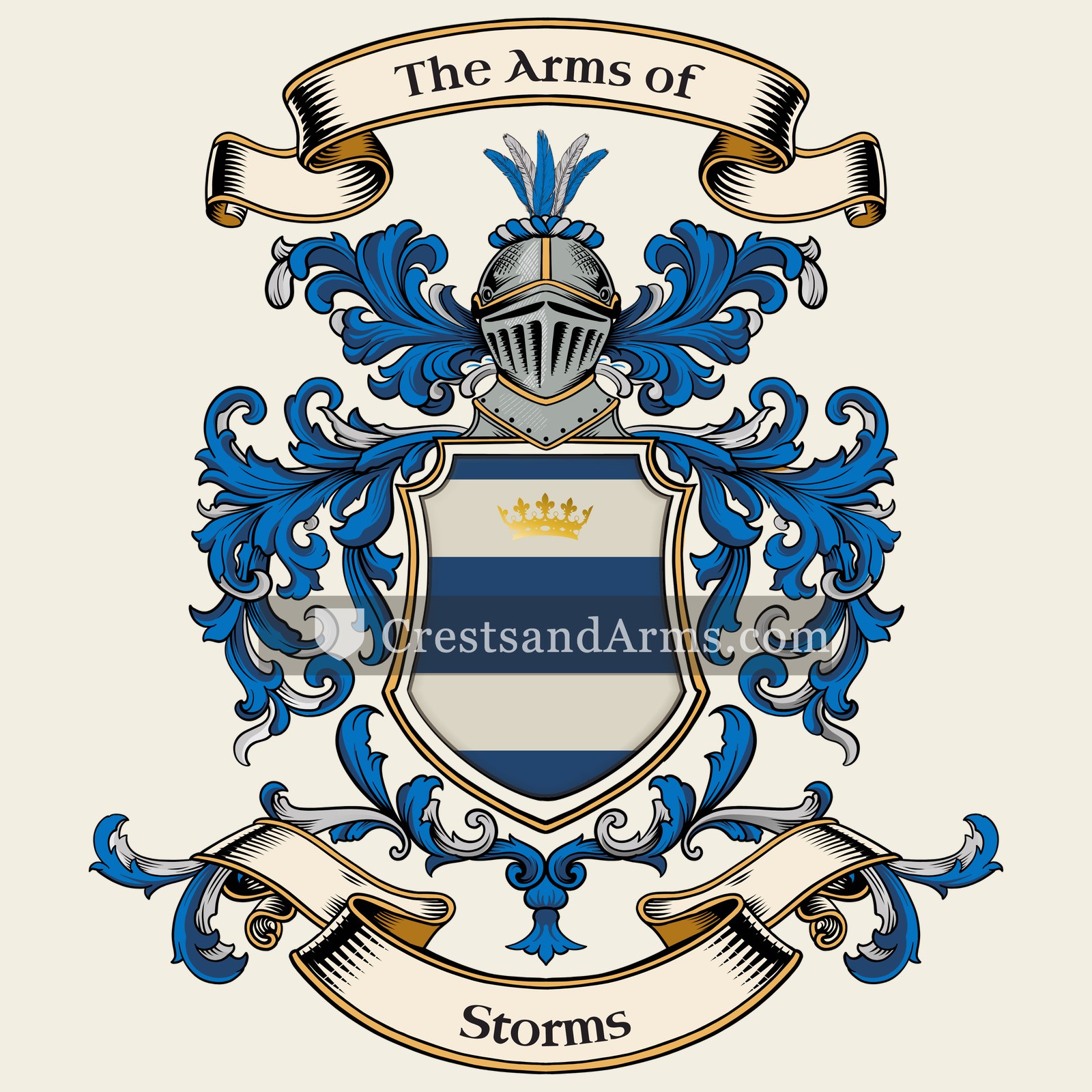


 fessThe military belt, and readiness to serve
 escallopThe pilgrim's shell, and a long journey made
 towerGrandeur and solidity, and a stronghold defended
 lionCourage, strength and royalty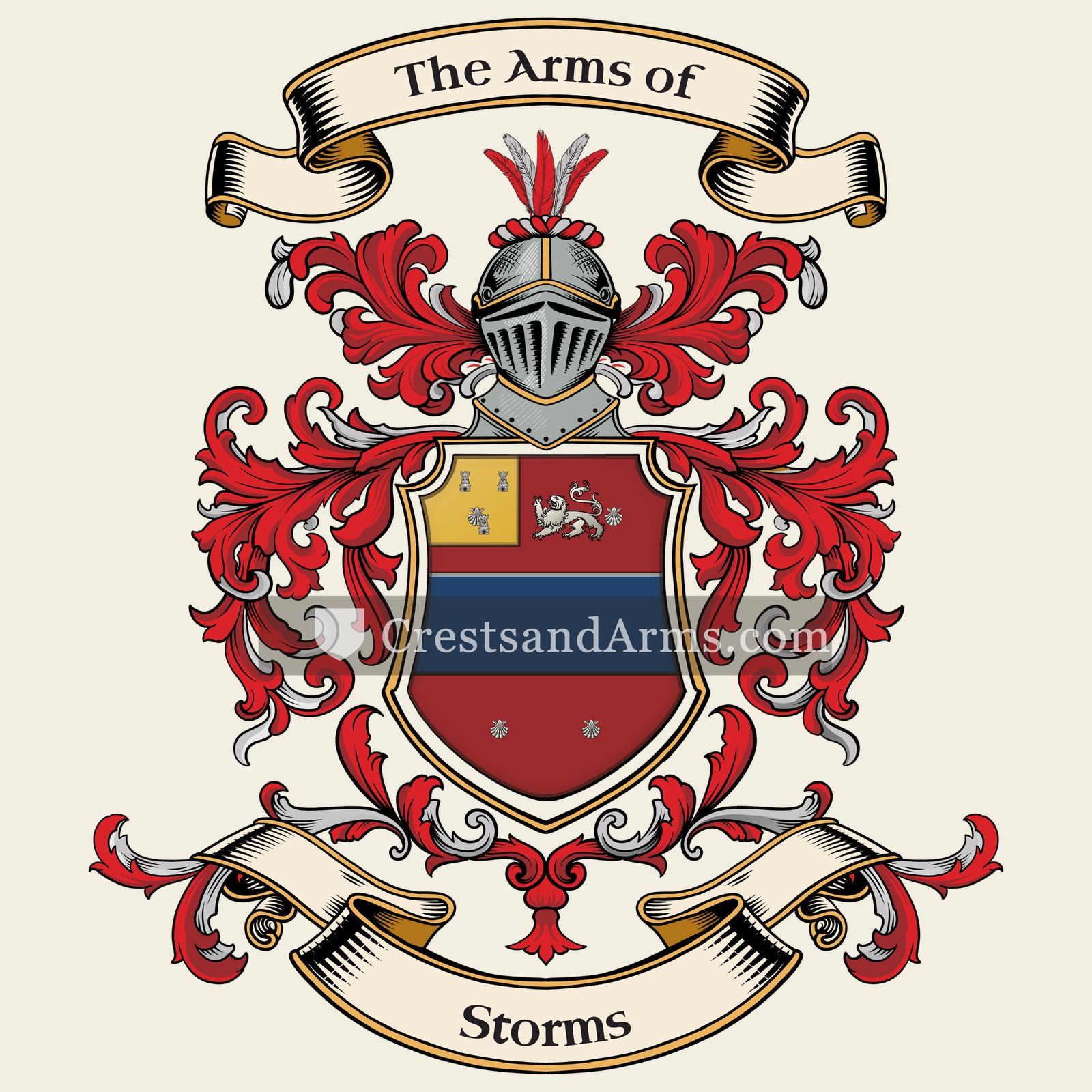


 mountThe ground held, and steadfastness upon it
 knightChivalry and service in arms