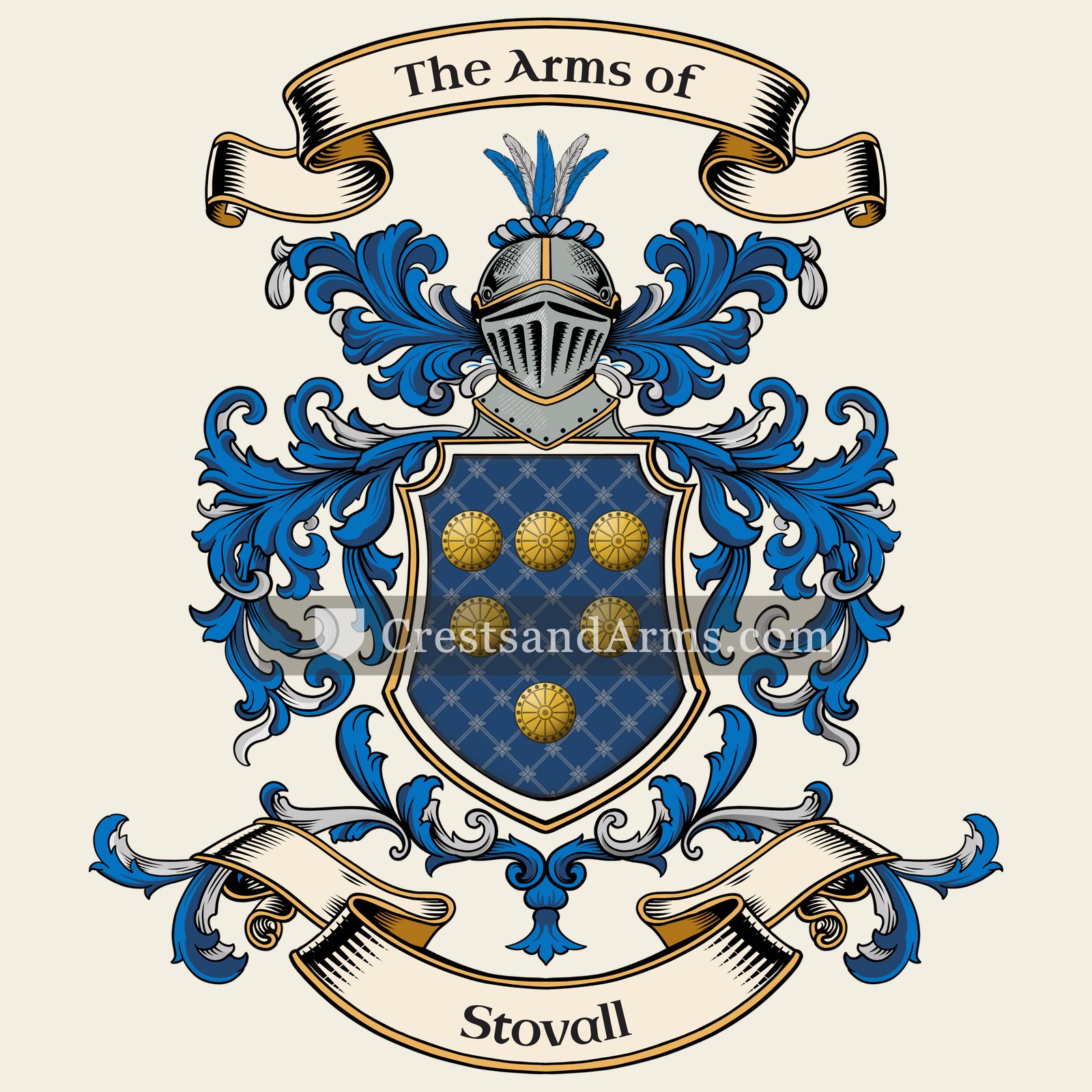
Map of France showing where the Stovall arms are recorded
The Stovall arms were recorded in Dauphine, c. 1663.
Dauphine lay in the mountains of south-eastern France, a country of small estates and scattered valleys. Its gentry were many and mostly modest, and even a small landholding was enough to justify arms.
This is where the arms were entered in the register. Families often moved to other parts of the country, so the same name can turn up in more than one region.
The body that granted and recorded arms in France in this period.
Louis XIV of France
Sovereign of the period
Louis XIV of France
1643–1715
Reigning in France when the Stovall arms are first recorded.
How Arms Worked in France
In France, a coat of arms was a mark of honor that passed down through the male line to all legitimate descendants. Families often used the same shield without changes to show their shared heritage. If a branch wanted to stand out, they could add a small mark to their shield to show their specific place in the family tree.
Granting authority
The Juge d'armes de France acted as the official authority that regulated and verified coats of arms across the country.
How they got arms
Families typically inherited their arms from ancestors, though they could also receive them through royal grants or by proving their noble status.
Where arms were recorded
Coats of arms were officially recorded in the Armorial Général de France, which began its main collection in the year 1696.
The family's standing
Recorded among the armigerous families of Dauphine.
Origin & History of the Stovall Family in France
The Stovall family name traces its roots to the historical province of Dauphiné in southeastern France. By the year 1663, records indicate that members of the family were well-established in this mountainous region near the Alps. The name likely evolved from local geographical features or descriptive terms used to identify people living in specific rural areas of the province. Many families in this part of France were deeply involved in agriculture and local trade during the seventeenth century. As religious and political changes swept through the region, some members of the family eventually moved away from Dauphiné to seek new opportunities in other parts of Europe and across the Atlantic. This migration helped spread the name to different countries where the spelling was occasionally adapted to fit local languages. Today, the name serves as a link to the family's long history in the rugged landscapes of the French countryside.
Stovall Meaning & Related Branches
Root word
Estouteville
A place name derived from Old Norse stutr meaning bull and ville meaning settlement.
This name
StovallAn anglicized locational surname originating from a Norman estate meaning settlement of the bull.
also spelled
Saint-Vallier
Vallier
Saint Vallier
San Vallier
Documented Sources
J. B. Rietstap, Armorial Général, Gouda: G. B. van Goor Zonen, 1884–87
Barthélemy, Adolphe. Dictionnaire topographique du département de la Drôme. 1857
Archives départementales de l'Isère. Série E, État civil et registres paroissiaux
Digital archive packCoat of arms PNG, gold border print PDF, vector SVG and the certificate of authenticity. Sent to your email in minutes.


 roundelA coin, and one who has been to the crusades
 roundelA coin, and one who has been to the crusades